Journalists Detained In Delhi, A UN Rebuke And A Decade Of Press Freedom Questions. From Gag Orders To Internet Blackouts, Is Independent Journalism Facing A Shrinking Space In Modi’s India?
Journalists detained while covering protests in Delhi. A Supreme Court intervention. A UN rebuke that India dismissed. From Kashmir’s internet blackout to newsroom raids and gag orders, the questions around press freedom in Narendra Modi’s India refuse to go away. Is independent journalism losing room to breathe?

On October 10, 2026, Delhi witnessed a security operation that raised an uncomfortable question for any democracy: when the state moves to contain a protest, who is allowed to document what happens next?
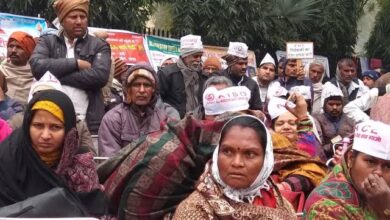
Thousands were reportedly detained as demonstrators attempted to protest against Chief Election Commissioner Gyanesh Kumar over alleged irregularities in the revision of electoral rolls.
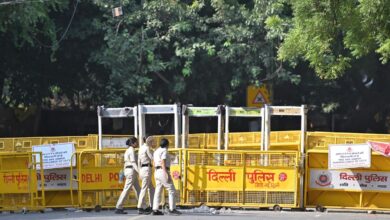
Authorities shut the gates of 45 metro stations, suspended internet services in parts of the capital and imposed extensive security restrictions. The government’s justification centred on public order. The scale of the restrictions, however, soon became a matter for the Supreme Court.
The following day, the Supreme Court intervened, directing authorities to restore normal movement and services and warning against the illegal detention of peaceful, unarmed protesters.
It also sought explanations from the authorities over the metro restrictions and the possibility of contempt proceedings. The intervention did not settle every allegation arising from the police operation, but it put a fundamental question on record: how far can authorities go in restricting public life to prevent a demonstration?
For journalists covering the operation, the question was more immediate.
The Press Club of India, the Indian Women’s Press Corps, the Delhi Union of Journalists and the Delhi unit of the Kerala Union of Working Journalists alleged that reporters were detained despite displaying press identification cards.
Some journalists reportedly had their phones and reporting equipment seized. Reporters from The Quint, The Wire, Scroll, Newslaundry and other outlets were among those named in the accounts, alongside senior journalist Paranjoy Guha Thakurta. The press bodies demanded the return of equipment, an inquiry into police conduct and assurances that reporters would be able to cover protests without interference.
The issue was no longer confined to the right to assemble. It concerned the public’s ability to see how that right was being restricted and enforced. If journalists documenting police action can themselves be detained, the question is not merely whether the authorities can control a crowd. It is whether independent scrutiny survives the operation.
That question has a history. From Kashmir’s communications blackout in 2019 to newsroom raids, online content restrictions and court-issued injunctions, India has seen a series of disputes over the limits of press freedom during Narendra Modi’s tenure.
These incidents are not identical, nor do they all establish unlawful censorship. But together, they demand a closer examination of how the space available to independent journalism has changed.
India Rejects The UN’s Concerns, But The Questions Remain
The Delhi detentions soon became an international issue. The Office of the United Nations High Commissioner for Human Rights (OHCHR) expressed concern over reports of mass detentions involving demonstrators, protest leaders, civil society members, lawyers and journalists.
Its spokesperson, Thameen Al-Kheetan, called on Indian authorities to exercise restraint, respect the right to peaceful assembly and ensure that restrictions on protests met strict tests of necessity and proportionality. The office also called for the immediate and unconditional release of those it considered arbitrarily detained.
India rejected the criticism. In a statement issued through its mission to the United Nations in Geneva, the government described the concerns as “misplaced” and an “unwarranted interference” in the country’s internal affairs. It argued that the Constitution guarantees peaceful assembly, subject to reasonable restrictions in the interest of public order, and pointed to India’s democratic institutions, independent judiciary and free media as safeguards. It also urged OHCHR to devote comparable attention to large-scale protests elsewhere.
The disagreement is about more than diplomatic language. India’s position is that public order must be protected within the country’s constitutional framework and that courts remain available to people who believe their rights have been violated. OHCHR’s position is that the existence of legal safeguards does not remove the need to scrutinise how restrictions are applied in practice. Both the legality of a restriction and the manner in which it is enforced matter.
There is also an important distinction between a human rights office raising concerns and a court finding that a particular detention was unlawful. OHCHR’s statement was not a judicial verdict on every person detained in Delhi. Equally, the government’s defence of its institutions does not, by itself, resolve the allegations about the treatment of protesters and journalists. Those questions require evidence, individual circumstances and, where challenged, legal scrutiny.
The larger issue is whether constitutional protections remain effective when authorities invoke public order to restrict assembly, movement, communications or reporting. The answer cannot rest entirely on assurances from the government, nor can it be established simply by criticism from abroad. It must be tested against the record: the restrictions imposed, the reasons given, the remedies available and the findings of independent institutions.
That is where the history of press restrictions in India becomes relevant.
Kashmir In 2019, When Reporting Itself Became A Logistical Battle
The communications blackout imposed in Jammu and Kashmir in August 2019 did more than interrupt phone calls and internet access. It fundamentally altered how journalists could gather information, verify events and tell the rest of the country what was happening in the region.
Following the Union government’s decision to revoke Jammu and Kashmir’s special constitutional status and reorganise the former state into two Union Territories, authorities imposed sweeping communications restrictions alongside security measures. For journalists, the immediate challenge was brutally practical: how do you report a developing story when you cannot reliably contact sources, transmit photographs or file copy to your newsroom?
The restrictions left local reporters struggling to work in an environment where communication with editors, colleagues and people outside the region became difficult or impossible.
Newspaper production and distribution were disrupted, while journalists attempting to report on detentions, protests and the security situation faced additional obstacles. International press-freedom organisations, including the Committee to Protect Journalists (CPJ), documented the difficulties faced by reporters and called on Indian authorities to restore communications access.
The blackout also complicated independent verification. When journalists cannot speak freely with sources or transmit information, it becomes harder for editors and readers elsewhere to establish what has happened, where it happened and whether competing accounts are accurate.
The government defended the restrictions on security grounds, arguing that extraordinary precautions were necessary to prevent violence and maintain public order following a major constitutional change.
That justification must be part of the record. But so must the consequences of imposing restrictions across an entire region, including on people who were not involved in any violence and on journalists whose work was to document events rather than participate in them.
The restrictions also created an extraordinary dependence on the limited channels through which information could still travel. CPJ documented journalists carrying reports and photographs out of Kashmir on USB drives because conventional internet access was unavailable.
Some reporters struggled to obtain movement permissions, while newspaper distributors were reportedly stopped in certain areas. Local publications cut their page counts, and editors found it difficult to contact district correspondents. The result was not simply less news. It was a weaker ability to independently verify events across the region.
The Supreme Court subsequently addressed the legality of the restrictions in Anuradha Bhasin v. Union of India.
In its January 10, 2020, judgment, the Court held that freedom of speech and expression, as well as the freedom to practise a profession, through the internet enjoys constitutional protection.
It also ruled that indefinite suspension of internet services was impermissible under the applicable rules and directed the publication of orders restricting communications so they could be challenged. The judgment did not declare every restriction imposed in Kashmir unlawful, but it established that such measures could not operate beyond constitutional and legal limits.
Kashmir’s 2020 Media Policy And The Pressure Built Into The Rules
If the 2019 blackout demonstrated how communications restrictions could obstruct journalism, the Jammu and Kashmir administration’s Media Policy 2020 raised a different question: how much discretion should the government have to decide which reporting is acceptable?
Introduced in May 2020, the policy set out a framework for government advertising, media engagement and the scrutiny of published material. It provided for the examination of content that authorities considered fake, unethical, anti-national or prejudicial to public order, among other categories.
The administration presented the policy as a means of ensuring responsible journalism and preventing the misuse of government advertising. Critics, however, argued that its provisions gave officials excessive influence over the media, particularly at a time when journalists in the region were already working under difficult conditions.
The concern was not merely that an individual story might be challenged. It was that the government could exercise influence through several connected mechanisms: assessing content, scrutinising publishers, deciding which organisations received official advertising and determining whether particular material crossed a broadly defined threshold.
For local publications already facing financial pressure and difficulty accessing information, the possibility of losing government advertising could carry consequences beyond the immediate dispute over a story.
CPJ subsequently documented journalists describing an environment in which official briefings were often easier to obtain than independent answers from government sources, while some reporters feared professional or financial retaliation. Such accounts do not establish that every decision taken under the policy was intended to silence criticism. They do, however, explain why press-freedom groups were concerned about the concentration of discretion in the hands of the administration.
The legal distinction matters. A government can legitimately address fabricated information, protect public order and set transparent rules for the use of public funds. The question is whether the definitions are sufficiently precise, decisions are supported by evidence, and journalists have an effective way to challenge them. Rules that leave too much room for subjective interpretation can create uncertainty about what may trigger official action.
That uncertainty can influence reporting even without a formal ban. An editor deciding whether to publish a sensitive investigation must weigh not only the story’s evidence and public interest, but also the potential consequences for the publication. When the same administration can scrutinise content and influence access to public advertising, the independence of that decision-making process becomes especially important.
Kashmir’s media policy therefore belongs in this investigation not because it was identical to a court-issued gag order, but because it illustrates another mechanism through which reporting can come under pressure: the use of administrative rules that shape the conditions under which journalism operates.
The next question is how these concerns extended beyond Kashmir, particularly when the Union government introduced a new regulatory framework for digital news publishers and online platforms in 2021.
The IT Rules And The Government’s Growing Role In Digital News
For years, digital news organisations offered an alternative to the traditional media establishment, publishing investigations and criticism that did not always receive sustained attention on television or in print.
In February 2021, however, the Union government introduced a new regulatory framework that brought digital news publishers under a formal system of oversight. The Information Technology (Intermediary Guidelines and Digital Media Ethics Code) Rules, 2021, established a code of ethics and a three-tier grievance redressal mechanism, with a government oversight mechanism at its highest level.
The government described the framework as a way to improve accountability, address grievances and bring greater consistency to digital media regulation.
Press-freedom groups viewed the framework differently.
The Committee to Protect Journalists (CPJ) warned that the rules gave the government excessive influence over online news and created risks for independent journalism. Among the concerns was the possibility that complaints against published stories could trigger a process in which the government ultimately exercised oversight over content.
Smaller digital publishers also faced the prospect of additional compliance costs and administrative burdens, potentially placing them at a disadvantage compared with larger media organisations.
The central issue was not whether digital publishers should be accountable for their work. News organisations already operate within laws governing defamation, incitement and other unlawful content. The dispute concerned the additional regulatory structure, the degree of executive involvement and the safeguards available when a publisher challenged a decision.
The controversy intensified in 2023, when amendments to the IT Rules provided for a government Fact Check Unit that could identify online information relating to the government’s business as fake, false or misleading. Critics argued that the arrangement created an obvious conflict of interest: the government would have a role in determining the accuracy of claims about itself, while the rules could place pressure on online intermediaries to act on such determinations.
The government defended the broader objective of countering misinformation, but the proposed mechanism raised questions about who should determine the truth of contested claims involving the state.
The courts became central to that dispute.
In March 2024, after challenges to the amendments, the Supreme Court stayed the Centre’s notification establishing the Fact Check Unit until the Bombay High Court finally decided the challenges before it. That was an interim intervention, not a final judgment declaring the entire IT Rules framework unconstitutional.
The distinction matters: the legal controversy concerned a specific mechanism within a broader regulatory structure, and the status of the challenged provisions must be assessed separately from the rules as a whole.
BBC Searches And NewsClick Raids, When The Pressure Moves Into The Newsroom
Regulation is one way to shape the environment in which journalism operates. Another is through investigations, searches and criminal proceedings that directly affect news organisations and the people who work for them.
Two cases from 2023 — the tax searches at BBC offices and the police raids linked to NewsClick — illustrate why the use of state powers against media organisations can become a press-freedom issue, even when the authorities maintain that they are pursuing legitimate legal objectives.
In February 2023, India’s tax authorities searched BBC offices in New Delhi and Mumbai, weeks after the broadcaster released a two-part documentary examining Narendra Modi’s role during the 2002 Gujarat riots. The government had previously criticised the documentary, which was not broadcast on Indian television. During the searches, tax officials examined financial records and electronic devices as part of what the authorities described as a tax-compliance exercise.
The BBC said it was cooperating with the authorities and would continue to report without fear or favour. Critics questioned the timing of the searches and argued that the action risked sending a chilling message to media organisations investigating politically sensitive subjects.
The timing created an obvious question, but timing alone does not establish motive. The government’s stated tax-compliance rationale must be distinguished from allegations that the searches were intended to intimidate a critical broadcaster.
The press-freedom issue is whether enforcement action is conducted transparently, supported by evidence and applied consistently – and whether it creates disproportionate pressure on organisations engaged in public-interest reporting.
Eight months later, the focus shifted to NewsClick, the digital news outlet whose office and the homes of journalists, contributors and staff were searched by Delhi Police on October 3, 2023.
Authorities seized electronic devices and arrested founder-editor Prabir Purkayastha and the organisation’s human resources head, Amit Chakravarty, in a case involving allegations of illegal foreign funding and offences under the Unlawful Activities (Prevention) Act.
The investigation followed allegations, reported by The New York Times, concerning funding networks linked to American businessman Neville Roy Singham and purported pro-China messaging. NewsClick denied the allegations and disputed the characterisation of its work. The allegations themselves were not proof that the organisation had engaged in the conduct alleged.
The most consequential legal development came in May 2024. The Supreme Court set aside Purkayastha’s arrest and remand after finding that the grounds of arrest had not been supplied to him in writing as constitutionally and legally required.
It ordered his release, subject to the applicable bail formalities. The ruling was significant because it concerned a fundamental safeguard against unlawful deprivation of liberty, even in a case brought under a stringent anti-terror law. It did not amount to a final determination that every allegation in the underlying investigation was false.
The BBC and NewsClick cases are different in their legal basis, facts and outcomes. One involved tax searches; the other involved a criminal investigation and arrests. Neither was a conventional gag order prohibiting the publication of a particular story. Yet both raise questions about the conditions in which journalists and newsrooms operate when state agencies exercise powers that can disrupt their work, seize equipment or place staff under investigation.
The 2025 Adani Gag Order And The Question Of Prior Restraint
The distinction between investigating a journalist and preventing one from publishing becomes especially important when courts are asked to issue gag orders.
In September 2025, a defamation suit brought by Adani Enterprises against journalists triggered a debate over how far courts should go in restricting reporting before the journalists concerned have had an opportunity to defend themselves.
The case placed two legitimate concerns in direct tension: the right of individuals and companies to protect their reputations against allegedly defamatory material, and the public’s interest in ensuring that litigation does not become a means of suppressing scrutiny.
A Delhi court initially issued an interim, ex parte injunction restricting certain journalists from publishing material described in the proceedings as unverified, unsubstantiated and prima facie defamatory.
The order also directed the removal of specified material. An ex parte order is one made without hearing the other side at that stage of the proceedings. Such orders can be necessary in exceptional circumstances, but they carry particular risks when they affect journalism: a publication may be restricted before its authors have had a meaningful opportunity to explain their evidence, challenge the allegations against them or demonstrate the public interest served by their reporting.
On September 18, 2025, a district judge set aside the order as it applied to four journalists, holding that they should have been given an opportunity to be heard. That decision did not establish that every report at issue was accurate, nor did it dispose of every aspect of the underlying defamation dispute. Its significance lay in the procedural safeguard it emphasised: restrictions affecting journalists must be considered with proper attention to the rights of those whose publication is being restrained.
The issue is known in law as prior restraint – a restriction that prevents publication before the material can be disseminated, rather than a remedy imposed after a court has established liability.
Indian courts have long recognised the importance of freedom of speech and expression under Article 19(1)(a) of the Constitution. At the same time, that freedom is not absolute. Defamation is among the grounds on which restrictions may be justified under Article 19(2), and courts must balance competing rights in individual cases.
The Adani-related proceedings offer a concrete example of how judicial safeguards can shape the boundaries of publication. They also demonstrate why the courts themselves are central to the press-freedom debate: they can impose restrictions, but they can also review and set aside orders that fail to provide adequate procedural protection.
The larger question is whether injunctions are sufficiently precise and exceptional to protect legitimate reputational interests without unnecessarily shutting down scrutiny.
2026 And The Speed Of Online Censorship
By 2026, the debate over press freedom had acquired another dimension: not just what journalists could publish, but how quickly that material could be taken offline. In February, the Union government amended the Information Technology Rules, cutting the deadline for online intermediaries to remove or disable access to content covered by specified government or court orders from 36 hours to three hours. T
he changes, which came into force on February 20, were introduced amid official concerns about deepfakes, unlawful content and the misuse of artificial intelligence. But the compressed deadline raised a separate question: how much meaningful scrutiny can a platform conduct before it removes material under a government direction?
The concern is particularly acute when the material comes from a news organisation. A platform receiving a removal notice may have little time to examine the underlying report, assess its public-interest value or seek legal advice before complying.
For a newsroom, the consequences can extend beyond losing access to an individual post. A blocked account can interrupt distribution to an established audience, while the removal of a video, investigation or eyewitness account can deprive the public of material that may be difficult to recover elsewhere.
In an October 2026 report, Reporters Without Borders (RSF) documented a series of restrictions affecting journalists and media organisations during the year. The examples included the temporary blocking in India of The Wire’s Instagram account after it published an animated caricature critical of Narendra Modi, restrictions affecting the social media accounts of Kashmiri news outlets, and the removal of journalistic material concerning alleged police violence and other public-interest issues.
RSF cited the Software Freedom Law Center (SFLC), which recorded 40 instances of content takedowns or account blocking involving journalists and media organisations in 2026. The organisation cautioned that the actual number could be higher.
The scale of the wider takedown system is also significant. According to data cited by RSF from The Indian Express, nearly 200,000 removal orders covering both journalistic and non-journalistic material were issued through the government’s Sahyog portal between March and July 2026.
That figure should not be read as 200,000 cases of censorship of journalism; it covers a much broader range of online content. It does, however, indicate the volume of requests passing through a system that has become an important channel for content restrictions.
The government has legitimate interests in addressing unlawful content, impersonation, deepfakes and material that can cause harm. The question is whether the system provides adequate transparency, clear legal grounds, independent scrutiny and an effective route to challenge a removal.
Critics have also questioned the role of the Sahyog portal, arguing that the process can leave affected users with limited information about who requested a takedown and why.
For journalists, speed can be decisive. A report about police conduct, a protest or a public authority may be most valuable while events are unfolding. If material disappears before the journalist or publisher can challenge its removal, a later remedy may not fully restore the lost audience or the public record.
Is There A Pattern To Press Restrictions In Modi’s India?
Taken individually, the episodes examined so far involve different institutions, legal provisions and stated justifications.
But dismissing each incident as entirely unrelated would be equally inadequate. The cumulative question is whether the mechanisms through which authorities can restrict communications, scrutinise publishers, investigate newsrooms, remove online material or restrain publication provide sufficient safeguards against disproportionate interference with journalism.
Four distinct mechanisms emerge from this record.
—The first is restriction of access: internet shutdowns and movement restrictions can prevent journalists from reaching sources, gathering evidence or transmitting reports.
—The second is administrative and regulatory control: media policies and digital rules can influence how publishers operate and how complaints about their content are handled.
Each mechanism raises a different legal question. A communications shutdown must be justified under the applicable law and constitutional protections. A content-removal direction must have a valid legal basis and comply with relevant safeguards. A criminal investigation must respect procedural rights. A gag order must be sufficiently justified and narrowly framed to avoid unnecessarily restricting lawful speech.
The government’s counterarguments also deserve serious consideration. No constitutional democracy gives journalists immunity from laws governing defamation, unlawful activity or other offences.
Authorities have responsibilities to maintain public order, investigate suspected crimes and address genuinely unlawful online content. Nor does every raid, prosecution or adverse court order establish that the press is being censored.
The test, however, cannot stop at the existence of a legal provision or an official explanation.
It must also examine how powers are exercised, whether they are applied consistently, whether the evidence is disclosed where required, and whether affected journalists have access to timely and effective remedies.
The question, therefore, is not whether India has experienced a single, uniform press gag order. It is whether the combination of restrictions, regulatory powers, enforcement actions and publication injunctions has made it harder for journalists to scrutinise those in power—and whether the legal safeguards designed to prevent that outcome are working as intended.
The Last Bit, The Test Is Not Whether India Has A Free Press On Paper
India’s Constitution protects freedom of speech and expression, while permitting specified reasonable restrictions. Its courts have repeatedly addressed the boundaries of those protections, including the legality of internet shutdowns and the procedural safeguards required when the state deprives someone of liberty.
These protections matter. But their practical value depends on whether journalists can exercise them when it matters most.
The Delhi detentions bring that question into immediate focus. The Supreme Court’s intervention addressed restrictions on peaceful assembly and movement, while press organisations separately alleged that journalists covering police action were detained and had their equipment seized.
Those allegations require a clear official response, a factual investigation and, where necessary, judicial scrutiny. The legality of each journalist’s detention must be established on its own facts rather than assumed from the wider dispute.
The larger record raises similar questions in different settings. Can a reporter work during a communications blackout? Can a digital publisher challenge a content-removal order before its audience disappears? Can a newsroom face a criminal investigation without its staff being denied due process? Can a court protect reputation without issuing an injunction so broad that it suppresses legitimate public-interest reporting?
These are not abstract questions about India’s international image. They concern the public’s ability to know what its government, police and other powerful institutions are doing.
Journalism does not place its practitioners above the law, but neither should the exercise of lawful reporting depend on whether the subject of an investigation finds it convenient.
The decisive test is straightforward: can journalists document the exercise of state power, publish what the evidence supports, and challenge restrictions without facing arbitrary interference?
The answer cannot be supplied by a government statement, a press-freedom ranking or a single court order. It must emerge from the evidence in each case, the remedies available to those affected and the willingness of institutions to hold the exercise of power to account.