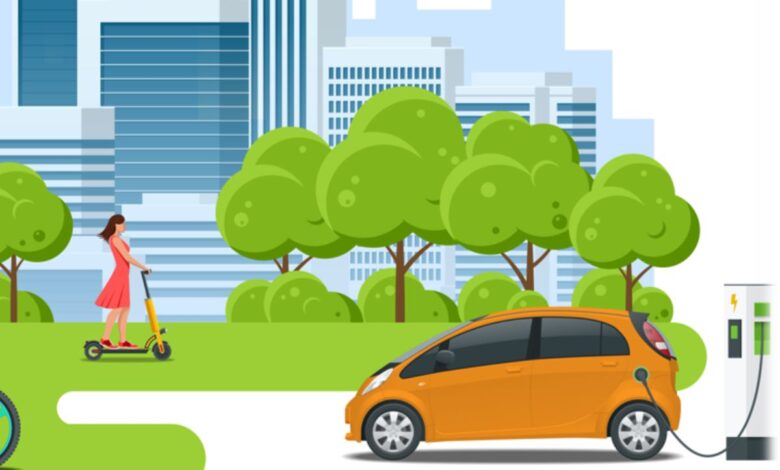
India stands at a transformative juncture in its mobility landscape as the nation accelerates toward its ambitious goal of net-zero emissions by 2070. The country’s green mobility sector has emerged as one of the most dynamic and innovative segments of the startup ecosystem, attracting substantial investment and policy support while fundamentally reshaping how Indians commute, deliver goods, and think about transportation. As of 2026, India’s electric vehicle market has matured significantly from its experimental early days, with the organized sector now operating nearly two thousand companies focused on various aspects of sustainable transportation, including vehicle manufacturing, charging infrastructure, battery technology, and mobility services.
The climate technology sector in India attracted approximately six hundred fifty-seven million dollars in venture capital funding during 2025, despite a decline from the previous year’s billion-dollar investment surge. This sustained capital inflow demonstrates enduring confidence in green mobility solutions as India’s government implements increasingly ambitious electrification targets and policies. The electric vehicle industry specifically has experienced remarkable growth, with the two-wheeler segment leading adoption rates and commercial fleet operators rapidly transitioning to electric powertrains for cost efficiency and environmental compliance. India currently operates approximately twenty-six thousand public charging stations, yet industry projections indicate a staggering requirement of nearly three million stations by 2030, creating unprecedented business opportunities for infrastructure startups.
This comprehensive analysis examines the ten most influential green mobility startups that are defining India’s sustainable transportation future in 2026, each addressing distinct market segments through innovative technology and business models that make electric mobility practical, affordable, and scalable across diverse Indian conditions.
1. Ather Energy – Premium Electric Two-Wheeler Pioneer
Ather Energy has established itself as India’s leading premium electric scooter manufacturer and technology innovator since its founding in 2013 by IIT Madras alumni Tarun Mehta and Swapnil Jain. The Bengaluru-based company has revolutionized the electric two-wheeler segment by delivering smart, connected scooters that compete favorably with conventional internal combustion vehicles on performance, features, and total cost of ownership. As of 2026, Ather commands approximately seventeen to twenty percent market share in India’s electric two-wheeler segment and has emerged as the second-largest player by sales volume, recently surpassing competitors in both revenue generation and market capitalization.
The company operates manufacturing facilities in Hosur, Tamil Nadu, with an installed annual production capacity exceeding four hundred twenty thousand units, and is establishing a second facility in Aurangabad, Maharashtra, scheduled to commence phased operations from May 2026. This expansion forms part of Ather’s ambitious strategy to triple production capacity and capture twenty percent market share by the end of fiscal year 2026. The company’s product portfolio currently includes the Ather 450 series, featuring high-performance variants with advanced connectivity and the Ather Rizta, a family-oriented electric scooter launched in 2024 with generous storage capacity and a range of one hundred sixty kilometers on a single charge.
What distinguishes Ather in the crowded electric vehicle market is its vertically integrated approach spanning hardware, software, charging infrastructure, and after-sales service. The company manufactures battery packs in-house and develops proprietary software that enables over-the-air updates, delivering continuous feature enhancements and performance improvements to existing customers without requiring physical service center visits. Ather’s AtherStack operating system has reached its seventh major iteration, incorporating artificial intelligence-driven features for ride optimization, predictive maintenance, and personalized riding modes.
The Ather Grid charging network represents another strategic differentiator, comprising over four thousand fast-charging points deployed across India and neighboring markets as of early 2026. These DC fast-charging stations utilize Ather’s proprietary connector while also providing standard AC outlets for other electric vehicles through the Ather Grid mobile application. This charging infrastructure addresses range anxiety, a primary barrier to electric vehicle adoption, while creating an ecosystem lock-in effect that enhances customer loyalty. Each Ather Grid station charges at a rate of approximately one kilometer of range per minute, enabling practical intercity travel with minimal charging downtime.
Ather Energy successfully completed its initial public offering in April 2025, becoming India’s second electric vehicle specialist to list on public markets. The company’s market capitalization stood at approximately two hundred thirty-seven billion rupees in early 2026, with strong investor sentiment driven by consistent revenue growth and improving unit economics. Revenue increased from seventeen hundred eighty-one crores in fiscal year 2023 to twenty-two hundred fifty-five crores in fiscal year 2025, representing growth of approximately twenty-seven percent over two years. More impressively, the company has substantially improved its gross margins, achieving approximately twenty-two to twenty-three percent adjusted gross margin by the first quarter of fiscal year 2026, demonstrating a clear path toward profitability.
The company reported revenue of approximately nine hundred forty crores in the second quarter of fiscal year 2026, representing fifty-four percent year-on-year growth, while simultaneously narrowing losses significantly. Non-vehicle revenues from subscriptions, charging services, accessories, and after-sales service now account for roughly twelve percent of total sales, creating recurring revenue streams that improve business sustainability. Ather has aggressively expanded its retail footprint, operating over six hundred Experience Centers across India as of early 2026, with plans to reach seven hundred stores by year-end. This extensive retail presence in both metropolitan cities and tier-two towns ensures customers can experience products firsthand before purchase while providing convenient access to service and support.
Looking ahead, Ather is developing two entirely new vehicle platforms that will significantly expand its addressable market. The EL platform targets the mass-market scooter segment with more affordable pricing, scheduled for launch during the festive season of 2026. The Zenith platform represents Ather’s entry into electric motorcycles, designed to compete in the 125cc to 300cc motorcycle segments that represent substantial sales volumes in India. These platform expansions will be manufactured at the new Aurangabad facility, enabling Ather to compete across price points while maintaining premium positioning in its core segment.
2. Yulu – Shared Micro-Mobility Market Leader
Yulu operates India’s largest shared electric micro-mobility platform, fundamentally reimagining urban transportation through technology-enabled, dockless electric two-wheelers that address first-mile and last-mile connectivity challenges. Founded in 2017 by Amit Gupta, RK Misra, Naveen Dachuri, and Hemant Gupta, with CFO Anuj Tewari elevated to co-founder status in November 2023, the Bengaluru-headquartered company has deployed over forty-five thousand shared electric vehicles across major Indian cities including Bengaluru, Mumbai, Delhi, Gurugram, Noida, and Hyderabad, serving more than four million registered users.
The company’s business model centers on Mobility-as-a-Service, providing low-speed, dockless electric bikes and scooters that users unlock through a mobile application for short-distance urban trips. Yulu vehicles travel at speeds under twenty-five kilometers per hour, making them safe for congested urban environments while requiring minimal regulatory licensing. This approach addresses the critical gap in India’s public transportation ecosystem where conventional options like buses and metros do not provide door-to-door connectivity, forcing commuters to rely on expensive or polluting alternatives for the critical first and last segments of their journeys.
Yulu manufactures three distinct electric vehicle variants tailored to different use cases. The Yulu Miracle serves urban commuters for short-distance personal trips, while Yulu Move caters to slightly longer journeys with enhanced comfort features. The Yulu DeX model, launched in 2022, specifically targets the burgeoning delivery professional segment that grew exponentially during and after the COVID-19 pandemic. This delivery-focused variant features reinforced frames, larger cargo capacity, and enhanced battery endurance to meet the demanding requirements of food delivery, grocery delivery, and e-commerce logistics partners including major platforms like Swiggy, Zomato, BigBasket, and Amazon.
The company achieved a significant milestone by becoming India’s first EBITDA-profitable shared electric mobility company in 2024, demonstrating that the challenging shared micro-mobility business model can achieve sustainable unit economics at scale in Indian conditions. Revenue reached approximately forty-three crores in fiscal year 2023, with the company announcing plans for an initial public offering targeted for fiscal year 2026. This profitability achievement stands in stark contrast to many global shared mobility operators that have struggled with persistent losses.
Yulu has pioneered battery-as-a-service infrastructure in India through its joint venture Yuma Energy, established in partnership with Canadian automotive supplier Magna International in 2022. Yuma operates a growing network of battery swapping stations that enable Yulu riders, particularly delivery professionals, to quickly exchange depleted batteries for fully charged units without waiting for charging times. The network completes over one million battery swaps monthly as of 2026, with plans to expand to over five hundred stations capable of three million monthly swaps. This battery swapping infrastructure addresses the practical limitations of battery charging times while extending the productive working hours of delivery partners who would otherwise lose income while waiting for batteries to charge.
Beyond rental operations, Yulu has diversified into personal vehicle sales with the Wynn model launched in mid-2023, which users can purchase outright rather than rent. The company has also introduced a franchise initiative called Yulu Business Partner that empowers local entrepreneurs in tier-two and tier-three cities to launch Yulu-branded shared electric vehicle services in their markets. This franchise model enables rapid geographic expansion without requiring proportional capital investment from the parent company. Current franchise operations include cities like Indore, Kochi, Tirunelveli, Vadodara, and Kolkata, bringing sustainable micro-mobility to markets beyond India’s largest metropolitan areas.
Yulu’s environmental impact has been substantial, with users collectively traveling over eight hundred fifty million kilometers on Yulu vehicles, helping save approximately thirty-two million kilograms of carbon dioxide emissions while completing over two hundred forty million green deliveries. The company leverages Internet of Things sensors, machine learning algorithms, and artificial intelligence for demand-supply management, ensuring optimal vehicle distribution across city zones based on real-time usage patterns and predicted demand. This technology stack enables operational efficiency that makes the low-margin micro-mobility business economically viable.
Strategic investors include Bajaj Auto, Magna International, Wavemaker Partners, Rocketship, 3One4 Capital, and Blume Ventures, providing not only capital but also strategic partnerships for manufacturing expertise, supply chain optimization, and market access. The company’s current valuation stands at approximately nineteen hundred crores based on recent funding rounds, with strong investor confidence in its path to sustained profitability and market expansion.
3. Zypp Electric – Last-Mile Logistics Transformation
Zypp Electric has established itself as India’s leading technology-enabled electric vehicle-as-a-service platform specializing in last-mile delivery logistics. Founded in 2017 by Akash Gupta, Rashi Agarwal, Tushar Mehta, and Melissa Horn, the Gurugram-based company operates a fleet exceeding twenty thousand electric scooters that enable carbon-free deliveries for over fifty major e-commerce, food delivery, and quick commerce platforms including Zomato, Swiggy, BigBasket, Amazon, Flipkart, Myntra, PharmEasy, Zepto, and Delhivery.
The company’s mission of achieving zero emissions in last-mile logistics addresses a critical environmental and economic challenge. Delivery logistics in India’s rapidly growing e-commerce and quick commerce sectors traditionally relied entirely on petrol-powered two-wheelers, creating substantial air pollution in urban areas while imposing high fuel costs on delivery partners who operate on thin margins. Zypp’s asset-light business model provides delivery professionals with electric scooters on subscription plans, eliminating the capital barrier to electric vehicle adoption while ensuring riders benefit from lower operating costs compared to conventional fuel.
Zypp’s technology platform integrates Internet of Things sensors and artificial intelligence-enabled fleet management systems that optimize vehicle utilization, route planning, and maintenance scheduling. The company’s electric scooters feature proprietary telematics that monitor battery health, vehicle location, riding patterns, and maintenance requirements in real-time, enabling predictive maintenance that minimizes downtime. This technological sophistication ensures that delivery partners experience maximum vehicle uptime and reliability, critical factors for gig economy workers whose income depends on continuous productive hours.
The company has raised a total of seventy-six point five million dollars across eleven funding rounds from diverse investors including ENEOS Group, Gogoro, and Anthill Ventures, demonstrating strong investor confidence in the electric logistics opportunity. Fleet growth has been exponential, expanding from just six hundred twenty vehicles in fiscal year 2021 to over twenty thousand vehicles by 2026, with operations spanning major metropolitan areas including Delhi NCR, Bengaluru, Mumbai, Pune, and Hyderabad. The company has set ambitious targets to deploy one hundred fifty thousand electric scooters across India by 2025-2026, representing a more than seven-fold expansion from current levels.
Zypp’s subscription model provides flexibility to delivery partners, who pay weekly or monthly fees significantly lower than the equivalent fuel costs for conventional scooters. This creates immediate economic benefits for riders while enabling Zypp to maintain asset ownership and ensure proper vehicle maintenance. The company also provides comprehensive insurance, roadside assistance, and maintenance services as part of subscription packages, eliminating the hassles and unpredictable costs that delivery partners would face with personally-owned vehicles.
In late 2025, Zypp announced a strategic partnership with Flo Mobility to expand its footprint in autonomous electric vehicle solutions, positioning the company to leverage emerging self-driving technologies for future delivery operations. The company has also made three strategic investments including Mechanify, TSAW, and Flo Mobility, demonstrating an ecosystem-building approach that extends beyond pure vehicle deployment into complementary technologies and services.
Environmental impact remains central to Zypp’s value proposition, with the company’s electric fleet eliminating thousands of tons of carbon dioxide emissions annually compared to equivalent petrol-powered delivery fleets. The company actively markets its environmental credentials to corporate clients who face increasing pressure from consumers, regulators, and investors to reduce supply chain emissions. Major e-commerce and food delivery platforms have publicly announced carbon neutrality targets, creating structural demand for services like Zypp that enable measurable emissions reductions without compromising delivery speed or reliability.
4. Ola Electric – Scale Manufacturing Pioneer
Ola Electric, founded by Bhavish Aggarwal and backed by the Ola Cabs ride-hailing platform, represents India’s most ambitious bet on large-scale electric vehicle manufacturing. The company operates the world’s largest electric two-wheeler manufacturing facility, the Future Factory in Tamil Nadu, designed with an ultimate annual production capacity of ten million units. As of early 2026, Ola Electric maintains market leadership in India’s electric two-wheeler segment by cumulative sales volume, though it faces intensifying competition from Ather Energy, TVS Motor, and Bajaj Auto.
The company’s strategy emphasizes vertical integration and scale manufacturing to achieve cost leadership in electric mobility. Ola has invested heavily in developing in-house battery cell manufacturing capabilities, rare among Indian electric vehicle manufacturers who typically rely on imported cells from China, Korea, or Japan. The company’s Gigafactory aims to produce lithium-ion battery cells domestically, reducing import dependence while potentially lowering costs through localized production and economies of scale. This vertical integration extends to motor manufacturing, electronics systems, and software development, giving Ola control over its entire technology stack.
Ola Electric completed India’s largest-ever initial public offering in the electric vehicle sector in August 2024, raising substantial capital to fund expansion plans and technology development. However, the company has faced significant operational challenges in 2025 and early 2026, including quality concerns, service center capacity constraints, and intensifying price competition. Revenue declined approximately forty-three percent year-on-year in the second quarter of fiscal year 2026 to six hundred ninety crores, reflecting substantial market share losses to competitors like Ather Energy and traditional automotive manufacturers entering the electric segment.
Despite revenue challenges, Ola Electric achieved a significant milestone in late 2025 by reporting its first profitable quarter at the automotive business level, securing a positive EBITDA margin of zero point three percent. This profitability resulted from aggressive cost-cutting measures, operational efficiency improvements, and a strategic shift toward higher-margin premium model sales. The company reported a net loss of four hundred eighteen crores in the second quarter of fiscal year 2026, substantially higher than competitor Ather’s loss of one hundred fifty-four crores, though representing improvement from prior periods.
The company faces increasing scrutiny from customers regarding product quality and after-sales service, with social media complaints about vehicle breakdowns and extended service wait times creating reputational challenges. Market registration data for late 2025 showed Ola’s market share declining to approximately eleven percent in October, down from previously dominant positions, while Ather’s share expanded to over twenty percent. This reversal reflects customer preference shifts toward brands perceived as offering superior quality and service despite potentially higher prices.
Looking ahead, Ola Electric is pursuing expansion into electric motorcycles and potentially four-wheeler segments, leveraging its manufacturing scale and technology capabilities. The company’s substantial production capacity provides operational leverage that could drive profitability if demand recovers and quality perceptions improve. Strategic partnerships with energy companies for charging infrastructure and potential export opportunities to international markets represent additional growth vectors. However, the company must address service quality concerns and regain consumer trust to fully capitalize on India’s electric vehicle opportunity.
5. Altigreen – Commercial Vehicle Electrification
Altigreen Propulsion Labs stands at the forefront of commercial electric vehicle innovation in India, specializing in electric powertrains and complete vehicles for last-mile transportation in the three-wheeler segment. Founded in 2013 by Shailendra Gupta and Amitabh Saran, the Bengaluru-based company has developed electric vehicle technology specifically optimized for India’s demanding commercial and environmental conditions, holding twenty-six global patents protecting its innovations.
The company’s primary focus addresses the six-billion-dollar Indian market for cargo and passenger three-wheeler auto-rickshaws, vehicles that form the backbone of urban goods transport and short-distance passenger movement in Indian cities. Traditional three-wheelers powered by diesel or compressed natural gas engines create substantial air pollution while imposing high operating costs on drivers who operate on razor-thin profit margins. Altigreen’s electric powertrains deliver dramatically lower operating costs, near-zero emissions, and reduced maintenance requirements compared to conventional powertrains.
Altigreen provides both complete electric three-wheeler vehicles and modular electric powertrains that original equipment manufacturers can integrate into their existing vehicle platforms. This dual approach enables the company to address both the retrofit market for existing three-wheeler operators seeking to convert conventional vehicles to electric power and the new vehicle segment where OEMs integrate Altigreen powertrains during manufacturing. The company’s technology has been deployed in sixty nations worldwide, demonstrating its robustness across diverse operating conditions and climate zones.
In February 2022, Altigreen raised three hundred crores (approximately forty million dollars) in a Series A funding round led by Sixth Sense Ventures, one of the largest funding rounds in India’s commercial electric vehicle segment. This substantial capital infusion has enabled aggressive expansion of manufacturing capacity, technology development, and market penetration across India and international markets. The company partners with logistics providers, fleet operators, and individual three-wheeler owners to facilitate electric vehicle adoption through financing partnerships and operational support.
Altigreen’s technology differentiation stems from power electronics, battery management systems, and motor control algorithms specifically engineered for the stop-start duty cycles, heavy payloads, and challenging terrain encountered in commercial last-mile operations. The company’s vehicles demonstrate superior reliability and durability compared to early electric three-wheeler attempts that suffered from premature battery degradation and motor failures under commercial operating conditions. Real-world performance validation has been critical to building customer confidence in electric commercial vehicles.
The commercial three-wheeler segment represents an enormous electrification opportunity given the sheer scale of vehicles operating in India and their intensive daily usage patterns that result in disproportionate fuel consumption and emissions relative to passenger vehicles. Industry estimates suggest over five million three-wheeler auto-rickshaws operate in India, collectively consuming billions of liters of diesel and compressed natural gas annually. Converting even a fraction of this fleet to electric power would deliver massive environmental benefits while creating substantial economic value for operators through reduced fuel and maintenance costs.

6. Exponent Energy – Rapid Charging Infrastructure
Exponent Energy is revolutionizing electric vehicle charging infrastructure through proprietary rapid charging technology that addresses one of the most significant barriers to commercial electric vehicle adoption in India. The Bengaluru-based startup has developed a comprehensive ecosystem comprising advanced battery packs, intelligent charging stations, and sophisticated software that enables electric three-wheelers to charge from zero to one hundred percent in just fifteen minutes, comparable to conventional vehicle refueling times and dramatically faster than typical electric vehicle charging that requires multiple hours.
This breakthrough in charging speed specifically targets commercial vehicle segments including auto-rickshaws, delivery vans, and logistics vehicles where drivers cannot afford extended charging downtime that reduces productive earning hours. Traditional electric vehicle charging times of four to eight hours make battery electric vehicles economically unviable for commercial operators who maximize income by keeping vehicles in service throughout the day. Exponent’s rapid charging technology eliminates this fundamental constraint, enabling electric vehicles to compete directly with conventional vehicles on operational efficiency.
The company’s technological approach integrates multiple innovations across battery chemistry, thermal management, power electronics, and charging protocols. Exponent has developed proprietary lithium iron phosphate battery packs with enhanced thermal characteristics that can safely accept extremely high charging currents without degrading battery life or creating safety risks. The charging stations feature sophisticated power management systems that optimize charging parameters in real-time based on battery temperature, state of charge, and ambient conditions. This systems-level integration ensures both rapid charging and long battery life, addressing the traditional trade-off where fast charging typically accelerates battery degradation.
Exponent operates on an energy-as-a-service business model where customers purchase vehicles without batteries, instead subscribing to Exponent’s charging and battery service. This approach dramatically reduces the upfront capital requirement for electric vehicle adoption since batteries typically represent thirty-five to forty percent of total vehicle cost. Operators pay subscription fees based on energy consumption rather than owning batteries outright, shifting the battery degradation risk to Exponent while ensuring access to the latest battery technology through periodic upgrades.
The company raised thirteen million dollars in a Series A funding round led by Lightspeed Venture Partners in 2022, representing Lightspeed’s maiden investment in an Indian electric vehicle startup. This funding has supported the deployment of charging infrastructure across key markets and the development of second-generation battery and charging technology with even faster charging capabilities. Exponent is rapidly expanding its charging station network across major Indian cities, targeting high-utilization commercial vehicle corridors where rapid charging infrastructure delivers maximum value to operators.
Strategic partnerships with electric vehicle manufacturers enable Exponent to integrate its battery and charging technology directly into new vehicle designs optimized for rapid charging capabilities. The company has collaborated with leading electric three-wheeler manufacturers to create integrated vehicle-battery-charging solutions that deliver superior performance and economics compared to conventional electric vehicles with standard charging infrastructure. These partnerships are critical to achieving the network effects necessary for rapid charging infrastructure to become ubiquitous.
The rapid charging technology also addresses grid integration challenges by enabling more controlled, predictable charging patterns compared to distributed slow charging. Exponent’s stations can be strategically located near grid substations with available capacity and can incorporate renewable energy integration and battery storage to reduce peak grid demand while supporting sustainable charging. As India’s electric vehicle fleet grows, intelligent charging infrastructure like Exponent’s will be essential to managing grid impacts and enabling continued electrification.
7. Bolt.Earth – Charging Infrastructure Market Leader
Bolt.Earth has emerged as India’s undisputed leader in electric vehicle charging infrastructure, having deployed over one hundred thousand chargers across the country by early 2026, far exceeding any competing charging network. Founded by Raghav Bharadwaj, the company characterized 2025 as a consolidation phase for India’s electric mobility ecosystem where the industry transitioned from experimental deployments to commercially viable, large-scale operations with sustainable business models.
The company’s ambitious roadmap for 2026 includes deploying twenty thousand advanced chargers featuring smart capabilities that significantly enhance user experience and operational efficiency. These next-generation charging stations display real-time availability information visible through mobile applications before drivers arrive at charging locations, eliminating the frustration of discovering occupied chargers upon arrival. App-based payment processing eliminates the need for physical cards, cash handling, or separate payment systems, streamlining the charging experience and reducing friction for users.
Artificial intelligence-optimized fast charging represents a key technological differentiator for Bolt’s infrastructure. The charging stations utilize sophisticated algorithms that adjust charging parameters dynamically based on vehicle battery condition, ambient temperature, available grid capacity, and user preferences to maximize charging speed while preserving long-term battery health. This intelligent charging management addresses the critical trade-off between charging speed and battery longevity, ensuring that rapid charging does not significantly degrade battery capacity over thousands of charging cycles.
Strategic partnerships with automotive manufacturers create opportunities for deep integration where vehicles can communicate directly with Bolt charging infrastructure through standardized protocols. This vehicle-to-grid communication enables advanced features including automatic charging parameter negotiation to optimize charging for specific battery chemistries, reservation of charging slots in advance to guarantee availability during planned trips, and highly accurate estimates of required charging time based on real-time battery condition rather than generic assumptions. Such integration dramatically improves the user experience and reduces range anxiety.
Bolt’s charging network spans diverse locations including highways, urban centers, commercial complexes, residential societies, and fleet depots, ensuring comprehensive coverage across use cases. Highway charging corridors enable long-distance electric vehicle travel, previously constrained by limited charging availability along major routes. Urban chargers support daily commuters and ride-hailing vehicles, while residential charging solutions address the needs of apartment dwellers who lack dedicated home charging facilities.
The company’s business model combines multiple revenue streams including per-use charging fees from individual drivers, subscription plans for frequent users, partnerships with commercial fleet operators requiring dedicated charging infrastructure, and advertising opportunities at high-traffic charging locations. This diversified revenue model reduces dependence on any single customer segment while capturing value across the electric vehicle ecosystem.
Bolt has also developed white-label charging solutions for commercial property owners, enabling real estate developers, shopping malls, hotels, and corporate campuses to deploy branded charging infrastructure that enhances property value and amenity offerings. The company manages installation, maintenance, and operations while property owners benefit from attracting electric vehicle users and demonstrating environmental leadership. This B2B2C approach accelerates charging infrastructure deployment by leveraging existing real estate assets and capital.
8. Statiq – Urban Charging Network Specialist
Statiq operates over seven thousand electric vehicle chargers deployed across sixty-three cities throughout India as of early 2026, positioning itself as a major player in the country’s rapidly expanding charging infrastructure landscape. The company focuses particularly on urban charging solutions, addressing the critical needs of city-based electric vehicle users who lack access to home charging facilities and require reliable public charging options for daily commuting, ride-hailing, and commercial operations.
The company’s urban-centric strategy recognizes that most Indian electric vehicle owners and particularly commercial operators live in multi-family residential buildings or rented accommodations where installing dedicated home charging equipment is impractical or impossible. This creates structural dependence on public charging infrastructure that must be widely distributed, highly reliable, and competitively priced to enable practical electric vehicle ownership. Statiq’s charging stations are strategically located in areas with high electric vehicle concentration including commercial districts, shopping centers, residential neighborhoods, and transportation hubs.
Statiq has developed a sophisticated mobile application that enables users to locate nearby charging stations, check real-time availability, reserve charging slots, initiate charging sessions, and process payments entirely through digital wallets or cards. The app provides navigation to selected charging stations, estimated charging times based on current battery level and target charge, and transparent pricing information including any time-based or congestion-based pricing variations. This digital-first approach minimizes friction and makes charging nearly as convenient as conventional refueling.
The company differentiates through service reliability and uptime, critical factors that have plagued early charging networks where non-functional chargers created significant user frustration. Statiq employs remote monitoring systems that detect charging station malfunctions immediately and dispatch maintenance teams proactively before users encounter problems. The company maintains service level agreements guaranteeing minimum network uptime percentages and provides customer support channels for immediate assistance if charging issues occur.
Strategic partnerships with electric vehicle manufacturers enable Statiq to offer integrated charging solutions bundled with vehicle purchases. These partnerships provide customers with charging subscriptions, discounted charging rates, or guaranteed access to charging infrastructure as part of their vehicle ownership package, reducing concerns about charging availability. Automaker partnerships also drive traffic to Statiq’s network as manufacturers direct their customers to preferred charging partners.
Statiq is increasingly incorporating renewable energy into its charging infrastructure, partnering with solar power developers to source clean electricity for charging stations. This green energy integration addresses the valid criticism that electric vehicles merely shift emissions from tailpipes to power plants if charged using coal-generated electricity. By sourcing solar or wind power, Statiq enables truly zero-emission transportation while supporting India’s renewable energy transition. Some charging stations incorporate on-site solar canopies that generate power directly while providing weather protection for charging vehicles.
The company has also developed battery storage systems at select high-utilization charging locations to manage grid demand and ensure charging availability during grid outages or peak demand periods when grid connections might be constrained. These battery buffers store electricity during off-peak hours when grid capacity is available and electricity is cheaper, then discharge during peak charging periods to supplement grid power. This demand management reduces infrastructure costs while improving service reliability.
9. Euler Motors – Electric Commercial Vehicles
Euler Motors specializes in electric commercial vehicles, particularly focusing on the cargo three-wheeler and small commercial vehicle segments that represent massive addressable markets in India’s logistics and goods transport ecosystem. The company recognizes that while passenger vehicles and two-wheelers attract substantial attention, commercial vehicles represent an even more compelling electrification opportunity given their intensive usage patterns, high fuel consumption, and disproportionate contribution to urban air pollution.
Founded with a mission to transform last-mile goods transportation through electric mobility, Euler has developed electric three-wheeler cargo vehicles specifically engineered for Indian operating conditions including poor road quality, extreme temperatures, high payload requirements, and demanding duty cycles involving frequent stops and starts throughout extended operating hours. The company’s vehicles feature robust chassis, high-capacity battery packs, and powerful motors capable of carrying typical cargo loads across urban delivery routes while delivering total cost of ownership advantages compared to diesel-powered alternatives.
Euler’s technology platform emphasizes reliability and durability, critical attributes for commercial vehicle operators who depend on consistent vehicle availability to maintain delivery schedules and income. The company employs rigorous testing protocols that subject vehicles to conditions far exceeding normal operating parameters, ensuring that batteries, motors, and electronic systems maintain performance under the punishing conditions of commercial Indian usage. Early electric commercial vehicle attempts often suffered catastrophic failures that destroyed operator confidence in the technology, making proven reliability essential to market acceptance.

The company has received backing from prominent venture capital firms including Blume Ventures, which has made electric mobility a strategic investment focus. Euler’s funding enables expansion of manufacturing capacity, technology development, and go-to-market initiatives targeting logistics companies, e-commerce platforms, fleet operators, and individual commercial vehicle owners. The company offers comprehensive financing partnerships that reduce the capital barrier to electric commercial vehicle adoption, critical for typically capital-constrained small business operators.
Euler partners with major logistics providers and e-commerce platforms seeking to electrify delivery fleets both for cost savings and to meet corporate sustainability commitments. These enterprise partnerships provide stable demand for Euler’s vehicles while enabling real-world validation of performance and economics under intensive commercial operations. Successful fleet deployments create powerful demonstration effects that drive adoption among other operators observing the benefits achieved by early adopters.
The commercial vehicle segment presents unique advantages for electrification compared to passenger vehicles. Commercial operators make rational economic decisions based on total cost of ownership calculations rather than emotional or lifestyle factors, and electric vehicles typically deliver compelling economic returns when purchased through appropriate financing structures. Additionally, commercial vehicles operate on predictable routes with known daily mileage requirements, enabling precise battery sizing and eliminating range anxiety concerns that affect private passenger vehicle buyers. Commercial operators also have access to dedicated depot charging that can occur during overnight periods when vehicles are idle, avoiding dependence on uncertain public charging infrastructure.
10. Refex eVeelz – Corporate Mobility Solutions
Refex eVeelz, operated by Refex Green Mobility Limited under the diversified Refex Group umbrella, provides comprehensive electric vehicle fleet solutions specifically designed for corporate and commercial applications. The company offers turnkey packages that include a one hundred percent electric vehicle fleet, professional drivers, charging infrastructure, and technology platforms for corporate commuting and business transportation needs, addressing the complex requirements of companies seeking to electrify their mobility operations without building in-house expertise in electric vehicle fleet management.
This full-service approach appeals particularly to corporations facing increasing pressure from investors, regulators, customers, and employees to reduce carbon emissions while lacking the time, expertise, or capital to independently build and manage electric vehicle fleets. Refex eliminates these barriers by assuming responsibility for all operational aspects including vehicle procurement, driver recruitment and management, charging infrastructure installation and operation, maintenance and repairs, insurance, and technology platform management. Clients simply specify their transportation requirements and Refex delivers end-to-end mobility services using electric vehicles.
The company has secured high-profile strategic partnerships that validate its operational capabilities and business model. In 2025, Refex announced a partnership with Uber to deploy one thousand electric vehicles across India by 2026, aimed at increasing the availability of electric ride options on the Uber platform while supporting the broader transition to zero-emission urban mobility. This collaboration enables Uber to expand electric vehicle supply on its platform without directly operating vehicles, while Refex gains access to Uber’s massive ride demand and brand visibility.
Refex’s corporate clients span diverse industries including information technology, business process outsourcing, manufacturing, pharmaceuticals, and financial services, all of which operate large employee transportation programs and increasingly seek sustainable alternatives to diesel bus fleets. The company’s electric vehicle fleets serve employee commutes, business meetings, airport transfers, client visits, and other corporate transportation needs. Corporate clients benefit from predictable monthly costs, elimination of fleet management overhead, and verifiable carbon emission reductions that support sustainability reporting requirements and corporate social responsibility objectives.
The company leverages the Refex Group’s broader capabilities in renewable energy, infrastructure development, and project financing to deliver integrated clean mobility solutions. Refex can bundle solar power generation with charging infrastructure, enabling clients to power corporate electric vehicle fleets with renewable energy generated on-site at corporate campuses. This integrated approach delivers even greater emissions reductions while potentially lowering electricity costs compared to grid power, particularly for companies with suitable roof space or land for solar installations.
Technology platforms developed by Refex enable clients to book vehicles on-demand, schedule recurring transportation, track vehicle locations in real-time, monitor charging status, receive trip completion confirmations, and access detailed analytics on fleet utilization, emissions savings, and cost metrics. These digital tools provide transparency and control while automating administrative tasks that would otherwise require dedicated fleet management staff.
The corporate fleet segment represents a massive addressable market in India where thousands of companies operate collective employee transportation for hundreds of thousands of employees daily. These corporate fleets often operate on fixed routes between residential areas and office campuses with predictable daily mileage, making them ideal candidates for electrification. Additionally, corporate clients typically have strong balance sheets and credit profiles enabling competitive financing terms that reduce total cost of ownership. As sustainability becomes increasingly central to corporate strategy and reporting, electric fleet services like those provided by Refex will experience structural demand growth.
The Future of Green Mobility in India
India’s green mobility sector stands at a pivotal moment in early 2026 as the transition from niche innovation to mainstream adoption accelerates across multiple vehicle segments, use cases, and geographic markets. Several powerful trends are converging to drive continued rapid growth in electric vehicle adoption and supporting ecosystem development over the coming years. Government policy support has intensified through initiatives including the PM E-DRIVE Scheme launched in September 2024 with a budget of ten thousand nine hundred crores allocated over two years to boost electric mobility infrastructure and vehicle adoption. State governments have introduced additional incentives including purchase subsidies, reduced road taxes, and free parking for electric vehicles that significantly improve economics compared to conventional alternatives.
Technology advancement continues at a remarkable pace, with battery costs declining approximately twenty percent annually while energy density increases enable longer ranges without proportional weight or cost increases. Charging infrastructure is expanding exponentially, with India adding thousands of new public charging points monthly across diverse locations from highways to residential societies. Battery swapping networks are maturing as a complementary solution for commercial vehicles and two-wheelers where rapid refueling is essential. Advances in power electronics enable faster charging without battery degradation, while vehicle-to-grid technologies promise to transform electric vehicles into distributed energy storage assets that support grid stability.
The geographic expansion of electric mobility beyond major metropolitan areas into tier-two and tier-three cities represents a massive market opportunity. Rising income levels, improving infrastructure, and increasing environmental awareness in smaller cities create fertile conditions for electric vehicle adoption. Manufacturers and service providers are strategically expanding distribution, service networks, and charging infrastructure into these emerging markets where competition is less intense and growth rates often exceed those in saturated metropolitan markets.
Commercial fleet electrification will likely outpace private vehicle adoption in coming years given the compelling economics for professional operators. Logistics companies, ride-hailing platforms, food delivery services, and corporate transportation programs are rapidly transitioning to electric vehicles driven by total cost of ownership advantages and corporate sustainability commitments. This commercial adoption creates demonstration effects and builds consumer familiarity with electric vehicles while generating sufficient scale to support continued infrastructure investment.
The Indian government’s potential reduction of import duties on premium electric vehicles from one hundred ten percent to fifteen percent for automakers meeting specific localization requirements could accelerate technology transfer and manufacturing investment. International automotive giants are increasing India commitments through both imports of advanced electric vehicles and domestic manufacturing investments that will bring global best practices to India’s market. This combination of domestic innovation and international technology transfer will accelerate product development while maintaining cost competitiveness essential for mass-market adoption.
Battery manufacturing localization represents the next frontier, with multiple initiatives underway to establish domestic lithium-ion cell production that currently accounts for the majority of electric vehicle import costs. Successful battery manufacturing at scale would dramatically reduce vehicle costs while creating strategic independence from import dependencies and supply chain vulnerabilities. Government production-linked incentive schemes specifically targeting battery manufacturing demonstrate policy commitment to this objective.
The startups profiled in this analysis represent diverse approaches to green mobility spanning vehicle manufacturing, charging infrastructure, fleet services, rapid charging technology, and shared mobility platforms. This ecosystem diversity strengthens the overall sector by addressing complementary aspects of the electric mobility challenge. Vehicle manufacturers create supply while charging infrastructure providers enable practical usage. Fleet services reduce adoption barriers for corporations and logistics companies while shared mobility platforms maximize vehicle utilization and reduce total vehicle requirements.
For aspiring entrepreneurs, the green mobility sector offers extraordinary opportunities across the value chain from battery chemistry and power electronics to fleet management software and renewable energy integration. The sector requires diverse skillsets spanning mechanical engineering, electronics, software development, operations management, and customer service, creating employment across capability levels. India’s unique market characteristics including massive scale, price sensitivity, challenging operating conditions, and diverse use cases require India-specific innovation rather than simple replication of solutions developed for other markets.
Investment capital continues flowing into promising green mobility startups despite the broader funding slowdown affecting many technology sectors. Climate-focused investment funds recognize that sustainable transportation represents one of the largest addressable markets in climate technology, with both environmental impact potential and commercial viability. The startups that successfully navigate the current market environment by demonstrating strong unit economics, operational excellence, and clear paths to profitability will attract abundant growth capital as the sector matures from experimental to established.
India’s ambition to achieve net-zero emissions by 2070 depends fundamentally on successful transportation sector transformation given that transportation accounts for approximately thirteen percent of the country’s total carbon dioxide emissions. The green mobility startups highlighted here are not merely businesses pursuing profits but rather critical enablers of India’s climate commitments and sustainable development trajectory. Their success or failure will substantially influence whether India achieves its environmental targets while supporting economic growth and improved quality of life for its citizens. As 2026 unfolds, these pioneering companies continue pushing the boundaries of what’s possible in electric mobility, creating the sustainable transportation infrastructure that will serve India for generations to come.