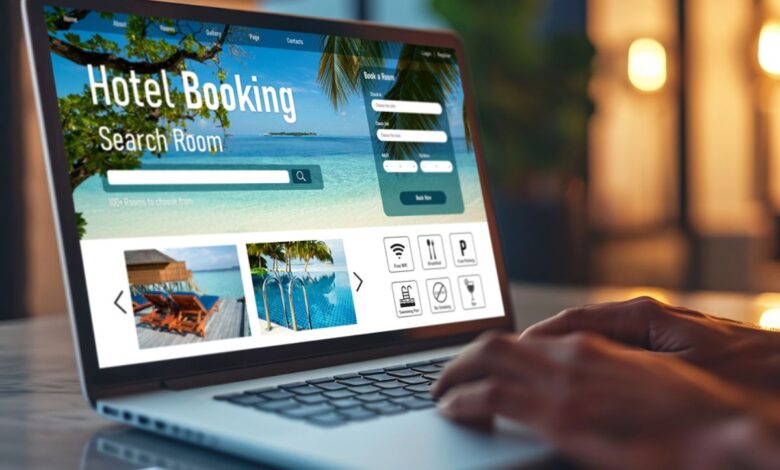
The way Indians book hotels has undergone a quiet but complete revolution over the past decade. Where a traveller in 2010 might have called a hotel directly, negotiated a rate with a local travel agent, or relied on a recommendation from a colleague who had visited the city before, the traveller of 2026 almost certainly begins — and often ends — their hotel search on a digital platform. Online travel agencies, global booking giants, and India-first apps now collectively mediate the vast majority of hotel bookings made by Indian consumers, and the competition among them for wallet share has never been more intense.
This transformation matters not just as a technology story but as a consumer empowerment story. Real-time price comparison, instant booking confirmation, transparent cancellation policies, user-generated reviews, and loyalty reward programmes have collectively shifted enormous negotiating power toward the traveller. The hotel booking platforms that have thrived in this environment are the ones that understood what Indian travellers actually need — competitive pricing, domestic payment method support, Hindi-language interfaces, customer service that works in a crisis, and increasingly, personalisation that makes the search experience faster and smarter.
All ten platforms featured here are actively operating in India in 2026, financially stable, and genuinely useful to a broad range of Indian travellers. The list spans domestic champions, global giants with deep India roots, and one alternative accommodation platform that has become impossible to ignore even in a conversation about traditional hotel bookings.
1. MakeMyTrip
MakeMyTrip is the undisputed leader of India’s online travel industry and the platform against which every competitor in the hotel booking space is measured. Founded in 2000 by Deep Kalra and listed on NASDAQ, MakeMyTrip has grown from a flights-first booking tool into the most comprehensive travel super-app in the Indian market, covering hotels, holiday packages, trains, buses, and activities. Its hotel inventory spans the full spectrum from budget homestays to five-star luxury resorts, with over a million property listings accessible through its platform.
What keeps MakeMyTrip at the top is a combination of factors that are individually replicable but together form a durable advantage. Its MyRewards loyalty programme has accumulated tens of millions of active members who consistently prefer the platform because their accumulated points are worth real money toward future bookings. Its customer support infrastructure, while imperfect, is among the most accessible in the industry. Its marketing spend — among the highest in Indian consumer tech — keeps it top-of-mind at the moment a traveller begins their search. And its pricing algorithms, which dynamically match or beat competitive rates across millions of hotel nights, mean that it can credibly claim to offer value as well as convenience.
Best suited for: Indian travellers of all segments who want the widest hotel inventory, a robust loyalty programme, and the familiarity of India’s most trusted travel brand.
2. Goibibo
Goibibo is MakeMyTrip’s subsidiary brand and India’s second-largest OTA by market presence, but it earns its own entry on this list because it operates with genuine product independence and serves a meaningfully distinct user experience. Goibibo’s hotel booking interface has consistently received strong ratings for its simplicity and speed — its goCash reward currency has been a particularly effective tool for driving repeat hotel bookings, allowing users to accumulate and spend a digital wallet balance that functions like a discount on every subsequent trip.
Goibibo is particularly strong in the budget and mid-market hotel segments, and its integration with the broader ibibo Group ecosystem means it shares inventory and pricing technology with MakeMyTrip while maintaining its own app experience and user community. For budget-conscious travellers and frequent domestic business travellers who have built up goCash balances, Goibibo often delivers better effective pricing than any competitor on the same property.
Best suited for: Budget and mid-market domestic hotel bookings, frequent travellers maximising the goCash rewards ecosystem, and users who prefer a simpler, faster booking interface.
3. Booking.com
Booking.com, the Amsterdam-headquartered global OTA owned by Booking Holdings, has established itself as one of the most widely used hotel booking platforms in India despite having no Indian origin story. Its competitive advantage is straightforwardly architectural: it lists more hotel properties globally than any other platform, its free cancellation filter is the most powerful and consistently applied in the industry, and its review system — built on verified stays only — is arguably the most trustworthy source of guest feedback available to any traveller researching accommodation.

In India specifically, Booking.com has invested significantly in expanding its domestic hotel inventory, supporting Indian payment methods including UPI and domestic debit cards, and building a customer support infrastructure that is reachable in a reasonable timeframe. For travellers booking international trips, Booking.com’s global inventory breadth is simply unmatched. For domestic Indian travel, it offers strong coverage in leisure destinations and metros, though its penetration in smaller Tier 3 markets still lags behind the domestic OTAs.
Best suited for: International hotel bookings, leisure travellers prioritising free cancellation flexibility, and users who place a premium on verified review quality.
4. Agoda
Agoda, also part of the Booking Holdings group, takes a different positioning from its sister brand and focuses particularly strongly on Asia-Pacific travel — which makes it exceptionally relevant for Indian travellers whose most common international destinations include Thailand, Singapore, Malaysia, Bali, Vietnam, and the UAE. Agoda’s pricing on properties across Southeast and East Asia is frequently the most competitive available, and its AgodaCash rewards programme generates genuine loyalty among frequent travellers to the region.
Within India, Agoda has also expanded its domestic hotel inventory meaningfully and often surfaces properties — particularly boutique and independently operated hotels — that do not appear prominently on the larger OTAs. Its mobile app is technically polished and consistently receives high ratings for ease of use. For Indians planning an international holiday to Southeast Asia, Agoda should always be part of the price comparison exercise, because it frequently beats every other platform on properties in that region.
Best suited for: Indian travellers booking international trips to Southeast Asia and other Asia-Pacific destinations, and deal-conscious users willing to compare across platforms.
5. EaseMyTrip
EaseMyTrip is one of India’s most successful bootstrapped travel success stories — a Delhi-based OTA that grew without significant venture capital funding and listed on Indian stock exchanges in 2021. What makes EaseMyTrip’s hotel booking platform particularly notable is its zero convenience fee model, a positioning decision that directly attacked the industry practice of displaying an attractive base rate and then adding service charges at checkout. For price-sensitive Indian travellers who find hidden fees a persistent frustration, EaseMyTrip’s transparent pricing has been a powerful differentiator.
The platform has expanded its hotel inventory steadily and covers both domestic and international properties, with a customer base that skews strongly toward value-conscious travellers and small business owners booking their own travel. EaseMyTrip’s loyalty programme and frequent promotional campaigns generate a consistent stream of deals that its growing community of subscribers tracks actively. Having demonstrated profitability as a public company, it has also earned credibility as a long-term player in the Indian OTA landscape.
Best suited for: Price-sensitive Indian travellers who prioritise fee transparency, value-seekers, and small business travellers managing their own bookings.
6. Cleartrip
Cleartrip, founded in 2006 and acquired by Flipkart in 2021, has undergone significant transformation since coming under the ownership of India’s largest e-commerce company. The Flipkart backing has brought two important advantages to Cleartrip’s hotel booking business: deep integration with the Flipkart SuperCoins loyalty ecosystem, which allows Flipkart shoppers to convert retail rewards into travel credits, and a significantly enhanced marketing reach through Flipkart’s enormous existing customer base.
Cleartrip’s hotel booking interface has always been praised for its design cleanliness and search speed, and these qualities have been preserved through the transition. Its Cleartrip for Work corporate travel management product has also made it a meaningful player in the B2B travel booking segment, where its integration with expense management workflows adds genuine value for small and medium enterprises. The convergence of Cleartrip’s travel expertise with Flipkart’s retail ecosystem is a combination that no purely travel-native platform can easily replicate.
Best suited for: Flipkart shoppers converting SuperCoins into hotel bookings, corporate travellers using the Cleartrip for Work platform, and users who value a clean, fast search interface.
7. Yatra
Yatra is one of India’s original online travel agencies, founded in 2006, and remains a meaningful independent player in the domestic hotel booking market despite the consolidation that has reshaped the OTA landscape around it. Listed on NASDAQ, Yatra has carved out a defensible position in the corporate travel segment through its Yatra for Business product, which provides SMEs and large enterprises with centralised hotel booking, policy compliance tools, and integrated expense reporting — a B2B proposition that the consumer-focused OTAs have not prioritised with the same intensity.

On the consumer side, Yatra’s domestic hotel coverage is solid, and the platform runs frequent discount campaigns that attract deal-seeking travellers. Its customer base is particularly loyal in North India, where the brand has historically invested most heavily in marketing. While Yatra lacks the scale and loyalty programme depth of MakeMyTrip, it offers a genuinely credible alternative for both individual and corporate travellers who have developed a preference for its interface and service model.
Best suited for: Corporate travel managers and SME travel booking, deal-conscious domestic travellers, and North India-based users with existing Yatra loyalty.
8. Expedia
Expedia, the Seattle-headquartered global travel giant, operates in India primarily as a platform for outbound international travel, and in that specific use case it is difficult to beat. Expedia’s hotel inventory on global properties — particularly in North America, Europe, and the Middle East — is among the deepest available on any platform, and its Expedia Rewards programme (rebranded to One Key globally) links hotel points with flights and car rental rewards in a way that creates genuine value for frequent international travellers.
For domestic Indian hotel bookings, Expedia is less competitive than the India-first OTAs on both inventory depth and pricing, and its customer support infrastructure is more globally oriented than locally responsive. But for the Indian professional travelling internationally — attending a conference in London, visiting clients in New York, or holidaying in Spain — Expedia’s global infrastructure, price-match guarantee, and breadth of hotel options make it a platform that belongs in every serious traveller’s comparison toolkit.
Best suited for: Indians booking international hotel stays in Western markets, frequent outbound business and leisure travellers, and users maximising the One Key rewards ecosystem.
9. Airbnb
Airbnb deserves a place on this list even in a conversation specifically about hotel bookings, because the reality of how Indian travellers use the platform in 2026 makes the traditional accommodation category distinction largely irrelevant. While Airbnb began as a platform for renting private homes and spare rooms, a very large proportion of the properties listed on it in India and internationally today are professionally managed apartments, boutique guesthouses, and villa-style properties that function in every meaningful way like hotels — with daily housekeeping, front desk services, and instant booking — but are not classified as hotels and therefore do not appear on traditional OTAs.
For Indian travellers seeking accommodation in a hill station, a beach destination, a heritage city, or an international location where a private apartment delivers a more authentic experience than a hotel room, Airbnb’s inventory is simply without equivalent. Its user experience, host review system, and payment infrastructure are all consistently excellent. The platform’s Airbnb for Teams product has also opened up a growing corporate use case around offsite retreats and group accommodation bookings.
Best suited for: Leisure travellers seeking unique or local accommodation experiences, group travel, family holidays requiring kitchen facilities, and travellers in destinations where private villa or apartment stays are preferred over hotel rooms.
10. Ixigo
Ixigo, the Gurugram-based travel platform that completed a successful IPO in 2024, has built its reputation primarily in the train and bus booking segments — where its AI-powered seat prediction and alert systems have attracted tens of millions of loyal users among India’s mass-market travellers. Its hotel booking vertical, while smaller than its transport business, benefits from an enormous existing user base of value-conscious Indian travellers who are booking train and bus tickets and increasingly completing their accommodation booking within the same app session.
Ixigo’s strategic positioning in 2026 is as the travel platform for Bharat — a deliberate differentiation from the metro-focused OTAs — and this shows in its hotel inventory, which includes strong coverage of properties in smaller cities and pilgrimage destinations that other platforms may underserve. Its Hindi-language interface, offline-compatible features, and low-data-mode functionality make it functionally accessible to travellers in markets and connectivity environments where competing apps struggle. For a first-time online hotel booker in a Tier 3 city, Ixigo is often the most approachable starting point.
Best suited for: Mass-market Indian travellers, users booking accommodation alongside train or bus travel, Tier 2 and Tier 3 city travellers, and first-time online hotel bookers.
How to Get the Most Out of These Platforms
Understanding why there are ten strong platforms rather than one dominant winner helps you use them more intelligently as a traveller. Each platform carries specific structural advantages — MakeMyTrip’s loyalty rewards, Booking.com’s cancellation flexibility, Agoda’s Asia-Pacific pricing, EaseMyTrip’s fee transparency — and the traveller who is willing to check two or three platforms before committing will consistently find better prices and better conditions than one who reflexively opens the same app every time.
A useful habit to develop is using a platform’s search and review infrastructure to research a property thoroughly, and then checking whether a direct booking with the hotel offers a rate advantage — many hotels offer price parity or slight discounts for direct bookings because they avoid paying OTA commission on those transactions. That said, the consumer protections, cancellation policies, and dispute resolution frameworks that the major OTAs provide often justify their commission premium, particularly when travelling to an unfamiliar destination.
Conclusion
India’s hotel booking platform landscape in 2026 is one of the most competitive and consumer-friendly in the world. Whether you are a budget domestic traveller in Tier 2 India using Ixigo, a luxury leisure traveller comparing Booking.com and Agoda for a Southeast Asia holiday, a corporate travel manager using Yatra or Cleartrip, or a family looking for a Himalayan villa on Airbnb, there is a platform on this list built to serve your specific need with genuine sophistication. The traveller who knows this landscape well will always travel better — and almost always for less.