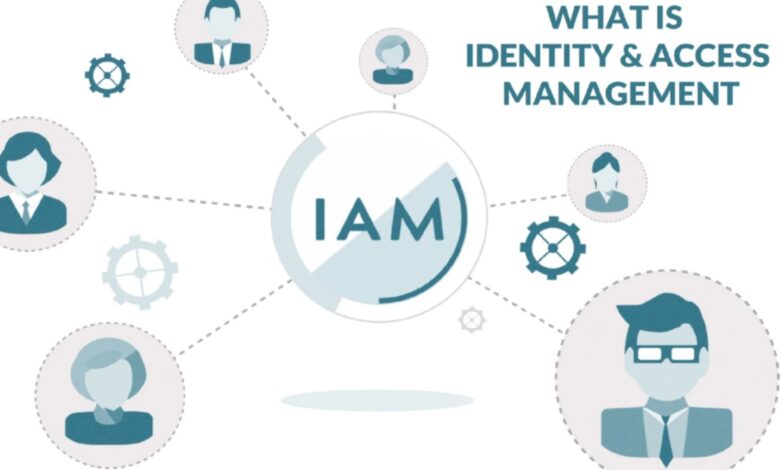
Every time an employee logs into a corporate application, a customer creates an account on a website, or a machine authenticates itself to a cloud service, an Identity and Access Management platform is quietly making a series of decisions in the background: Who are you? Are you really who you say you are? And given who you are, what are you allowed to do? These three questions — identity, authentication, and authorisation — sit at the foundation of every digital interaction in the modern enterprise, and the platforms that answer them have become among the most strategically critical infrastructure investments that any organisation makes.
The IAM market in 2026 is undergoing one of the most significant transformations in its history, driven by three converging forces. The first is the collapse of the traditional network perimeter — the idea that security could be enforced by protecting a defined boundary around corporate infrastructure has been definitively invalidated by hybrid work, multi-cloud architectures, and the proliferation of devices that access sensitive data from everywhere.
The second is the maturing of the Zero Trust security model, which assumes no user, device, or network should be trusted by default and requires continuous verification of identity as the primary security control. The third is the explosion of artificial intelligence, both as a tool that IAM platforms use to detect anomalous access behaviour and as a threat surface that requires new identity controls around AI agents and non-human identities.
Understanding these forces helps you evaluate IAM platforms not just on their current feature sets but on their architectural readiness for a security environment that is changing faster than at any previous point in computing history. The ten platforms below represent the most capable, most widely deployed, and most strategically forward-thinking options available in 2026.
1. Okta
If you were to name a single company that has done the most to define what modern cloud-native IAM looks like, Okta would be the most defensible answer. Founded in 2009 in San Francisco and now one of the most valuable pure-play identity security companies in the world, Okta built its platform on a premise that was controversial at the time and obvious in retrospect: that identity management should live in the cloud, not in on-premises directory servers. Its Okta Identity Cloud is today one of the most comprehensive IAM ecosystems available, covering workforce identity, customer identity through its CIAM product, privileged access, and an extensive integration network of over 7,000 pre-built application connectors.
What distinguishes Okta in 2026 is its depth in the Customer Identity and Access Management (CIAM) segment, where its platform enables companies to build registration, login, and profile management experiences for their end users with enterprise-grade security underneath. The company’s Okta AI initiative, which applies machine learning to risk-based authentication decisions and anomaly detection, reflects how seriously it is investing in the next generation of adaptive, context-aware identity security. For enterprises seeking a cloud-native, comprehensive identity platform with the broadest ecosystem compatibility in the market, Okta remains the default shortlist entry.
Best suited for: Enterprises seeking cloud-native workforce and customer IAM with extensive third-party integrations and strong adaptive authentication capabilities.
2. Microsoft Entra ID (formerly Azure Active Directory)
If Okta is the independent identity specialist, Microsoft Entra ID is the identity infrastructure that comes embedded in the world’s most widely used enterprise productivity ecosystem. Formerly known as Azure Active Directory, Microsoft rebranded and expanded its identity offering under the Entra product family in 2023, and by 2026 it has become one of the most widely deployed IAM platforms on earth by the simple virtue of the fact that most enterprise organisations already use Microsoft 365. When your email, your collaboration tools, your productivity applications, and your cloud infrastructure are all Microsoft products, Entra ID’s native integration advantage is significant and real.
In 2026, Microsoft Entra has expanded well beyond its traditional Active Directory extension role to encompass Verified ID (a decentralised identity capability), External Identities for partner and customer access scenarios, and Permissions Management for multi-cloud entitlement governance. Its integration with Microsoft Defender creates a security feedback loop where identity signals and threat intelligence reinforce each other in ways that standalone identity tools cannot easily replicate. The platform’s main limitation is that its advantages are most pronounced for organisations already committed to the Microsoft ecosystem — for heterogeneous, multi-vendor environments, its integration breadth outside its own ecosystem is more limited than Okta or Ping Identity.
Best suited for: Microsoft-centric enterprises who want deep native integration between identity, productivity tools, security monitoring, and cloud infrastructure.
3. CyberArk
CyberArk occupies a distinctive and critically important position in the IAM landscape because it built its entire business on a problem that most organisations underestimate until they experience a serious breach: privileged access. Privileged accounts — the administrator credentials, service accounts, root passwords, and API keys that have elevated permissions to access sensitive systems — are the most targeted assets in modern cyberattacks. Attackers who gain a regular user credential can be stopped by privilege controls; attackers who gain a privileged credential can often move laterally through an entire organisation undetected. CyberArk’s Privileged Access Management platform is the global standard for securing, rotating, and auditing these elevated credentials.
In 2026, CyberArk has significantly broadened its scope beyond traditional privileged access to address what is rapidly becoming the most pressing identity challenge of the AI era: non-human identities. Service accounts, API keys, machine identities, and increasingly, AI agents that act autonomously on behalf of users all require identity and access governance — and the volume of these non-human identities now significantly exceeds the number of human users in most large enterprises. CyberArk’s Secrets Hub and its machine identity security capabilities position it as the leader in this emerging and critical sub-segment of the IAM market.
Best suited for: Security-first enterprises and regulated industries where privileged access control, credential vault management, and non-human identity governance are primary requirements.
4. SailPoint
While platforms like Okta and CyberArk focus on authentication and privileged access respectively, SailPoint addresses the third and often most complex dimension of IAM: access governance. The central question of access governance is whether the access that people currently have is actually the access they should have — and in organisations with thousands of employees, hundreds of applications, and constantly changing roles, answering that question accurately requires technology that can continuously analyse access patterns, detect over-provisioning, enforce separation of duties, and automate the access certification reviews that regulators increasingly require.
SailPoint’s Identity Security Cloud applies AI to this governance challenge in ways that have meaningfully automated work that previously required enormous analyst effort. Its AI engine analyses historical access patterns to generate intelligent access recommendations, flags anomalous access that deviates from a user’s peer group norms, and accelerates access review processes by pre-populating certification decisions based on machine-learning-derived confidence scores. Taken private by Thoma Bravo in 2022 and subsequently reinvested in significantly before returning to public markets, SailPoint in 2026 is operating as one of the most technically sophisticated identity governance platforms available. For compliance-driven organisations in financial services, healthcare, and government, it is frequently the platform against which all alternatives are benchmarked.
Best suited for: Compliance-intensive organisations requiring automated access governance, identity lifecycle management, and AI-driven access certification for regulatory frameworks including SOX, HIPAA, and GDPR.
5. Ping Identity
Ping Identity has built a reputation over two decades as the IAM platform of choice for large, complex enterprises — particularly financial institutions, healthcare systems, and telecommunications companies — where the requirements for flexibility, standards compliance, and hybrid deployment options are more demanding than most cloud-native platforms can comfortably accommodate. Its PingOne Cloud Platform and complementary on-premises products support a broad range of identity standards including SAML, OAuth 2.0, OpenID Connect, and FIDO2, and its architecture is designed to allow hybrid deployments where some identity workloads remain on-premises and others move to the cloud — a pragmatic necessity for regulated industries with data residency requirements.
Following its acquisition by Thoma Bravo and subsequent merger with ForgeRock in 2023, Ping Identity has substantially expanded its product depth, particularly in customer identity management where ForgeRock’s heritage provides complementary capabilities. The combined platform is now one of the most comprehensive enterprise IAM offerings available, with particular strength in complex federation scenarios, API security, and regulated industry deployments where the ability to customise and self-host components is non-negotiable.
Best suited for: Large regulated enterprises requiring hybrid deployment flexibility, complex federation and standards compliance, and highly customisable customer identity solutions.
6. IBM Security Verify
IBM Security Verify is the identity and access management component of IBM’s broader Security portfolio and brings to the IAM conversation the one thing that IBM does more comprehensively than almost any competitor: deep enterprise integration across a heterogeneous technology landscape. For large organisations running mainframes alongside cloud-native applications, legacy ERP systems alongside modern microservices, and on-premises data warehouses alongside SaaS platforms, IBM Security Verify’s ability to provide a unified identity layer across all of these environments is genuinely difficult to replicate with smaller, more narrowly focused vendors.
The platform covers single sign-on, multi-factor authentication, identity governance, privileged access management, and consumer identity management — and its AI-driven risk scoring, built on IBM’s own AI research, provides adaptive authentication that adjusts the friction of a login experience based on continuously evaluated contextual risk signals. IBM’s extensive professional services organisation and its global support infrastructure are also meaningful factors for large enterprises managing global identity deployments at scale, where the quality of implementation and ongoing support services can determine the success or failure of a programme as much as the technology itself.
Best suited for: Large complex enterprises with heterogeneous, multi-era technology environments requiring unified identity governance across both legacy and modern infrastructure.
7. One Identity
One Identity, a Quest Software company, has built a focused and capable IAM platform with particular depth in the Microsoft Active Directory ecosystem — making it especially valuable for organisations whose identity infrastructure is centred on on-premises Active Directory and who are navigating the transition to a hybrid or cloud identity model without wanting to abandon their existing directory investments. Its One Identity Manager provides identity governance and administration capabilities, while its Safeguard product addresses privileged access management, and Starling delivers cloud-delivered IAM services that bridge the gap between on-premises and cloud-native identity.
One Identity’s approach is characterised by a practical, migration-friendly philosophy. Rather than demanding that enterprises make a wholesale shift to cloud-native identity — which carries significant operational and migration risk for organisations with complex, mature directory environments — it provides tools that extend and enhance existing Active Directory investments while progressively enabling cloud capabilities. For mid-market enterprises and large organisations with substantial on-premises infrastructure investments, this pragmatic positioning is a genuine differentiator.
Best suited for: Mid-market and enterprise organisations with significant Active Directory investments seeking a practical path to hybrid identity management without disruptive infrastructure replacement.
8. ForgeRock (Now Part of Ping Identity)
Though ForgeRock has been operationally integrated into Ping Identity following their 2023 merger, its technology platform continues to be sold, supported, and developed as a distinct offering within the combined company’s portfolio — justifying its inclusion as a separately identifiable platform in 2026. ForgeRock built its reputation on customer identity specifically: the complex challenge of managing the identity lifecycle for millions of consumers at scale, with the performance, resilience, and privacy compliance requirements that consumer-facing applications demand. Its ForgeRock Identity Platform, built on open standards and designed for extreme scalability, is deployed by some of the world’s largest banks, telecommunications companies, and healthcare organisations to manage consumer identity at a scale and complexity that most other IAM platforms cannot match.
The platform’s particular strength in consent management and privacy compliance — its ability to manage granular user consent across data processing purposes in compliance with GDPR, CCPA, and other privacy frameworks — has become increasingly valuable as privacy regulatory enforcement intensifies globally. For organisations whose primary IAM challenge is managing consumer identity at massive scale with stringent privacy requirements, the ForgeRock technology platform remains a leading-edge choice.
Best suited for: Consumer-facing enterprises managing identity for millions of end users at scale, with complex privacy compliance and consent management requirements.
9. Saviynt
Saviynt is the most compelling pure-cloud-native entrant in the enterprise identity governance space and has been gaining meaningful market share against more established incumbents by delivering governance capabilities that were historically associated only with complex, expensive on-premises deployments — through a cloud-delivered model that dramatically reduces implementation time and total cost of ownership. Founded in 2010 and headquartered in Los Angeles, Saviynt’s Enterprise Identity Cloud addresses identity governance, privileged access, application access governance, and third-party identity management in a unified platform architecture that avoids the integration complexity of assembling multi-vendor point solutions.
Saviynt’s particular innovation has been in embedding AI-driven analytics directly into the governance workflow — its platform continuously analyses access patterns, peer group norms, and entitlement data to surface risk insights that human reviewers can act on efficiently rather than drowning in undifferentiated access certification data. Its growing adoption in the financial services, healthcare, and energy sectors reflects increasing market recognition that cloud-native governance can meet the stringent requirements of regulated industries without the operational overhead of on-premises alternatives.
Best suited for: Organisations seeking cloud-native identity governance and privileged access management with strong AI-driven analytics, particularly in regulated industry environments.
10. Delinea
Delinea emerged in 2021 from the merger of Thycotic and Centrify — two well-established privileged access management vendors — and has since built a focused, highly capable PAM platform that competes directly with CyberArk in the privileged access space while offering a notably more streamlined implementation experience. Its Secret Server for credential vaulting, Privilege Manager for endpoint privilege management, and Server Suite for Unix and Linux privileged access form a comprehensive PAM suite that addresses the full scope of privileged access risk.
What Delinea has consciously positioned as its differentiator relative to CyberArk is implementation simplicity — a recognition that even the most technically powerful security platform fails to deliver value if organisations cannot deploy and operate it effectively within their resource constraints.
In 2026, Delinea has also been expanding its capabilities in cloud privilege management and DevOps secrets management, addressing the growing recognition that privileged access risks in cloud and DevOps environments are as serious as those in traditional enterprise IT — and often less well-governed due to the speed at which cloud infrastructure is provisioned and changed.
Best suited for: Organisations prioritising privileged access management with a faster, more operationally accessible implementation model, and those extending PAM governance into cloud and DevOps environments.
How to Choose the Right IAM Platform for Your Organisation
Reading ten platform descriptions is useful, but the harder and more important question is how to match your specific organisational context to the right choice. A few principles are worth keeping in mind as you work through that decision.
The first is to start from your primary IAM problem rather than from a feature checklist. Organisations whose primary challenge is authenticating employees to cloud applications have different needs from those whose primary challenge is governing who has access to what across thousands of applications, or those whose primary challenge is securing the privileged credentials that attackers most want to steal. Okta, SailPoint, and CyberArk respectively address these three different primary problems — and starting with clarity about which problem is most urgent for your organisation will prevent the mistake of choosing a platform optimised for someone else’s problem.
The second is to consider your deployment environment honestly. If your organisation is predominantly cloud-native and Microsoft-centric, Entra ID’s native integration advantage is real and valuable. If you have substantial on-premises infrastructure that will take years to migrate, choosing a cloud-only IAM platform creates a long transition period during which your existing infrastructure is ungoverned. Platforms like Ping Identity, One Identity, and IBM Security Verify are specifically designed for this hybrid reality.
The third principle, and perhaps the most forward-looking one, is to evaluate how each platform addresses non-human identity management. The proliferation of API keys, service accounts, machine identities, and AI agents means that a very large and growing proportion of access risk in any modern organisation comes from non-human identities rather than human users — and the platforms that have invested seriously in this problem (CyberArk and Delinea most prominently) will provide meaningfully better security posture over the next five years than those that treat non-human identity as a secondary concern.
Conclusion
The IAM market in 2026 is both more important and more complex than at any previous point in enterprise security history. The combination of identity-based attacks becoming the dominant vector for breaches, Zero Trust architecture becoming mainstream, and AI agents creating a new class of identity management challenges means that the platform an organisation chooses to anchor its identity security programme is a decision with profound and long-lasting consequences.

The ten platforms described above represent the clearest, most capable choices available — each with distinct strengths, distinct architectural philosophies, and distinct ideal customer profiles. Understanding what makes each one genuinely different is the beginning of making a choice that will serve your organisation well not just today but as the identity security landscape continues to evolve in ways that are both predictable and surprising.