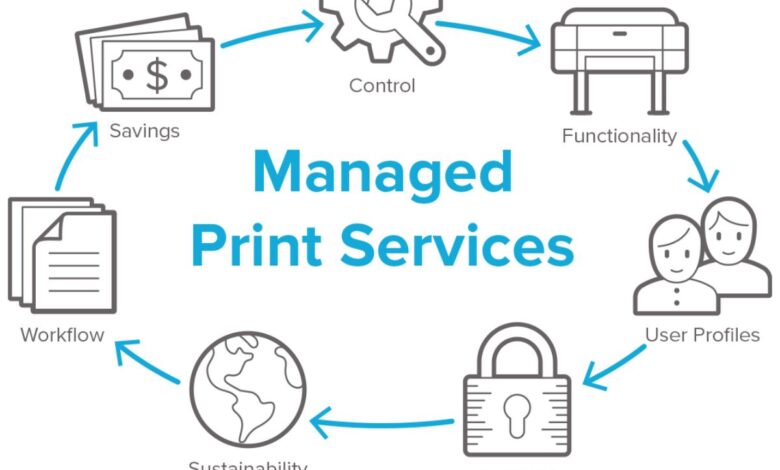
Printing may seem like a mature, even mundane corner of enterprise technology — and yet it remains one of the most consistently undermanaged sources of operational cost, security risk, and environmental inefficiency in Indian organizations. The average enterprise spends far more on printing than its finance team realizes, because print costs are fragmented across hardware purchases, toner procurement, maintenance contracts, paper consumption, IT support tickets, and the hidden productivity losses that come from unreliable devices.
Managed Print Services, or MPS, addresses this problem by replacing the chaos of decentralized printer ownership with a structured, professionally managed model. Under an MPS arrangement, a firm takes over the full lifecycle of an organization’s printing environment — assessing current usage, right-sizing the device fleet, handling supplies replenishment automatically, managing maintenance and repairs, monitoring performance remotely, and continuously optimizing the environment to reduce waste and cost. The result, for most organizations, is a 20 to 30 percent reduction in total print costs alongside a measurable improvement in fleet reliability and, increasingly, print security.
India’s MPS market has matured significantly over the past few years, driven by the growing sophistication of enterprise procurement, the push toward greener operations, and the recognition that unmanaged print environments are a genuine cybersecurity vulnerability — printers are endpoints too, and unpatched, unmonitored printing devices have become a known entry point for network intrusions. Here is a comprehensive look at the top 10 IT Managed Print Services firms operating in India in 2026.
1. HP India
HP remains the single largest provider of managed print services in India by installed base and brand recognition. Through its HP Managed Print Services offering, the company delivers end-to-end print environment management for enterprises ranging from mid-sized businesses to large public sector organizations. HP’s MPS proposition is built around its Proactive Insight service — a remote monitoring and predictive analytics platform that anticipates supply depletion and device failures before they disrupt operations, allowing for proactive intervention rather than reactive maintenance.
HP India’s strength in MPS is inseparable from its dominance in the Indian printer hardware market, which gives it unmatched scale in device deployment, parts availability, and field service reach across Tier 1 and Tier 2 cities. Its security-forward approach — where HP Wolf Security extends endpoint protection principles to printers — is particularly relevant for Indian enterprises in BFSI and healthcare that are increasingly scrutinizing their printing environment as part of broader cybersecurity programs. For organizations looking for a single, globally backed MPS provider with deep India operational infrastructure, HP is invariably the first conversation.
2. Xerox India
Xerox is one of the foundational names in the global MPS market, and its India operations reflect the company’s long-standing commitment to this specific service model. Xerox’s Workplace Cloud and its broader MPS portfolio in India help organizations move from transactional printer ownership toward a fully managed, outcome-based relationship where Xerox assumes responsibility for availability, performance, and optimization of the entire print fleet.
What distinguishes Xerox in the Indian MPS market is its sophisticated workflow integration capability — the ability to connect print infrastructure with document management systems, enterprise content management platforms, and business process automation tools. This means that for many Xerox MPS clients, the engagement is not just about managing printers; it becomes a conversation about how digital and print document workflows can be redesigned for greater efficiency. Xerox’s presence in enterprise and government printing in India, built over decades, gives it institutional credibility that newer entrants in the market cannot easily replicate.

3. Canon India
Canon India has built a formidable MPS practice through its Business Information Communication division, which takes the company’s deep hardware manufacturing expertise in imageRUNNER and imagePRESS devices and wraps it in a comprehensive managed services layer. Canon’s uniflow platform — a smart print management software solution — is central to its MPS deployments, enabling follow-me printing, user authentication, usage analytics, and cost allocation across large, distributed device fleets.
Canon’s MPS practice in India has particular strength in the corporate and professional services sectors, where high-volume, high-quality document production requirements demand both the reliability of Canon’s hardware and the systematic management of a professional services wrapper. Its strong service network across India, including authorized service centers in smaller cities, ensures that the operational support backbone of an MPS engagement can function effectively even in distributed, multi-location deployments. Canon’s growing focus on sustainability — including carbon footprint reporting for print environments — is also resonating with Indian enterprises that have made ESG commitments.
4. Ricoh India
Ricoh India is one of the most technically comprehensive MPS providers in the Indian market, and its approach to managed print goes further than most competitors in integrating print infrastructure with broader digital workplace strategy. Ricoh’s Always Current Technology model — where devices receive regular firmware and software updates throughout their lifecycle rather than becoming obsolete — reduces the total cost of hardware ownership and keeps security posture current without requiring full device replacement cycles.
Ricoh’s RICOH Smart Integration platform allows MPS clients to connect their print environment with cloud storage services, ERP systems, and document workflow applications, making print a functional component of business processes rather than a standalone operational function. In India, Ricoh has built strong relationships with large enterprises, educational institutions, and government bodies, and its field service organization — with engineers present across major Indian cities — ensures service level commitments can be met consistently. For organizations seeking an MPS partner with genuine document workflow depth alongside strong print infrastructure management, Ricoh is a consistently strong choice.
5. Konica Minolta India
Konica Minolta has undergone one of the most deliberate strategic transformations of any company on this list, evolving from a printer hardware manufacturer into a technology-led workplace solutions company — and its MPS practice in India reflects that evolution. Its Workplace Hub platform positions Konica Minolta as a provider of intelligent workplace infrastructure, with MPS as one component of a broader managed IT services proposition.
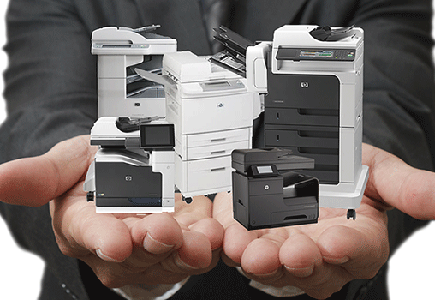
In practical terms, Konica Minolta’s MPS offering in India covers fleet management, remote monitoring, predictive maintenance, and consumption-based billing — but what distinguishes it is the integration with its broader IT services capabilities, including cloud solutions, cybersecurity, and business process automation. For organizations that want a single vendor managing both their print environment and a broader range of workplace IT services, Konica Minolta’s converged approach is particularly compelling. Its bizhub series of multifunction devices, widely deployed across Indian enterprises, provides a familiar hardware foundation for MPS transitions.
6. Kyocera Document Solutions India
Kyocera brings a genuinely distinctive philosophy to the MPS market in India, rooted in its ceramic-based long-life printing technology. Kyocera’s printing devices are engineered for exceptional durability — their drum and developer components have significantly longer service lives than those of most competitors — which translates into lower total cost of ownership in an MPS model where Kyocera assumes responsibility for maintenance costs.
Kyocera India’s Fleet Services MPS program provides remote device monitoring, automatic supply management, and proactive maintenance for its TASKalfa multifunction device range. Its KYOCERA Net Manager software adds print policy management, user authentication, and usage reporting capabilities that enterprises need for both cost control and compliance. Kyocera’s MPS proposition appeals strongly to cost-conscious Indian enterprises in manufacturing, education, and government that have high print volumes and want a provider whose hardware economics genuinely support a low total cost of ownership commitment. Its growing network of certified service partners across India ensures serviceable geographic coverage.
7. Epson India
Epson has carved out an increasingly important position in India’s MPS market through its EcoTank and WorkForce series of ink tank-based printing devices, which offer a fundamentally different economics proposition from laser-based printing. Ink tank technology eliminates the expensive toner cartridge replacement cycle that drives up running costs for most printer fleets, replacing it with refillable ink reservoirs that dramatically reduce per-page costs — a proposition that is particularly compelling for high-volume SME and mid-market MPS deployments.
Epson India’s MPS offering is built around this hardware economics advantage, delivering managed services around its high-capacity ink tank devices that can keep per-page costs among the lowest available in the market. Its strong distribution network across India and active engagement with both the commercial and government segments have allowed it to build a meaningful MPS client base that extends well into Tier 2 cities. For organizations with high print volumes and a genuine focus on cost reduction as the primary MPS objective, Epson’s economic model is difficult to match.
8. Lexmark International India
Lexmark is a global MPS specialist — unlike manufacturers whose primary business is hardware sales, Lexmark has positioned itself explicitly as a print services company that happens to manufacture devices. This services-first orientation gives its MPS practice a depth and sophistication that is reflected in the quality of its Lexmark Cloud Fleet Management platform, which provides real-time device visibility, predictive analytics, and automated supply management through a cloud-native architecture that can manage complex, multi-site enterprise print environments at scale.
Lexmark India serves large enterprise clients across BFSI, healthcare, manufacturing, and retail, and its security-focused approach to MPS — rooted in its Print Management Software capabilities and device-level security features — makes it particularly relevant for organizations in regulated industries where document security and audit trails are not optional. Lexmark’s willingness to manage mixed-brand device fleets — not just its own hardware — is a practical differentiator for enterprises with existing print infrastructure investments they are not ready to replace wholesale.
9. Sharp Business Systems India
Sharp Business Systems India is the wholly owned subsidiary of Sharp Corporation’s business solutions division, and it has built a credible MPS practice in India through its range of multifunction printers and document management solutions. Sharp’s OSA (Open Systems Architecture) platform allows its MPS deployments to integrate with a wide range of third-party business applications — enabling print-to-cloud workflows, document capture automation, and ERP-connected print management that goes beyond basic fleet monitoring.
Sharp’s MPS engagements in India are particularly well-suited for mid-to-large enterprises in manufacturing, legal, and real estate sectors, where document-intensive workflows create both high print volumes and strong requirements for document management integration. Its customer support infrastructure in India, built through a network of authorized business partners and direct service teams in major metros, provides the operational backbone necessary for credible SLA delivery in managed services engagements. Sharp’s ongoing investment in its professional display and collaboration technologies alongside its print MPS practice positions it as a broader workplace technology partner rather than a pure-play printer services provider.
10. Brother India
Brother India rounds out this list as a particularly strong MPS option for the SME and mid-market segments that larger MPS providers sometimes underserve. Brother’s Brother as a Service (BaaS) model delivers a straightforward, consumption-based MPS proposition built around its highly reliable laser and inkjet multifunction devices — where clients pay per page and Brother handles device supply, maintenance, and monitoring without the complexity and overhead of enterprise-scale contracts.
Brother’s strength lies in its simplicity and its genuine understanding of the practical needs of smaller organizations. For an SME with 50 to 500 employees, the elaborate MPS frameworks designed for multi-thousand device enterprise fleets are often overkill — and Brother’s service model is calibrated for exactly this context. Its devices have developed a strong reputation for reliability and low maintenance requirements in the Indian market, and its expanding service partner network across India is progressively closing the geographic support gaps that once limited its MPS ambitions to metro markets.
Choosing the Right MPS Partner for Your Organization
Understanding which of these firms is the best fit for your organization requires being honest about two dimensions: the scale and complexity of your print environment, and the depth of services integration you need. For large enterprises with hundreds of devices across multiple locations and requirements around document workflow, security, and compliance integration, providers like Xerox, Ricoh, Konica Minolta, or Lexmark bring the depth of platform and services sophistication to match. For organizations where cost reduction and operational simplicity are the primary objectives, HP’s scale advantages and Epson’s ink tank economics offer compelling propositions. For the SME market, Brother’s accessible service model delivers genuine MPS value without disproportionate commercial complexity.
The best MPS relationships share a common characteristic — the provider genuinely understands your document-related business processes, not just your printer hardware. A provider that starts with a thorough print audit, engages seriously with how document workflows connect to business outcomes, and brings analytics and continuous improvement to the engagement is worth considerably more than one that simply locks in a device lease and monitors toner levels. Asking prospective MPS partners how they measure and demonstrate the ongoing value they deliver is one of the most revealing questions in any selection process.
Final Thoughts
India’s managed print services market in 2026 serves a business landscape that is simultaneously cutting print volumes through digitization and demanding higher reliability, security, and sustainability from the printing it retains. The ten firms profiled here — spanning global MPS leaders, specialist device manufacturers, and segment-focused service providers — collectively represent the full range of credible choices available to Indian organizations. The right choice depends on your scale, your sector, and how ambitiously you want to connect your print environment to your broader digital workplace strategy.