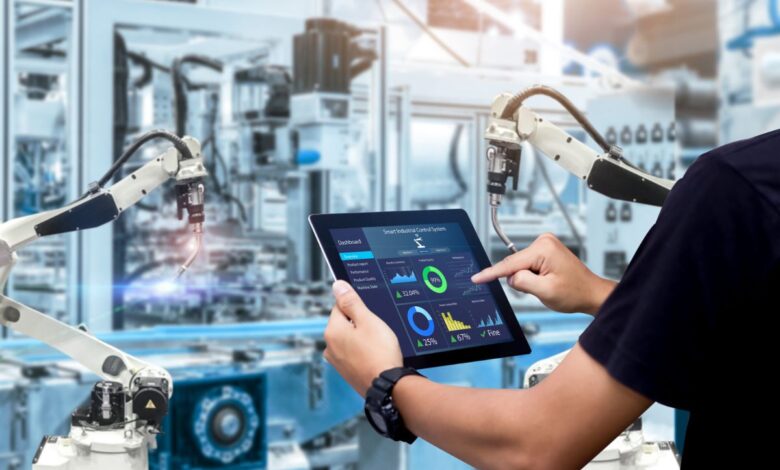
India’s factories are in the middle of a quiet but profound transformation. Machines that once operated in isolation — generating no data, offering no visibility into their health or performance, and communicating with nothing beyond their immediate mechanical context — are being connected to networks, fitted with sensors, and made to speak a data language that engineers, managers, and AI systems can all read and act upon. This is the promise of Industrial IoT, often abbreviated as IIoT, and in India in 2026 it is no longer a pilot-programme aspiration. It is an active, accelerating commercial reality.
The Industrial IoT platform is the software heart of this transformation. It is what sits between the physical world of machines, sensors, actuators, and controllers and the digital world of dashboards, analytics engines, maintenance workflows, and enterprise decision-making. A good IIoT platform collects data from diverse industrial equipment — regardless of the manufacturer, protocol, or age of that equipment — normalises it into a common data model, stores it reliably, analyses it intelligently, and surfaces insights in a form that people can act on and machines can respond to automatically.
The difference between a factory that has deployed a mature IIoT platform and one that hasn’t is, in concrete terms, the difference between knowing a motor is about to fail three days before it does and discovering that it has failed when the production line stops.
This article profiles the top 10 Industrial IoT platforms available in India in 2026 — spanning global enterprise platforms with strong India deployments, Indian-built platforms purpose-designed for the local manufacturing context, and sector-specific solutions that have achieved deep penetration in particular verticals. Every platform on this list is actively maintained, commercially available, and operationally deployed in Indian industrial environments.
Understanding What Makes an IIoT Platform Genuinely Capable
Before exploring the platforms themselves, it helps to understand the technical dimensions that separate a mature IIoT platform from a basic monitoring tool. Think of an IIoT platform as having four distinct layers of capability, each building on the one below it.
The connectivity layer is the foundation: the platform’s ability to collect data from industrial equipment using the protocols that equipment actually speaks — OPC-UA, Modbus, MQTT, PROFINET, BACnet, and dozens of others — without requiring manufacturers to replace or significantly modify existing machinery. This brownfield connectivity capability is particularly critical in India, where the average age of shop floor equipment is high and large-scale hardware replacement is not economically feasible for most manufacturers.
Above connectivity sits the data management layer: how the platform stores, organises, and makes accessible the enormous volumes of time-series data that industrial equipment generates. Industrial data has unique characteristics — it is high-frequency, highly structured in some dimensions and unstructured in others, and loses its value rapidly if not processed in near real-time — and the platforms that handle it well have built specialised time-series databases and streaming architectures specifically for this use case rather than adapting general-purpose enterprise databases.
The analytics layer is where the platform’s intelligence lives: the ability to apply statistical models, machine learning algorithms, and domain-specific analytical rules to raw industrial data in order to generate predictions (when will this equipment fail?), prescriptions (what operating parameters will maximise energy efficiency?), and anomaly detections (why is this batch deviating from expected quality parameters?). In 2026, this layer is increasingly AI-native rather than rule-based, and the platforms that have invested in genuine machine learning capability here are significantly more valuable than those whose “analytics” amounts to threshold-based alerting.
The application layer, finally, is where the platform connects to the people and systems that act on its insights: maintenance management systems, ERP platforms, quality management workflows, energy management dashboards, and supply chain systems. A platform that generates excellent insights but cannot surface them in the workflows where decisions are made is only partially useful — and the maturity of a platform’s integration ecosystem is often the factor that determines whether adoption succeeds at scale or stalls after the initial pilot.
1. Siemens MindSphere (now Siemens Xcelerator)
Origin: Germany | India Presence: Strong, via Siemens India | Best for: Large manufacturing enterprises, especially automotive and process industries
Siemens has repositioned its industrial IoT offering under the broader Siemens Xcelerator portfolio, with MindSphere serving as its cloud-based industrial IoT application platform within that ecosystem. In India, where Siemens has a deep and decades-long presence in manufacturing, energy, and infrastructure, Xcelerator and MindSphere are deployed across some of the country’s most sophisticated industrial environments. The platform’s native integration with Siemens’s own PLCs, SCADA systems, and automation hardware is its strongest technical advantage — for factories already running Siemens equipment, the connectivity layer is essentially pre-solved.
In 2026, Siemens Xcelerator has been enhanced with AI-powered predictive maintenance modules and digital twin capabilities that allow manufacturers to simulate production scenarios before implementing physical changes. For large Indian manufacturers in automotive, pharmaceuticals, and heavy engineering — sectors where Siemens automation hardware already has strong penetration — this platform offers a natural and deeply integrated IIoT path.
2. PTC ThingWorx
Origin: USA | India Presence: Strong, via PTC India | Best for: Industrial enterprises seeking AR integration and product lifecycle-connected IoT
ThingWorx, developed by PTC, is one of the most feature-complete IIoT platforms available globally and has built a significant India customer base, particularly among automotive component manufacturers, electronics assemblers, and industrial equipment makers. Its most distinctive capability is the seamless integration between its IoT platform and PTC’s Vuforia augmented reality tools, enabling use cases where a maintenance engineer wearing AR glasses receives real-time machine data and repair guidance overlaid directly on the physical equipment they are looking at — a capability that dramatically accelerates maintenance resolution in complex industrial environments.
ThingWorx’s connectivity library supports an exceptionally broad range of industrial protocols, and its application development environment allows manufacturing IT teams to build custom dashboards and workflow applications without deep programming expertise. In India, PTC has invested in a strong partner ecosystem of system integrators who can deploy and customise ThingWorx, making it accessible to manufacturers who lack large in-house software teams.
3. GE Digital (Predix Platform)
Origin: USA | India Presence: Active, via GE India | Best for: Power generation, oil and gas, aviation, and heavy industrial assets
GE Digital’s Predix platform was one of the earliest serious industrial IoT platforms and remains one of the most deeply capable for asset-intensive industries with high-consequence failure scenarios. In India, Predix is deployed primarily in power generation — thermal, hydro, and increasingly renewable — as well as oil and gas infrastructure and railway asset management, sectors where GE has long-established equipment relationships and where the financial and safety consequences of unplanned downtime are severe enough to justify a sophisticated platform investment.
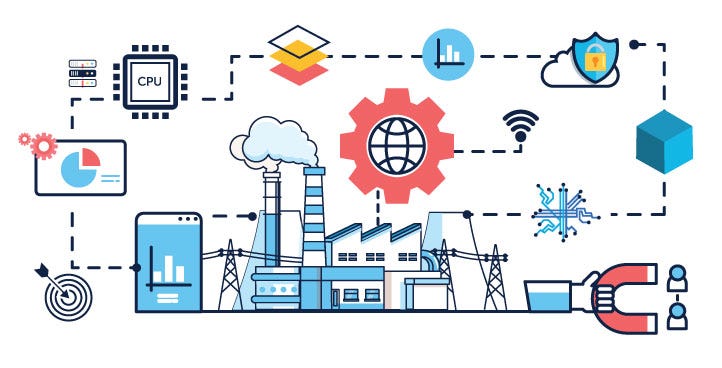
Predix’s particular strength in 2026 is its fleet-level analytics capability: the ability to analyse data not just from a single asset but from hundreds of similar assets operating across different sites simultaneously, identifying performance benchmarks, sharing learnings from failure events, and calibrating predictive models using collective operational experience. For Indian power utilities and industrial conglomerates managing large fleets of similar equipment across multiple facilities, this fleet intelligence capability is a meaningful differentiator.
4. Honeywell Forge
Origin: USA | India Presence: Active, with India-specific deployments | Best for: Process industries, buildings, and energy management
Honeywell Forge is the enterprise performance management platform that Honeywell has built around its deep domain expertise in process control, building automation, and industrial safety systems. In India, Honeywell has significant penetration in refineries, petrochemical plants, and large commercial buildings — environments where its automation hardware has been the operational backbone for years and where Forge now layers intelligence on top of existing control systems.
What makes Forge distinctive is its vertical depth. Rather than being a horizontal platform that manufacturers must configure and customise extensively, Honeywell Forge comes with pre-built analytical models for specific industrial processes — refinery distillation columns, HVAC energy optimisation, compressor performance management — that embody decades of Honeywell domain expertise. These pre-built applications dramatically reduce deployment time and produce faster time-to-insight than generic platforms that require extensive customisation to deliver industry-relevant analytics.
5. Bosch IoT Suite (Bosch Connected Industry)
Origin: Germany | India Presence: Active, via Bosch India | Best for: Automotive, manufacturing, and connected products
Bosch’s IIoT platform offering is tightly integrated with its Manufacturing Execution System (MES) and quality management tools, and in India — where Bosch has extensive automotive component manufacturing facilities and a strong system integrator network — it occupies an important position in the connected factory landscape. Bosch Connected Industry’s approach is rooted in the company’s own experience as a manufacturer: it has built its IIoT platform by first deploying it in its own factories globally, including its Bengaluru and Nashik facilities in India, before offering it commercially.
This inside-out development approach means that Bosch’s IIoT tools address real manufacturing pain points with hard-won practical knowledge rather than theoretical feature lists. In 2026, Bosch Connected Industry is particularly strong in shopfloor data collection, machine condition monitoring, and quality traceability — areas where the platform’s automotive heritage produces particularly polished and tested capabilities.
6. Tata Communications MOVE (Industrial IoT Connectivity Platform)
Origin: India | India Presence: Core market | Best for: Enterprises seeking carrier-grade IoT connectivity with enterprise security
Tata Communications has built its IIoT proposition around a foundational insight: that connectivity — the reliable, secure, low-latency transmission of data from industrial devices to processing systems — is the most commonly underestimated challenge in IIoT deployments. Its MOVE platform provides a managed global IoT connectivity service with SIM management, network orchestration, and security built in at the carrier level rather than added as afterthoughts.

For Indian manufacturers with multi-site operations — factories in multiple states, or remote facilities with unreliable public network infrastructure — Tata Communications’ carrier-grade connectivity platform provides the reliable data transport layer that makes everything else in an IIoT architecture work consistently. In 2026, MOVE has expanded its capabilities to include edge computing support and IoT device management, moving beyond pure connectivity into a more complete IIoT platform proposition. Tata Communications is listed on Indian stock exchanges, fully operational, and backed by the institutional strength of the Tata Group.
7. Vegam Solutions
Origin: India | Headquarters: Chennai, Tamil Nadu | Best for: SME manufacturers, brownfield connectivity, and real-time OEE monitoring
Vegam Solutions is one of the most practically important Indian-built IIoT platforms for the segment of the market that global enterprise platforms most often miss: the Indian SME manufacturer with legacy equipment, limited IT staff, and a tight budget that nonetheless needs real production visibility and performance analytics. Vegam’s platform connects to PLCs, CNC machines, and industrial sensors from virtually any manufacturer using standardised industrial protocols, collects production and equipment data in real time, and presents it through dashboards that line operators, production managers, and plant directors can all use meaningfully.
Its OEE (Overall Equipment Effectiveness) monitoring module — which calculates availability, performance, and quality metrics for each machine in real time — has been deployed across automotive component, textile, food processing, and pharmaceutical manufacturing facilities in India and Southeast Asia. What makes Vegam genuinely valuable is its brownfield connectivity depth: the team has spent a decade building protocol adapters for the specific equipment combinations found in Indian factories, which means the time from installation to first useful data is measured in days rather than months. For Indian SMEs beginning their IIoT journey, Vegam is one of the most accessible and contextually appropriate starting points available.
8. Stellapps smART Platform
Origin: India | Headquarters: Bengaluru, Karnataka | Best for: Dairy, agri-processing, and food supply chain industrials
Stellapps has built what is best described as a sector-specific IIoT platform for the dairy and agri-processing industry — and it has done so at a scale that makes it one of the most impactful industrial IoT deployments in India by the number of connected physical assets and economic participants involved. The smART platform connects milk quality testing devices at collection centres, GPS-tracked milk chilling units, and animal health monitoring sensors across a network that encompasses millions of dairy farmers in India.
What makes Stellapps relevant in a broader IIoT context is the technical sophistication underneath its agricultural application: real-time sensor data ingestion, cold chain temperature monitoring with exception alerting, quality score calculation using connected analyzers, and payment processing integration that links quality data to farmer remuneration. These are exactly the same IIoT capabilities — connectivity, real-time analytics, workflow integration — that apply to factory environments, implemented in the specific context of India’s dairy supply chain. Backed by Temasek and the Gates Foundation, Stellapps is one of the most credibly funded Indian IIoT companies in operation.
9. Schneider Electric EcoStruxure
Origin: France | India Presence: Strong, via Schneider Electric India | Best for: Energy management, electrical infrastructure, and smart manufacturing
Schneider Electric’s EcoStruxure is an IoT-enabled architecture that spans connected products, edge control, and cloud-based apps and analytics across three key domains: energy management, industrial automation, and building management. In India, where energy cost management is a critical operational concern for manufacturers — electricity tariffs are high, power quality is variable, and demand charges can significantly impact profitability — EcoStruxure’s energy management capabilities are particularly compelling.
EcoStruxure’s architecture is built around a principle of interoperability: it is designed to work with equipment from multiple manufacturers, not just Schneider’s own product portfolio, which makes it deployable in the mixed-brand equipment environments that characterise most Indian industrial facilities. Its India deployment footprint spans data centres, water utilities, manufacturing plants, and commercial buildings, and Schneider’s strong local partner network means that implementation support is available across major Indian industrial hubs. In 2026, EcoStruxure has deepened its AI-powered energy optimisation capabilities, helping manufacturers reduce energy consumption through intelligent load management and equipment operating parameter optimisation.
10. Detect Technologies — Industrial Inspection IoT Platform
Origin: India | Headquarters: Chennai, Tamil Nadu | Best for: Oil and gas, petrochemical, and heavy industrial asset integrity monitoring
Detect Technologies has built a highly specialised IIoT platform for one of the most demanding industrial monitoring use cases: continuous structural integrity and corrosion monitoring for critical industrial assets in refineries, petrochemical plants, and pipelines. Its Universal Sensor Platform (USP) combines ultrasonic thickness sensors, thermal imaging, and acoustic emission detectors with an AI analytics layer that continuously assesses asset health and predicts failure risk — enabling what the company calls “inspection as a service” where physical asset health is known in real time rather than during periodic scheduled shutdowns.
What makes Detect Technologies significant as an IIoT platform provider rather than simply an inspection technology vendor is the software intelligence layer it has built on top of its hardware. The platform ingests data from thousands of sensor points across an industrial facility, fuses readings from multiple sensor modalities, and applies machine learning models trained on decades of corrosion and structural failure data to generate risk scores and maintenance recommendations that are genuinely actionable. In 2026, Detect has active deployments at ONGC, Indian Oil, BPCL, and international energy majors in the Middle East, and continues to expand its platform capabilities with new sensor types and analytical models.
Choosing the Right IIoT Platform for Your Organisation
Understanding these platforms is one thing — knowing which one fits your specific situation is another, and the gap between the two is where many IIoT adoption projects stall. The decision framework is best thought of in three progressive questions.
The first question is about your starting point: how old is your equipment, how mixed is your vendor landscape, and how reliable is your connectivity? If your factory floor is predominantly legacy equipment with diverse protocols and patchy network coverage, an Indian platform like Vegam with deep brownfield connectivity experience will serve you better than a global enterprise platform that assumes modern, standards-compliant equipment and reliable cloud connectivity.
The second question is about your primary use case: are you trying to reduce unplanned downtime, improve energy efficiency, increase product quality, or achieve supply chain visibility? Different platforms have invested in different analytical depths — Honeywell Forge is exceptional for process optimisation, Detect Technologies is unmatched for structural integrity monitoring, and Schneider EcoStruxure leads in energy management. Matching the platform to your highest-priority use case rather than buying on feature breadth alone produces faster and more measurable returns.
The third question is about your integration requirements: which enterprise systems does this platform need to connect to, and who will manage that integration? Global platforms like ThingWorx and MindSphere have mature integration ecosystems with ERP, MES, and quality management systems, but those integrations typically require experienced system integrators and meaningful implementation investment. Indian platforms like Vegam and Tata Communications MOVE have been designed with Indian enterprise integration patterns in mind and often deploy faster in Indian operational contexts.
Conclusion
India’s Industrial IoT platform landscape in 2026 is a rich and genuinely diverse ecosystem — one that spans the deepest capabilities of global industrial technology companies like Siemens, GE, Honeywell, and Schneider Electric alongside the contextually intelligent, practically grounded offerings of Indian-built platforms like Vegam, Stellapps, Tata Communications MOVE, and Detect Technologies. What is most encouraging about this landscape is that the Indian-built platforms are not simply cheaper alternatives to global ones — in several important dimensions, particularly brownfield connectivity, cost-effective deployment at SME scale, and domain depth for India-specific industrial contexts, they are genuinely better options for the majority of Indian manufacturers.
The most important insight for any manufacturer beginning their IIoT journey is that the right platform is not the most famous one or the most feature-rich one — it is the one that solves your specific industrial problem most reliably, most quickly, and at a cost that your organisation can sustain over the multi-year horizon that meaningful IIoT adoption requires.
All information in this article is based on publicly available platform documentation, company disclosures, deployment case studies, and industry reports available through mid-2025. Platform features and pricing evolve continuously; organisations are strongly encouraged to conduct proof-of-concept evaluations with shortlisted platforms before committing to full-scale deployment.