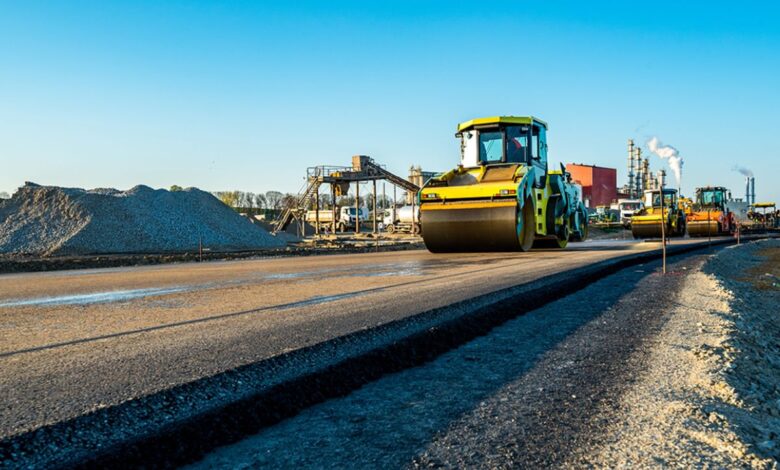
India is building at a pace that has few historical precedents. The National Infrastructure Pipeline — a government programme that has channelled over ₹111 lakh crore into roads, railways, ports, airports, urban infrastructure, and energy systems since its inception — has transformed what was once a chronic infrastructure deficit into one of the world’s most active construction markets. In 2026, the companies executing this ambition are not merely contractors pouring concrete. They are sophisticated engineering enterprises managing complex multi-stakeholder projects across geographies, deploying technology ranging from Building Information Modelling to AI-driven project scheduling, and competing for contracts that run into thousands of crores apiece.
Understanding who these companies are — and what genuinely distinguishes one from another — requires looking beyond revenue rankings and contract announcements into the specific capabilities, track records, and strategic positions that determine which developers can be trusted with the most consequential infrastructure projects in the country. This article profiles the ten infrastructure developers that best represent the depth and ambition of India’s construction sector in 2026.
1. Larsen & Toubro (L&T)
There is essentially no category of infrastructure that Larsen & Toubro has not built, and in 2026 that breadth of capability remains its most important competitive characteristic. L&T’s infrastructure businesses span heavy civil engineering, hydrocarbon construction, power transmission, smart cities, transportation, and water infrastructure, and its project portfolio at any given moment reads like a map of India’s developmental ambitions — metros in Chennai and Ahmedabad, highways across the national highway grid, desalination plants in the Middle East, data centres in Europe. The company’s revenue from its infrastructure segment consistently exceeds ₹1 lakh crore annually, and its order book in 2026 reflects continued strong government capex allocation toward the categories where L&T holds the deepest capabilities.
What keeps L&T at the top of this list is not just scale but execution credibility. In a sector where project delays, cost overruns, and contractual disputes are industry-wide afflictions, L&T’s track record of delivering large, complex projects within broadly acceptable parameters is a genuine differentiator. Its investment in technology — it operates one of India’s most advanced engineering design and BIM centres — means that its project planning is increasingly predictive rather than reactive, which is ultimately what separates infrastructure companies that consistently make money from those that consistently lose it.
2. GMR Group
GMR Group has made airports its defining infrastructure category, and in 2026 its position as India’s foremost private airport developer is unassailable. It operates and develops the Delhi and Hyderabad airports — two of the busiest in the country — under long-term concession agreements, and has an active international airport development footprint spanning Southeast Asia and the Philippines through its GMR Airports International platform.
What makes GMR particularly interesting as an infrastructure developer in 2026 is the way it has evolved from a pure civil construction story into an integrated airport-city development model. Delhi’s IGI Airport and the emerging Bhogapuram Airport in Andhra Pradesh are both conceived not just as aviation infrastructure but as aerotropolis developments — essentially new urban economic zones built around airport cores, incorporating retail, hospitality, logistics, and commercial real estate in a single integrated master plan. This urban development dimension significantly changes the financial profile of airport infrastructure, converting what was once a pure concession business into a long-term real estate and commercial ecosystem play.

3. Adani Ports and Special Economic Zones (APSEZ)
Adani Ports and SEZ is the largest commercial port operator in India by cargo volume, operating twelve ports and terminals across the country’s coastline with a combined capacity that processes a significant share of India’s maritime trade. Its infrastructure development activities extend well beyond port construction into the integrated logistics corridor model — developing inland container depots, logistics parks, and multimodal transport connections that link port capacity to hinterland industrial zones.
In 2026, APSEZ’s development of Vizhinjam International Seaport in Kerala represents one of the most strategically significant infrastructure projects in the country — a deep-water transhipment port designed to capture a share of the container transhipment traffic that currently bypasses India entirely for Colombo, Singapore, and Dubai. When operational at scale, Vizhinjam has the potential to fundamentally alter India’s position in global container shipping networks. APSEZ is listed on Indian stock exchanges and continues to operate and develop infrastructure actively.
4. IRB Infrastructure Developers
IRB Infrastructure is India’s largest private sector highway developer by number of lane kilometres, having built and operated toll roads across the national highway network for over two decades through the public-private partnership model. Its Build-Operate-Transfer (BOT) and Hybrid Annuity Model (HAM) concession portfolio is one of the most extensive in the country, spanning major corridors in Maharashtra, Rajasthan, Gujarat, Karnataka, and Punjab.
What makes IRB’s model instructive is that it integrates infrastructure development with long-term asset ownership — unlike pure EPC contractors who build and exit, IRB builds and then operates its toll roads for concession periods of fifteen to thirty years, collecting toll revenue and maintaining the asset throughout. This operating model requires a very different set of capabilities from pure construction, including traffic and revenue forecasting, O&M (operations and maintenance) management, and financial engineering of project-level cash flows. IRB has demonstrated these capabilities consistently over its operating history, making it one of the most credible private highway infrastructure companies in India. It is listed on Indian stock exchanges and financially stable.
5. Dilip Buildcon
Dilip Buildcon has built one of the most impressive execution track records in Indian highway and road construction over the past decade, distinguished primarily by its speed of project delivery — a metric that matters enormously in infrastructure because faster completion directly translates into earlier revenue realisation and lower financing costs. The company operates one of India’s largest fleets of construction equipment, which gives it a meaningful structural advantage in project mobilisation speed: where competitors must hire equipment and wait for delivery, Dilip Buildcon can mobilise owned machinery to a new project site within days of contract award.
In 2026, Dilip Buildcon’s project portfolio has expanded beyond roads into mining infrastructure, irrigation, and urban infrastructure, reflecting the company’s deliberate effort to diversify its revenue base beyond the cyclicality of highway contracting. The company is listed on Indian stock exchanges, has a consistently strong order book, and has demonstrated the financial discipline to manage the working capital demands of large EPC contracts without the balance sheet stress that has affected some peers.

6. NCC Limited (Nagarjuna Construction Company)
NCC Limited is one of India’s most diversified infrastructure construction companies, working across buildings, roads, water supply, electrical, railways, and mining — a breadth of capability that reflects its Hyderabad-based origins in a region where infrastructure development activity has been consistently strong. Its buildings division, which constructs commercial complexes, residential towers, hospitals, and institutional buildings, complements its civil infrastructure work in a way that most pure-play highway or industrial developers cannot replicate.
In 2026, NCC’s order book reflects strong execution across all its segments, and its railway and metro rail construction capabilities — built up deliberately over the past five years as Indian railway capex has expanded substantially under the national rail plan — position it well for one of the largest infrastructure spending programmes the country has ever committed to. NCC is listed on Indian stock exchanges and has maintained consistent financial performance.
7. KEC International
KEC International occupies a specific but critically important slice of India’s infrastructure development landscape: the transmission infrastructure that carries electricity from where it is generated to where it is consumed. Its power transmission towers, substations, and cabling projects form the backbone of India’s electricity distribution network, and as renewable energy generation has expanded dramatically — solar and wind capacity additions have accelerated significantly under India’s clean energy targets — the demand for transmission infrastructure to connect these new generation sources to the grid has grown proportionally.
KEC’s global footprint distinguishes it from most Indian infrastructure developers. It operates in over a hundred countries, building transmission infrastructure across Africa, the Middle East, the Americas, and Southeast Asia, which gives it a resilience to domestic market cycles that purely India-focused competitors lack. The company is part of the RPG Group, listed on Indian stock exchanges, and has a strong international order book that continues to grow in 2026.
8. Afcons Infrastructure
Afcons Infrastructure, part of the Shapoorji Pallonji Group, has established itself as one of India’s premier specialists in complex, technically challenging infrastructure projects — the kind of work that requires genuine engineering depth rather than just organisational scale. Its portfolio includes marine works (jetties, breakwaters, and undersea structures), underground metro rail tunnelling, long-span bridges, and offshore oil platform construction — categories where the margin for error is narrow and where technical capability is the primary differentiator rather than bidding price.
In 2026, Afcons is involved in some of India’s most technically demanding ongoing projects, including segments of various metro rail networks and highway projects in mountainous terrain where conventional construction methods are insufficient. The Shapoorji Pallonji Group has a long heritage in Indian construction, and Afcons carries that institutional engineering knowledge alongside modern project management capabilities. The company went public through an IPO in 2024, giving it a strengthened capital base for pursuing larger project opportunities.
9. PNC Infratech
PNC Infratech has built a strong regional reputation in North India — particularly in Uttar Pradesh, Madhya Pradesh, and Rajasthan — as a reliable highway and expressway contractor, and its track record in delivering road projects for NHAI has made it one of the preferred bidders for large highway packages in these geographies. What distinguishes PNC from its larger national peers is the depth of its regional relationships and execution capabilities: its workforce, equipment fleet, and subcontractor network are optimised for the specific terrain, climate, and logistics conditions of its core markets, which gives it a cost and schedule advantage in these geographies that national contractors cannot always replicate.
In 2026, PNC has also expanded into airport runway and apron construction — a natural adjacency to its highway expertise — and has won packages in the government’s regional connectivity airport development programme. The company is listed on Indian stock exchanges and has consistently maintained a healthy balance sheet relative to its order book.
10. Megha Engineering and Infrastructures Limited (MEIL)
MEIL has grown from a relatively regional player into one of India’s most significant infrastructure developers over the past decade, with a project portfolio spanning irrigation, water supply, power transmission, roads, metros, and industrial infrastructure. Its association with several of Telangana’s largest infrastructure programmes — including the Kaleshwaram Lift Irrigation Scheme, one of the world’s largest lift irrigation projects by pumping capacity — established its credentials for executing technically and logistically complex, large-scale infrastructure at a pace that impressed even infrastructure specialists.
In 2026, MEIL has continued expanding its national footprint, winning significant projects across multiple states and categories. Its private company status means its financials are not as extensively publicly available as listed competitors, but its project track record and continued order wins from state and central government agencies are consistent indicators of an operationally capable and commercially credible enterprise with no regulatory concerns as of mid-2025.
What Separates the Best From the Rest
Looking across all ten companies, a pattern emerges that is worth understanding because it applies beyond any individual company’s situation. The infrastructure developers that have consistently delivered value — to project owners, to investors, and to the communities that use their projects — share three characteristics that are more predictive of long-term performance than any single financial metric.
The first is specialisation alongside scale. Every company on this list has at least one category of infrastructure — airports for GMR, transmission for KEC, technically complex civil works for Afcons, highway BOT for IRB — where it has invested deeply enough to develop genuine competitive advantage rather than simply competing on price. Developers that chase every contract across every category tend to spread their capabilities too thin to execute any category exceptionally well.

The second is balance sheet discipline. Infrastructure contracting is a working-capital-intensive business where the gap between project execution costs and project payment can run to months or years. The companies that have maintained financial stability through multiple cycles — NCC, Dilip Buildcon, PNC — have done so because they manage this working capital exposure carefully, rather than bidding aggressively to grow the order book and then struggling to finance the execution. The companies that have failed in Indian infrastructure have almost invariably failed because of balance sheet overextension rather than technical incompetence.
The third is technology integration. The gap between companies that use BIM, AI-assisted project scheduling, real-time progress monitoring, and drone-based site surveying and those that rely primarily on manual processes is not primarily a technology story — it is a project delivery quality story. Technology, in infrastructure, is ultimately the tool through which the best developers convert their engineering knowledge into consistently superior execution outcomes.