Who Benefited From Earth Infrastructure’s ₹2,004 Crore Collections? Where Did Homebuyers’ Money Go While Their Homes Remained Undelivered?
The Enforcement Directorate’s October 2026 attachment of approximately ₹140 crore in immovable assets has intensified scrutiny of Earth Infrastructure Ltd and its associated entities, following an investigation into approximately ₹2,004 crore collected from more than 19,425 homebuyers and investors. The case raises difficult questions about incomplete real estate projects, alleged diversion of funds, corporate structures, promoter accountability and the prolonged insolvency battles involving homebuyers and public authorities. With cumulative attachments and seizures reported at ₹352 crore, the crucial issue is whether investigators can establish the complete movement of funds, identify recoverable assets and help resolve the housing crisis that has left purchasers waiting for promised homes.

Earth Infrastructure’s ₹2,004 Crore Question: Where Did the Homebuyers’ Money Go?- The ED’s latest action puts the spotlight on assets, money flows and unfinished homes
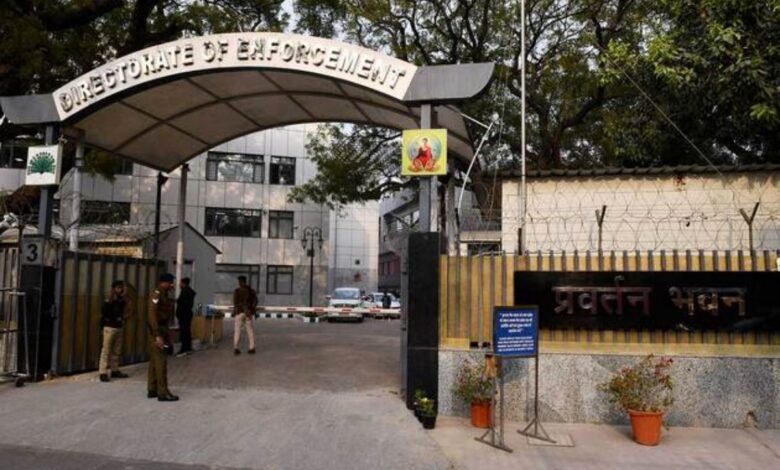
On 12 October 2026, the Enforcement Directorate’s Delhi Zonal Office-II announced the provisional attachment of immovable assets valued at approximately ₹140 crore in its money laundering investigation involving Earth Infrastructure Ltd, its subsidiaries, promoters, family members and related entities. The 4 promoters named in the release are Avdhesh Kumar Goel, Rajnish Mittal, Atul Gupta and Vikas Gupta. The action was taken under the Prevention of Money Laundering Act, 2002. The attachment is a significant development in a case involving allegations of large-scale fund diversion, but it should not be confused with a final confiscation order or a completed recovery for homebuyers. The ED says the investigation is continuing.
The figure at the centre of the latest announcement is approximately ₹2,004 crore. According to the ED, Earth Group entities collected this amount from more than 19,425 homebuyers and investors by promising timely delivery of residential or commercial units and assured returns. The agency says substantial funds were diverted through group entities, related concerns and individuals, while projects were left incomplete or possession was not handed over.
These are the agency’s stated findings in its ongoing investigation. The question is whether the financial trail can be mapped project by project, so that buyers, creditors and courts can understand how much money was collected, how it was used, what assets remain traceable and what resources are actually available to complete the projects.
The latest action follows searches conducted by the ED in April 2026. Its 11 April press release says searches were carried out on 10 April at 10 premises in Delhi and Gurugram linked to Earth Group directors, promoters and associated entities. The agency reported seizure of approximately ₹6.3 crore in cash, jewellery valued at approximately ₹7.5 crore, silver bullion, luxury watches and documents relating to more than 100 immovable properties estimated to be worth more than ₹100 crore.
In its October announcement, the ED gave the jewellery valuation as approximately ₹8.78 crore and again referred to the property documents. The 2 releases therefore contain different jewellery figures. They should be reported with their respective dates, rather than combined or treated as though the discrepancy has been explained.
The ED’s October release also says the total value of attachments in the case, including seizures under Section 17 of the PMLA, had reached approximately ₹352 crore. That cumulative figure is not the same as ₹352 crore in cash recovered, nor does it mean the money has been returned to buyers. The release separately refers to the prosecution complaint filed on 29 July 2026, which seeks conviction of the accused and confiscation of properties valued at more than ₹212 crore. An attachment, a seizure, a prosecution complaint and a final confiscation are different legal stages. The figures need to be understood in that context, particularly when discussing what financial relief may eventually be available to homebuyers.
Two ED releases, two collection figures
One detail that requires particular care is the amount the group is said to have collected. The ED’s 11 April 2026 release reported that approximately ₹2,024.45 crore had been collected from more than 19,425 homebuyers and investors. The 12 October 2026 release reported approximately ₹2,004 crore for the same stated population. The difference is ₹20.45 crore.
Neither release, as published, provides a reconciliation explaining why the later figure is lower. It would be inaccurate to silently select one number and present it as the definitive total, or to claim that the discrepancy proves a specific financial irregularity. The correct reporting is to identify both figures, attribute them to the respective ED releases and seek clarification from the agency about the difference.
The difference may appear small in relation to the overall amount, but in a case involving thousands of buyers, precise accounting matters. A proper reconciliation would state whether the figures cover the same set of companies, projects, investors and accounting periods; whether they include assured-return schemes as well as property bookings; whether any receipts were excluded or reclassified; and whether the October figure reflects a revised calculation. The published releases do not answer those questions.
Without supporting schedules, it is not possible to determine the reason for the change from the press releases alone. A transparent investigation should ultimately distinguish total receipts, the alleged proceeds of crime, amounts spent on construction, payments to land authorities and lenders, transfers between group companies, and assets identified as allegedly acquired from diverted funds.
The 2 releases also need to be read carefully on property values. In April, the ED described documents relating to more than 100 immovable properties with an estimated value exceeding ₹100 crore. In October, it repeated the reference to documents relating to more than 100 properties, again with an estimated value above ₹100 crore, while reporting the new ₹140 crore provisional attachment. These are different categories of information.
The documents seized during searches are not necessarily equivalent to properties that have been provisionally attached, and the estimated value of properties covered by documents should not automatically be added to the attachment figure. A reliable total must identify each asset, its owner, the legal action taken against it and whether its value is already included in another announced figure.
What the ED says about the alleged fund diversion
The ED says its investigation began with 5 FIRs registered by the Economic Offences Wing of Delhi Police against Earth Infrastructure Ltd, its directors and related entities under provisions of the Indian Penal Code. Its April release describes the underlying offences as including cheating, criminal breach of trust and conspiracy. The agency also says the Serious Fraud Investigation Office filed a criminal complaint under Section 447 of the Companies Act against promoters and directors of the Earth Group.
These are separate proceedings initiated under different legal frameworks. The existence of an FIR or complaint is an important procedural fact, but it is not the same as a final judicial determination of criminal liability. The ED’s press releases do not set out the complete text of all 5 FIRs or the full SFIO complaint, so a detailed account of each alleged transaction would require those underlying records.
According to the ED’s April release, the alleged movement of funds included the acquisition of land parcels in Gurugram, Delhi and Rajasthan in the names of group companies and family members; routing through group or shell entities; personal land deals; advances to unrelated entities; payments described as salaries to family members without active business roles; and the sale of properties allegedly acquired using diverted funds.
The agency named Lavender Infratech Pvt Ltd, Dhurav Real Estate Developers Pvt Ltd, Murlidhar Infracon Pvt Ltd, Banke Bihari Farming Pvt Ltd and Julian Infracon Pvt Ltd among entities through which it says proceeds of crime were routed. These are specific investigative claims that can be reported with attribution. The press release, however, does not provide transaction-by-transaction ledgers, bank statements, dates, consideration amounts or complete beneficial-ownership records for each company. Those details should not be invented or inferred from the list of names alone.
The October release names Avdhesh Kumar Goel, Rajnish Mittal, Atul Gupta and Vikas Gupta and states that the ED’s investigation established their central role in planning and executing the alleged diversion of funds. It says the 4 were arrested on 1 June 2026 under Section 19 of the PMLA and that a prosecution complaint was filed against them on 29 July 2026. The complaint seeks conviction and confiscation of properties valued at more than ₹212 crore.
The agency’s language should be reported accurately and attributed to it. The public releases do not supply the full prosecution complaint or a final trial judgment. A publication should therefore avoid declaring that the named individuals have been convicted, that every property associated with them represents criminal proceeds, or that the prosecution’s claims have already been judicially proved.
The projects at the centre of the homebuyer crisis
The ED’s April release lists Earth Towne, Earth Sapphire Court, Earth Copia, Earth Techone, Earth Iconic, Earth Titanium, Earth Elacasa, Earth Gracia and Earth Skygate among the major projects launched under the Earth brand across Delhi-NCR, Gurugram, Greater Noida and Lucknow. The agency says insolvency proceedings were initiated against Earth Infrastructure Ltd and group companies following homebuyer applications connected with the non-completion of projects including Earth Iconic, Earth Elacasa, Earth Titanium, Earth Towne, Earth Sapphire Court, Earth Copia and Earth Techone.
This list establishes the scope of the projects identified by the ED; it does not mean that every project had the same corporate owner, insolvency history, construction status or resolution applicant. Each project needs to be assessed using its own company records, tribunal orders, regulatory filings and current construction information.
The insolvency information website for Earth Infrastructures Ltd identifies the company as a real estate developer that held development and selling rights for projects including Earth Towne, Earth Techone, Earth Sapphire, Earth Copia and Earth Iconic. It says the land for these projects belongs to different land-owning companies that were subsidiaries of EIL.
That distinction is central to understanding the legal and financial complexity. The company marketing or developing a project may not be the same legal entity as the one holding the leasehold land. The project company, land-owning subsidiary, holding company, creditors and successful resolution applicant may all have different rights and obligations. A report that treats all companies using the Earth name as one interchangeable legal entity risks misdescribing ownership, liabilities and the reach of a court order.
Earth Towne: the history behind the prolonged delay
Earth Towne in Greater Noida has been a prominent example of the homebuyer distress associated with the group. A Moneycontrol report published on 24 April 2022 described buyers protesting over delayed delivery, stating that the project had been envisaged around 2010 with a promised delivery period of approximately 3 years. The report said some towers were then 80 to 90 per cent complete, while buyers continued to face uncertainty.
It also recorded buyers’ accounts of paying loan instalments while living in rented accommodation and their complaints about the handling of the project. These are historical accounts from 2022, not a verified statement of the project’s condition in October 2026. They help document the duration of the buyers’ concerns but must not be used as a substitute for a current site inspection or a current construction-status report.
The Supreme Court’s judgment dated 5 May 2026 provides a more detailed account of the corporate and land arrangements behind Earth Towne. It records that the Greater Noida Industrial Development Authority allotted a plot measuring 73,942 square metres in Sector 1, Greater Noida, to a consortium comprising Earth Infrastructures Ltd, Raus Infras Ltd and Shalini Holdings Ltd on 19 March 2010.
Earth Towne Infrastructure Pvt Ltd was incorporated on 21 July 2010 as the special-purpose company for the project, and GNIDA executed a 90-year lease in its favour on 1 September 2010. A development agreement dated 9 September 2010 gave EIL the right to develop the land. The judgment records that EIL initially held 78 per cent of ETIPL and later increased its shareholding to 98 per cent. These details demonstrate why the distinction between the development company and land-owning entity became central to the insolvency dispute.
The Supreme Court judgment also records that EIL paid ₹51.88 crore to GNIDA against interest and premium payable under the lease, and that defaults in subsequent payments led GNIDA to issue notices in 2019 and 2020. It records GNIDA’s claim that, as of 31 March 2022, ETIPL owed approximately ₹215.87 crore. That amount was GNIDA’s stated claim in the litigation, not a figure that should be described without qualification as a final, independently determined debt.
The judgment also records the project’s construction history, stating that by 2016 EIL had constructed 12 towers and completed foundation work for 5 others. The case therefore involved not only delays to buyers but also disputes over lease payments, the legal relationship between the companies and the treatment of land within insolvency proceedings.
The wider insolvency process
The insolvency website for EIL states that the company’s corporate insolvency resolution process began on 6 June 2018 following an order of the National Company Law Tribunal. It identifies Surinder Kumar Juneja as the initial interim resolution professional and Akash Singhal as the resolution professional appointed later.
The Supreme Court judgment similarly records that the CIRP began after an application under Section 7 of the Insolvency and Bankruptcy Code by financial creditor Deepak Khanna was admitted on 6 June 2018. It records that the committee of creditors included HDFC Bank and 4,229 home and office-space allottees. The scale of buyer participation is important because the insolvency process was not merely a dispute between a developer and a lender; it involved thousands of customers whose claims were tied to unfinished property projects.
According to the EIL insolvency website, the committee of creditors approved the Roma Unicon Designex Consortium resolution plan for Earth Towne on 26 August 2019, and the NCLT approved it on 5 April 2021. The Alpha Corp Development Pvt Ltd plans for Earth Copia, Earth Sapphire Court and Earth Techone were approved by the committee of creditors on 11 November 2019 and by the NCLT on 8 June 2021.
The plans were subsequently set aside by the NCLAT on 30 January 2023, after which appeals were taken to the Supreme Court. The dates matter because they show that the resolution process has passed through several rounds of approvals and litigation. The existence of an approved or restored resolution plan, however, does not by itself establish that construction is complete or that every buyer has received possession.
On 5 May 2026, the Supreme Court restored the resolution plans of Roma Unicon Designex Consortium and Alpha Corp Development Pvt Ltd for the projects covered by the appeals. The judgment considered GNIDA’s objections regarding the treatment of land leased to EIL’s subsidiary companies within the holding company’s CIRP. In relation to Earth Towne, the Court concluded that the facts justified lifting the corporate veil between EIL and ETIPL, noting EIL’s dominant role in the project and its 98 per cent shareholding in ETIPL.
The judgment described the subsidiary companies as fronts in the context of the project arrangements and restored the relevant resolution plans. This is a material judicial finding about the structure and treatment of these project entities in insolvency. It should not be presented as a finding that the ED’s separate money laundering allegations have been proved; the Supreme Court judgment concerned the insolvency and resolution-plan disputes before it.
The 5 October 2026 NCLAT development
The next important development came on 5 October 2026, when the National Company Law Appellate Tribunal decided an appeal concerning the separate insolvency process initiated against Earth Towne Infrastructure Pvt Ltd. The published decision identifies the matter as Company Appeal (AT) (Insolvency) No. 1344 of 2026, brought by the Monitoring Committee of the Earth Towne project against ETIPL and others.
It concerns the NCLT order of 1 June 2026 admitting a Section 7 application against ETIPL. The appeal raised the conflict between that separate CIRP and the resolution plan for Earth Towne that the Supreme Court had restored on 5 May 2026. This proceeding is relevant because ETIPL holds the leasehold land on which Earth Towne is situated, while the restored plan is intended to resolve the project through EIL’s insolvency process.
The NCLAT decision records that the appeal succeeded and the 1 June 2026 NCLT order was set aside. It reasoned that the separate CIRP against ETIPL was incompatible with the Supreme Court’s judgment restoring the Earth Towne resolution plan. The tribunal also referred to the Supreme Court’s conclusion that the corporate veil should be lifted for the purpose of resolving the project and that the land-owning company’s leasehold interest was comprehended within the restored plan.
The NCLAT directed the parties to appear before the adjudicating authority on 15 October 2026. As of 13 October 2026, that scheduled date is still in the future, so the article should not state what happened at the subsequent hearing or imply that all implementation questions have already been resolved. The NCLAT ruling is a significant step in aligning the project’s insolvency proceedings, but the practical outcome still depends on the resolution plan being implemented and the units being completed and delivered.
The other project companies and land arrangements
The Supreme Court judgment also explains the land arrangements for Earth TechOne and Earth Sapphire Court. It records that GNIDA had leased approximately 58,866 square metres in the Tech Zone area to NIIT Multimedia Ltd, later renamed Neo Multimedia Ltd, and approximately 20,911 square metres at Plot 48, Knowledge Park V, to Nishtha Software Pvt Ltd.
EIL was to undertake development on those plots under separate agreements. The judgment dealt with the extent to which the project land and related leasehold rights could be included in the resolution plans and how GNIDA’s role and dues should be addressed. The legal outcome for these projects must be read in light of the specific findings and directions in the judgment, rather than assuming that all land-owning companies have the same legal status or that every project has identical obligations.
The EIL insolvency website lists the land-owning companies and areas associated with the 4 projects for which it says development and selling rights remain with EIL. It lists Earth Copia in Sector 112, Gurugram, with land of 41,755.46 square metres owned by Aurochem Build Prop Pvt Ltd; Earth Sapphire Court in Knowledge Park V, Greater Noida, with 20,911.24 square metres held by Nishta Software Pvt Ltd; Earth Tech One in the Tech Zone area, Greater Noida, with 58,866.03 square metres held by Neo Multimedia Ltd; and Earth Towne in Sector 1, Greater Noida, with 73,942 square metres held by Earth Towne Infrastructure Pvt Ltd.
These figures and company names come from the insolvency website and should be cross-checked against the relevant lease deeds and court records before they are used for a detailed land-ownership analysis.
What the figures do and do not establish
The ED’s announced figures show the scale of its investigation and the assets it says it has secured or seized. They do not establish that the full ₹2,004 crore or ₹2,024.45 crore has been traced to specific properties, that the ₹352 crore cumulative total is available for restitution, or that the attached assets can be sold immediately and the proceeds distributed to buyers.
Those outcomes depend on the status of each asset, ownership disputes, the applicable legal process, any challenges to the attachment and the final outcome of the criminal proceedings. The distinction is critical: an attachment may preserve property during investigation, but it is not equivalent to a payment to an affected buyer. The ED’s October release itself says the investigation is continuing.
The same caution applies to the number of affected people. The ED’s releases refer to more than 19,425 homebuyers and investors across the group’s projects and related activities. That figure should not be treated as the number of buyers in Earth Towne alone, nor should it be assumed that each person has an identical claim, amount paid, contractual promise or legal remedy.
The Supreme Court judgment records a separate figure of 4,229 home and office-space allottees in the committee of creditors for EIL. The 2 figures refer to different contexts and should not be conflated. A sound account of the financial impact would need project-wise data on the number of allottees, claims admitted, amounts paid, amounts refunded, possession status and claims settled under each resolution plan.
The accountability questions that remain
The first question is financial transparency. If the ED’s investigation concerns more than ₹2,000 crore collected from homebuyers and investors, the public interest lies in a clear account of how the money moved through the developer, subsidiaries, related entities and asset purchases. The April release identifies broad categories of alleged fund use and names certain entities, but the press release does not provide a complete transaction ledger.
The difference between the April and October collection figures also remains unexplained in the public statements reviewed here. Publishing a project-wise reconciliation, where legally permissible, would make it easier for buyers and creditors to understand which funds went into construction, which went to land and statutory payments, which were transferred within the group and which transactions the ED alleges were diversion of proceeds of crime.
The second question concerns the difference between preserving assets and delivering homes. The provisional attachment of ₹140 crore is a meaningful enforcement step, but buyers need clarity about the practical path from asset identification to legal determination, recovery and any distribution permitted by law. In parallel, the resolution plans must be implemented in accordance with the court orders and their own terms.
For each project, this requires a current construction assessment, the cost of completion, the status of statutory approvals, the position on land dues, the number of buyers awaiting possession and a realistic completion schedule. Neither the ED press release nor the Supreme Court judgment establishes that every buyer has now received possession. That question must be answered through current project-level evidence.
The third question is accountability across the different institutions involved. The ED is investigating alleged money laundering and has announced attachment and seizure actions. Delhi Police’s EOW registered the FIRs described in the ED releases, while the SFIO filed a complaint under the Companies Act. The NCLT, NCLAT and Supreme Court have dealt with insolvency and resolution-plan disputes. These institutions operate under different laws and address different issues.
The public should not be given the impression that one action automatically resolves every other issue. An attachment does not complete a building; a restored resolution plan does not itself establish criminal guilt; and a criminal complaint does not automatically determine the final amount due to each homebuyer. The practical test is whether the separate processes produce legally sustainable accountability, accurate financial tracing and a workable route to project completion and buyer relief.
What a credible resolution should make visible
For buyers, the most useful next step would be transparent, project-wise reporting by the relevant resolution professionals and monitoring committees. Such reporting should identify the number of units, claims admitted, funds available under the plan, construction milestones completed, outstanding statutory payments, remaining construction cost and expected possession dates. Where a plan has a defined time frame, progress should be measured against that schedule.
Where the plan has encountered legal or financial obstacles, the obstacle and the authority responsible for resolving it should be stated clearly. The Supreme Court’s restoration of plans and the NCLAT’s subsequent decision concerning Earth Towne provide a legal framework for moving forward, but the public will ultimately judge the process by measurable implementation, not by the number of orders issued.
The same standard of transparency should apply to the assets identified in the ED’s investigation. A clear public account, consistent with legal restrictions and the rights of affected parties, would distinguish properties provisionally attached, cash and valuables seized, documents recovered, properties alleged to be linked to proceeds of crime and assets whose ownership or value remains disputed. It should also explain whether any value is counted in more than one announced total.
Without that distinction, the headline figures risk creating an impression that the entire amount is already secured for victims, when the agency’s release does not say that. The reported ₹140 crore provisional attachment and ₹352 crore cumulative total are important developments, but their precise legal and financial meaning should remain clear throughout coverage of the case.
The central issue is what happens next
The Earth Infrastructure case now has 2 connected but distinct tracks. On the enforcement side, the ED has announced a provisional attachment of approximately ₹140 crore, identified more than ₹2,000 crore in reported collections, and described its case concerning alleged diversion of funds. It has also reported a cumulative attachment and seizure figure of approximately ₹352 crore.
On the insolvency side, the Supreme Court restored resolution plans in May 2026, and the NCLAT’s 5 October decision set aside the separate CIRP order against Earth Towne Infrastructure Pvt Ltd that had threatened to conflict with the restored plan. Each development matters, but neither should be overstated. The investigation continues, and the implementation of the plans must still be assessed through current, project-specific information.
The enduring question is whether the legal process can turn the identification of assets and the restoration of resolution plans into tangible outcomes for people who paid for homes or invested in the group. The available documents establish a serious enforcement investigation, a long-running insolvency process and a series of consequential court decisions.
They also expose gaps that public releases alone do not fill, including the unexplained difference between the 2 ED collection figures and the need for updated, project-wise implementation data. A rigorous account must keep those facts separate from unanswered questions. The case should be measured not only by the value of property attached or the number of proceedings initiated, but by transparent accounting, legally sustainable outcomes and demonstrable progress toward resolving the claims of affected buyers.