food delivery companies
Delhi High Court rejects Nayan Raheja’s anticipatory bail in the ED money-laundering probe after finding twin conditions under Section 45 unmet and repeated non-appearance despite summonses and undertakings. With nearly ₹2,700 crore allegedly collected from 4,600 homebuyers, over ₹1,350 crore claimed as diverted, and projects still incomplete years later, the order raises sharper questions: how long can documented non-cooperation shield those named in a multi-thousand-crore homebuyer investigation while allottees wait for keys and recovery?


Delhi High Court Denies Anticipatory Bail to Nayan Raheja: Non-Cooperation, Twin Conditions, and the Unanswered Questions of a Multi-Thousand-Crore Homebuyer Probe
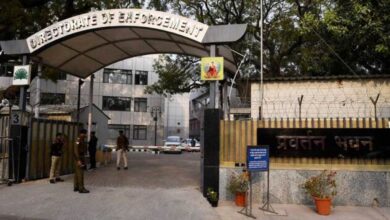
On 15 October 2026, Justice Amit Bansal of the Delhi High Court dismissed the anticipatory bail application of Nayan N. Raheja in the Enforcement Directorate’s money-laundering case arising from alleged diversion of homebuyer funds collected by Raheja Developers Ltd. The order marks the second successive judicial refusal of pre-arrest protection, following the Saket PMLA court’s rejection on 19 September 2026.
The High Court held that the applicant had failed to satisfy the twin conditions under Section 45 of the Prevention of Money Laundering Act and that his repeated non-appearance before investigators, despite summonses and prior undertakings, disentitled him to relief. A detailed order is awaited in some contemporaneous reports, yet the publicly available reasoning already raises sharp questions about investigative cooperation, the scale of the underlying allegations, and the continued wait of thousands of homebuyers.
The core of the High Court’s finding rests on two interconnected grounds. First, the twin conditions prescribed by Section 45(1)(ii) of the PMLA were not met. The court observed that, on the material placed before it, it could not be said that the applicant is not guilty of the offence of money laundering, nor that he would not be involved in such activity if granted bail. The investigation remains ongoing, and the applicant’s role continues to be examined.
Second, the court recorded that despite undertakings given to the court, the applicant failed to join and cooperate in the investigation when summoned. The reasons offered for non-appearance were held unjustified. This conduct, the court stated, would itself disentitle him from the grant of anticipatory bail.
The Enforcement Directorate had issued 9 summonses to Nayan Raheja between April and August 2026 under Section 50 of the PMLA. He responded to some by citing absence from the city or seeking permission to appear through video conferencing, yet he did not join the investigation in the manner required. The High Court specifically noted that he had not appeared before the agency since April 2026, when an iPad allegedly containing incriminating material was seized from his wife’s residence.
Forensic analysis of that device is said to have revealed details relating to project costs, expenses and unsold inventory of Raheja Developers Ltd. projects, material that the agency relies upon to indicate continued involvement in the company’s affairs despite the absence of any formal managerial position on paper.

These findings must be read against the broader allegations that form the foundation of the ECIR registered in March 2022. The Enforcement Directorate has consistently stated that Raheja Developers Ltd. collected approximately ₹2,425.99 crore to ₹2,699.13 crore from around 4,600 homebuyers across multiple residential and commercial projects, including Raheja Revanta, Raheja Shilas, Raheja Trinity, Raheja Oma, Raheja Mall, Raheja Aranya, Raheja Atharva and Vedanta.
A substantial portion of these collections, placed in some accounts at approximately ₹1,353.26 crore, was allegedly diverted through a complex web of related entities, group companies and shell structures for purposes unconnected with the construction and delivery of the promised units. Possession remained undelivered long after contractual timelines had expired. Provisional attachments of immovable properties linked to the company, related entities, Navin M. Raheja and family members have reached a cumulative estimated market value of approximately ₹2,399.65 crore across successive orders in 2026.
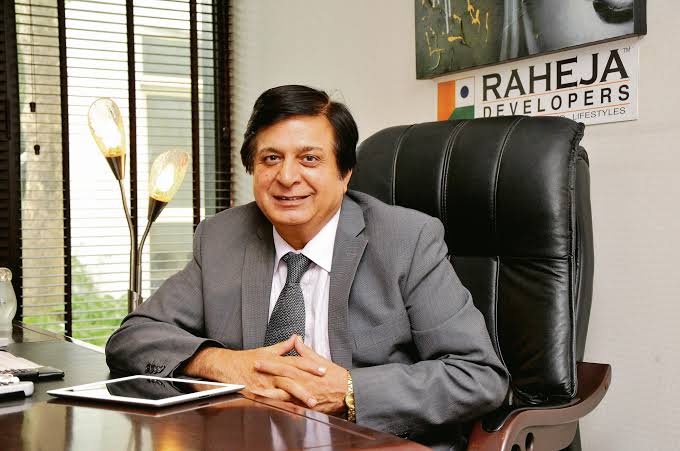
Within this larger matrix sits a specific allegation concerning Nayan N. Raheja himself. In the pleadings of his own writ petition seeking to quash the ECIR, it is recorded that he is alleged to have received ₹1.23 crore from the proceeds of crime. Properties valued at approximately ₹14.10 crore belonging to him have been provisionally attached, bank accounts frozen, and his residence placed under surveillance.
The Enforcement Directorate’s case is not limited to that sum. Investigative material is said to indicate that he looked after the affairs of the parent company or was a director of subsidiary companies into which homebuyer funds were diverted for non-construction purposes. The defence has consistently maintained that he held directorship only for limited periods ending in 2008 and briefly in 2010, that he holds a fractional shareholding of 0.81 per cent, and that he receives remuneration solely for architectural advice.
The High Court, like the Saket court before it, declined to treat the absence of a predicate chargesheet or the claim of non-management as sufficient to satisfy the statutory threshold at the anticipatory-bail stage.
The human consequences of the alleged diversion cannot be reduced to ledger entries. Approximately 4,600 households paid into projects that, on the agency’s case, did not receive the full application of those funds toward construction. Many buyers had paid 90 to 95 per cent of the sale consideration. They continued to service home loans while rental costs accumulated and promised possession dates—some stretching back more than a decade—passed without delivery.
The dual burden of EMI and temporary accommodation is not an abstract inconvenience; it represents years of eroded savings, deferred family plans, and mounting financial stress. When projects such as Raheja Revanta, launched in 2011 with possession promised within 36 to 48 months, remain incomplete in 2026 and enter project-specific insolvency proceedings, the pattern of non-delivery acquires institutional weight. The successive CIRP admissions in Shilas, Krishna Housing Scheme and Revanta are not peripheral commercial events; they are parallel indicators that the underlying problem of incomplete projects and unpaid allottees persists.
The High Court’s emphasis on non-cooperation invites a deeper interrogative. An undertaking of full cooperation was recorded by the Delhi High Court itself on 30 July 2026. Subsequent summonses went substantially unanswered. The seizure of the iPad in April 2026, and the forensic indications of detailed project data on that device, form part of the material that the court treated as relevant to the question of ongoing involvement.
If the applicant’s case is that he has no managerial role and has dealt with no proceeds of crime, the failure to appear for custodial interrogation or detailed questioning after the seizure of such material raises the question of what precisely is being avoided. Anticipatory bail is an exceptional remedy under the PMLA. It is not intended to convert documented non-appearance into a continuing shield against the very investigation that the statute requires.
The twin conditions under Section 45 are deliberately stringent. The court must be satisfied that there are reasonable grounds for believing the accused is not guilty of the offence of money laundering and that he is not likely to commit any offence while on bail.
The High Court found neither limb satisfied on the material before it. The investigation is described as ongoing; the applicant’s role is still under examination. At the stage of anticipatory bail the court is not required to conduct a mini-trial on the quantum of diversion or the precise nature of every transaction. It is required to apply the statutory filter. That filter, applied twice, once by the special court and once by the High Court, has produced the same result.

The comparative institutional question remains unavoidable. In other homebuyer-fraud investigations of comparable or smaller scale the Enforcement Directorate has proceeded to arrest. In the present matter the agency has secured successive provisional attachments totalling nearly the amount of the alleged collections, has recorded repeated non-appearance, has obtained two judicial refusals of anticipatory bail, and has still not converted those refusals into custody.
Bail denied is not an arrest. It is an invitation the agency has so far declined. The continued liberty of the applicant under residual interim protections, while thousands of homebuyers remain without keys and while projects continue to enter insolvency one by one, is a measure of how selectively the most serious economic offences are pursued.
Why does the denial of anticipatory bail matter beyond the individual case? Because the PMLA was enacted to prevent economic offenders from remaining beyond the effective reach of investigation when the statutory conditions are unmet. Because the scale of the alleged collections and diversion, thousands of crores from thousands of households, makes the integrity of the investigative process a matter of public interest rather than private convenience.
Because successive project insolvencies demonstrate that the underlying problem of non-delivery is neither resolved nor isolated. Because the forensic indications from the seized device, the specific allegation of receipt of ₹1.23 crore from proceeds of crime, and the pattern of non-appearance after a formal undertaking collectively undermine any claim that pre-arrest protection is necessary to prevent harassment rather than to facilitate full cooperation.
The unanswered questions multiply. Why did nine summonses between April and August 2026 fail to produce sustained personal appearance after an explicit High Court undertaking of cooperation? Why does the forensic analysis of a device seized in April 2026 appear to contain detailed project-cost and inventory data if the applicant’s role was limited to architectural advice? Why have provisional attachments reached nearly the quantum of the alleged collections while possession remains undelivered across multiple projects?
Why must homebuyers who paid 90 to 95 per cent of the consideration continue to litigate in insolvency forums while the money-laundering investigation proceeds without the custodial interrogation that the statute contemplates when the twin conditions are unmet? Until those questions receive answers grounded in complete cooperation, transparent financial trails and completed investigation, the successive refusals of anticipatory bail stand as the minimum necessary protection of both the statutory scheme and the interests of the allottees who have already waited far too long.
The High Court’s order of 15 October 2026 does not constitute a finding of guilt. It constitutes a finding that the statutory threshold for pre-arrest protection has not been crossed and that documented non-cooperation weighs decisively against the grant of relief. In a case involving alleged diversion of homebuyer funds measured in thousands of crores, incomplete projects that have entered insolvency, and a record of repeated failure to appear despite undertakings, that finding is both legally coherent and institutionally necessary.
The homebuyers who funded these projects are entitled to an investigative process that prioritises accountability over the convenience of those whose cooperation has already been judicially found wanting. On the present record, anticipatory bail would undermine that process. The Delhi High Court was right to refuse it.