BPTP’s ₹750-Crore SkyNest Sales Blitz: Luxury Towers, Unanswered Questions and a Discovery Park Dispute That Refuses to Disappear
As BPTP celebrates reported sales of 150 luxury homes in Greater Faridabad, an HRERA complaint raises serious questions about land division, revised building plans, promised amenities and the rights of existing Discovery Park allottees. A spectacular sales headline may impress prospective buyers, but it cannot substitute for documentary answers.

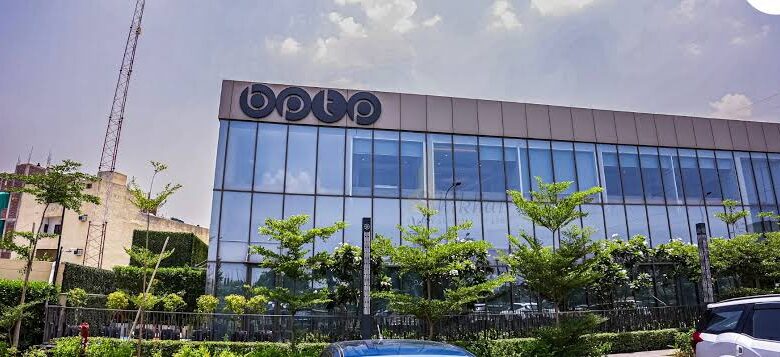
There is a familiar temptation in India’s luxury real-estate market: build an impressive narrative, showcase towering architecture, announce blockbuster sales, attach a premium price tag and let the market believe that everything must be going exceptionally well.
BPTP Limited’s SkyNest Towers in Sector 80, Greater Faridabad, appears to offer precisely the kind of story developers love to tell. According to company-originated publicity carried by news outlets, the project has reportedly generated sales of approximately ₹750 crore from 150 luxury homes, with an average reported ticket size of ₹5 crore per apartment.
But beneath the spectacle of high-rise luxury lies a question that deserves substantially more attention than another triumphant sales announcement: what happens when a new project’s commercial success collides with unresolved questions raised by existing homebuyers about an earlier development, its approved plans, its promised facilities and the land on which the newer project is situated?
That is the uncomfortable question facing BPTP following a representation-cum-complaint recorded by the Haryana Real Estate Regulatory Authority (HRERA), Panchkula, concerning SkyNest Towers and the earlier Discovery Park development.
The complaint does not establish that BPTP committed fraud. HRERA’s procedural record is not a finding of guilt. But the issues raised are sufficiently serious to warrant documentary scrutiny, a comprehensive response from the promoter and a timely, reasoned determination by the competent authorities.
And that is precisely why the celebration surrounding SkyNest deserves closer examination.
When a developer advertises hundreds of crores in sales, prospective buyers deserve more than glossy brochures. Existing allottees deserve answers, and regulators must establish whether the development complies with the approvals, obligations and consent requirements applicable to it.
₹750 crore in reported sales: a triumph for the marketing department, but what does the number actually prove?
BPTP’s reported SkyNest sales figure is impressive: ₹750 crore for 150 apartments. The implied average ticket size is approximately ₹5 crore.
The project is promoted as an ultra-premium residential development featuring twin towers approximately 150 metres high, 3 BHK and 4 BHK homes measuring approximately 3,185 to 3,856 square feet, more than 82,000 square feet of amenities and around 20 landscaped sky-level spaces.
The marketing message is unmistakable: exclusivity, architectural scale, lifestyle and aspiration.
Yet a crucial distinction must not be lost in the publicity. Company-reported sales are not automatically equivalent to independently audited revenue, cash collected, registered conveyances, possession delivered or completed transactions. Those are different measures, and responsible reporting must distinguish between them.
Nor does the appearance of substantially similar sales announcements across multiple publications constitute independent verification of the underlying transactions. If outlets are reproducing the same company statement, they remain part of the same publicity chain rather than three independent audits.
The question becomes even more important when prospective buyers are being asked to commit several crores of rupees. They are entitled to evaluate not just the height of the towers or the appearance of the amenities, but also the legal status of the project, the operative sanctioned plans and any material dispute affecting their purchase.
A developer is entitled to celebrate legitimate commercial success. But it cannot reasonably expect a commercial headline to end questions about regulatory compliance.
Selling an apartment for ₹5 crore is a commercial transaction. Demonstrating compliance with the law is a separate obligation. A large sales number does not answer a single disputed question about land boundaries or sanctioned plans.
The Discovery Park question BPTP cannot answer with a sales brochure
The HRERA representation concerns the relationship between SkyNest Towers and Discovery Park, a development historically associated with Licence No. 44 of 2008.
According to the supplied HRERA record, the original group-housing development covered approximately 16.331 acres. The original building-plan framework dated 27 June 2012 contemplated 12 main residential towers, two economically weaker section (EWS) towers, one nursery school, one primary school, a shopping complex and a community building or clubhouse.
The complaint alleges that the development delivered to existing allottees has not corresponded to that original framework.
The complainants state that nine main residential towers and two EWS towers had been developed, while the promised schools remained outstanding. They further allege that the original project area was divided or reduced, that Discovery Park was registered over a smaller area, and that SkyNest was subsequently registered on land forming part of the original development.
These are allegations made by the complainants, not findings that have been established by a final HRERA order. The original approvals, revised plans, completion records, site demarcation and the promoter’s response must determine the outcome.
But the underlying issue is serious: if buyers invested on the basis of an approved residential development that included schools, shared facilities and a defined overall layout, what has happened to those commitments?
A school is not a decorative feature in a brochure. A shopping complex is not merely a sales talking point. Common facilities can form an important part of the value, utility and planning framework of a residential community.
If the facilities remain outstanding, the promoter must explain their present status and the legal basis for any change. If the facilities have been lawfully revised, relocated or completed, the documentary record should establish that clearly.
The point is not to prejudge the complaint. It is to demand that the same attention given to marketing a new luxury development be given to resolving legitimate questions about the obligations associated with the older one.
A new project may have a new name, a new tower design and a new price list. That does not, by itself, resolve the legal history of the land on which it stands.
From 16.331 acres to competing area figures: a question begging for a certified answer
The most striking aspect of the complaint is the land-area history.
The supplied document identifies the original development as covering approximately 16.331 acres. It refers to Discovery Park over 10.74 acres and separately mentions figures of 5.931 acres and 5.391 acres in describing the newer project or revised-plan area. Other public-facing descriptions refer to SkyNest as occupying approximately 5.4 acres.
The publicly displayed registration information also appears to contain area entries that do not reconcile neatly when read together. Some figures may refer to a broader licensed parcel, a particular phase, the project area or another category of land. Others may reflect an error or a field requiring clarification.
It would be irresponsible to declare these differences proof of fraud without examining the certified documents. It would be equally irresponsible to dismiss them as unimportant without obtaining those documents.
The promoter and the relevant authorities should publish a single, certified reconciliation answering the following questions:
- What was the precise land area covered by the original licence?
- What land was allocated to Discovery Park, and what is its current registered project area?
- What exact parcel was registered as SkyNest, supported by a certified demarcation plan?
- What do the competing area figures represent, and why do they differ?
- Which common facilities were attached to the original development, and where are they now required to be provided?
- What approvals authorised any division, change in boundaries or revised allocation of development rights?
These are not exotic technical questions. They are fundamental property-documentation questions.
When a project involves high-value residential apartments, land measurement cannot be left to speculation. The company should not have to rely on rhetorical assurances, and homebuyers should not have to reconstruct the project history from disconnected documents.
If the land division and registrations are fully compliant, a certified plan and a clear documentary explanation should settle the issue. If discrepancies expose genuine non-compliance, the authorities should identify the breach and act under the law.
Until then, the competing figures demand an explanation—not a premature verdict and certainly not silence.
The revised-plan allegation: whose consent, and what does the file show?
The complaint further alleges that a revised building plan dated 5 March 2026 was obtained without the consent required from two-thirds of the allottees.
It refers to changes to the original development framework and alleges that the changes diminished the project’s land area, amenities and overall character.
Section 14 of the Real Estate (Regulation and Development) Act, 2016, governs adherence to sanctioned plans and provides consent requirements for certain alterations. The precise application of that provision depends on the nature of the alteration, the applicable statutory requirements and the approvals actually obtained.
That makes the documentary trail decisive.
The regulator should examine the original sanctioned plan, the revised plan, the relevant approval file, the allottee-consent records and the precise statutory basis under which the changes were approved.
If the required consent was obtained, the record should demonstrate that. If the law did not require it for the particular change, the applicable legal basis should be identified. If consent was required but not obtained, the competent authority should determine the consequences.
BPTP should be asked to answer this question directly, rather than allowing the dispute to remain submerged beneath a celebration of sales.
Where consent is legally mandatory, it cannot be treated as a box to be ticked after the event. Equally, where a complaint alleges that consent was absent, the allegation must be proved through the relevant records.
The issue is too important for vague reassurances from either side.
Two tower descriptions, one basic demand: identify the operative approved plan
The supplied complaint refers to a revised plan involving two towers of 14 floors each over an area described in one passage as approximately 5.391 acres.
SkyNest’s marketing, meanwhile, promotes twin towers approximately 150 metres high, with other project descriptions referring to a G+44-floor configuration.
These descriptions appear difficult to reconcile if they concern precisely the same towers and the same version of the plan. The available documents, however, do not conclusively establish that every reference relates to an identical stage or component of the development.
That distinction matters. The correct response is not to announce a contradiction as proven misconduct, but to require the exact operative plan to be identified.
The authorities should clarify the sanctioned height, permissible floors, tower configuration, approved number of units and relevant plan dates. BPTP should make the applicable approved plan readily accessible to prospective buyers and explain any differences between earlier approvals and the configuration currently being marketed.
A computer-generated image can show what a tower is supposed to look like. It cannot establish which building plan has legal approval.
For a multi-crore property purchase, the binding approval matters more than the rendering.
What about the schools, shopping facilities and common amenities?
The complaint alleges that Discovery Park was originally represented as a comprehensive residential community and that the delivered development does not correspond to the promised planning framework.
The allottees say that the project was supposed to include 12 main residential towers, two EWS towers, two schools, shopping facilities and a community building. They allege that only nine main towers and two EWS towers had been developed and that the promised schools were still missing.
Those allegations require physical and documentary verification.
The authorities should establish whether the schools and other facilities were mandatory under the original approvals, whether the relevant plans were lawfully revised, whether any facility has been relocated or completed, and which entity is responsible for outstanding works.
A clear schedule should identify the facility, its approved location, its current physical status, the applicable approval and the responsible party.
If the facilities have been lawfully delivered, the company should be able to show the relevant completion and approval documents. If they remain outstanding, the allottees deserve a specific explanation and a legally enforceable timetable where the law permits one.
This is not a demand for special treatment. It is a demand for a factual accounting of the development’s obligations.
A developer’s promotional priorities may change from one project to another. Existing allottees’ rights and the approved development framework do not simply disappear because a newer product has become commercially attractive.
HRERA has recorded the complaint. It has not declared BPTP guilty.
The regulatory distinction is essential—and it should be stated as plainly as the allegations themselves.
The five-page HRERA resolution extract supplied for this report records a representation-cum-complaint considered at the Authority’s meeting on 29 July 2026. The Authority directed its office to send the complaint to the promoter by email and registered post and required BPTP to submit a reply at least one week before the next hearing.
The extract records an adjournment to 9 September 2026. The subsequently reviewed public listing reflects another adjournment on 16 September 2026.
A final adjudication establishing the merits of the SkyNest–Discovery Park allegations was not located in the records reviewed for this report as of 14 October 2026.
That means the document does not establish that HRERA has cancelled SkyNest’s registration, prohibited sales, invalidated the revised plan or ordered the original Discovery Park layout to be restored. Those were among the remedies sought by the complainants, not outcomes recorded in the supplied extract.
It is also important to recognise that SkyNest has its own HRERA registration, numbered HRERA-PKL-FBD-881-2026, dated 9 April 2026, with published validity stated until 31 March 2033.
The registration is a material fact, but it does not by itself determine every question concerning the relationship between the newer and older developments. The substantive allegations still require a decision on the relevant evidence.
The public regulatory record also reflects separate proceedings relating to SkyNest’s registration conditions and Discovery Park’s registration continuation. In one separate SkyNest compliance proceeding, HRERA recorded compliance with a particular condition concerning promoter-account information and newspaper notices. That limited finding should not be misrepresented as either proof of overall compliance or evidence that the present complaint has been upheld.
The public record is therefore not a conviction, a clean bill of health on every disputed issue or a final answer. It is a record of a dispute that still needs a clear, reasoned resolution.
For existing allottees, the practical concern is delay. A matter involving land boundaries, approved layouts and common facilities should not be allowed to drift indefinitely between hearing dates.
HRERA should establish a firm timetable, obtain the relevant records, consider the promoter’s reply and issue a reasoned order after giving the parties a fair opportunity to be heard.
If a technical site inspection is required, it should be organised promptly. If the complaint lacks documentary support, the decision should say so. If it reveals violations, the Authority should identify them and apply the law.
Adjournments may sometimes be necessary. But adjournment is a procedural event, not a substitute for a substantive decision.
BPTP’s history of consumer disputes: why scrutiny is warranted, but precision remains essential
The SkyNest complaint is not the only occasion on which BPTP or entities associated with its projects have faced adverse consumer decisions. Several public decisions concerning other projects involve delayed possession, disputed charges, changes in area and contractual obligations.
These matters should not be presented as proof that the current allegations are true. They do, however, provide relevant context when assessing the importance of transparent documentation and effective consumer protection.
Supreme Court: the Sanjay Rastogi refund dispute
In M/s BPTP Ltd. v. Sanjay Rastogi, decided on 12 April 2021, the Supreme Court considered a dispute in which the consumer forum had directed a refund after finding that possession had not been delivered within the contractual period.
The Court upheld the refund direction while reducing the interest rate to 9% per annum. The refund amount was approximately ₹1.19 crore, with payment required by the deadline specified in the order.
The decision concerned an individual dispute over another transaction, not SkyNest. It was a consumer-law outcome, not a criminal conviction.
Nevertheless, it demonstrates why possession commitments and contractual obligations cannot be treated as secondary details in the real-estate business.
Next Door: adverse findings over a commercial-property dispute
In a decision dated 25 May 2026 concerning the Next Door commercial project in Sector 76, Faridabad, the Delhi State Consumer Disputes Redressal Commission found deficiency in service and unfair trade practice in the circumstances before it.
The dispute concerned delayed lawful possession, disputed demands, documentation and a reduction in super area.
The Commission directed a refund of approximately ₹43.29 lakh with 6% interest from the respective deposit dates, along with ₹1 lakh for harassment and ₹50,000 in litigation costs. A higher rate of interest was prescribed for the period of default if payment was not made within the stipulated time.
The order should be reported in its proper context. The status of any later appeal or full compliance with the order was not independently established in this review. Nor does the judgment prove the allegations made by Discovery Park allottees.
But it is an adjudicated dispute that underscores a familiar point in property transactions: area, possession and documentation are substantive obligations, not minor technicalities.
Amstoria: disputed transfer charges
In Sanjeev Mahajan v. BPTP Ltd., decided on 8 June 2026, the Delhi State Consumer Disputes Redressal Commission examined a dispute involving BPTP Amstoria and a disputed transfer-related charge of approximately ₹8.06 lakh.
The Commission found the charge unjustified in the circumstances of the case, criticising the lack of adequate justification and inconsistencies in the verification material. It ordered a refund with 6% interest, together with ₹1 lakh for mental agony and ₹50,000 in litigation costs. A 9% rate was specified for default beyond the prescribed payment period.
The Commission did not accept every claim raised by the complainant. The decision was project-specific and cannot establish a universal rule about charges imposed by BPTP.
The significance is narrower: the consumer forum scrutinised the evidence supporting a disputed demand and granted relief where the relevant claim was not justified.
Village Parklands: dispute over area and additional charges
In proceedings concerning BPTP’s Village Parklands project, the National Consumer Disputes Redressal Commission in March 2024 declined to interfere further with the consumer outcome.
The underlying dispute included a reduction in the area of the allotted villa and charges for a substation and enhanced infrastructure development. The consumer relief upheld included approximately ₹3.20 lakh for reduction in area, ₹1.38 lakh in substation charges, ₹1.39 lakh in enhanced infrastructure-development charges and about ₹1.05 lakh in compensation for delayed possession.
Again, this was a different development and a separate consumer dispute. It should not be converted into a claim that the SkyNest allegations have already been proved.
Park Spacio: maintenance charges before possession
A report published by The Times of India in June 2026 described a Haryana RERA order concerning pre-possession maintenance charges in BPTP’s Park Spacio project in Gurugram.
According to that report, the authority directed a refund of approximately ₹1.1 lakh with 11% annual interest, ₹1 lakh in compensation and ₹50,000 in litigation costs.
BPTP’s President of Business Development, Rohit Mohan, was quoted as saying that the company had not yet been formally served and would examine the order and consider its legal options.
That response deserves inclusion. Any appeal or subsequent development should be checked before presenting the matter as conclusively settled.
Environmental compensation: an order set aside on procedural grounds
In a separate Amstoria matter concerning alleged groundwater extraction, the Punjab and Haryana High Court set aside an environmental compensation order of approximately ₹2.1195 crore and required fresh inspection or reconsideration after identifying procedural and natural-justice concerns.
That judgment cannot honestly be described as a final finding that unlawful extraction had been proved. Nor should the setting aside of the order be portrayed as a determination that the underlying environmental concerns were unfounded.
The case was about another project and another regulatory issue. Its proper significance is that environmental enforcement, too, must be evidence-based and procedurally sound.
Pedestal @70A: a separate CBI investigation
In April 2026, the Supreme Court considered a petition by BPTP Limited and a director in connection with a CBI FIR concerning the Pedestal @70A project in Sector 70-A, Gurugram. The FIR formed part of a broader investigation into alleged collusion involving developers and financial institutions in home-loan subvention arrangements.
The Supreme Court did not convict BPTP or its director in that proceeding. The petition was disposed of while the petitioners were permitted to place material before the CBI for consideration as part of the wider investigation.
The case relates to separate allegations and cannot be used to assert that BPTP committed fraud in SkyNest or Discovery Park.
What this history tells homebuyers
These proceedings show that disputes involving BPTP projects have reached consumer forums and other authorities and that some have resulted in adverse orders. They also illustrate why legal precision matters.
A consumer decision, an unresolved regulatory complaint, an environmental order set aside for procedural reasons and an FIR under investigation have different legal meanings.
It would be misleading to combine them into a declaration that the current allegations are proved. It would be equally misleading to suggest that an unresolved SkyNest complaint deserves no scrutiny simply because the authority has yet to issue a final decision.
The appropriate conclusion is that the present allegations must be determined on their own evidence, against a background in which transparency, documentary compliance and the enforcement of homebuyer rights remain essential.
Seven questions BPTP should answer before celebrating SkyNest as an unqualified success
BPTP should be invited to provide a documented response to seven central questions.
1. What is the exact legal and physical boundary of SkyNest? Provide a certified demarcation plan and reconcile the publicly referenced land-area figures.
2. How does SkyNest relate to Discovery Park? Explain the chain of licences, approvals, registrations and revised plans and identify the relevant parcel in each record.
3. What is the operative building plan? Identify the currently sanctioned tower heights, floor counts, unit inventory and common facilities, together with the approval dates.
4. What consent was required and obtained? Address the allegation that revised plans were approved without the consent required from existing allottees, and supply the supporting documents or legal basis for any exemption.
5. What happened to the promised schools and other facilities? State whether each facility has been completed, remains outstanding or has been lawfully relocated or revised, and identify who is responsible for delivery.
6. What is the status of the earlier project’s outstanding towers and registration obligations? Explain the relevant orders, extensions, progress reports and compliance position.
7. What does the ₹750-crore sales headline represent? Clarify whether it refers to bookings, agreements, sales value or another metric and avoid implying that the figure represents audited revenue or fully collected consideration unless the records establish that.
These questions are not accusations in themselves. They are the minimum documentary questions that should be answered when a high-value development is the subject of a serious and identifiable regulatory complaint.
If BPTP can resolve the issues through authenticated records, it should be allowed to do so. If the records reveal violations, the relevant authority should determine the legal consequences.
The company cannot be declared guilty merely because the questions exist. But the questions should not be buried because the project is selling well.
HRERA and the state authorities must move beyond procedural drift
The complaint calls for a clear, time-bound process.
HRERA should secure BPTP’s comprehensive written response, examine the relevant records for both developments, identify what is admitted and disputed, and issue a reasoned determination. The Authority should consider a site inspection or independent technical verification if the documentary material warrants it.
The Department of Town and Country Planning should verify the original licence, revised approvals, land boundaries and development obligations. Relevant local authorities should independently inspect the status of the schools, common facilities and infrastructure where those matters fall within their jurisdiction.
If the evidence discloses a regulatory breach, the responsible authority should issue appropriate directions and enforce them. If the evidence establishes a cognisable criminal offence, the competent investigating agency should assess it under applicable law. Criminal proceedings should be initiated where justified by evidence, not merely because a complaint uses the words fraud or cheating.
The demand is for tighter supervision, faster investigation, prompt hearings and quicker enforcement of established violations—not a predetermined verdict.
Where charges are justified, the relevant proceedings and trials should proceed without avoidable delay. Where allegations are not substantiated, the final record should state so clearly. A reasoned outcome is in the interests of existing allottees, prospective buyers, the regulator and the developer itself.
Every avoidable delay deepens uncertainty. Every unexplained discrepancy weakens confidence. Every unanswered question gives prospective buyers another reason to seek independent verification before committing their savings.
And when the property market involves multi-crore purchases, those are not trivial consequences.
The final question: is BPTP prepared for the same scrutiny it expects buyers to apply to no one?
BPTP is entitled to promote SkyNest. It is entitled to publicise reported sales. It is entitled to defend itself against allegations and to challenge any regulatory order in accordance with the law.
What it is not entitled to expect is that a sales milestone will automatically silence legitimate questions concerning project approvals, the land history or existing allottees’ rights.
The reported ₹750-crore figure may demonstrate considerable commercial interest. It does not settle the allegations in the HRERA representation. The company’s separate registration for SkyNest is relevant, but it does not by itself answer every question arising from the earlier Discovery Park development. The adverse consumer decisions in other projects warrant accurate context, but they do not constitute proof of the current complaint.
These distinctions do not weaken the case for scrutiny. They make that scrutiny credible.
The appropriate response is straightforward: publish the relevant documents, reconcile the area figures, identify the operative sanctioned plans, explain the status of the common facilities and allow the regulator to determine the complaint promptly.
If the records support BPTP’s position, let them speak. If they establish violations, let the law take its course.
BPTP may be able to sell a ₹5-crore apartment with a view of the skyline. It still has to answer questions about the ground beneath it.
A luxury address can command a premium. Accountability cannot be optional.
The SkyNest story should therefore not be reduced to a contest between a sales headline and a complaint. It should become a test of whether the promoter and the regulatory system can provide clear, verifiable answers to the people whose homes, investments and common facilities are affected.
Until that happens, the ₹750-crore headline is a statement of reported commercial performance—not a verdict on the unresolved questions surrounding the project.
LEGAL DISCLAIMER
This investigative report distinguishes between company-reported sales, documented procedural developments, decisions in separate legal disputes and allegations made by complainants.
The allegations concerning land division, revised building plans, missing consent, non-delivery of promised amenities, inaccurate progress disclosures, fraud, cheating and violations of applicable laws are allegations requiring verification and adjudication. They are not presented as established findings of guilt.
The HRERA document reviewed for this report records procedural directions and adjournments; it does not establish that the SkyNest–Discovery Park allegations have been proved. A final merits determination was not located in the materials reviewed as of 14 October 2026. The materials reviewed also did not establish that a court of law has convicted BPTP Limited or any named individual in connection with the specific SkyNest–Discovery Park allegations.
Other consumer cases, environmental proceedings and the separate CBI investigation concern different projects and legal issues. They must not be treated as proof of liability in the present matter. Likewise, the company’s reported ₹750-crore sales figure is not presented as independently audited revenue or verified cash collection.
The land-area figures and plan descriptions discussed in the report require reconciliation against certified records. Apparent discrepancies alone do not establish fraud or intentional misrepresentation.
Before publication, the newsroom should obtain and review any subsequent HRERA or court orders, invite a detailed response from BPTP Limited and fairly incorporate any material response received. Any conclusion regarding civil, regulatory or criminal liability must be based on verified evidence and the findings of the competent authority or court.
The demand for accountability is not a declaration of guilt. It is a demand that material questions be answered with documents, that affected homebuyers receive a fair hearing and that any violations established through due process result in timely and lawful action.