DLF Ex CFO Ramesh Sanka’s Bail Extortion Case
The Punjab and Haryana High Court has dismissed DLF Limited's petition seeking cancellation of regular bail granted to former senior executive Ramesh Sanka in a criminal case involving an alleged ₹311-crore extortion demand. DLF accused Sanka of misusing confidential corporate information and intimidating the company through subsequent legal proceedings filed before different courts. Sanka maintained that he was pursuing legitimate legal remedies and had relied on documents already forming part of the police investigation. While the court observed that his conduct raised concerns, it held that approaching judicial forums could not, by itself, constitute a violation of bail conditions.

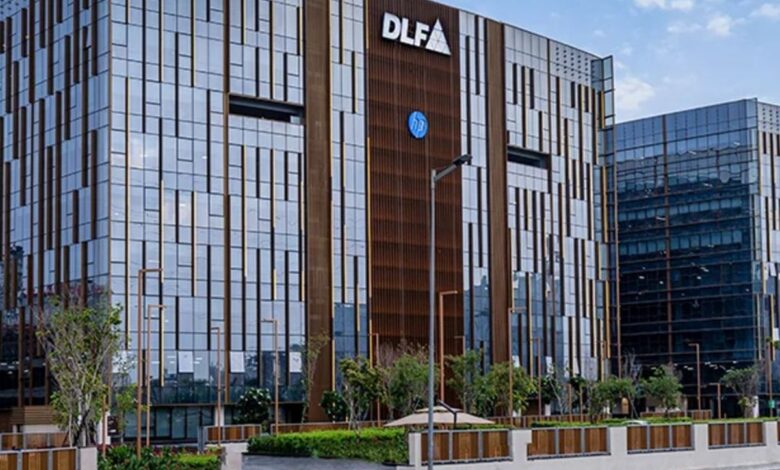
Punjab and Haryana High Court Rejects DLF Plea to Cancel Former Executive Ramesh Sanka’s Bail in ₹311-Crore Extortion Case
The Punjab and Haryana High Court has dismissed a petition filed by real estate developer DLF Limited seeking cancellation of regular bail granted to its former senior executive Ramesh Sanka in a criminal case involving an alleged extortion demand of ₹311 crore. The court held that approaching judicial forums and pursuing legal remedies against a complainant cannot, by itself, be treated as intimidation or a violation of bail conditions.
Justice Vikram Aggarwal delivered the judgment on November 13, 2026, in DLF Limited v. State of Haryana and Another, CRM-M-6656-2026. The company had approached the High Court alleging that Sanka was misusing confidential corporate information and filing multiple proceedings against DLF to threaten and intimidate the company and its witnesses after securing bail.
However, the court declined to cancel his bail, observing that the allegations would have to be examined in the appropriate proceedings. It also clarified that the merits of the original criminal case and the allegations raised by Sanka against DLF were not being decided in the bail-cancellation proceedings.
The dispute dates back to August 2024, when an FIR was registered against Sanka following a complaint by DLF. The company alleged that its former executive had demanded ₹311 crore by threatening to disclose confidential business information and documents obtained during his employment. Sanka, on the other hand, maintained that the amount represented professional fees allegedly owed to him for advisory services and assistance in certain land transactions involving the company.
Background of the ₹311-crore dispute
Ramesh Sanka joined DLF as Chief Financial Officer on June 1, 2004. He was subsequently elevated to Group Chief Financial Officer and later became Managing Director of DLF Cyber City Developers Limited. His formal association with the company ended on July 2, 2014.
According to DLF, his senior positions provided him access to confidential corporate information, including business plans, financial records, agreements, commercial strategies, customer information, property-related documents and internal communications. The company alleged that he was required to maintain the confidentiality of such information under his employment agreement and its internal Code of Conduct.
The disagreement concerns whether Sanka continued to provide professional advisory services to DLF after leaving the organisation and whether the company owed him remuneration for those services.
Sanka claimed that he had assisted DLF in connection with land transactions involving properties originally associated with the IREO Group. His defence maintained that he had provided professional advice and assistance that contributed to the acquisition of approximately 28.49 acres of land and that the ₹311-crore amount represented his outstanding professional remuneration.
DLF disputed this account, arguing that Sanka had no professional role with the company after July 2014 and had not contributed to the land acquisition in the manner claimed by him. The company maintained that his demand was not a legitimate claim for professional fees but an attempt to extract money through threats involving confidential information.
The December 2025 bail judgment recorded these competing versions. The court did not decide whether the amount was legally payable or whether the communications constituted extortion, observing that the issues would require examination during trial.
Legal notices and registration of FIR
According to earlier media reports and the allegations recorded in the court proceedings, the disagreement escalated during the first half of 2024.
Sanka allegedly began communicating with DLF in February 2024, seeking payment of ₹311 crore for the professional services he claimed to have provided. DLF rejected his demand and issued a legal notice on April 4, 2024, denying the claims and asking him to stop sending communications containing what the company described as false and fabricated demands.
Further legal communications followed. DLF maintained that Sanka’s emails contained threats to disclose sensitive information if the company did not pay the demanded amount. Sanka disputed this interpretation and described his communications as legitimate reminders and legal notices concerning outstanding professional fees.
The Economic Times reported on August 17, 2024, that DLF had filed an FIR against its former CFO over the alleged ₹311-crore blackmail and extortion demand. The report also quoted Sanka as saying that he had approached the Deputy Commissioner of Police, East Gurugram, and submitted his response on August 2, 2024, regarding what he described as a false complaint.
FIR No. 253 was registered on August 8, 2024, at DLF Phase-I police station in Gurugram. The provisions invoked included Sections 381, 385, 409 and 506 of the Indian Penal Code and Section 66 of the Information Technology Act, 2000.
The allegations included theft by a clerk or employee, putting a person in fear of injury to commit extortion, criminal breach of trust, criminal intimidation and computer-related offences. These provisions were invoked by the investigating agency based on the complaint, and the allegations remain subject to proof in the criminal trial.
Electronic devices seized during investigation
The investigation also focused on electronic records allegedly retained by Sanka. According to the Haryana government’s reply reproduced in the November 2026 High Court judgment, police seized two laptops, one mobile phone and one hard disk.
The devices were sent to the DITAC laboratory for data extraction and forensic examination. The forensic report was received on August 21, 2025.
The State informed the court that the extracted material appeared to contain confidential DLF records, including business plans, agreements, building structures, company share-capital information, business transactions and internal emails. The investigation into the extracted data was stated to be continuing, with the possibility of a supplementary charge sheet.
During the subsequent bail-cancellation proceedings, DLF also referred to the recovery of approximately 32 lakh digital files from Sanka’s hard disk. The company argued that the documents demonstrated the extent of confidential information allegedly retained by its former executive.
Sanka’s defence, however, disputed the company’s characterisation of the material. His lawyers argued that documents used in subsequent court proceedings were already part of the police final report and that DLF had not adequately identified which particular documents had been improperly disclosed.
The recovery of electronic records is an important part of the investigation, but the presence of company-related information on a device does not independently establish theft, unauthorised retention or extortion. The source, ownership, confidentiality and use of the documents will have to be examined through the evidence.
Sanka granted regular bail in December 2025
Sanka was arrested on January 3, 2025, and remained in custody for approximately 11 months before receiving regular bail from the Punjab and Haryana High Court on December 9, 2025.
Justice Rupinderjit Chahal granted bail in CRM-M-45139-2025 after considering arguments from Sanka, the Haryana government and DLF.
The defence argued that the case primarily concerned electronic communications and a financial disagreement over professional fees. It also highlighted that the police had seized the electronic devices, conducted forensic examination and filed the charge sheet. According to the defence, there was no further recovery required from Sanka and his continued detention was unnecessary.
The prosecution opposed bail, alleging that Sanka had used confidential information obtained during his employment to demand ₹311 crore. It also referred to his other criminal cases and the possibility of interference with the investigation.
DLF supported the prosecution’s position, maintaining that the alleged fee claim was fabricated and that Sanka had not contributed to the land acquisition as claimed.
The court observed that whether the communications amounted to extortion or reflected a civil and contractual dispute would require examination during trial. It also considered the period of custody, the seizure of electronic devices, the forensic examination and the filing of the charge sheet before granting regular bail.
The bail order imposed several conditions. Sanka was directed not to influence, threaten, induce or intimidate DLF, prosecution witnesses or anyone acquainted with the facts of the case. He was also prohibited from tampering with evidence or misusing confidential DLF data in his possession. Additionally, he was required to obtain permission from the trial court before leaving India and provide his current residential address and mobile number to the investigating officer.
Subsequent petitions against DLF
After securing bail, Sanka approached different judicial forums with allegations concerning financial, taxation and regulatory violations involving DLF and its associated companies.
The November 2026 judgment records proceedings initiated before the Supreme Court, Delhi High Court, Telangana High Court and Madras High Court. These proceedings became a central part of DLF’s argument that Sanka was violating the conditions of his bail.
One of the proceedings referred to by DLF was an interlocutory application filed by Sanka on June 3, 2026, in a Supreme Court appeal involving SEBI. The application reportedly contained emails, corporate circulars, transfer documents, lease deeds and other company-related records.
DLF argued that Sanka was not a party to the original appeal and had introduced confidential company material to threaten and intimidate the company. The defence maintained that he was exercising his legal rights and relying on documents already included in the police investigation record.
Another important proceeding was filed before the Telangana High Court. In Writ Petition No. 22907 of 2026, decided on September 11, 2026, Sanka raised allegations concerning the assessment and collection of stamp duty on commercial buildings transferred within the Hyderabad Information Technology Special Economic Zone.
The petition involved DLF Commercial Developers Limited and DLF Assets Limited. Sanka alleged that commercial buildings had been transferred through arrangements involving transfer and handover deeds, co-developer arrangements and long-term land leases in a manner that required examination of the applicable stamp-duty obligations.
He sought directions to the relevant authorities to examine the transactions and determine whether the appropriate stamp duty had been assessed and collected.
A separate proceeding was also filed before the Madras High Court. Writ Petition No. 33312 of 2026 concerned allegations relating to stamp-duty assessment on commercial buildings in the Chennai Information Technology Special Economic Zone.
These petitions contained allegations made by Sanka and did not establish that DLF had evaded stamp duty or committed financial irregularities. The issues were matters for examination by the competent authorities and courts.
DLF seeks cancellation of bail
DLF subsequently approached the Punjab and Haryana High Court through CRM-M-6656-2026, seeking cancellation of Sanka’s regular bail under Section 483(3) of the Bharatiya Nagarik Suraksha Sanhita, 2023.
The company argued that Sanka had violated the conditions imposed in December 2025 by using confidential corporate information in multiple legal proceedings against DLF.
It alleged that the petitions were not simply attempts to obtain judicial relief but formed part of a deliberate campaign to intimidate the company and influence prosecution witnesses. DLF also pointed out that some of the proceedings had been dismissed, withdrawn or remained under registry objections.
The company specifically relied on the Supreme Court application and the documents filed in proceedings before different High Courts. It argued that the alleged misuse of confidential records was contrary to the restrictions imposed when Sanka was granted bail.
Sanka opposed the petition, arguing that approaching courts could not be treated as a violation of bail conditions. His lawyers submitted that the documents used in the proceedings were already part of the police final report and that DLF had failed to identify specific instances of prohibited disclosure or witness intimidation.
The defence also argued that the company was attempting to restrict his ability to pursue legal remedies against it.
High Court refuses to cancel bail
Justice Vikram Aggarwal examined the arguments and the conditions imposed in the December 2025 bail order. The court also considered Supreme Court judgments explaining the distinction between rejection of bail and cancellation of bail already granted.
The judgment referred to the principles laid down in Dolat Ram v. State of Haryana and other decisions, which establish that cancellation of bail requires sufficient grounds, such as interference with the administration of justice, attempts to influence witnesses, tampering with evidence or abuse of the liberty granted by the court.
The High Court acknowledged the allegations against Sanka and made a strong observation about his conduct. In paragraph 23 of the judgment, Justice Aggarwal observed, “No doubt, respondent No.2 appears to be having the tendencies of a blackmailer. He for sure, is not a saint.”
However, the court said that the relevant question was whether his subsequent conduct justified cancellation of bail.
The judge observed that resorting to legal remedies could not, by itself, be treated as intimidation or a violation of bail conditions. The fact that Sanka had approached different courts against DLF did not automatically establish that he had threatened the company or its prosecution witnesses.
The court also noted that Sanka was yet to face trial in the original criminal case. The merits of the allegations made by him against DLF would have to be examined by the courts having jurisdiction over those proceedings.
Importantly, the High Court declined to express any opinion on the truthfulness of the original extortion allegations or the claims raised by Sanka against the company.
The court ultimately dismissed DLF’s petition as devoid of merit on November 13, 2026. As a result, Sanka’s regular bail continues.
Original criminal case remains pending
The dismissal of DLF’s bail-cancellation petition does not amount to an acquittal of Sanka in the original extortion case. The criminal allegations concerning the alleged ₹311-crore demand, retention of confidential information and misuse of electronic records remain subject to trial.
Similarly, the High Court’s decision does not establish that DLF committed the financial or regulatory violations alleged by Sanka in his subsequent petitions.
The November 13 judgment settles only the immediate question of bail cancellation. It leaves the larger financial and criminal controversy between DLF and its former executive unresolved.