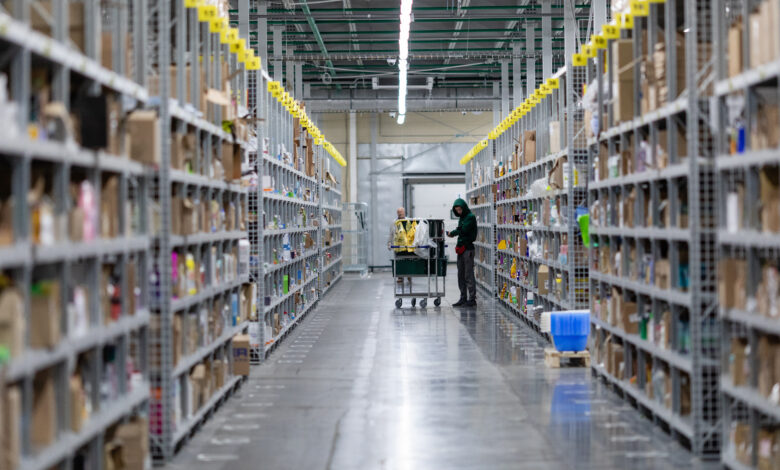
Top 10 Best Dark Store Companies in India in 2027
The rapid rise of quick commerce has transformed how millions of Indians access groceries, essentials, personal care items, and everyday products. Dark stores, the specialized mini-warehouses designed exclusively for order fulfillment rather than walk-in retail, sit at the heart of this transformation. These facilities enable deliveries in minutes by placing inventory close to dense residential clusters, supported by sophisticated inventory systems, picker teams, and hyperlocal logistics.
In 2027 the Indian market continues to expand aggressively into both metros and emerging cities, with operators refining assortment depth, delivery speed, technology integration, and unit economics. The companies listed below stand out for the scale of their networks, operational sophistication, assortment breadth, customer reach, and continued investment in denser coverage and faster fulfillment.
1. Blinkit
Blinkit operates the largest dedicated dark store network in India and remains the clear scale leader in quick commerce. Its facilities typically range from a few thousand square feet upward and are stocked with a broad mix of groceries, fresh produce, dairy, snacks, personal care, household essentials, and a growing selection of non-grocery categories. The company has built deep density in the top metros while also extending into a large number of secondary cities, giving it unmatched pincode coverage in many markets. Advanced inventory algorithms keep popular SKUs highly available, while real-time demand sensing helps balance stock across nearby stores.
Delivery partners are tightly integrated into the system so that orders move from pick to doorstep with minimal delay. Blinkit has steadily improved contribution margins by raising average order values through larger baskets and a richer non-grocery mix, and it continues to invest in both organic store openings and partner models that allow faster geographic expansion. The platform’s technology stack supports high daily throughput per store while maintaining service levels that keep customers returning. Its parent company’s broader ecosystem further strengthens brand visibility and cross-promotion opportunities.
2. Zepto
Zepto has built one of the most intensively utilized dark store networks in the country, known for very high order volumes per facility. Its stores are engineered for speed, typically housing tens of thousands of SKUs that cover daily essentials, fresh items, and selected premium or impulse categories. The company places strong emphasis on denser coverage within existing cities rather than pure geographic sprawl, which allows it to maintain short average delivery distances and consistent sub-15-minute performance. Inventory ownership models and growth-partner arrangements help Zepto scale capacity without carrying the entire fixed-cost burden alone.
Sophisticated warehouse management systems, barcode-driven picking, and optimized picker paths keep fulfillment times low even during peak hours. Zepto has expanded its assortment beyond basic groceries into beauty, gourmet, and lifestyle items to raise basket sizes. Continuous software improvements in demand forecasting and dynamic slotting help reduce stockouts while controlling working capital. The platform’s focus on high-throughput stores and rapid iteration of operational processes positions it as a leader in efficiency metrics within the sector.
3. Swiggy Instamart
Swiggy Instamart leverages the parent company’s extensive delivery infrastructure and customer base to power a large and growing dark store footprint. Its facilities are strategically located to serve high-density neighborhoods and are stocked with a balanced mix of grocery staples, fresh produce, ready-to-eat items, and a rising share of non-food categories. The company has demonstrated disciplined network expansion, adding stores where utilization and demand justify the investment while still maintaining significant headroom within the existing footprint. Integration with Swiggy’s broader platform allows seamless customer acquisition and cross-selling opportunities.
Technology investments focus on accurate inventory visibility, efficient order batching, and reliable last-mile coordination. Instamart continues to improve average order values through curated assortments and promotional mechanics. Franchise and partner-store models have become important tools for accelerating coverage in both metros and emerging cities. The combination of operational maturity, brand trust, and multi-category potential keeps Instamart among the top performers in the Indian quick-commerce landscape.
4. Flipkart Minutes
Flipkart Minutes has executed one of the fastest network build-outs in the sector, rapidly expanding its micro-fulfilment centres across metros and a growing list of tier-two and tier-three cities. The dark stores are designed for high-velocity picking of groceries, essentials, and selected general merchandise that complements Flipkart’s broader catalogue. Strong backend support from the parent company’s logistics and inventory systems gives Minutes advantages in replenishment speed and assortment consistency.
The platform has closed the gap with established players in key city-level store counts and pincode coverage, particularly through aggressive addition of facilities in competitive neighborhoods. Technology focus includes precise demand prediction, efficient space utilization inside the stores, and tight integration with delivery fleets. Minutes benefits from Flipkart’s customer traffic and promotional engine, which helps drive trial and repeat usage. Expansion continues with an eye toward both densification in existing markets and selective entry into newer geographies where unit economics look promising.
5. BigBasket
BigBasket, operating its quick-commerce offering under BB Now and related formats, combines years of grocery expertise with a dedicated dark store network. Its facilities emphasize strong fresh-produce capabilities, a wide grocery assortment, and reliable availability of daily essentials. The company maintains a meaningful presence in major cities and continues selective expansion while refining store formats for faster fulfillment. Inventory systems are tuned for high fill rates on perishable and high-velocity items, supported by a mature supply-chain backbone. BigBasket’s longer history in organized grocery retail translates into deep supplier relationships and efficient procurement that help control costs and maintain quality.
The platform serves both pure quick-commerce demand and customers who appreciate broader category depth. Operational processes focus on hygiene, temperature control where needed, and consistent service levels. Partnerships and hybrid models further extend reach without requiring every location to be a fully owned dark store.
6. Amazon Now
Amazon Now has scaled its micro-fulfilment and urban fulfilment centres at a rapid pace, building a network that now covers a large number of cities. The stores stock a curated selection of groceries, personal care, household items, and other high-frequency products optimized for ultra-fast delivery. Amazon’s global technology infrastructure supports sophisticated inventory placement, demand forecasting, and order routing. The service benefits from the parent company’s vast customer base, Prime membership advantages, and ability to cross-promote across the broader Amazon ecosystem.
Expansion has focused on both dense urban clusters and progressive entry into additional cities, often leveraging a mix of company-operated and partner facilities. Operational priorities include high availability of core SKUs, efficient picker productivity, and seamless last-mile execution. Amazon Now continues to refine its assortment to balance speed with sufficient choice, while investing in the density required to keep delivery times consistently short.
7. JioMart
JioMart leverages Reliance Retail’s extensive physical grocery network by converting and optimizing a large number of existing stores and back-of-house areas for quick-commerce fulfillment. This hybrid approach gives it one of the broadest geographic footprints among major players, spanning metros as well as a wide array of smaller towns. Inventory draws from the parent company’s massive procurement scale, supporting competitive pricing and reliable availability of staples, fresh items, and private-label products. Technology integration allows real-time visibility into stock across locations and efficient allocation of online demand to the nearest suitable facility.
The model reduces the need for purely dedicated dark stores in every neighborhood while still enabling rapid delivery windows. JioMart continues to deepen its quick-commerce capabilities through better assortment planning for online demand patterns and tighter last-mile coordination. The combination of physical density, supply-chain strength, and digital ordering convenience positions it as a formidable presence in the sector.
8. Country Delight
Country Delight has carved a specialized position by focusing on farm-fresh dairy, produce, and related daily essentials fulfilled through a network of dedicated dark stores and micro-warehouses. Its facilities emphasize cold-chain integrity, short farm-to-store cycles, and high product freshness that differentiates the offering. The company has expanded coverage in key urban markets while maintaining tight control over quality and inventory turns.
Technology supports precise demand forecasting for perishable categories and efficient routing of both inbound farm produce and outbound customer orders. Subscription models and recurring-order features help stabilize daily volumes and improve store utilization. Country Delight continues to broaden its assortment carefully while protecting the core freshness proposition that drives customer loyalty. Operational discipline around hygiene, temperature management, and rapid turnaround remains central to its model.
9. ElasticRun
ElasticRun operates a distinctive partner-led dark store and micro-fulfilment model that enables quick-commerce capabilities for a range of retail and brand clients. Its network focuses on efficient last-mile density and flexible capacity that can be scaled according to demand. Facilities are optimized for multi-client or multi-category use, allowing better utilization of space and labor. Technology platforms handle inventory allocation, order orchestration, and delivery partner management across the network.
ElasticRun’s approach helps smaller or specialized players access dark-store economics without building everything from scratch. Continuous improvements in route optimization, picker productivity tools, and demand sensing support competitive service levels. The company continues to expand its geographic coverage and deepen operational capabilities to serve the growing volume of hyperlocal demand.
10. Shadowfax
Shadowfax has evolved its logistics capabilities to include dedicated or semi-dedicated dark store support for quick-commerce operators and brands seeking reliable hyperlocal fulfillment. Its facilities and partner locations emphasize high-speed picking, efficient sorting, and seamless integration with last-mile fleets. Technology investments focus on real-time tracking, capacity forecasting, and dynamic allocation of orders across the network.
Shadowfax’s scale in delivery operations provides natural synergies for dark-store clients who need consistent performance during peak periods. The company continues to refine store layouts, inventory handling processes, and quality controls to meet the stringent speed and accuracy requirements of the segment. Partnerships with multiple platforms and retailers allow it to maintain strong utilization while offering flexible capacity solutions.
These ten operators collectively define the competitive landscape of dark-store-driven quick commerce in India. They differ in pure network size, ownership models, category strengths, and geographic focus, yet all share a commitment to placing inventory closer to customers, shortening delivery times, and continuously improving operational efficiency. As demand for minute-level convenience continues to grow and competition intensifies in both metros and emerging cities, the ability to combine density, assortment relevance, technology, and disciplined unit economics will determine long-term leadership. The sector remains dynamic, with ongoing investments in store openings, partner models, colder-chain capabilities, and software that further compresses the time between order placement and doorstep delivery.