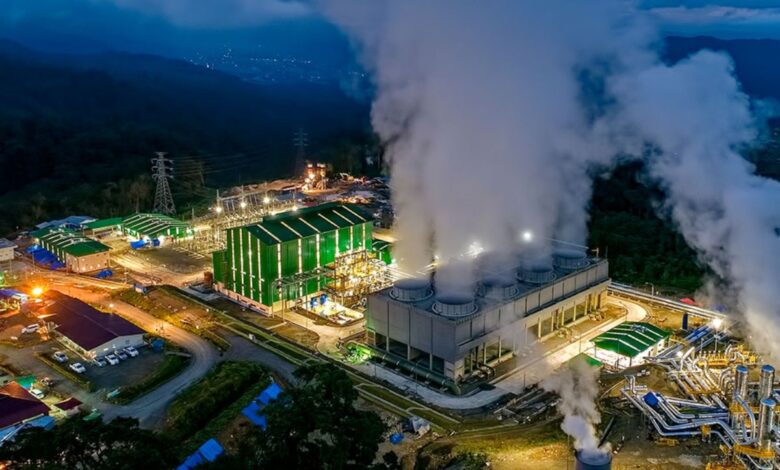
India stands at the threshold of a geothermal energy revolution in 2026, though the sector remains in its exploratory infancy compared to mature renewable energy sources. With an estimated potential of ten thousand six hundred megawatts identified across three hundred eighty-one geothermal sites, India published its first National Geothermal Energy Policy in 2025, marking a strategic pivot toward diversifying the renewable energy mix. Understanding that this is fundamentally a nascent sector with limited commercial deployment, this article examines the key entities and organizations driving India’s geothermal exploration efforts.
The Geological Survey of India has identified ten geothermal provinces including the Himalayan region, Cambay Basin, Son-Narmada-Tapi lineament belt, West Coast, Godavari basin, Mahanadi basin, Aravalli, and South Indian Cratonic areas. Most resources fall within the medium to low heat enthalpy zone with temperatures from one hundred to one hundred eighty degrees Celsius, though higher-temperature sites exist in the Himalayan regions.
1. Oil and Natural Gas Corporation (ONGC)
ONGC stands as India’s undisputed leader in geothermal energy development, spearheading the country’s first serious attempt at geothermal power generation through its ONGC Energy Centre. The state-run corporation has leveraged deep drilling expertise to pioneer geothermal exploration in India’s most challenging terrains. ONGC’s flagship project in Puga Valley, Ladakh, represents India’s most advanced geothermal initiative, located at an altitude exceeding fourteen thousand feet.
ONGC resumed drilling operations in 2024 after a two-year hiatus following unexpectedly high pressures encountered during initial drilling in 2022. Preliminary results proved exceptionally encouraging, with temperatures of one hundred eighty to one hundred ninety degrees Celsius discovered at just forty meters depth. The project involves drilling two wells to one thousand meters depth, targeting temperatures exceeding two hundred degrees Celsius for a one-megawatt pilot phase. ONGC has partnered with Iceland GeoSurvey for technical consulting, drawing on Icelandic expertise where geothermal accounts for two-thirds of primary energy consumption.
Beyond Puga Valley, ONGC has announced plans for nationwide geothermal mapping, identifying resources in Ladakh, Himachal Pradesh, Gujarat, Andhra Pradesh, and Chhattisgarh. The corporation’s strategy includes exploring abandoned oil and gas wells for geothermal conversion, particularly in the Gandhar oil field in Ankleshwar, Gujarat, and the Cambay Basin, leveraging ONGC’s extensive subsurface data repository.
2. Singareni Collieries Company Limited (SCCL)
SCCL holds the distinction of operating India’s only functional geothermal power plant, a twenty-kilowatt pilot facility in the Manuguru area of Telangana. While modest in scale, this achievement represents a critical proof-of-concept for geothermal technology. The plant utilizes closed-loop Binary Organic Rankine Cycle Process technology, demonstrating successful indigenous technical capability.
The Manuguru pilot emerged from SCCL’s coal mining operations where underground thermal anomalies suggested geothermal potential. Unlike high-temperature geothermal resources requiring deep drilling, SCCL’s project utilizes lower-temperature resources suitable for binary cycle technology operating efficiently at temperatures between one hundred to one hundred eighty degrees Celsius. This approach is particularly relevant for India where most geothermal resources fall into the medium to low enthalpy category, expanding geographic scope beyond obvious hotspots.

3. Geological Survey of India (GSI)
The Geological Survey of India functions as the foundational research and mapping authority for geothermal resources, providing essential data that enables commercial development. GSI has systematically studied three hundred eighty-one thermally anomalous areas across India, publishing the comprehensive Geothermal Atlas of India in 2022. This atlas documents surface temperature measurements, discharge rates, and water chemistry across identified geothermal fields.
GSI’s resource assessment established the ten thousand six hundred megawatt potential estimate that underpins national policy and investment decisions. The organization identified sixteen priority geothermal energy sites, including Puga Valley where drilling is actively ongoing. Beyond resource mapping, GSI monitors environmental impacts of geothermal exploration and ensures sustainable development practices. As India’s geothermal sector expands, GSI’s data repository and technical capabilities remain indispensable for de-risking investments.
4. Thermax Limited
Thermax represents India’s most prominent private sector player in geothermal energy equipment manufacturing and system integration. As a publicly listed power equipment company with extensive experience in thermal systems and boiler manufacturing, Thermax possesses relevant technical capabilities for geothermal plant construction. The company has strategically positioned itself to supply critical equipment including heat exchangers, turbines, and balance-of-plant systems for future projects.
Thermax’s involvement reflects broader ambitions in renewable energy sectors. The company has expressed interest in securing government contracts and offering integrated solutions encompassing exploration support, development, and power plant operations. Thermax’s strategy focuses on adapting existing thermal engineering expertise to geothermal applications, particularly binary cycle systems suitable for India’s medium to low temperature resources. As India’s National Geothermal Policy prioritizes indigenous technology development, Thermax’s manufacturing capabilities position it advantageously for capturing domestic market share.
5. Tata Power Company
Tata Power, India’s largest integrated power company, has demonstrated strategic interest in geothermal through international investments and domestic exploration. The company holds an eleven point four percent stake in Geodynamics Ltd., an Australian firm developing enhanced geothermal systems, providing exposure to advanced geothermal technologies and operational experience that could transfer to Indian projects.
Within India, Tata Power has participated in policy consultations and feasibility studies, leveraging extensive experience across conventional and renewable power generation. The company’s integrated approach encompassing generation, transmission, distribution, and trading positions it to develop geothermal projects holistically once the sector matures. Tata Power has expressed particular interest in hybrid projects integrating geothermal with solar or wind resources to provide baseload stability.
6. Greenko Group and ReNew Power
Greenko Group and ReNew Power, India’s leading independent renewable energy producers, have actively positioned themselves for geothermal opportunities. Both companies have built substantial renewable energy portfolios primarily in solar and wind, achieving gigawatt-scale capacity. Their interest in geothermal reflects strategic recognition that India’s renewable energy transition requires diversified generation sources beyond weather-dependent technologies.
These independent power producers are attracted to geothermal energy’s potential for providing baseload renewable power with high capacity factors exceeding eighty-five percent. The government’s indication of long-term power purchase agreements and attractive tariffs for geothermal projects aligns with IPPs’ business models requiring revenue certainty. While neither company has secured geothermal project allocations as of 2026, their demonstrated capabilities in project development, financing, and grid integration position them as strong candidates for future opportunities.
7. Baker Hughes
Baker Hughes, the multinational oilfield services company, provides critical drilling equipment, services, and technical expertise for India’s geothermal exploration. The company’s involvement in ONGC’s Ladakh geothermal pilot project demonstrates how oil and gas industry infrastructure transfers directly to geothermal development. Baker Hughes supplied specialized drilling equipment for the Puga Valley project in 2023, addressing extreme conditions and technical requirements of high-altitude geothermal drilling.
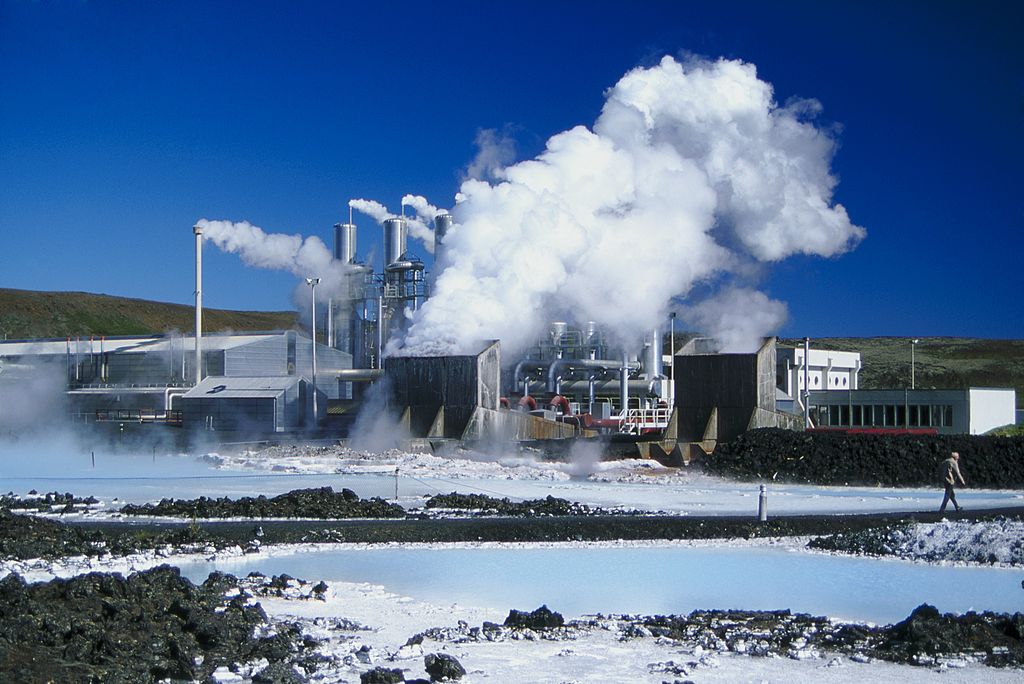
The company’s global experience in geothermal drilling, particularly in high-temperature and high-pressure environments, provides valuable knowledge for navigating India’s challenging geology. Baker Hughes has worked on geothermal projects worldwide, including in Indonesia, Kenya, and the United States, accumulating expertise in reservoir characterization and production optimization. Beyond equipment supply, Baker Hughes has expressed interest in longer-term partnerships for India’s geothermal sector, potentially including integrated service contracts combining drilling, completion, and reservoir management.
8. Mitsubishi Heavy Industries (MHI)
Mitsubishi Heavy Industries has emerged as a strategic international partner for India’s geothermal development through equipment supply and technology transfer. In December 2023, MHI partnered with ONGC Videsh Limited to explore geothermal resources in Indonesia, demonstrating interest in collaborating with Indian entities. This partnership provides ONGC with access to MHI’s extensive geothermal technology portfolio, including turbines, generators, and plant design expertise.
MHI is a global leader in geothermal power plant equipment, having supplied systems to projects in Indonesia, Philippines, Kenya, and New Zealand. The company manufactures both steam and binary cycle turbines suitable for different resource temperatures, providing flexibility for India’s diverse geothermal sites. The strategic relationship extends beyond equipment supply to encompass technical training, knowledge transfer, and potentially co-development of projects.
9. Iceland GeoSurvey (ISOR)
Iceland GeoSurvey represents crucial international expertise supporting India’s geothermal development, particularly through advisory services for ONGC’s Puga Valley project. Iceland’s unparalleled geothermal development experience makes ISOR’s involvement invaluable for India’s nascent sector. The organization provides technical consulting on reservoir assessment, drilling strategies, environmental management, and sustainable development practices.
ISOR’s engagement includes on-site presence during critical drilling operations, real-time technical guidance for unexpected subsurface conditions, and training for Indian engineers. The partnership includes knowledge transfer on Enhanced Geothermal Systems, direct use applications, and regulatory frameworks that have enabled Iceland’s successful geothermal sector. India has signed formal Memoranda of Understanding with Iceland’s government specifically for geothermal energy cooperation, reflecting strategic importance assigned to this partnership.
10. Ministry of New and Renewable Energy (MNRE)
The Ministry of New and Renewable Energy functions as the regulatory authority, policy architect, and facilitator for India’s geothermal sector. While not a developer in the commercial sense, MNRE’s role in establishing frameworks, allocating resources, and coordinating stakeholders makes it indispensable. The Ministry published India’s first National Geothermal Energy Policy in 2025 after extensive stakeholder consultations, establishing the foundational framework for exploration, development, and utilization of geothermal resources.
MNRE implements the Renewable Energy Research and Technology Development Programme, providing up to one hundred percent financial support to government and non-profit research organizations and up to seventy percent support to industry for geothermal research and development projects. The Ministry coordinates inter-agency collaboration with the Ministry of Petroleum and Natural Gas, Ministry of Mines, and Directorate General of Hydrocarbons, facilitating access to data repositories and drilling expertise from the oil and gas sector.
India’s Geothermal Future
India’s geothermal sector in 2026 stands at an inflection point where decades of exploration and policy development are beginning to translate into tangible projects. The National Geothermal Policy provides comprehensive frameworks for exploration permits, development licenses, fiscal incentives, and environmental safeguards. The policy allows one hundred percent foreign direct investment, prioritizes indigenous technology development, and establishes single-window clearance mechanisms to streamline project approvals.
Several factors position India for accelerated geothermal growth. The oil and gas sector’s expertise in drilling and reservoir management transfers directly to geothermal applications. India’s manufacturing capabilities in power equipment enable domestic production of geothermal systems. The country’s success in solar and wind deployment demonstrates capability to scale new renewable technologies rapidly once commercial viability is established. International partnerships with geothermal leaders including Iceland, the United States, and Saudi Arabia provide access to best practices and technical expertise.
Challenges remain substantial, including high upfront exploration and drilling costs, limited technical expertise in geothermal reservoir engineering, regulatory coordination across multiple agencies, and environmental concerns particularly in ecologically sensitive Himalayan regions. The long development timelines for geothermal projects, typically five to seven years from exploration to commissioning, require patient capital and sustained government support.
Conclusion
India’s geothermal energy landscape in 2026 reflects an industry in its earliest developmental phase, characterized by exploration, pilot projects, and policy framework establishment rather than commercial deployment at scale. The entities featured represent diverse stakeholders including state-owned enterprises like ONGC and SCCL leading operational projects, government agencies like GSI and MNRE providing research and regulatory frameworks, private companies like Thermax, Tata Power, Greenko, and ReNew Power positioning for future opportunities, and international partners like Baker Hughes, Mitsubishi Heavy Industries, and Iceland GeoSurvey providing equipment and expertise.
Understanding that India currently has only a twenty-kilowatt operational pilot plant and one one-megawatt project under development provides essential context for realistic expectations. The ten thousand six hundred megawatt potential identified by GSI represents theoretical capacity rather than near-term development pipeline. Achieving even a fraction of this potential will require sustained investment, technological advancement, successful demonstration of commercial viability, and continued policy support over the coming decade.
The publication of India’s National Geothermal Energy Policy in 2025 marks the beginning of serious geothermal development rather than culmination of established capacity. The combination of India’s renewable energy ambitions, increasing energy demands, need for baseload renewable generation, and substantial identified geothermal resources creates compelling rationale for sector growth. As early projects demonstrate technical and economic viability, the entities positioned in India’s geothermal landscape today may evolve into major developers driving substantial capacity additions. For now, India’s geothermal story is one of potential and preparation, with the most significant chapters yet to be written in the years beyond 2026.