As India’s digital economy accelerates toward becoming a trillion-dollar market, cloud adoption among Indian startups and enterprises has reached unprecedented levels. The global cloud computing market is projected to surpass one trillion dollars in 2026, with India representing one of the fastest-growing segments in the Asia-Pacific region. However, this explosive growth brings a critical challenge that keeps CTOs and CFOs awake at night: unchecked cloud spending that can consume thirty to thirty-five percent of budgets through waste and inefficiency.
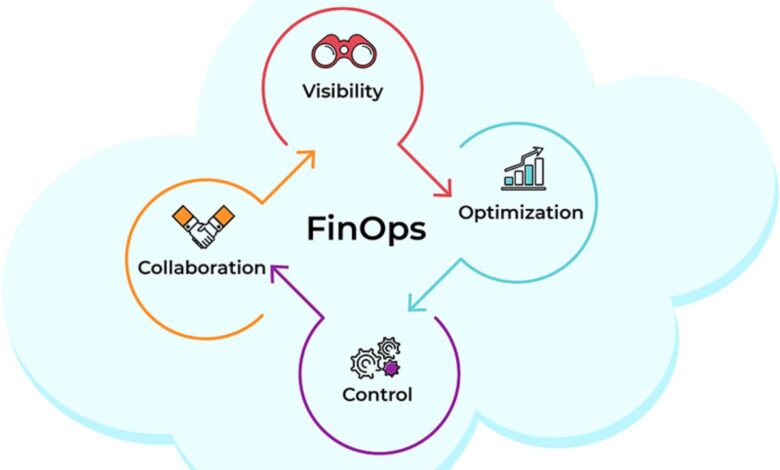
Enter Financial Operations, commonly known as FinOps, a transformative discipline that bridges the gap between engineering agility and financial accountability. FinOps represents more than cost-cutting measures; it embodies a cultural shift where technology, finance, and business teams collaborate using shared cost data to maximize the business value extracted from every rupee spent on cloud infrastructure. For Indian startups navigating tight funding environments and established enterprises optimizing their digital transformation investments, FinOps has evolved from optional to mission-critical.
The Indian FinOps landscape in 2026 presents an interesting dynamic. While homegrown FinOps-specific software startups remain emerging, Indian organizations are rapidly adopting proven global platforms alongside consulting services from Indian technology leaders. This article examines the top ten FinOps solutions that Indian startups and enterprises are leveraging to gain visibility, optimize spending, and transform cloud costs from unpredictable expenses into strategic investments.
Understanding FinOps in the Indian Context
Before diving into specific solutions, understanding the unique challenges facing Indian organizations helps explain why FinOps adoption is accelerating so rapidly. Indian startups typically operate with leaner budgets compared to their Western counterparts, making cost efficiency not just desirable but essential for survival. The pressure intensified in 2026 as venture capital firms became increasingly selective, demanding clear paths to profitability and sustainable unit economics rather than growth-at-any-cost narratives.
Additionally, India’s multi-cloud adoption rate exceeds global averages, with organizations frequently utilizing Amazon Web Services, Microsoft Azure, and Google Cloud Platform simultaneously. This multi-cloud strategy, while providing flexibility and avoiding vendor lock-in, creates complexity in cost tracking, allocation, and optimization. FinOps platforms that can unify visibility across these disparate environments deliver tremendous value to Indian organizations.
The global cloud FinOps market is experiencing remarkable growth, expanding from approximately thirteen and a half billion dollars in 2024 to a projected twenty-three billion dollars by 2029, representing a compound annual growth rate of eleven point four percent. India and China are specifically highlighted as high-growth markets driving this expansion, fueled by rapid digital transformation initiatives and increasing cloud technology adoption across industries.
1. CloudZero
CloudZero has emerged as the preferred FinOps platform for product-led Indian SaaS startups and technology companies that need to understand costs with exceptional granularity. Rather than providing surface-level dashboards, CloudZero enables engineering and finance teams to analyze costs at the unit level, examining spending per customer, per product feature, or per team with surgical precision.
The platform’s engineering-first approach resonates strongly with Indian technology organizations where developers and DevOps teams drive infrastructure decisions. CloudZero automatically collects, allocates, and analyzes cloud costs, identifying resource wastage and illuminating the relationship between infrastructure spending and unit economics. This capability proves invaluable for Indian startups preparing for funding rounds or planning initial public offerings, where demonstrating strong unit economics increasingly determines success.
CloudZero supports multi-cloud environments, ingesting and aggregating cost data from multiple providers, though the depth of integration varies by platform. The solution provides anomaly detection with automated Slack alerts, enabling rapid response when costs spike unexpectedly. Each customer receives a designated FinOps Account Manager who acts as an extension of their internal team, particularly valuable for Indian startups that may lack dedicated FinOps expertise in-house.
The platform particularly excels for SaaS companies and engineering-driven organizations seeking to dissect cloud spend and improve unit economics. Indian fintech companies, edtech platforms, and B2B SaaS providers have reported significant cost optimization after implementation, with some achieving savings approaching sixty percent through intelligent resource allocation and waste elimination.
2. Vantage
Vantage has carved a strong niche among Indian startups and mid-sized technology companies seeking powerful FinOps capabilities without enterprise-level complexity or pricing. The platform emphasizes ease of use and rapid deployment, enabling teams to connect cloud accounts and begin viewing consolidated cost data within minutes rather than weeks.
Supporting major cloud providers including AWS, Azure, and Google Cloud Platform, alongside services like Snowflake, Datadog, and Databricks, Vantage delivers unified visibility across the diverse technology stacks common in Indian organizations. The platform’s developer-friendly interface encourages engineering teams to actively engage with cost data rather than treating it as purely a finance concern, embodying the collaborative spirit central to effective FinOps practice.
Vantage proves particularly attractive for companies transitioning from spreadsheet-based cost tracking or basic cloud-native consoles toward more sophisticated financial management. The platform provides cost allocation features, budget alerts, anomaly detection, and forecasting without overwhelming users with excessive features they do not immediately need. For Indian managed service providers serving multiple clients, Vantage offers multi-account support with quick setup capabilities.
The platform’s competitive pricing structure makes it accessible for Indian startups operating with limited budgets while still delivering substantial value through optimization recommendations and spending visibility. Teams in the early to mid FinOps maturity stage, working to establish cost visibility and initiate optimization efforts, find Vantage particularly well-suited to their needs and growth trajectory.
3. Finout
Finout represents the enterprise-grade FinOps platform choice for Indian organizations managing complex, large-scale cloud environments across multiple providers and services. The platform addresses a common frustration among FinOps teams: understanding not just total spending but which specific investments drive outcomes, unit economics, and business performance.
Finout connects cloud, data, and AI costs across AWS, Azure, Google Cloud Platform, along with specialized services like Snowflake, Databricks, OpenAI, and Anthropic, mapping these expenses directly to products, teams, services, and customers. This business-aware cost mapping transforms FinOps from reactive reporting into strategic decision-making capability. Indian enterprises can finally answer critical questions like which customer segments generate profitable cloud economics or which product features consume disproportionate infrastructure resources.
The platform’s MegaBill feature provides a unified view consolidating all infrastructure spending with precise cost allocation capabilities, instant virtual tagging for untagged resources, and comprehensive shared cost management. Finout’s architecture supports this without requiring code changes or agent installations, reducing implementation complexity significantly.
Indian companies using Finout have reported identifying and resolving cost inefficiencies worth tens of thousands of pounds during proof-of-concept phases alone. The platform’s ability to create customized reports tailored to specific departmental KPIs enables different teams within large organizations to access relevant financial insights without drowning in irrelevant data. For Indian enterprises committed to scaling FinOps practices across multiple business units, Finout provides the governance, automation, and visibility necessary for success.
4. IBM Cloudability (Apptio)
IBM Cloudability, formerly known as Apptio Cloudability before IBM’s acquisition, serves as the enterprise FinOps standard for large Indian organizations with complex multi-cloud environments requiring robust governance and mature financial management capabilities. The platform particularly appeals to organizations already invested in IBM’s broader technology ecosystem or those in heavily regulated industries requiring enterprise-grade compliance and security.
Cloudability supports multiple cloud platforms including AWS, Azure, IBM Cloud, and others, centralizing cost visibility and management across these environments. The platform excels at enabling cross-team collaboration, providing tools that help DevOps engineers, cloud architects, product managers, and finance teams work from common cost data to drive informed decisions.
The solution offers comprehensive features including detailed cost allocation and tagging frameworks, rightsizing recommendations based on actual usage patterns, Reserved Instance and Savings Plan optimization analysis, budget management with threshold alerts, and customizable dashboards enabling different stakeholders to view relevant metrics. Indian enterprises particularly value the platform’s ability to handle the scale and complexity inherent in large organizational structures.
IBM complements the software platform with professional consulting and implementation services, helping Indian organizations embed FinOps practices and drive the cultural change necessary for long-term success. For companies operating in sectors like banking, insurance, telecommunications, and manufacturing, where FinOps must integrate with existing enterprise financial systems and governance frameworks, Cloudability provides the enterprise maturity and support infrastructure required.
The platform typically employs percentage-based pricing tied to cloud spend, often around two to three percent of total cloud costs, though specific contract terms vary by organization size and usage requirements. While this pricing model can become expensive at scale, large Indian enterprises find the investment justified by the sophistication of capabilities and depth of vendor support provided.
5. Economize
Economize directly addresses a critical gap in the Indian startup ecosystem: accessible, lightweight cloud cost management specifically designed for small and medium-sized businesses and fast-growing startups that need FinOps capabilities without enterprise complexity or pricing. The platform recognizes that not every organization requires or can afford heavyweight enterprise solutions, yet still faces genuine cloud cost challenges requiring professional tools.
Supporting AWS, Azure, and Google Cloud Platform, Economize delivers clear dashboards, anomaly detection capabilities, forecasting features, and automated recommendations for rightsizing workloads and reducing unnecessary consumption. The platform’s budget alerts and cost allocation features enable engineering and finance teams to track expenses and establish accountability without requiring extensive training or dedicated FinOps personnel.
Economize’s simplicity represents its greatest strength for the Indian market, where many startups operate with extremely lean teams wearing multiple hats. The platform provides actionable insights without overwhelming users, making FinOps practices accessible to organizations that previously relied on basic cloud-native tools or manual spreadsheet tracking. Implementation complexity remains minimal, allowing teams to derive value quickly rather than investing months in configuration and setup.
The platform’s affordability aligns well with the budget constraints common among Indian startups, particularly in the current funding environment where demonstrating capital efficiency has become paramount. For companies in the seed to Series A stage, or bootstrapped businesses achieving profitability through disciplined resource management, Economize offers the right balance of capability and cost-effectiveness to establish foundational FinOps practices.
6. Harness Cloud Cost Management
Harness Cloud Cost Management integrates seamlessly with Harness’s broader Continuous Delivery and DevOps platform, creating a compelling value proposition for Indian technology companies already invested in modern software delivery practices. The platform enables finance and engineering teams to track cloud spending proactively, with hourly monitoring and reporting of unused instances that many competitors update less frequently.
The system supports major cloud providers including Amazon Web Services, Google Cloud Platform, and Microsoft Azure, providing unified visibility across multi-cloud environments. Harness enables teams to create and enforce cost policies directly, embedding financial governance into development and deployment workflows rather than treating it as an afterthought. This integration proves particularly valuable for Indian SaaS companies and digital product businesses where rapid iteration and continuous deployment drive competitive advantage.
Harness’s Continuous Delivery Platform offers root cost analysis capabilities that correlate cloud events with cost changes, helping teams understand exactly how deployments, scaling events, or infrastructure modifications impact spending. This cause-and-effect visibility enables more intelligent decision-making around architecture choices and deployment strategies.
The platform provides automated cost-saving recommendations covering Reserved Instance opportunities, resource rightsizing, and identifying instances that can be scaled down during periods of inactivity. For Indian companies operating globally across multiple time zones, these recommendations can unlock substantial savings by matching resource allocation to actual usage patterns rather than maintaining peak capacity continuously.
Harness employs tiered pricing that includes limited freemium options alongside paid plans that charge as a percentage of cloud spend, with rates around two point two-five percent for team tiers and two point five percent for enterprise users. Indian startups appreciate the ability to begin with free tiers before committing to paid plans as cloud spending scales.

7. Densify
Densify brings sophisticated machine learning capabilities to cloud cost optimization, making it particularly attractive for Indian technology companies with data science expertise and complex container-based architectures. The platform leverages artificial intelligence to identify and forecast cloud resource usage and availability, automating optimization decisions that would otherwise require extensive manual analysis.
Key capabilities include intelligent instance rightsizing and automated scaling of cloud resource types based on actual utilization patterns and predicted future needs. Densify excels particularly in containerization scenarios, efficiently managing Kubernetes clusters, namespaces, quotas, and projects at scale. For Indian startups and enterprises embracing microservices architectures and container orchestration, this specialized expertise delivers tangible value.
Unlike general-purpose FinOps tools that primarily serve finance teams or cost analysts, Densify positions itself for cloud engineering teams who face increasing pressure from finance departments to report and validate resource usage. The platform helps engineers demonstrate the efficiency of their infrastructure decisions using data-driven insights rather than subjective assessments.
Densify supports single-cloud, hybrid-cloud, and multi-cloud environments, including IBM Cloud and container services like Red Hat OpenShift and Kubernetes. This flexibility accommodates the diverse infrastructure approaches common among Indian organizations, from startups running entirely on AWS to enterprises maintaining complex hybrid deployments spanning on-premises data centers and multiple public clouds.
For Indian companies with technical teams capable of leveraging advanced machine learning insights and automation, Densify transforms cloud cost optimization from periodic manual reviews into continuous, intelligent adaptation of resources to match business needs precisely.
8. FinOpsly
FinOpsly represents the next generation of FinOps platforms, positioning itself as a proactive, agentic system that moves beyond passive reporting toward active intervention. The platform’s core innovation lies in using explainable artificial intelligence agents that continuously analyze cost drivers, provide clear reasoning behind every recommendation, and execute policy-governed actions to optimize spending automatically.
The platform connects cloud, data, and AI costs across major providers including AWS, Azure, Google Cloud Platform, Snowflake, and Databricks, mapping these expenses to products, teams, services, and customers. This business-aware approach enables Indian organizations to understand not merely how much they spend but critically, which investments drive meaningful outcomes and improve unit economics.
FinOpsly’s automation operates within defined financial and operational guardrails, ensuring that changes remain safe, auditable, and aligned with business requirements and risk tolerance. This governed automation addresses a common concern about FinOps platforms: the fear that automated cost-cutting might inadvertently impact performance or customer experience. By combining business context with controlled automation, FinOpsly aims to make FinOps a trusted, continuous discipline rather than periodic firefighting.
For Indian startups scaling rapidly and enterprises managing increasingly complex data and AI workloads, FinOpsly’s ability to integrate costs across traditional cloud infrastructure, modern data platforms like Snowflake, and emerging AI services provides comprehensive visibility previously difficult to achieve. The platform’s focus on explainability ensures that recommendations can be understood and trusted rather than functioning as mysterious black boxes.
9. AWS Cost Explorer with AWS Compute Optimizer
While technically not a third-party FinOps platform, AWS Cost Explorer combined with AWS Compute Optimizer deserves recognition as a foundational tool that many Indian organizations leverage, particularly those in early FinOps maturity stages or operating primarily within the AWS ecosystem. Amazon Web Services introduced Cost Explorer in direct response to customer complaints that AWS bills were difficult to understand and analyze.
Cost Explorer provides customizable cost and usage reports with resource-level data available hourly, daily, or monthly, along with twelve months of historical data enabling trend analysis and comparison. The tool offers rightsizing recommendations, cost anomaly detection with alerting capabilities, and forecasting features, all without additional charges beyond standard AWS usage fees.
AWS Compute Optimizer extends these capabilities by using machine learning to analyze historical utilization metrics and provide specific recommendations for EC2 instances, Auto Scaling groups, EBS volumes, and Lambda functions. The service identifies opportunities to reduce costs or improve performance by matching resources to actual workload requirements.
For Indian startups and small businesses operating exclusively or primarily on AWS, these native tools provide substantial value without additional software costs. Many organizations begin their FinOps journey with Cost Explorer, establishing baseline visibility and implementing initial optimizations before potentially graduating to more comprehensive third-party platforms as complexity increases.
The tools’ primary limitation lies in their single-cloud focus. Indian organizations running multi-cloud environments or those requiring sophisticated cost allocation, chargeback, or showback capabilities typically need more advanced platforms. However, for AWS-centric organizations seeking basic FinOps capabilities with zero additional investment, Cost Explorer and Compute Optimizer represent entirely valid starting points.
10. PwC India Cloud FinOps Services
While not software-as-a-service platforms, professional services from firms like PwC India warrant inclusion given the critical role consulting and managed services play in the Indian FinOps ecosystem. PwC India’s Cloud FinOps offerings combine strategic advisory, implementation services, and ongoing managed FinOps capabilities, addressing the reality that many Indian organizations lack internal FinOps expertise and benefit from guided implementation.
PwC India’s approach centers on three core ideologies. First, increasing cloud spend transparency across enterprises through comprehensive visibility frameworks and governance structures. Second, identifying cloud optimization opportunities accompanied by tactical solutions for implementation. Third, developing processes and governance frameworks to sustain and mature cloud spend operations over time, embedding FinOps into organizational culture rather than treating it as one-time initiative.
The firm’s Cloud FinOps Analyzer represents proprietary tooling designed to analyze large datasets of cloud provider billing and utilization data, identifying patterns indicating potential cost savings and supporting comprehensive advisory designed to promote cloud transparency. This tool-plus-service combination acknowledges that technology alone rarely solves FinOps challenges; cultural change, process evolution, and skilled guidance prove equally important.
PwC brings unique capabilities combining deep expertise in financial audit and operational excellence with comprehensive cloud knowledge. The firm maintains strategic alliances with major cloud providers including Amazon Web Services, Microsoft Azure, and Google Cloud Platform, enabling them to leverage insider knowledge and preferential positioning when appropriate.
For large Indian enterprises, particularly those in regulated industries like banking and insurance, or organizations undergoing complex cloud transformations involving hybrid and multi-cloud architectures, PwC’s consulting-led approach provides the structure, governance, and change management expertise necessary for FinOps success. Their services prove particularly valuable for organizations that need FinOps to integrate with broader enterprise financial management, procurement, and governance frameworks.
The State of Indian FinOps Startup Ecosystem
An important observation emerges when examining the FinOps landscape in India: while Indian organizations enthusiastically adopt FinOps practices and platforms, the market for India-origin FinOps software startups remains nascent compared to other software categories. Several factors explain this dynamic.
First, FinOps as a discipline only gained widespread recognition within the past five years, with the FinOps Foundation establishing frameworks and certifications that standardized practices. The global FinOps community now exceeds ninety-five thousand members with over sixty-two thousand trained practitioners, but this growth occurred relatively recently. Indian entrepreneurs naturally gravitate toward software categories with proven market demand and clear monetization paths; FinOps platforms are still demonstrating both.
Second, successful FinOps platforms require deep integration with major cloud providers, substantial technical infrastructure for processing massive billing datasets, and sophisticated analytics engines. These requirements create high barriers to entry compared to software categories where smaller teams can build minimum viable products rapidly. Global platforms like CloudZero, Vantage, and Finout raised substantial venture capital to build these capabilities before achieving product-market fit.
Third, Indian startups and enterprises have readily adopted global FinOps platforms that already existed rather than waiting for domestic alternatives to emerge. Unlike file-sharing solutions where data sovereignty concerns drove demand for Indian alternatives like DigiBoxx, FinOps platforms process billing metadata rather than sensitive business data, reducing localization imperatives.
However, opportunities exist for Indian entrepreneurs in adjacent spaces. Cloud cost optimization consulting services, FinOps training and certification programs tailored for Indian audiences, and specialized tools addressing specific pain points in the FinOps workflow could represent viable entry points. Additionally, as AI and machine learning costs become larger components of overall cloud spending, platforms specializing in AI workload optimization present emerging opportunities.
Implementing FinOps Successfully in Indian Organizations
Selecting appropriate FinOps software represents only the first step. Successfully implementing FinOps practices requires cultural change, executive sponsorship, and cross-functional collaboration that many Indian organizations initially underestimate. Several principles guide successful implementations.
Executive support proves critical, particularly in Indian organizations where hierarchical decision-making remains common. When leadership visibly prioritizes cloud cost optimization and empowers FinOps teams, adoption accelerates dramatically compared to bottom-up initiatives lacking executive backing. Finance teams, engineering leaders, and business executives must all commit to FinOps principles and actively participate in governance.
Establishing clear accountability through cost allocation and chargeback mechanisms helps teams understand their cloud spending impact. When engineering teams see their infrastructure costs clearly attributed to their projects or products, behavior changes organically without requiring heavy-handed mandates. Indian organizations that implement transparent cost allocation consistently achieve better outcomes than those treating cloud costs as undifferentiated overhead.
Starting with quick wins builds momentum and demonstrates value. Rather than attempting comprehensive FinOps transformation immediately, successful Indian organizations typically begin with high-impact, low-complexity optimizations. Identifying and eliminating obvious waste like unused instances, unattached storage volumes, or oversized resources delivers immediate savings that justify further investment in FinOps maturity.
Investing in FinOps education and certification ensures teams understand best practices and can leverage platforms effectively. The FinOps Foundation offers comprehensive training programs and certifications; having certified practitioners within the organization dramatically improves outcomes compared to learning through trial and error.
Finally, recognizing that FinOps represents an ongoing discipline rather than one-time project sets appropriate expectations. Cloud environments continuously evolve as applications scale, new services launch, and business requirements change. Sustainable FinOps practices embed cost awareness into standard workflows rather than requiring separate periodic initiatives.
The Future of FinOps in India
Looking forward, several trends will shape FinOps evolution in the Indian context throughout 2026 and beyond. Artificial intelligence integration within FinOps platforms will accelerate, moving beyond basic machine learning for anomaly detection toward sophisticated predictive analytics and autonomous optimization. Indian organizations should evaluate platforms’ AI capabilities critically, distinguishing genuine value from marketing hype.
The emergence of specialized FinOps tools for AI workloads reflects the growing importance of GPU compute and large language model costs. Indian startups building AI-first applications face dramatically different cost profiles than traditional cloud workloads, requiring specialized tooling and optimization approaches. Platforms that excel at managing AI infrastructure costs will gain competitive advantage.
Multi-cloud FinOps capabilities will increase in importance as Indian organizations become more sophisticated about leveraging different providers’ strengths. The ability to view costs, allocate spending, and optimize across AWS, Azure, and Google Cloud Platform from unified platforms represents table stakes rather than differentiators.
Sustainability metrics integration into FinOps dashboards addresses growing environmental awareness among Indian technology leaders. Understanding the carbon footprint associated with cloud spending enables organizations to optimize both cost and environmental impact simultaneously, aligning with corporate sustainability commitments.
Finally, the FinOps talent market in India will mature, with dedicated FinOps engineers, analysts, and managers becoming recognized career paths rather than accidental specializations. Universities and training providers will likely introduce FinOps-specific programs, creating deeper talent pools for organizations building internal capabilities.
Conclusion
The FinOps software landscape in India in 2026 reflects a maturing market where organizations increasingly recognize that cloud cost management represents strategic imperative rather than optional overhead. While India has not yet produced a roster of homegrown FinOps software startups comparable to other software categories, Indian organizations are sophisticated adopters of global platforms, selecting tools that best match their specific requirements, maturity levels, and budget constraints.
From lightweight, startup-friendly platforms like Economize and Vantage to enterprise-grade solutions like Finout and IBM Cloudability, options exist serving organizations across the entire spectrum of size and sophistication. Specialized tools like Densify address specific technical requirements around containers and machine learning optimization, while comprehensive consulting services from firms like PwC India provide the strategic guidance and change management expertise necessary for large-scale transformation.
Indian startups navigating the challenging 2026 funding environment must demonstrate financial discipline and strong unit economics to secure investment. FinOps platforms enable these demonstrations through granular visibility into cost drivers and clear attribution of infrastructure spending to business outcomes. For established enterprises, FinOps represents the path toward maximizing return on substantial cloud investments while maintaining the agility required in competitive markets.
The key to FinOps success lies not in selecting the single “best” platform but in choosing the solution appropriately matched to your organization’s current needs, growth trajectory, technical capabilities, and financial constraints. Begin with clear understanding of your FinOps maturity level and primary pain points. Evaluate platforms based on their ability to address these specific challenges rather than pursuing feature checklists disconnected from reality.
As the global FinOps market continues its rapid expansion toward twenty-three billion dollars by 2029, with India representing one of the highest-growth regions, opportunities abound both for organizations implementing best practices and potentially for Indian entrepreneurs identifying underserved niches within the ecosystem. The organizations that master FinOps today position themselves for sustainable competitive advantage tomorrow, transforming cloud spending from uncontrolled expense into strategic investment delivering measurable business value.