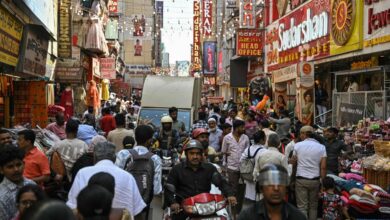
India’s Fast-Moving Consumer Goods sector is the fourth-largest sector in the Indian economy, and in 2026 it represents one of the most fiercely competitive, innovation-driven, and strategically important commercial landscapes on the planet. With a population exceeding 1.4 billion, a median age below 30, rapid urbanisation, rising rural incomes, and an explosion of modern trade and e-commerce channels, India is not just a large FMCG market — it is arguably the world’s most consequential growth market for consumer goods companies over the next two decades.
The Indian FMCG industry was valued at approximately $167 billion in FY2024 and is projected to reach $220 billion by 2025-26, according to estimates from IBEF and industry bodies like FICCI and CII. This growth is being driven simultaneously from the top — by premiumisation and aspirational consumption in urban India — and from the bottom — by increasing penetration of branded packaged goods in rural and semi-urban India, where nearly 65% of the country’s population still lives.
Against this backdrop, the brands and companies that occupy the top positions in India’s FMCG hierarchy are not static. They earn their leadership through distribution depth, product innovation, marketing investment, supply chain resilience, and the ability to serve consumers across an extraordinary range of income levels and cultural preferences. Here is a comprehensive guide to the Top 10 FMCG Brands in India in 2026.
1. Hindustan Unilever Limited (HUL)
Headquarters: Mumbai | Parent: Unilever PLC | Revenue (FY2024): ~₹60,000 crore | Segment: Multi-category
Hindustan Unilever Limited is India’s largest FMCG company by revenue, by market capitalisation, and by the sheer breadth of its consumer reach — and it has occupied this position for the better part of six decades. HUL operates across home care, personal care, beauty, food, and refreshments, and its portfolio of over 50 brands is a near-perfect map of Indian household consumption. Among its most iconic brands are Surf Excel, Rin, Vim, Lifebuoy, Dove, Lux, Ponds, Lakme, Closeup, Brooke Bond Red Label, Lipton, Kwality Wall’s, and Knorr — names that span every price point from the most affordable sachet economy products to premium beauty and personal care.
What makes HUL structurally dominant is a distribution network that reaches over 9 million retail outlets across India, including rural kirana stores that many competitors simply cannot serve at scale. HUL’s “Winning in Many Indias” strategy, which divides the country into geographically distinct clusters with customised product and pricing strategies, has been widely studied as a masterclass in emerging market FMCG execution. In 2026, HUL is also at the forefront of India’s premiumisation wave, growing its premium beauty and personal care portfolio through acquisitions and organic launches that address the aspirational urban consumer. Its acquisition of the Minimalist skincare brand in early 2024 signalled its intent to compete seriously in the D2C-driven premium skincare segment.
2. ITC Limited
Headquarters: Kolkata | Revenue (FMCG segment, FY2024): ~₹20,000 crore+ | Segment: Multi-category
ITC is one of India’s most distinctive conglomerates, and its FMCG business — which it has been building since the early 2000s as a diversification from cigarettes — has evolved into the country’s second-largest FMCG operation by revenue. ITC’s consumer goods portfolio covers biscuits and snacks (Sunfeast, Bingo), staples and spices (Aashirvaad, ITC Master Chef), personal care (Fiama, Vivel, Engage), notebooks (Classmate), agarbattis (Mangaldeep), and matchsticks (Aim) — a breadth that very few companies anywhere in the world can match across such diverse categories.
Aashirvaad Atta is India’s single best-selling packaged atta brand, and its dominance in the staples category reflects ITC’s ability to leverage its deep agricultural procurement networks — built through its e-Choupal rural initiative — to source wheat and other commodities at scale and convert them into branded consumer products. Sunfeast Yippee! noodles is the second-largest noodles brand in India, competing directly with Nestlé’s Maggi. In 2026, ITC’s FMCG segment continues to grow its operating profitability as its scale advantages and distribution network (leveraging its cigarette distribution reach) translate into improving margins.
3. Nestlé India Limited
Headquarters: Gurugram | Parent: Nestlé S.A. | Revenue (FY2024): ~₹18,000 crore | Segment: Food and beverages
Nestlé India is one of the most emotionally resonant FMCG companies in the country, and its flagship brand — Maggi — occupies a place in Indian consumer consciousness that is difficult to quantify purely in commercial terms. Maggi noodles, which Nestlé India launched in 1983, essentially created the instant noodles category in India, and the brand’s remarkable recovery from the 2015 nationwide recall — triggered by food safety concerns — to recapturing market leadership is one of the most studied brand resilience stories in Indian marketing history.
Beyond Maggi, Nestlé India’s portfolio includes KitKat, Munch, Milkybar, Eclairs (confectionery), Nescafé and MILO (beverages), Milkmaid (dairy), and CERELAC and NAN (infant nutrition). The company’s consistent focus on product quality, cold chain distribution investment, and selective premiumisation — including its growing out-of-home and café channels — has made it one of the most reliably profitable FMCG companies listed on Indian stock exchanges. Nestlé India’s revenue per employee and return on capital employed are benchmarks that Indian FMCG analysts cite regularly.
4. Procter & Gamble India (P&G)
Headquarters: Mumbai | Parent: Procter & Gamble Co. | Segment: Home care, personal care, healthcare
Procter & Gamble operates in India through two listed entities — P&G Hygiene and Health Care and Gillette India — and through its unlisted holding company, giving the full P&G India business a portfolio that spans Ariel and Tide (laundry), Whisper (feminine hygiene), Pampers (baby care), Head & Shoulders, Pantene and Rejoice (haircare), Gillette (shaving), and Vicks (healthcare). P&G India’s ability to consistently grow Whisper’s market share in the feminine hygiene category — a segment with significant societal importance in India — and to drive Ariel’s premium positioning in urban laundry have been two of its most celebrated commercial achievements.
P&G’s India strategy has always been one of careful selectivity — it does not try to compete in as many categories as HUL or ITC, but in the categories it enters, it competes with the full force of its global R&D, marketing science, and supply chain capabilities. In 2026, P&G India continues to benefit from the structural growth of modern trade (supermarkets and hypermarkets) and quick-commerce platforms, where its premium products enjoy disproportionate representation relative to their share in traditional trade.
5. Dabur India Limited
Headquarters: New Delhi | Revenue (FY2024): ~₹13,000 crore | Segment: Health, personal care, food and beverages
Dabur is India’s most trusted Ayurvedic and natural products company and the fourth-largest FMCG company in the country by revenue. Founded in 1884 by Dr. S.K. Burman in Calcutta, Dabur has built a 140-year legacy around the principles of nature-based healthcare, and this heritage is today one of its most durable competitive advantages as global consumer interest in Ayurveda, herbal products, and clean-label FMCG grows dramatically.
Dabur’s portfolio includes Dabur Chyawanprash (India’s largest-selling health supplement), Dabur Honey (India’s largest honey brand), Dabur Amla Hair Oil, Real fruit juices (India’s largest branded fruit juice brand), Meswak toothpaste, Vatika hair care, and OralB competitor Babool. The company has a particularly strong presence in rural India, where its Ayurvedic product positioning resonates deeply with consumers who trust traditional remedies. In 2026, Dabur is also leveraging the global “India beauty” wave — exporting Ayurvedic personal care and healthcare products to markets in the Middle East, Southeast Asia, and the US.
6. Britannia Industries Limited
Headquarters: Bengaluru (corporate) / Kolkata (registered) | Revenue (FY2024): ~₹16,000 crore | Segment: Biscuits, bakery, dairy
Britannia is India’s most iconic biscuit brand and the country’s largest bakery FMCG company by revenue. Founded in 1892 in Kolkata, Britannia’s journey from a British colonial-era bakery to a modern, innovation-driven consumer goods company is one of Indian industry’s great transformation stories — a turnaround that accelerated dramatically under the stewardship of Nusli Wadia and the professional management team he installed in the 1990s.
Britannia’s biscuit portfolio — Good Day, Marie Gold, NutriChoice, 50-50, Tiger, and Bourbon — collectively commands the largest single-brand market share in India’s ₹50,000 crore+ biscuit industry. The Marie Gold biscuit is one of the highest-volume food SKUs sold anywhere in the world. Beyond biscuits, Britannia has aggressively expanded into dairy (cheese, ghee, milk, yogurt) and adjacent bakery categories (bread, cakes, rusk), with its cheese business being the fastest-growing in India’s organised dairy segment. In 2026, Britannia is also executing a rural distribution deepening strategy that is steadily closing the gap between its urban and rural per-capita consumption, a structural growth driver that still has years to play out.
/bmi/media/media_files/v5iEEgJXjQAzIgsmfxfU.jpg)
7. Marico Limited
Headquarters: Mumbai | Revenue (FY2024): ~₹9,700 crore | Segment: Hair care, edible oils, foods, male grooming
Marico is one of India’s most respected homegrown FMCG companies, built around a small number of category-defining brands that have been relentlessly developed over three decades. Founded by Harsh Mariwala in 1990 as a spin-off from Bombay Oil Industries, Marico’s flagship brand Parachute Coconut Oil is India’s most widely recognised branded edible oil and hair oil, holding a market share north of 55% in the branded coconut oil category — an extraordinary position of market dominance.
Beyond Parachute, Marico’s Saffola brand is the most trusted premium edible oil brand in India, positioned on heart-health and wellness, while its Set Wet and Beardo brands have made Marico the leader in male grooming in a market that barely existed before the mid-2000s. Marico’s international business — spanning Bangladesh, Vietnam, Middle East, and Africa — now contributes approximately 25% of its consolidated revenue, making it one of India’s most successfully internationalised FMCG companies. In 2026, Marico’s food business (Saffola Oats, healthy snacking) is a key strategic growth driver as the company bets on India’s nutrition-awareness megatrend.
8. Colgate-Palmolive India Limited
Headquarters: Mumbai | Parent: Colgate-Palmolive Co. | Revenue (FY2024): ~₹5,800 crore | Segment: Oral care, personal care
Colgate India is, in one specific category, the most dominant brand in the country: oral care. Colgate holds approximately 52–55% market share in the Indian toothpaste market, making it one of the highest single-brand category shares of any FMCG product in the world’s most populous democracy. Its core toothpaste SKUs — Colgate Strong Teeth, MaxFresh, Total, Sensitive, and Herbal — span every segment from mass (₹30 toothpaste sachets) to premium therapeutic formulations.
Colgate India’s challenge in 2026 is also its most interesting story: it is navigating the competitive pressure of herbal and Ayurvedic toothpastes — led by Patanjali’s Dant Kanti and HUL’s Meswak/Closeup range — while simultaneously defending its premium share against Sensodyne (GSK/Haleon). Colgate’s response has been to double down on its own herbal variants (Active Salt Neem, Vedshakti) while investing in teeth-whitening and sensitivity segments where premium pricing is defensible. Its oral care dominance ensures it remains indispensable to any serious analysis of India’s FMCG landscape.
9. Patanjali Ayurved Limited
Headquarters: Haridwar, Uttarakhand | Segment: Food staples, personal care, healthcare, Ayurvedic products
No analysis of India’s FMCG landscape is complete without Patanjali, the company that Baba Ramdev and Acharya Balkrishna built from a yoga camp into a multi-thousand-crore consumer goods empire in the span of a single decade — one of the most remarkable FMCG stories in global business history. At its peak, Patanjali disrupted the pricing, positioning, and product strategies of virtually every major FMCG company in India, forcing HUL, Colgate, Marico, and others to rapidly launch herbal and natural variants of their own products.
Patanjali’s portfolio spans Dant Kanti toothpaste, Kesh Kanti shampoo, Patanjali Ghee, Patanjali Honey, Nutrela soya, Divya Pharmacy healthcare products, and a large range of packaged food staples including atta, rice, and pulses under the Patanjali brand. While the company has faced regulatory and reputational challenges in recent years around advertising claims, its distribution network — particularly through its own Patanjali stores and a deeply loyal customer base in Tier 2 and Tier 3 cities — remains a formidable commercial asset in 2026. Patanjali’s enduring relevance lies in how it permanently shifted consumer and corporate sentiment toward Ayurvedic and natural FMCG products in India.
10. Emami Limited
Headquarters: Kolkata | Revenue (FY2024): ~₹3,700 crore | Segment: Health and personal care, Ayurvedic products
Emami is a Kolkata-based FMCG company that has built one of India’s most distinctive brand portfolios by occupying niches that larger competitors have historically underserved. Its flagship brands — BoroPlus (antiseptic cream, India’s largest selling antiseptic brand), Navratna Oil (therapeutic cool hair oil, a brand with extraordinary rural penetration), Fair and Handsome (rebranded as Smart and Handsome, the leading male fairness and skin care range), Zandu Balm (pain relief, an institution in Indian medicine cabinets), and Kesh King (Ayurvedic hair care) — are each either category leaders or strong number-two positions in their respective segments.
What makes Emami’s model distinctive is its mastery of affordable, efficacy-first personal care: its products are typically priced for mass-market consumers but carry a perception of therapeutic effectiveness rooted in traditional Indian ingredients. In 2026, Emami’s acquisition of the Dermicool brand and its investments in male grooming (through Smart and Handsome and the Helios line) reflect its strategy of premiumising within its niche without abandoning the mass-market roots that built its distribution. The company’s strong presence in Eastern India and its growing international business in South Asia and Africa add further dimensions to its long-term growth story.
Reading the Map: What These Ten Brands Tell Us About India’s FMCG Future
The ten companies profiled here collectively generate revenues exceeding ₹1.5 lakh crore and employ millions of Indians directly and indirectly across manufacturing, distribution, and retail. But what they collectively represent is more than a revenue figure — they are a portrait of how consumer India is evolving.

Three forces define this market’s future trajectory. The first is the urban premiumisation engine: as India’s middle class grows and aspirational consumption rises, consumers are trading up from generic to branded, and from standard branded to premium branded — a multi-year upgrade cycle that benefits companies like HUL, Nestlé, P&G, and Britannia disproportionately.
The second is the rural penetration frontier: the next several hundred million FMCG consumers will be first-time buyers of packaged goods in Tier 3, Tier 4, and rural India, where Dabur, Patanjali, ITC’s Aashirvaad, and Emami have structural distribution advantages. The third is the D2C and digital disruption wave: nimble new-age brands in skincare, nutrition, and personal care are capturing urban millennial and Gen-Z consumers, putting pressure on the legacy giants to either acquire, partner with, or build their own digital-native sub-brands — a transformation already underway and set to accelerate through the rest of the decade.
Disclaimer: Revenue figures are approximate, based on company annual reports and analyst estimates available through mid-2025. Market share data references publicly available Nielsen, IQVIA, and industry research reports. Readers are encouraged to consult the latest filings on BSE/NSE for current financial performance.