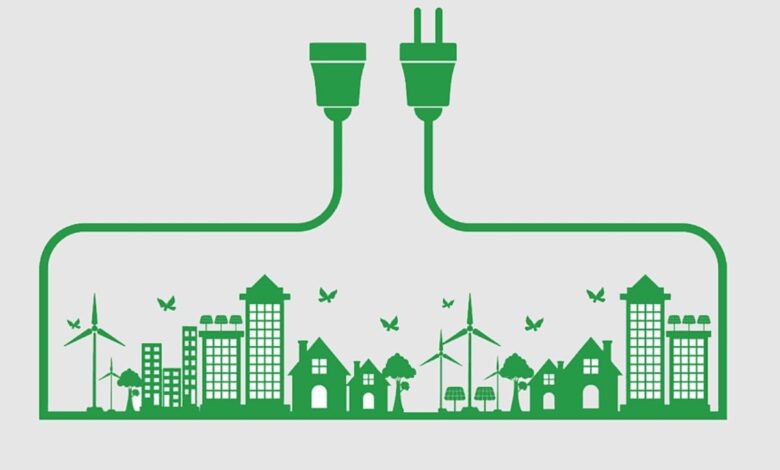
Understanding how energy storage technology works is like understanding the challenge of saving water during the rainy season for use in summer. Just as ancient civilizations built cisterns to capture rainfall, modern energy systems need sophisticated batteries to capture electricity from solar panels during sunny days or wind turbines on breezy nights, storing it for when renewable sources aren’t generating. Unlike water storage, which has remained fundamentally unchanged for millennia, energy storage technology is experiencing a renaissance in 2026.
India’s energy storage ecosystem encompasses nine hundred sixty-four startups focused on battery and storage innovations. Of these, one hundred ninety-six have secured funding, and fifty-five have advanced to Series A and later stages. What makes 2026 particularly significant is that India isn’t just consuming technology developed elsewhere, but creating fundamentally new approaches. The government’s requirement for seventy-four gigawatts and four hundred eleven gigawatt-hours of storage by 2032 has created a massive market encouraging innovation, while policy support provides the financial foundation for technical risk-taking.
The technology landscape spans multiple approaches. Some startups reimagine battery chemistry, moving beyond lithium to alternatives like zinc-bromine. Others optimize existing lithium-ion technology through sophisticated battery management systems and smart software. Still others build infrastructure layers through battery swapping networks treating energy storage as a service. Understanding these approaches requires grasping a fundamental truth: there’s no single perfect battery for all uses, just as there’s no single vehicle perfect for all transportation needs.
1. Offgrid Energy Labs: Reimagining Battery Chemistry
When most people think about advanced batteries, they think lithium-ion technology. But Offgrid Energy Labs, a deep-tech startup incubated at IIT Kanpur, is pioneering zinc-bromine chemistry through its proprietary ZincGel technology. Consider the challenges plaguing lithium-ion: lithium is geographically concentrated with China controlling much of the supply chain, batteries carry fire risks because electrolyte materials can combust, typical lifespan is around three thousand cycles before significant degradation, and recycling remains challenging and expensive.
ZincGel addresses these through innovative materials science. Zinc is the twenty-third most abundant element in Earth’s crust, mined in over fifty countries, dramatically reducing supply chain risks. The proprietary water-based electrolyte eliminates fire hazards. ZincGel batteries last through five thousand or more cycles, roughly double lithium-ion lifespan. This extended life matters for total cost. Imagine two batteries: one costs one hundred dollars lasting three years, another costs one hundred fifty dollars lasting seven years. The second is cheaper annually despite higher upfront cost—precisely ZincGel’s economic proposition for stationary storage.
The technology excels in long-duration storage where batteries discharge over six to twelve hours, ideal for balancing renewable energy captured during afternoon hours and discharged during evening peaks. Offgrid raised fifteen million dollars in Series A funding led by Archean Chemicals, building a ten megawatt-hour UK facility ready by early 2026 before scaling to gigawatt-hour production in India. With over twenty-five IP families and fifty IP assets globally, Offgrid has built substantial technological moats protecting its innovations.
2. Lohum Cleantech: Mastering the Circular Economy
While startups like Offgrid create new battery chemistries, Lohum Cleantech has built its technology around extracting maximum value through entire battery lifecycles. Think of this like a sophisticated automotive ecosystem where vehicles are manufactured, used for passenger transport, repurposed for delivery work, and finally dismantled with every component recycled for new vehicles—but far more complex with batteries.
Lohum operates three interconnected platforms. First, it manufactures advanced lithium-ion batteries using proprietary techniques optimizing energy density and longevity. Second, it provides second-life solutions for batteries degraded below primary thresholds but retaining seventy to eighty percent capacity. A battery unsuitable for powering electric vehicles might still provide years in stationary storage where weight doesn’t matter. This requires sophisticated testing to accurately assess remaining capacity and predict degradation patterns.
Third, Lohum has developed recycling technology recovering over ninety-eight percent of critical materials. A typical lithium-ion battery contains lithium, cobalt, nickel, manganese, and graphite. Extracting these through mining requires enormous energy, while recovering from used batteries is far more efficient. Lohum’s processes achieve recovery rates rivaling global leaders while maintaining profitability at one gigawatt-hour scales. The MG Motor partnership repurposes vehicle batteries into five kilowatt-hour off-grid systems for urban and rural applications. With capacity expanding from twenty thousand to fifty thousand tonnes annually and revenue approaching eight hundred thirty-five crore rupees, Lohum exemplifies technology-driven circular economy at commercial scale.
3. Neuron Energy: Scaling Advanced Manufacturing
Neuron Energy represents the challenge of translating battery science from laboratory prototypes to gigawatt-hour manufacturing. Founded in 2018, the company opened a one point five gigawatt-hour facility in Chakan, Pune, expanding to three gigawatt-hours. One gigawatt-hour capacity can power approximately twenty thousand electric vehicles annually or provide storage for medium-sized solar installations.

What distinguishes Neuron is integrated battery pack engineering. Rather than assembling purchased cells, Neuron develops custom configurations for specific applications. Electric two-wheeler batteries need different characteristics than factory energy storage. Two-wheeler batteries must be lightweight, handle rapid acceleration and regenerative braking, withstand vibration and temperature swings, and fit constrained spaces. Factory storage can be heavier, operates in controlled environments, handles slower but longer cycles, and prioritizes cost over weight.
Neuron’s battery management systems incorporate sophisticated sensors monitoring individual cell voltages, temperatures, and state of charge. This granular data enables cell balancing, preventing overcharging or over-discharging, predicting maintenance, and optimizing performance under varying conditions. The facility includes research exploring sodium-ion batteries offering lower costs for stationary applications, aluminum-air batteries with potentially higher energy density, and solid-state batteries replacing liquid electrolytes for improved safety. Currently ninety-five percent of revenue comes from mobility, but Neuron projects energy storage growing to thirty to forty-five percent by 2030.
4. Cygni Energy: Systems Integration Engineering
Cygni Energy, founded in 2014 and incubated at IIT Madras, approaches energy storage from systems engineering perspectives. The recently launched Hyderabad gigafactory with four point eight gigawatt-hours capacity focuses on creating integrated solutions addressing real-world deployment challenges. One key focus is thermal management. Batteries generate heat during charging and discharging, and in India’s climate where temperatures regularly exceed forty degrees Celsius, inadequate thermal management can reduce battery life by fifty percent. Cygni employs computational fluid dynamics and advanced thermal systems maintaining optimal operating temperatures.
The company pioneered direct current architecture for microgrids. Solar panels generate direct current, batteries store direct current, and many modern loads operate on direct current. However, most buildings use alternating current, requiring multiple energy-wasting conversions. Cygni’s direct current architecture minimizes conversions, improving efficiency by ten to fifteen percent while reducing component costs. Containerized solutions ranging from one kilowatt-hour residential to multi-megawatt-hour utility-scale installations integrate batteries, thermal management, safety systems, and power electronics in standardized containers manufactured centrally and deployed anywhere.
5. Battery Smart: Infrastructure Technology Platform
Battery Smart represents infrastructure and software innovation enabling battery swapping networks. For commercial electric two-wheelers and three-wheelers used for deliveries, batteries often cost as much as the entire vehicle, creating enormous adoption barriers. Battery Smart’s technology platform addresses this through energy-as-a-service where drivers purchase vehicles without batteries at reduced cost, then subscribe to swapping services paying based on usage.
The platform tracks thousands of batteries across hundreds of locations, ensuring charged batteries are available where needed while optimizing charging during off-peak hours when electricity costs are lowest. Interoperable battery packs work across multiple vehicle models through standardized interfaces. This standardization creates network effects where more vehicles support more stations support more vehicles. The mobile application provides real-time battery availability, navigation, payment processing, and usage analytics. Behind the scenes, machine learning algorithms predict demand patterns, optimize battery distribution, and identify maintenance needs.
Quick swap technology completes exchanges in under two minutes through mechanical designs allowing rapid release and installation without tools. For delivery drivers whose income depends on vehicle uptime, this two-minute swap versus potentially hours of charging represents viable business economics versus failure. The partner-led asset-light station model enables small entrepreneurs to operate swap stations with minimal capital, using Battery Smart’s technology platform, battery supply, and operational support.

6. SUN Mobility: Modular Architecture Innovation
SUN Mobility distinguishes itself through modular battery architectures working across vehicle classes from two-wheelers to heavy commercial vehicles. The fundamental insight is that different vehicles require vastly different energy capacities. A two-wheeler might need two kilowatt-hours, while a delivery truck might require one hundred kilowatt-hours. Rather than designing completely separate batteries, SUN Mobility developed modular building blocks.
Individual battery modules combine in different configurations to meet specific vehicle requirements. A two-wheeler uses two modules, while a truck uses fifty of the same modules. This modular standardization dramatically reduces manufacturing complexity and cost while enabling battery swapping at whatever scale the vehicle requires. The technology innovation lies in electrical and mechanical interfaces allowing modules to be connected in series and parallel configurations while maintaining thermal management, safety monitoring, and communication across entire packs. Quick interchange stations incorporate robotics and handling systems swapping entire battery packs or individual modules depending on vehicle type. For heavy commercial vehicles, the technology allows swapping only depleted modules rather than entire packs, reducing swap time and physical handling.
7. Magenta Mobility: Integrated Fleet Technology
Magenta Mobility, founded in 2018 with forty-one point five million dollars raised, built an integrated platform spanning electric vehicles, charging infrastructure, and fleet management. What makes Magenta technologically distinctive is combining hardware and software optimizing entire logistics operations. The PLENT charging technology consolidates twelve charging stations into one unit using intelligent power management distributing available electricity across multiple vehicles. This addresses critical infrastructure constraints where grid capacity is limited. Rather than requiring twelve separate high-capacity electrical connections, PLENT manages twelve vehicles from one connection through smart load balancing.
Magenta’s fleet management platform incorporates real-time vehicle tracking, battery temperature monitoring, performance analytics, and predictive maintenance. The system identifies vehicles showing early battery degradation signs, unusual energy consumption suggesting mechanical issues, or wasteful driving behaviors. This data-driven approach reduces downtime, extends vehicle and battery life, and improves efficiency. All Magenta chargers feature Firmware Over-The-Air capabilities, allowing performance improvements and feature additions through software updates without physical equipment access.
8. Greenfuel Energy Solutions: Applied Domain Expertise
Greenfuel Energy Solutions evolved from being India’s largest compressed natural gas vehicle component supplier to lithium-ion battery manufacturing. This transition brings deep understanding of commercial vehicle operations under Indian conditions that purely battery-focused startups often lack. The company knows commercial vehicles operate in extremely harsh environments with temperature extremes, vibration, dust, and irregular maintenance. Batteries designed without this context often fail prematurely despite impressive laboratory performance. Greenfuel’s battery packs incorporate ruggedized construction, enhanced sealing against dust and moisture, thermal management for ambient temperatures exceeding fifty degrees Celsius, and mounting systems withstanding vibration without damage. The pan-India service network provides rapid response to battery issues, critical for commercial operators where vehicle downtime directly reduces income.
9. Inverted Energy: Custom Engineering Solutions
Inverted Energy, founded in 2017 by IIT engineers, specializes in designing custom lithium-ion solutions for applications where standardized products don’t fit. The company serves electric cycles, scooters, rickshaws, solar installations, portable lighting, and consumer electronics. Each presents unique technical challenges. Electric cycle batteries must be extremely lightweight while providing adequate range. Solar applications handle irregular charging patterns from variable sunlight. Consumer electronics require compact form factors with specific voltage and capacity combinations. Inverted Energy’s engineering approach analyzes application requirements, designs cell configurations and battery management systems, develops appropriate thermal management, and engineers mechanical packaging fitting within constraints.
10. Attero Recycling: Advanced Materials Recovery
Attero Recycling applies sophisticated hydrometallurgical and pyrometallurgical technologies recovering over ninety-eight percent of lithium carbonate, cobalt, nickel, and graphite from end-of-life batteries. NASA-recognized for urban mining innovations, Attero uniquely extracts all metals including electrolytes at pharmaceutical-grade purity. The largest facility incorporates over thirty global patents covering battery disassembly automation, chemical processes for separating specific elements, and quality control systems ensuring consistent output. The technology handles diverse battery chemistries and formats from small consumer electronics to large vehicle batteries. Automated systems safely discharge batteries, mechanical processes break them into components, chemical processes dissolve and separate materials, and purification systems achieve high-purity outputs suitable for manufacturing new batteries.
The Technology Landscape Ahead
India’s energy storage technology startup ecosystem in 2026 demonstrates remarkable breadth, from fundamental battery chemistry innovations like ZincGel to infrastructure platforms enabling battery swapping networks. This diversity reflects that energy storage requirements vary enormously across applications. Battery technology optimal for smoothing renewable generation operates under completely different constraints than batteries powering delivery vehicles, which differ from batteries providing residential backup power.
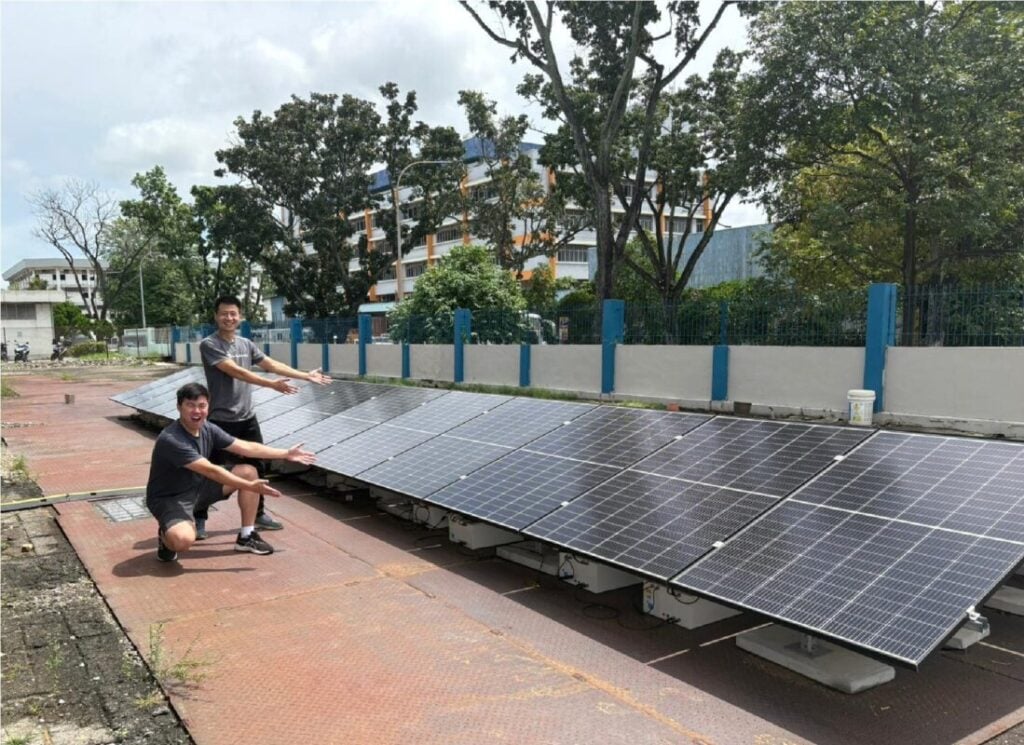
The technological trajectory points toward continued chemistry diversification beyond lithium-ion, improved manufacturing automation and quality control, sophisticated software optimizing battery performance and lifecycle, integration with renewable energy and grid systems, and circular economy approaches maximizing value extraction across battery lifecycles. As India works toward ambitious storage targets of seventy-four gigawatts and four hundred eleven gigawatt-hours by 2032, these technology innovations will determine not just whether targets are met, but at what cost and with what strategic implications for resource security and industrial competitiveness. The startups highlighted here represent different pathways to that future, all sharing commitment to technological innovation as the foundation for commercial success and India’s energy transformation.