Introduction: The Electric Revolution Reshaping Indian Public Transport
India’s public transportation landscape is experiencing a transformative shift in 2026 as electric buses rapidly replace diesel-powered fleets across cities and towns nationwide. This revolution is driven by multiple converging forces including deteriorating urban air quality in some of the world’s most polluted cities, rising fuel costs that strain transportation budgets, ambitious government initiatives like the PM e-Bus Sewa and PM E-DRIVE schemes, and India’s commitment to reducing carbon emissions as part of its global climate pledges. The electric bus market has evolved from pilot projects and skepticism to become a mainstream transportation solution that is fundamentally reshaping how Indians move through their cities.
According to industry data analyzed in early 2026, the electric bus sector has achieved remarkable growth with market share rising from just four percent of bus sales in fiscal year 2024 to approximately five percent in fiscal year 2025, with projections suggesting continued acceleration toward ten to twelve percent by fiscal year 2027. The government’s landmark PM e-Bus Sewa scheme, launched in August 2023 with a total outlay of fifty-seven thousand six hundred thirteen crore rupees, aims to deploy ten thousand electric buses in one hundred sixty-nine cities through public-private partnership models.
This is complemented by the PM E-DRIVE scheme introduced in October 2024, which provides forty-three hundred ninety-one crore rupees specifically for procuring fourteen thousand twenty-eight electric buses by state transport undertakings through March 2026. To ensure financial viability and protect private operators against payment defaults by state authorities, the government operates a Payment Security Mechanism worth thirty-four hundred thirty-five crore rupees approved in October 2024.
The top five manufacturers including Tata Motors, Olectra Greentech, JBM Auto, PMI Electro Mobility, and Switch Mobility collectively control eighty-eight percent of market share and maintain a combined annual manufacturing capacity exceeding forty thousand five hundred electric buses. This concentration reflects both the capital-intensive nature of electric vehicle manufacturing and the importance of proven operational track records in securing large government tenders that form the backbone of the Indian electric bus market. As we examine the leading manufacturers in this dynamic sector, it becomes clear that India is not merely adopting electric buses but is building indigenous capabilities that position the country as a potential global hub for electric mobility manufacturing and innovation.
1. Tata Motors: The Legacy Automaker Leading the Electric Transition
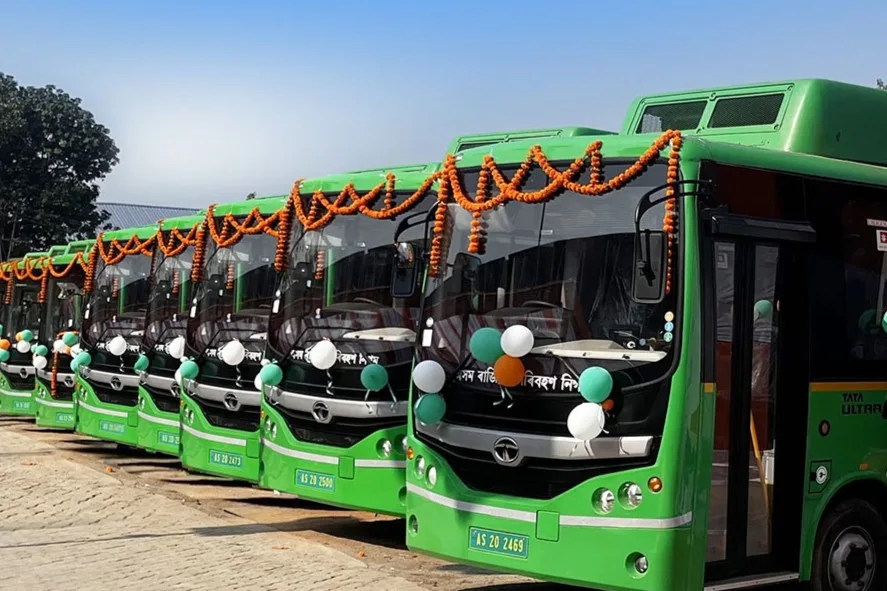
Tata Motors stands as India’s undisputed leader in commercial vehicle manufacturing and has successfully leveraged its extensive experience, manufacturing scale, and distribution networks to dominate the electric bus segment. As the country’s largest automaker with a diverse portfolio spanning passenger vehicles, commercial vehicles, luxury cars under the Jaguar Land Rover brand, and defense vehicles, Tata brings unmatched resources and credibility to the electric bus market. The company has supplied more than three thousand six hundred electric buses currently operating across eleven cities as of early 2026, demonstrating operational excellence with fleet uptime exceeding ninety-five percent even in demanding urban environments.
Tata’s electric bus portfolio centers around the Starbus EV and Ultra EV model families, offering configurations ranging from nine-meter to twelve-meter lengths with various floor heights to accommodate different urban contexts and passenger needs. The Starbus EV twelve-meter low-floor version features a four hundred kilowatt-hour battery pack charged through a CCS2 connector, powered by a two hundred forty-five kilowatt motor that delivers speeds up to seventy kilometers per hour and the capability to climb seventeen percent gradients.
The low-floor configuration with a floor height of just forty centimeters ensures easy ingress and egress, particularly benefiting senior citizens and differently-abled passengers, while seating options range from seventeen to thirty-five passengers depending on whether the bus prioritizes wheelchair accessibility or passenger capacity.
Recent orders underscore Tata’s market leadership position. In January 2025, the company secured an order for one hundred forty-eight additional Starbus EV units from Bengaluru Metropolitan Transport Corporation, building on an initial order of nine hundred twenty-one buses and bringing the total fleet commitment to over one thousand units in India’s tech capital. Through its subsidiary TML Smart City Mobility Solutions, Tata operates under a comprehensive twelve-year supply, operation, and maintenance model that transfers operational risk from cities to the manufacturer while ensuring long-term service quality. The company also secured a significant order for one hundred Magna EV intercity electric coaches from Green Energy Mobility Solutions, demonstrating capabilities beyond urban transit into longer-distance applications.
Tata’s approach emphasizes complete indigenization with design, engineering, and manufacturing centered in India, creating jobs and building national capability in electric vehicle technology. The company reports that its electric bus fleet has collectively covered over four hundred million kilometers, providing real-world validation of reliability and total cost of ownership advantages compared to diesel alternatives.
In fiscal year 2025, Tata registered one hundred thirty-two electric bus units during the first half of the year, representing approximately six percent market share during that period. While this represents a quieter phase compared to the company’s dominant position in 2024 when it registered over fourteen hundred electric buses, Tata remains strategically positioned with substantial order books and continues advancing hydrogen-powered fuel cell bus technology with fifteen units already operating in Delhi under a pilot project with Indian Oil Corporation.
2. Olectra Greentech: BYD Partnership Drives Scale and Innovation
Olectra Greentech has established itself as a pioneering force in India’s electric bus manufacturing through its strategic technology partnership with Chinese electric vehicle giant BYD, which provides access to proven battery and powertrain technologies that have been validated across millions of kilometers in global deployments. Incorporated in 2000 and originally focused on composite polymer insulators for electrical transmission, the company pivoted to electric mobility and now operates as India’s largest manufacturer of pure electric buses with more than two thousand eight hundred vehicles already deployed on roads across the country and an order book exceeding ten thousand units as of mid-2025.
The company manufactures a comprehensive range of electric buses spanning seven-meter, nine-meter, and twelve-meter configurations with over one hundred thirty-five product variants tailored to different applications including city transit, intercity travel, airport operations, and staff transport. During the first quarter of fiscal year 2026, Olectra commissioned a state-of-the-art greenfield manufacturing facility in Hyderabad with an initial annual capacity of five thousand units that can scale to ten thousand units, positioning the company to meet surging demand from government tenders and private operators. This facility incorporates automation, advanced quality control systems, and sustainable manufacturing practices that reduce environmental impact while improving production efficiency.
In the first half of calendar year 2025, Olectra registered three hundred sixty-six electric buses, capturing seventeen point four percent market share and maintaining steady delivery pace throughout the semester. The company sold ninety-eight units in August 2025 compared to eighty-nine units in July 2025, marking ten percent month-over-month growth and demonstrating operational momentum. Olectra serves a premier roster of customers including state transport corporations, municipal bodies, private fleet operators, and airport authorities, with particularly strong market position in Southern and Western India.
However, the company faces execution challenges that highlight the risks inherent in large-scale government contracts. Public reporting on Maharashtra contract disputes has exposed Olectra to reputational stress, demonstrating how delivery timelines and quality concerns can quickly impact customer relationships and market perception under gross cost contract models where manufacturers bear full operational responsibility.
The company’s market capitalization stood at thirteen thousand two hundred seventy-six crore rupees as of September 2025 with shares trading at sixteen hundred seventeen rupees, reflecting investor confidence tempered by execution uncertainties. Going forward, Olectra’s success depends on converting its substantial order book into timely deliveries while maintaining quality standards that ensure fleet reliability and customer satisfaction in an increasingly competitive market where newcomers are challenging established players.
3. JBM Auto: Four Decades of Bus Manufacturing Expertise Meets Electric Future
JBM Auto brings nearly four decades of bus manufacturing heritage to the electric mobility transition, operating across diversified business divisions that encompass automotive components and systems, buses and electric vehicles, EV aggregates, charging infrastructure, renewable energy, and environmental management. This comprehensive ecosystem approach differentiates JBM from pure-play electric vehicle manufacturers by creating vertical integration across the entire value chain from component manufacturing to charging infrastructure deployment. Established in 1996 and headquartered in Gurgaon, JBM has built relationships with state transport undertakings, aviation authorities, defense forces, and various mobility operators that provide a solid foundation for electric bus deployment.
The company’s electric bus order book exceeds eleven thousand units as of mid-2025, with over two thousand five hundred units already operating on roads across India. This massive pipeline provides revenue visibility extending multiple years into the future and positions JBM as one of the most aggressive players in capacity expansion. The company operates nineteen manufacturing locations equipped with more than one thousand presses and three thousand robots, supported by six gigawatt-hour battery manufacturing capacity and annual electric bus production capability of twenty thousand units. This manufacturing scale, combined with strategic alliances with international partners including LeafyBus, Hitachi Energy, and FlixBus, strengthens JBM’s technological capabilities and expands its international market access.
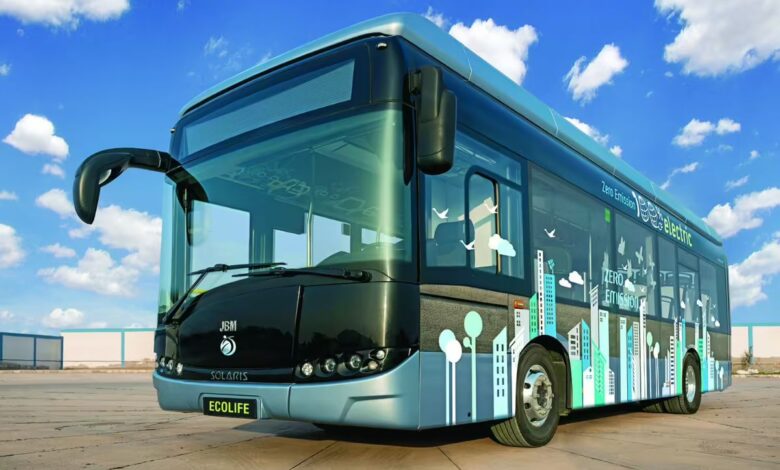
JBM’s flagship product, the Ecolife electric bus platform available in nine-meter and twelve-meter variants, emphasizes localization with indigenous design and manufacturing that optimizes total cost of ownership for Indian operating conditions. The company has achieved dominant market positions in specific segments including over ninety percent share in the airport tarmac bus category, forty to forty-five percent in luxury coaches, and approximately thirty percent in city and state transport undertaking markets.
In August 2024, JBM secured a transformative order worth seventy-five billion rupees for one thousand three hundred ninety electric buses under the PM e-Bus Sewa Scheme through its subsidiary JBM Ecolife Mobility, which is tasked with complete procurement, supply, operation, maintenance, and infrastructure development to be executed within twelve to eighteen months.
The company’s financial performance reflects this aggressive growth trajectory. In fiscal year 2025, JBM Auto secured one hundred million dollars in funding from the Asian Development Bank and Asian Infrastructure Investment Bank specifically for deploying five hundred seventy-five electric buses, boosting its asset-light expansion strategy that minimizes capital intensity.
The company sold sixty-two electric bus units in August 2025, though this represented a fifty-seven percent decline compared to one hundred forty-five units in July 2025, illustrating the lumpy nature of deliveries driven by project milestone schedules rather than steady monthly production. JBM’s evolution from a traditional bus body builder to a comprehensive electric mobility solutions provider encompassing vehicles, charging infrastructure, and operations demonstrates the company’s strategic vision and execution capability in a rapidly transforming industry.
4. Switch Mobility: Ashok Leyland’s EV Subsidiary Achieves Profitability
Switch Mobility represents Ashok Leyland’s focused electric vehicle strategy, formed through the rebranding of British bus manufacturer Optare in November 2020 and subsequent acquisition of Ashok Leyland’s EV division through a slump sale worth two billion four hundred million rupees. Part of the Hinduja Group, Switch brings together Ashok Leyland’s engineering strength and manufacturing scale with Optare’s electric bus design expertise and European market experience to create a global electric mobility platform with operations spanning India, the United Kingdom, and plans for manufacturing in Spain and the United Arab Emirates.
The company achieved a major milestone in fiscal year 2025 by posting double-digit EBITDA margins in the fourth quarter and reaching EBITDA breakeven for the full financial year, marking the transition from a cash-burning startup to a potentially sustainable business model. This profitability was achieved despite ongoing restructuring that included beginning the closure of UK manufacturing operations in Sherburn due to slower-than-expected electric vehicle adoption in British public transport markets. Executive Chairman Dheeraj Hinduja emphasized that Switch India is performing much better than expected and should not require significant equity infusion in the near future, providing confidence to Ashok Leyland shareholders concerned about subsidiary losses.
Switch Mobility’s product portfolio includes the EiV 12 and EiV 22 double-decker electric buses for the Indian market, with a new low-floor electric bus for city commutes under development on an entirely new platform. The EiV 12 low-floor version accommodates up to sixty-three passengers including thirty-nine seated and twenty-four standing, powered by floor-mounted lithium iron phosphate batteries with energy storage capacity ranging from one hundred eighty-nine to four hundred twenty-three kilowatt-hours depending on configuration, delivering range up to three hundred fourteen kilometers on a full charge.
The buses feature Switch iON, the company’s proprietary telematics platform providing real-time vehicle health monitoring, intelligent transportation management, and refined fleet control capabilities that enable operators to optimize routes, predict maintenance needs, and maximize uptime.
In the first half of calendar year 2025, Switch registered five hundred three electric buses, capturing twenty-four percent market share and maintaining consistent output across the first quarter with a strong rebound in June. The company’s order book exceeded eighteen hundred electric buses as of the third quarter of fiscal year 2025, including export orders that demonstrate international competitiveness.
Major deployments include three hundred electric buses for Bengaluru Metropolitan Transport Corporation announced in November 2021 and five hundred electric buses for Chennai Metropolitan Transport Corporation secured by subsidiary OHM Global Mobility in October 2024, with Switch supplying the state-of-the-art EiV 12 model buses that OHM will operate and maintain over a twelve-year contract period. Ashok Leyland projects Switch India volumes to triple in fiscal year 2026 driven by the robust order backlog, with revenue expected to reach nine hundred to one thousand crore rupees and the India business turning profit after tax within four to six quarters.
5. PMI Electro Mobility: The Emerging Market Leader
PMI Electro Mobility has emerged as one of India’s most dynamic electric bus manufacturers despite being incorporated only in 2017, demonstrating that focused execution and operational excellence can quickly build market leadership in rapidly growing segments. The company operates a cutting-edge production facility in the Delhi National Capital Region and has deployed more than two thousand eight hundred electric buses actively transforming public transport across thirty-one cities spanning Ladakh, Himachal Pradesh, Delhi, Uttar Pradesh in the North, West Bengal and Odisha in the East, Kerala in the South, and Gujarat, Maharashtra, and Goa in the West.
In the first half of calendar year 2025, PMI dominated the market by registering five hundred forty-two electric bus units, capturing twenty-five point eight percent market share and demonstrating particularly strong performance in April and May which alone contributed over sixty percent of total deliveries. This leadership position was maintained through mid-2025 when PMI led India’s electric bus market ahead of Switch Mobility and established players like Olectra and JBM. The company offers comprehensive product portfolio including seven-meter, nine-meter, and twelve-meter models plus school buses, providing flexibility to serve diverse customer requirements from compact feeder routes to full-size urban transit and specialized educational transport applications.
PMI’s business model emphasizes the Gross Cost Contract approach where the company forms separate special purpose vehicles for each project with local bus operators, taking responsibility for supply, operation, and maintenance of electric buses over contract tenures typically spanning ten to twelve years. This model transfers operational complexity from cities to the manufacturer while creating long-term recurring revenue streams that provide financial stability and incentivize quality and reliability.
As of February 2025, PMI maintained a strong order book position of two thousand eight hundred forty-five electric buses under GCC model, with one thousand buses scheduled for delivery by March 2026 and one thousand five hundred forty-six by March 2027, providing revenue visibility of approximately one thousand crore rupees in fiscal year 2026 and fifteen hundred crore rupees in fiscal year 2027.
The company has developed electric bus depots with capacity exceeding forty-four megawatts, providing comprehensive charging and maintenance support for its fleet and demonstrating capabilities beyond vehicle manufacturing to encompass complete infrastructure ecosystems. Each PMI electric bus is designed to save approximately twenty-eight thousand kilograms of carbon dioxide annually compared to diesel equivalents, and the collective fleet has logged over twenty crore green kilometers as of early 2025.
Recent deployments include two hundred fifty-five nine-meter DEVi electric buses inaugurated in Delhi in May 2025 as part of the Delhi government’s ambitious plan to introduce two thousand eighty neighborhood buses, with PMI supplying a total of one thousand four hundred fifty-six units. The company raised eighty-nine point two million dollars over four funding rounds with the latest Series C round in July 2025, and employs over four hundred people as of August 2025. PMI’s annual revenue reached four hundred thirty-seven crore rupees as of March 2024 with expectations of reaching seven hundred fifty crore rupees in fiscal year 2025.
6. EKA Mobility: Pinnacle Industries’ High-Tech EV Venture
EKA Mobility, formally known as Pinnacle Mobility Solutions Private Limited, represents the electric vehicle ambitions of Pune-based Pinnacle Industries, a leading automotive seating, interiors, and specialty vehicles manufacturer serving original equipment manufacturers across passenger vehicles, commercial vehicles, and farm equipment sectors. Founded in 2019 specifically to capitalize on India’s electric mobility transition, EKA has assembled impressive international partnerships including equity investments from Mitsui & Company of Japan which invested six hundred crore rupees in 2023, and technical collaboration with VDL Groep of the Netherlands, bringing global expertise and capital to accelerate development and scale.

The company manufactures a comprehensive range of electric buses spanning seven-meter, nine-meter, and twelve-meter variants including the flagship EKA COACH described as India’s first fully stainless-steel electric luxury bus for long-distance travel, the EKA 12M high-capacity urban transit bus, the EKA 9M for mid-sized commuting needs, the EKA LF low-floor bus providing enhanced accessibility within city limits with powerful electric drivetrain and efficient design, and the compact EKA 7M ideally suited for feeder services, hilly terrains, and narrow city lanes. This diverse product portfolio enables EKA to address multiple market segments from premium intercity travel to compact last-mile connectivity.
EKA Mobility secured major orders in 2025 including deployments worth approximately four hundred crore rupees from Nagpur Municipal Corporation and one hundred fifty crore rupees from Uttar Pradesh State Road Transport Corporation. The company partnered with GreenCell Mobility to deploy seven hundred fifty electric buses across Andhra Pradesh comprising one hundred twenty-nine nine-meter buses and six hundred twenty-one twelve-meter variants, marking a transformative step in the state’s green mobility mission following Letter of Confirmation of Quantity from Convergence Energy Services Limited.
Additionally, EKA partnered with Chartered Speed to deploy one thousand one hundred thirty-five electric buses under the PM e-Bus Sewa Scheme serving over three point six lakh passengers daily across seven states and union territories including Rajasthan, Chhattisgarh, Madhya Pradesh, Odisha, Meghalaya, Jammu and Kashmir, and Ladakh.
The company commissioned a five-thousand-unit annual capacity manufacturing plant in Chakan, Maharashtra in September 2024 and plans to establish a second facility in Pithampur near Indore to meet growing demand. EKA Mobility raised one hundred seventy-nine million dollars over four funding rounds with the latest Series A round in October 2025 securing fifty-seven million dollars from investors including Mitsui, Enam Holdings, and VDL Groep.
The company employed seven hundred fifty-two people as of August 2025 and reported annual revenue of two hundred forty-two crore rupees as of March 2025 with valuation reaching thirty-five hundred crore rupees as of April 2025. EKA is approved under the Central Government’s Production-Linked Incentive scheme which seeks to boost domestic manufacturing of advanced automotive technology products, providing financial incentives that improve competitiveness against imports.
7. VE Commercial Vehicles: Volvo-Eicher Joint Venture Enters Electric Segment
VE Commercial Vehicles, a fifty-fifty joint venture between Volvo Group and Eicher Motors established in 2008, leverages combined Swedish engineering excellence and Indian manufacturing efficiency to serve the commercial vehicle market. While historically focused on diesel-powered trucks and buses under the Eicher brand, the company has demonstrated visible progress with the Skyline Pro electric bus line manufactured at its India bus plant, signaling entry into the rapidly growing electric mobility segment. VE Commercial Vehicles benefits from access to Volvo’s global electric vehicle technology developed for European markets combined with Eicher’s deep understanding of Indian operating conditions, cost structures, and customer requirements.
The Skyline Pro E electric bus is available in nine-meter and twelve-meter variants designed specifically for Indian urban transit applications, incorporating features like air conditioning, low-floor accessibility, comfortable seating, and advanced safety systems. The company’s manufacturing infrastructure includes dedicated facilities for bus production with capabilities to integrate electric powertrains, battery packs, and charging systems. VE Commercial Vehicles’ extensive service network spanning India provides aftermarket support crucial for fleet operators managing daily operations where downtime directly impacts revenue and service quality.
The company’s entry into electric buses represents a strategic hedge against the decline of diesel commercial vehicles and positions VE Commercial Vehicles to participate in government procurement programs that increasingly specify electric-only requirements. While the company has not disclosed specific order numbers or delivery schedules as aggressively as pure-play electric bus manufacturers, industry observers note that VE Commercial Vehicles’ joint venture structure provides financial stability and long-term investment capability that could enable rapid scaling once the electric bus market reaches sufficient maturity and volume.
The Volvo connection also provides potential access to advanced battery management systems, electric motor technologies, and autonomous driving capabilities being developed for global markets that could differentiate Skyline Pro buses in the premium segment of India’s electric bus market.
8. BYD India: Chinese EV Giant’s Direct Market Entry
BYD, the world’s largest electric vehicle manufacturer headquartered in Shenzhen, China, operates in India both through its technology partnership with Olectra Greentech and increasingly through direct sales and service operations. The company’s global leadership in battery technology, with over twenty years of experience manufacturing lithium-ion batteries for consumer electronics, electric vehicles, and energy storage systems, provides technical advantages in cost, energy density, charging speed, and thermal management that are difficult for competitors to replicate without similar scale and R&D investment.
BYD’s electric bus technology has been deployed across more than fifty countries with over seventy thousand units in operation globally, providing extensive real-world validation of reliability, safety, and total cost of ownership. The company manufactures complete electric bus systems including battery packs, electric motors, power electronics, and vehicle control systems, enabling deep integration and optimization that third-party integrators cannot easily match. BYD’s iron-phosphate battery chemistry, which the company pioneered for automotive applications, offers superior safety characteristics with reduced fire risk compared to nickel-manganese-cobalt batteries, longer cycle life exceeding four thousand charge cycles, and better performance retention in hot climates like India.
While BYD primarily serves the Indian market through Olectra as the manufacturing and distribution partner, the company maintains direct presence through service centers, training programs, and technical support that ensure knowledge transfer and localization of electric vehicle technology. BYD’s global supply chain provides cost advantages through economies of scale in procuring raw materials like lithium, cobalt, and specialized electronic components. As India’s electric bus market continues expanding, BYD faces strategic decisions about potentially establishing direct manufacturing operations to serve both domestic demand and export markets in South Asia, Africa, and the Middle East, though political sensitivities around Chinese investment in strategic sectors may constrain direct market entry strategies compared to partnership models.
9. Mahindra Electric: Automotive Conglomerate’s EV Division
Mahindra Electric, the electric vehicle division of Mahindra & Mahindra, one of India’s oldest and most diversified automotive manufacturers, brings over seven decades of automotive manufacturing experience to electric mobility. While Mahindra Electric has focused primarily on electric three-wheelers and passenger vehicles including the e2o compact car and eVerito sedan, the company’s broader Mahindra Truck and Bus Division provides natural synergies for entering electric bus manufacturing. Mahindra operates extensive manufacturing facilities across India with proven capabilities in vehicle design, supply chain management, quality control, and dealer network development.
The company’s electric vehicle expertise includes indigenous development of battery management systems, electric motor designs, and power electronics that could be scaled from passenger vehicles to commercial applications. Mahindra’s automotive division has experience manufacturing buses for various applications including staff transport, school buses, and tourist coaches, providing familiarity with commercial vehicle customer requirements, procurement processes, and service expectations that differ fundamentally from passenger car markets. The Mahindra brand carries strong equity in India associated with reliability, value for money, and local manufacturing that could translate into competitive advantages in electric bus tenders where domestic content and Make in India credentials influence evaluation criteria.
Industry observers note that Mahindra has been relatively cautious in electric bus deployment compared to aggressive market entry by newer players, potentially reflecting strategic prioritization of electric passenger vehicles and three-wheelers where the company has established market presence. However, the group’s historical pattern of entering new mobility segments once market viability is proven suggests that Mahindra could leverage existing manufacturing assets, component commonality with electric trucks and passenger vehicles under development, and brand strength to become a significant player if it commits resources to electric bus production.
The company’s global partnerships including collaboration with Ford on electric vehicle platforms and potential access to technologies developed by Mahindra subsidiaries in Europe and North America provide additional capability that could accelerate electric bus development.
10. Tata Elxsi and Automotive Technology Partners
The Indian electric bus ecosystem extends beyond vehicle manufacturers to include critical technology suppliers that enable indigenous development of advanced systems. Tata Elxsi, the design and technology subsidiary of Tata Group, provides electric vehicle engineering services including battery management systems design, electric powertrain development, vehicle control software, charging infrastructure solutions, and connected vehicle platforms. The company works with multiple electric bus manufacturers to develop customized solutions adapted to Indian operating conditions, regulatory requirements, and cost targets that balance performance with affordability.
Technology partnerships are increasingly important as electric buses incorporate sophisticated electronics, artificial intelligence for predictive maintenance and route optimization, advanced driver assistance systems moving toward autonomous operation, and vehicle-to-grid capabilities that enable buses to serve as mobile energy storage assets. Indian manufacturers are building relationships with global suppliers including Siemens for traction motors, ABB and Delta Electronics for charging infrastructure, and semiconductor companies like NVIDIA for computing platforms, while simultaneously developing indigenous capabilities to reduce import dependence and improve cost competitiveness.
The government’s emphasis on localization through programs like Make in India and Production-Linked Incentive schemes creates incentives for technology development within India, spurring investments in battery cell manufacturing, electric motor production, and power electronics fabrication. Companies like Tata AutoComp, Motherson Group, and Samvardhana Motherson are expanding capabilities in electric vehicle components that serve both domestic manufacturers and export markets. This ecosystem development is critical for India to move beyond vehicle assembly toward deep manufacturing capabilities that create sustainable competitive advantages and enable price points accessible to cost-sensitive public transport operators across the country.
Conclusion: The Road Ahead for India’s Electric Bus Industry
India’s electric bus manufacturing sector in 2026 represents a dynamic and rapidly maturing industry that has transitioned from experimental pilots to mainstream commercial deployment with multiple credible manufacturers competing vigorously for market share. The convergence of supportive government policies including substantial financial incentives and payment security mechanisms, deteriorating urban air quality creating political pressure for zero-emission solutions, improving technology that delivers comparable or superior total cost of ownership versus diesel alternatives, and growing manufacturing scale that reduces unit costs has created favorable conditions for continued rapid growth.
The industry faces significant challenges including charging infrastructure deployment that requires coordination between electric utilities, municipal authorities, and bus operators; battery supply chain vulnerabilities with India dependent on imports for lithium-ion cells; skilled workforce shortages particularly for technicians capable of diagnosing and repairing high-voltage electrical systems; and operational uncertainties as electric buses accumulate mileage under demanding Indian conditions including extreme heat, dust, and road quality that may reveal reliability issues not apparent in initial deployments.
The financial sustainability of manufacturers operating under gross cost contract models where they bear full operational risk over ten to twelve year tenures remains unproven at scale, with some early adopters already experiencing contract disputes and delivery delays that damage reputation and strain working capital.
However, the trajectory appears strongly positive. Industry projections suggest electric bus market share could reach ten to twelve percent by fiscal year 2027 and potentially fifteen percent by 2030 as costs continue declining, charging infrastructure expands, and operational experience builds confidence. The top manufacturers profiled in this analysis are investing billions of rupees in production capacity, battery assembly facilities, charging infrastructure, and service networks that will support hundreds of thousands of electric buses over the coming decade. The diversity of approaches from established automotive giants leveraging existing scale to nimble startups bringing technology partnerships and operational innovation creates healthy competition that accelerates improvement.
For India’s cities choking on pollution and congestion, for millions of daily commuters seeking affordable and comfortable public transport, and for a nation committed to reducing its carbon footprint while building indigenous industrial capabilities, electric buses represent more than just a technological transition. They embody the possibility of sustainable urban development that balances economic growth with environmental protection and quality of life. The manufacturers building India’s electric bus industry are not merely selling vehicles but are constructing the infrastructure foundation for livable cities in the twenty-first century.