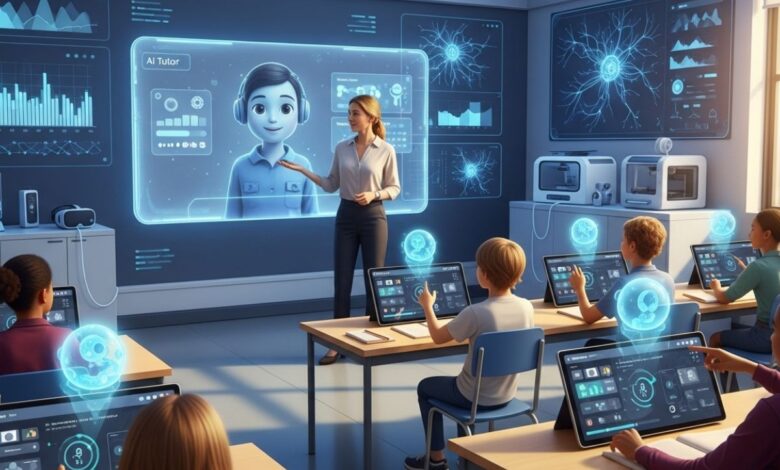
India’s education technology landscape has undergone a fundamental transformation in 2026, moving decisively away from the massive livestream classrooms that characterized the previous generation of online learning toward something far more personal and effective. The shift represents more than just a technological upgrade—it addresses a deep-seated problem in Indian education where students in large classes, whether physical or digital, often struggle to receive the individual attention necessary for true understanding and mastery.
Traditional tuition centers and live online classes, while reaching thousands of students simultaneously, leave most learners invisible in the crowd, unable to ask questions at their own pace or receive feedback tailored to their unique learning patterns and knowledge gaps. Meanwhile, one-on-one human tutoring, while highly effective, remains prohibitively expensive at rates reaching two thousand five hundred to three thousand rupees per hour in major cities, pricing out the vast majority of Indian families who nonetheless desperately want their children to receive personalized educational support.
This is where artificial intelligence tutors have emerged as a genuinely transformative force. These sophisticated platforms do not simply deliver pre-recorded video lectures or automated quiz systems that earlier generations of EdTech companies offered. Instead, they function as persistent learning companions that remember each student’s journey through the curriculum, identify patterns in mistakes and misunderstandings, adapt content difficulty and pacing to individual needs, provide explanations in multiple ways until concepts truly click, and offer this personalized attention at a fraction of traditional tutoring costs.
The Indian government’s ambitious target of training ten million teachers in AI pedagogy by the academic year 2026-27, as outlined in the National Education Policy 2020, reflects official recognition that artificial intelligence represents not a replacement for human educators but rather a powerful tool that can extend their reach and effectiveness, enabling truly personalized learning at scale.
Understanding these AI tutor platforms requires appreciating what makes them genuinely different from the chatbots and search tools many people have encountered. Generic AI systems excel at providing broad information or answering isolated questions, but they struggle with the sustained, context-aware guidance that characterizes effective tutoring.
The best AI tutors operating in India today are highly exam-specific, deeply familiar with the syllabi and question patterns of Indian educational boards and competitive examinations, capable of tracking student performance over weeks and months to identify subtle patterns, and focused relentlessly on measurable learning outcomes rather than mere content delivery. The platforms profiled in this comprehensive analysis represent the vanguard of this educational revolution, each bringing unique approaches and capabilities to the challenge of democratizing access to high-quality personalized learning across India’s diverse and demanding educational landscape.
1. Edza AI: Personalized Attention for Indian Examinations
Edza AI has positioned itself at the forefront of India’s AI tutoring revolution through its focus on providing what it describes as a personal tutor cloned into artificial intelligence specifically designed for Indian examinations across Classes 7 through 12, recently expanded to include the intensely competitive JEE and NEET entrance examinations. Operating under Maharashtra-based Hacktivspace Private Limited, the platform announced its JEE and NEET expansion in January 2026, building upon its established base of over thirty thousand learners primarily concentrated in Classes 9 through 12 across multiple Indian educational boards including CBSE, ICSE, and various state boards.
The company’s language reveals careful strategic positioning. Rather than claiming to replace schools or human teachers entirely, Edza AI presents itself as addressing what it calls the personal attention deficit that makes expensive one-on-one human tuition a necessity for many Indian families seeking academic excellence for their children. This framing acknowledges the reality that while schools provide foundational instruction and peer interaction, the sheer size of most Indian classrooms makes truly individualized attention mathematically impossible, creating demand for supplementary tutoring that has traditionally been met through expensive private arrangements or impersonal coaching centers.

The technical foundation of Edza AI rests on what Rishabh from the machine learning team, who completed graduate studies at the University of Milan, describes as an adaptive tutoring workflow system built around a persistent learning context loop. This means the AI tutor maintains continuous awareness of where each student stands within any given chapter, what they have previously attempted and how they performed, which concepts they repeatedly misunderstand despite multiple explanations, and how their overall performance trends over time. This persistent memory ensures that each tutoring session resumes with full context rather than starting from scratch as if the student were a complete stranger, mirroring how experienced human tutors build deep familiarity with individual students over extended relationships.
The platform’s approach to tutoring recognizes that effective education is not a single activity but rather a bundle of interconnected functions. Edza AI addresses this through several integrated capabilities. The system remembers mistakes and weak areas, treating them not as isolated incidents but as signals of deeper conceptual gaps that require targeted intervention through customized practice exercises that specifically address identified weaknesses.
Continuous adaptive assessment loops ensure that students are tested, the tutor detects patterns in errors, and subsequent content adjusts based on performance signals rather than following rigid predetermined sequences. Voice-call tutoring with collaborative whiteboarding allows students to explain their thinking verbally and see solutions developed in real time through diagrams and step-by-step workings, closely approximating the interaction style of in-person tutoring. AI Shorts provide quick visual explanations through text-to-animation technology, delivering concept clarification in bite-sized formats that fit naturally into study sessions.
Looking toward the broader implications, when Indian households are already paying substantial monthly tuition fees or per-hour rates approaching two thousand five hundred rupees in major metropolitan areas, an always-available personal tutor need not achieve absolute perfection to gain adoption—it merely needs to provide consistently helpful guidance at dramatically lower cost. The forecast for 2026 is not that traditional tuition ends entirely but rather that it becomes unbundled, with routine functions like diagnosis, repetition checking, and targeted practice migrating to AI systems offering on-demand attention, while human tutors increasingly concentrate on higher-touch mentorship, motivation, and strategic academic guidance that genuinely requires human emotional intelligence and experience.
2. SigIQ.ai: Demonstrating Mastery Before Teaching
SigIQ.ai represents an innovative approach to AI tutoring that begins with a provocative premise—before an AI system can effectively tutor students on passing difficult examinations, it should first demonstrate its own ability to ace those very same tests. Founded in 2023 by Doctor Karttikeya Mangalam, who grew up in Bihar where access to elite educational resources remained severely limited, and Professor Kurt Keutzer, the company operates from dual headquarters in California and Gurgaon, India. The founding story embodies the democratization promise of AI-powered education, with Mangalam completing degrees at IIT Kanpur and UC Berkeley before launching SigIQ.ai specifically to make advanced tutoring universally available regardless of geography or socioeconomic status.
The company achieved remarkable public validation of its approach during India’s UPSC civil service examination in June 2024, when SigIQ.ai’s AI tutor completed the two-hour preliminary examination paper in under seven minutes while scoring one hundred seventy-five marks out of a possible two hundred. This performance represents the highest score ever recorded in the exam’s history, surpassing the results of over 1.3 million human participants who annually attempt this notoriously difficult gateway to India’s prestigious civil service positions.
The demonstration was broadcast live at an event in Delhi and received widespread coverage in Indian media, establishing the platform’s credentials in a manner that traditional marketing could never achieve—through objective, verifiable performance on an examination that Indians universally recognize as intellectually demanding.
In January 2026, SigIQ.ai announced securing nine and a half million dollars in funding co-led by House Fund and GSV Ventures, with additional participation from Duolingo, Peak XV Partners, Calibrate Ventures, and angel investors from academia and AI startup ecosystems. Doctor Mangalam characterized the funding round as validation that the company stands at a pivotal moment in education where modern generative AI can provide personal one-on-one tutoring to every student while reducing the cost of personalized learning from hundreds of dollars per hour to essentially the computational cost of running AI models on server infrastructure.
The platform’s core philosophy emphasizes a fundamental distinction between what it calls digital tutors rather than digital assistants. Generic chatbot systems can answer isolated questions or retrieve information from large databases, but they lack the deep subject mastery, pedagogical sophistication, and persistent context awareness that characterizes effective tutoring. By first creating AI systems capable of themselves achieving top performance on target examinations, SigIQ.ai ensures accuracy and quality in the teaching delivered, setting what it argues is a necessary benchmark for educational AI that goes beyond conversational plausibility to verifiable subject matter expertise.
Since founding, the company has launched two core products addressing different examination contexts. EverTutor focuses on the UPSC civil service examination that attracts over a million Indian aspirants annually, providing comprehensive preparation support grounded in the demonstrated capability of the underlying AI to outperform human test-takers. The company has also developed offerings for the GRE examination taken by students seeking graduate education abroad, with plans to expand US presence supporting GRE candidates through upcoming academic cycles.
Jeremy Fiance, Managing Director of The House Fund, emphasized that SigIQ.ai is not merely another EdTech startup but rather has built an AI system that publicly demonstrated ability to outperform both humans and leading commercial AI models on one of the world’s most challenging examinations, representing a fundamental redefinition of what becomes possible in personalized education.
Looking forward, while initial use cases concentrate on standardized examinations where performance can be objectively measured, SigIQ.ai articulates long-term ambitions to support personalized learning across broader subject areas and age groups, particularly targeting regions with limited access to traditional educational infrastructure. The company plans to showcase technology at ASU+GSV, a key education and technology conference, while continuing to refine its tutoring systems based on actual student outcomes and learning trajectories.
3. Embibe: AI-Powered Performance Analytics and Prediction
Embibe has established itself as a leading AI-powered personalized learning platform with particular strength in competitive examination preparation including IIT JEE, NEET, and preparations for various educational boards across India. Founded in 2012 by Aditi Avasthi with a mission to provide personalized educational feedback addressing gaps in traditional education, the platform has evolved dramatically through strategic backing from Reliance Industries, which acquired Embibe in 2018 and subsequently integrated it into Jio Platforms in April 2025, dramatically expanding its reach and resources.
The platform’s core strength lies in its sophisticated use of data analytics and artificial intelligence to create deeply personalized learning experiences that adapt continuously to each student’s demonstrated performance and understanding. By 2023, Embibe had accumulated over five million registered users reflecting seventy percent year-over-year growth, with approximately six hundred thousand daily active users engaging with the platform’s adaptive learning systems. This scale provides enormous data advantages, as the AI systems can identify patterns across millions of student interactions to understand which teaching approaches prove most effective for students displaying particular learning characteristics or struggling with specific conceptual challenges.
Embibe’s AI-driven predictive analysis represents one of its most valued features among students preparing for high-stakes competitive examinations. The system analyzes performance on practice tests and exercises to generate probability-based predictions of likely examination scores and ranks, helping students understand their current readiness levels and make informed decisions about study priorities and time allocation. For students facing the intense pressure of examinations like JEE and NEET where ranks determine admission to prestigious institutions, this predictive capability provides valuable feedback that helps maintain realistic expectations while identifying specific areas requiring additional focus.
The platform provides detailed insights into each student’s individual strengths and areas requiring improvement through comprehensive performance analytics that go far beyond simple right or wrong scoring. The system tracks response times, identifies topics where students consistently struggle, recognizes patterns in mistakes that suggest specific conceptual misunderstandings, and generates targeted practice sets designed to address identified gaps. This outcome-focused approach ensures that practice time gets invested where it will generate maximum improvement rather than being diffused across material the student already understands adequately.
Embibe has incorporated three-dimensional interactive learning experiences that go beyond traditional text and two-dimensional diagrams to help students visualize complex scientific concepts, geometric relationships, and spatial reasoning problems that prove particularly challenging when presented through conventional formats. The integration of Samsung TVs announced in January 2025, offering fifty percent discounts on annual subscriptions purchased through the television platform, exemplifies strategic partnerships designed to expand accessibility by meeting students where they already engage with digital content.
Integration into Jio Platforms positions Embibe within Reliance Industries’ broader digital ecosystem, providing potential synergies with telecommunications infrastructure, digital payment systems, and content distribution networks that few standalone EdTech companies can match. Analysts had predicted in 2021 that Reliance’s EdTech business including Embibe could achieve valuations between seven and eight billion dollars by 2025, driven by anticipated threefold increases in paid users potentially reaching thirty million. While the EdTech sector has experienced funding contractions and shifts from hypergrowth toward more sustainable models, Embibe’s integration with a deep-pocketed strategic investor provides unusual stability compared to venture-backed competitors facing profitability pressures.
4. Toppr: Adaptive Learning Paths and Instant Doubt Resolution
Toppr has built its reputation on adaptive learning technology that creates genuinely customized educational paths for K-12 students rather than forcing all learners through identical predetermined sequences. The platform uses artificial intelligence to assess individual learning styles, pace, and current understanding levels, then adjusts the difficulty and sequencing of content to ensure optimal engagement without overwhelming students or boring them with material they have already mastered.
The adaptive system operates through continuous feedback loops where student performance on practice questions and exercises directly influences what content the AI presents next. If a student demonstrates solid understanding of a particular topic through accurate and efficient problem-solving, the system accelerates forward to more advanced material or different subjects requiring attention. Conversely, when students struggle with specific concepts or question types, the AI automatically generates additional explanations, practice problems, and alternative teaching approaches targeting the demonstrated gaps.
Toppr’s instant doubt resolution feature leverages AI algorithms to provide real-time solutions to student queries as they arise during study sessions. This addresses a fundamental frustration of self-paced learning where students often get stuck on particular problems or concepts and must either wait hours or days for scheduled tutoring sessions or simply move on without fully resolving their confusion. The AI system can parse student questions, identify the underlying conceptual issue or procedural step causing difficulty, and generate step-by-step explanations with worked examples that address the specific point of confusion.
The platform offers personalized learning modules that combine video lessons, interactive exercises, comprehensive practice question banks, and detailed performance tracking across all major Indian educational boards and competitive examinations. Students preparing for JEE, NEET, or board examinations find dedicated preparation tracks that align precisely with relevant syllabi and examination patterns, ensuring that study time focuses on material that will actually appear on target tests rather than tangential content.
Toppr’s pricing strategy positions it in the mid-range tier of Indian EdTech platforms, typically costing between ten and fifteen dollars monthly, making it accessible to middle-class Indian families while maintaining sufficient revenue to support ongoing platform development and content creation. The platform frequently offers seasonal discounts around examination periods and provides trial periods allowing prospective users to evaluate interface usability and content quality before committing to subscriptions.
5. Vedantu: Live Classes Enhanced with AI Assistant Teachers
Vedantu represents an interesting hybrid model combining live interactive classes with human teachers alongside emerging AI-powered assistance that enhances both educator effectiveness and student outcomes. The platform’s primary business model centers on real-time online tutoring using its proprietary White Board Audio Video Environment technology that enables synchronized audio, video, and collaborative whiteboarding for one-on-one and small group instruction across STEM subjects, languages, and social sciences for students from grades 4 through 12.
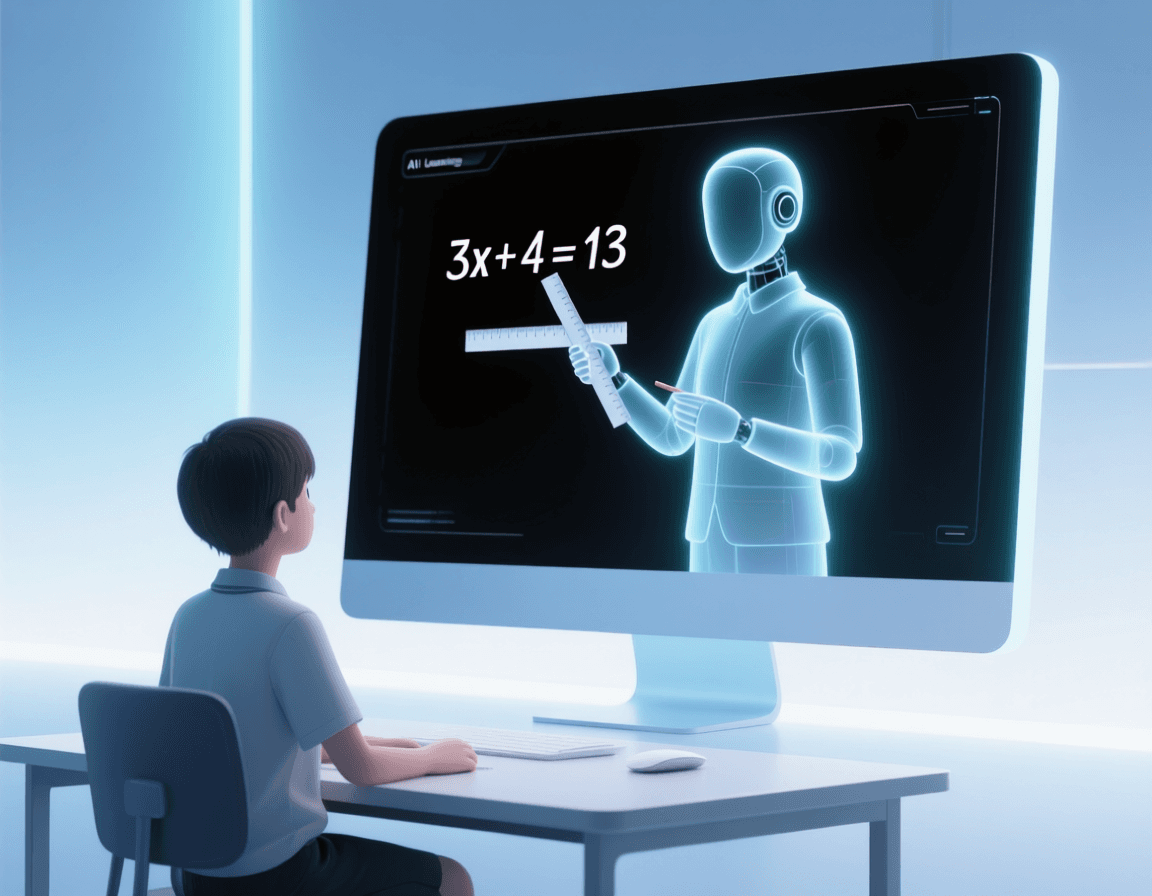
The company is actively developing an AI-powered application designed to function as an assistant teacher that works alongside human educators rather than replacing them. As of early 2026, this AI assistant operates in the background supporting tutors and is expected to become directly available to students within approximately six months following completion of testing and refinement. Krishna from Vedantu’s leadership team describes the AI assistant as capable of curating relevant content tailored to individual student needs rather than following rigid rule-based approaches, greatly enhancing the effectiveness and efficiency of human teachers.
Vedantu invests approximately two million dollars annually on AI initiatives across multiple projects, with funding levels expected to grow based on demonstrated value creation from each development effort. The company’s data science and machine learning team comprises approximately five core members, though final application development involves additional teams making the overall AI development staff considerably larger. The technical approach currently relies primarily on open-source AI solutions which have gained significant traction and are expected to become more cost-effective over the coming months, though the company continues utilizing commercial GPT models for smaller applications not requiring large-scale deployment.
The platform has achieved unicorn status valued at over one billion dollars following a Series E funding round in September 2021 led by ABC World Asia, making it the fifth EdTech company in India to reach unicorn valuation after BYJU’S, Unacademy, Eruditus, and upGrad. However, like much of the Indian EdTech sector, Vedantu has faced challenges from reduced startup funding, implementing workforce reductions totaling over one thousand employees across 2022 as the company adjusted to more capital-constrained operating environment.
The AI systems being developed focus on several core functions that complement rather than duplicate human teaching. Content curation algorithms analyze student performance data to recommend specific video lessons, practice problems, and reference materials most relevant to each learner’s current needs and knowledge gaps. Doubt-solving assistance provides preliminary responses to student questions, allowing human tutors to focus on more complex conceptual clarification and personalized guidance. Performance analytics identify patterns in student engagement and comprehension that inform both immediate teaching adjustments and longer-term curriculum refinement.
6. Unacademy: AI-Powered Mock Tests and Revision Strategies
Unacademy has built India’s largest online learning platform measured by course breadth and educator diversity, offering extensive libraries covering academic subjects and competitive examination preparation including UPSC, JEE, NEET, SSC, banking examinations, and numerous other tests that millions of Indian students attempt annually. The platform combines free video lessons, live classes, comprehensive test series, and detailed performance analytics to deliver comprehensive learning experiences accessible to students regardless of financial constraints.
The platform’s Unacademy Plus subscription tier incorporates artificial intelligence to tailor mock tests based on individual student performance patterns, analyze progress across multiple dimensions, and recommend targeted revision strategies that focus study time on topics offering maximum score improvement potential. The AI systems track which question types and subject areas each student consistently handles well versus where they struggle, using this performance data to generate personalized test series that progressively build capabilities in weak areas while maintaining proficiency in stronger subjects.
The platform facilitates the Ask a Teacher feature allowing students to post questions and receive responses from multiple expert educators within minutes, providing exposure to diverse explanatory approaches and teaching styles. This marketplace of perspectives proves valuable for students who may not immediately grasp concepts explained one way but find clarity when alternative explanations frame ideas differently or use different examples to illustrate abstract principles.
Unacademy’s community features create peer learning networks where students preparing for similar examinations can share resources, discuss difficult concepts, compare study strategies, and provide mutual encouragement during demanding preparation journeys. These social learning dimensions address motivation and emotional support aspects that purely AI-driven systems struggle to replicate, combining technological efficiency with human connection.
The platform gained significant traction demonstrating over three hundred thousand students engaging in twenty-four hundred online lessons within just six months of intensive expansion, with the mobile application garnering over two million monthly views. This scale enables continuous platform improvements informed by massive datasets on which teaching approaches, question formats, and content structures generate strongest learning outcomes across different student populations and examination types.
7. BYJU’S: Adaptive Visual Learning with AI Integration
BYJU’S remains one of India’s most recognized EdTech brands despite recent financial and operational challenges that have complicated its trajectory. At its peak, the company achieved the world’s most valuable EdTech startup valuation at twenty-two billion dollars in 2022, serving over one hundred fifty million registered students as of April 2023 with approximately 4.5 million paid subscribers utilizing its comprehensive learning programs for kindergarten through 12th grade students as well as competitive examination aspirants.
The platform’s core offering emphasizes engaging video lessons featuring high-quality animations that explain academic subjects and concepts through visual storytelling designed to maintain student attention and interest while conveying educational content. The adaptive learning algorithms adjust content difficulty and pacing based on individual student performance, ensuring that learners progress through material at speeds matching their comprehension rather than being rushed through topics they have not fully grasped or forced to wait while content reviews material they have already mastered.
BYJU’S has developed internally its BADRI AI model which the company subjects to rigorous testing at BYJU’S Labs, a dedicated facility equipped with advanced technology and expert staff focused on refining the AI systems before wider deployment. This proprietary approach contrasts with competitors relying primarily on commercial AI platforms or open-source solutions, potentially providing differentiation if the internal development efforts yield superior performance for educational applications.
However, the company has faced severe challenges during 2024 and 2025 including insolvency proceedings in India, workforce reductions affecting approximately five hundred employees primarily in sales and marketing departments, delisting of its Android application from Google Play Store due to unpaid AWS bills, and multiple media reports indicating valuation had effectively dropped to zero by October 2024. Founder Byju Raveendran publicly acknowledged the company was worth zero in reference to its valuation, while Forbes’ Billionaire Index 2024 showed his personal net worth falling from approximately seventeen thousand five hundred forty-five crore rupees to zero.
Despite these operational challenges, BYJU’S platform continues serving millions of students who have active subscriptions or utilize free trial periods. The company’s future trajectory remains highly uncertain as it navigates insolvency proceedings while attempting to implement AI innovations that could potentially restore competitiveness if financial and operational issues can be resolved. The platform’s extensive content library and brand recognition among Indian consumers represent substantial assets that could prove valuable under different ownership or management structures if current restructuring efforts succeed.
8. upGrad: Professional AI-Enhanced Learning for Career Advancement
upGrad occupies a distinct niche within India’s EdTech landscape by focusing primarily on working professionals and recent graduates seeking career advancement, professional certifications, and specialized skills rather than targeting school students or competitive examination aspirants. The platform offers online degree programs, professional certification courses, and industry-aligned training across technology, business, data science, and other professional domains in partnership with leading universities and industry organizations.
The AI-enhanced learning systems deployed by upGrad focus on personalization for working adults who typically face time constraints and need highly efficient learning experiences that respect their limited availability while delivering measurable career outcomes. The adaptive systems assess prior knowledge and professional experience to skip over foundational content the learner already understands well while ensuring adequate coverage of truly new concepts and skills. Intelligent scheduling algorithms help learners balance coursework with professional and personal commitments, recommending realistic weekly time allocations and adjusting pacing when learners fall behind or demonstrate capacity to accelerate.
The platform leverages existing AI models while planning to develop proprietary systems over time as technical teams gain experience and identify specific educational requirements not well-served by general-purpose AI platforms. This pragmatic approach allows rapid deployment of AI-enhanced features using proven technologies while building internal capabilities for future differentiation through custom solutions addressing upGrad’s specific educational methodologies and student populations.
upGrad has achieved unicorn status and serves as a founding member of IAMAI’s India EdTech Consortium alongside BYJU’S, Vedantu, Simplilearn, Unacademy, and PrepInsta Prime, positioning it among the established leaders in India’s educational technology sector. The focus on career outcomes and professional advancement appeals to students willing to invest substantially in education when clear paths to salary increases or career transitions justify the costs, creating potentially more stable revenue models than K-12 segments where willingness to pay proves more variable.
9. iPrep PAL: Personalized Adaptive Learning for Classes 3-12
iPrep PAL has established itself as a comprehensive AI-powered learning platform specifically designed for students in Classes 3 through 12, offering personalized adaptive learning experiences in both English and Hindi to accommodate India’s linguistic diversity. The platform’s bilingual approach addresses the reality that while English-medium education dominates urban India, large numbers of students prefer instruction in Hindi or find English-only platforms inaccessible barriers to quality digital learning.
The personalized adaptive learning algorithms continuously assess student understanding through practice exercises and quizzes, using performance data to identify knowledge gaps and misconceptions that require targeted intervention. Rather than progressing through rigid predetermined lesson sequences, students experience learning paths that dynamically adjust based on demonstrated mastery, ensuring that struggling students receive additional support and alternative explanations while advanced learners can accelerate through material they grasp quickly.
The platform covers comprehensive curriculum content aligned with major Indian educational boards including CBSE, ICSE, and various state boards, ensuring that students find material relevant to their actual classroom learning and board examinations. This alignment proves crucial for maintaining student engagement and parental confidence, as families investing in supplementary digital learning expect clear connections to the academic success metrics they care about most—classroom grades and board examination scores.
iPrep PAL represents the emerging cohort of Indian EdTech platforms building from inception around AI-powered personalization rather than retrofitting AI capabilities onto earlier generation video lesson or live class platforms. This greenfield approach potentially allows more fundamental integration of AI into platform architecture and pedagogical design rather than layering AI features atop learning systems designed for different instructional models.
10. Cuemath: AI-Powered Mathematics Mastery
Cuemath has built specialized expertise in mathematics education, using artificial intelligence to personalize learning paths based on each student’s understanding of mathematical concepts rather than attempting to serve all subjects with potentially diluted effectiveness. The platform’s focus on mathematics addresses a subject area where many Indian students struggle and where conceptual understanding requires building systematically on foundational knowledge, making personalized pacing particularly valuable.
The AI systems assess student understanding through diagnostic evaluations that identify precisely which foundational concepts each learner has truly mastered versus which remain incompletely understood despite perhaps producing correct answers through memorized procedures. This diagnostic sophistication allows the platform to address root causes of mathematical difficulties rather than simply providing more practice on current grade-level topics that students cannot fully grasp because earlier prerequisites remain shaky.
Cuemath’s personalized learning paths ensure students progress through mathematical concepts in sequences matching their individual readiness, spending additional time on topics where they need more practice and explanation while moving efficiently through material they grasp quickly. The approach emphasizes genuine conceptual understanding rather than rote memorization of procedures, aiming to build mathematical thinking capabilities that transfer across problem types rather than narrow test-taking skills.
The mathematics-specific focus allows Cuemath to develop particularly sophisticated AI models fine-tuned on mathematical reasoning, problem-solving processes, and the hierarchical structure of mathematical knowledge where later topics fundamentally depend on earlier concepts. This specialization potentially provides advantages over general-purpose AI tutors attempting to cover all academic subjects, as the platform can invest in depth of mathematical pedagogical expertise rather than spreading development resources across multiple disciplines.
The Transformation of Indian Education Through AI Tutoring
These ten platforms collectively illustrate how artificial intelligence is fundamentally reshaping Indian education by addressing the central challenge of providing personalized attention at scale. India’s demographic reality of hundreds of millions of students requiring quality education has always strained the capacity of human teachers to provide individual guidance, creating enormous demand for supplementary tutoring that has traditionally been expensive and accessible primarily to affluent families. AI tutors are beginning to democratize access to personalized learning by offering consistently available guidance, patient repetition and multiple explanatory approaches, tracking of individual progress and learning patterns, and targeted intervention on specific weaknesses at costs dramatically below human tutoring rates.
However, the evolution of AI tutoring in India also highlights important nuances. The most successful platforms do not position AI as completely replacing human teachers but rather as complementing them, handling routine instructional functions like practice generation, immediate doubt resolution, and progress tracking while human educators focus on motivation, emotional support, complex conceptual clarification, and strategic guidance. The Indian government’s initiative to train ten million teachers in AI pedagogy by 2026-27 reflects this collaborative vision where educators learn to leverage AI tools effectively rather than viewing them as threats.

The EdTech sector in India has matured considerably from its hypergrowth phase to a more sustainable model emphasizing demonstrated learning outcomes, efficient operations, and reasonable pricing rather than pursuing user growth at any cost. Platforms that survive and thrive will likely be those that deliver measurable value to students through improved examination scores, better conceptual understanding, and increased learning confidence while maintaining business models that can achieve profitability rather than perpetually requiring new investment capital.
Looking forward, as these AI tutoring platforms continue refining their pedagogical approaches based on millions of student interactions, expand coverage to additional subjects and examination types, improve natural language capabilities to better understand student questions and generate clearer explanations, and reduce costs through more efficient AI model architectures, the vision of truly personalized education available to every Indian student regardless of location or family income moves from aspiration toward reality. The platforms profiled here represent the vanguard of this transformation, and their success or failure over the coming years will fundamentally shape whether India can leverage artificial intelligence to address its most pressing educational challenges while maintaining the human elements of teaching that technology cannot replicate.