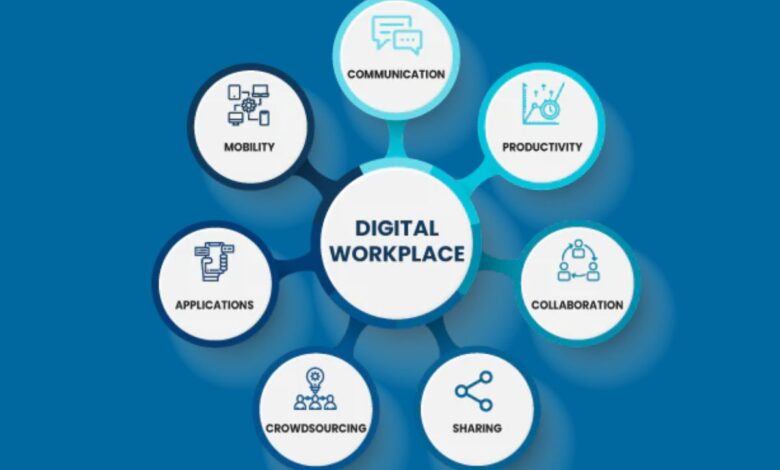
The way Indians work has changed fundamentally over the past few years, and this transformation shows no signs of slowing down as we move through 2026. What started as an emergency response to the pandemic has evolved into a permanent shift in how organizations think about workspaces, collaboration, and employee engagement. Today, the traditional office environment where everyone gathered in one physical location has given way to hybrid models where teams are dispersed across cities, time zones, and sometimes even continents. This new reality has created an urgent need for digital workplace platforms that can bring people together virtually while maintaining the productivity, culture, and sense of connection that organizations depend on.
For Indian businesses navigating this landscape in 2026, choosing the right digital workplace platform involves balancing several important considerations. Cost matters tremendously, especially for startups and small businesses operating on tight budgets. Integration capabilities determine whether a platform can connect with the other business tools your organization already uses. Security and compliance become critical when handling sensitive customer data or meeting industry-specific regulatory requirements. And perhaps most importantly, adoption rates among employees ultimately determine whether a platform succeeds or fails, since even the most feature-rich solution delivers no value if people refuse to use it.
1. Microsoft Teams: The Enterprise Standard for Integrated Collaboration
Microsoft Teams has established itself as the dominant digital workplace platform globally, reaching approximately 320 million monthly active users by early 2026 and capturing roughly 37 percent market share among team collaboration platforms. For Indian organizations, particularly those already using Microsoft 365 for email and document management, Teams offers the most seamless integration imaginable. When your organization’s entire productivity stack lives within the Microsoft ecosystem, Teams becomes the natural collaboration hub where communication, meetings, file sharing, and application access converge in one unified interface.
What makes Teams particularly powerful for Indian enterprises is its deep integration with applications that businesses already depend on. Email conversations in Outlook can transform into Teams chats with a single click. Documents stored in OneDrive and SharePoint become immediately accessible within Teams channels without navigating to separate applications. Calendar integration means scheduling meetings happens naturally without juggling multiple systems. This tight coupling between communication and productivity tools reduces the friction that typically plagues digital workplace adoption, since employees can accomplish more without constantly switching contexts or searching for information across disconnected platforms.
The platform’s AI capabilities have advanced significantly, with features like automated meeting transcriptions that create searchable records of discussions, intelligent content suggestions that help find relevant documents and conversations, and predictive text that accelerates message composition. For Indian businesses operating across multiple time zones or languages, Teams supports over 40 languages including Hindi, enabling truly inclusive communication. The platform’s mobile applications provide full functionality on smartphones and tablets, which matters enormously in India’s mobile-first business environment where many workers rely primarily on phones rather than desktop computers.
However, Teams does present some challenges that Indian organizations should understand before committing. The platform works best when your entire ecosystem lives within Microsoft 365, which means organizations using Google Workspace or other productivity suites may experience integration friction. Pricing starts at approximately 330 rupees per user monthly for basic Microsoft 365 plans, which can add up significantly for organizations with hundreds or thousands of employees. Some users find the interface cluttered and overwhelming, particularly when first adopting the platform, though this complexity reflects Teams’ comprehensive feature set rather than poor design.
2. Google Workspace: Collaboration Excellence for Cloud-First Organizations
Google Workspace represents the other major force in digital workplace platforms, offering integrated collaboration through Gmail, Google Drive, Google Docs, Sheets, Slides, Meet, and Chat. For organizations that have built their workflows around Google’s productivity suite, Workspace provides collaboration capabilities that feel almost magical in their simplicity and effectiveness. Multiple team members can simultaneously edit documents with changes appearing in real time, comment threads keep discussions contextual and organized, and version history ensures nothing gets lost even when mistakes happen.
What distinguishes Google Workspace in the Indian market is its accessibility and familiarity. Many Indian professionals already use Gmail for personal communication and have experience with Google Docs and Sheets from their educational backgrounds, which dramatically reduces training time when organizations adopt Workspace for business use. The platform’s cloud-first architecture means files live online by default rather than on individual computers, making collaboration natural rather than requiring special sharing procedures. When someone shares a document link, recipients immediately gain access without downloading files, managing versions, or worrying about compatibility issues.
The pricing structure for Google Workspace starts at approximately 400 rupees per user monthly for the Business Starter plan, making it accessible even for small businesses and startups with limited budgets. This plan includes professional email addresses using your domain name, 30 gigabytes of cloud storage per user, video meetings supporting up to 100 participants, and access to the full suite of collaboration tools. Higher-tier plans offer expanded storage, advanced security features, and enhanced administrative controls suitable for larger enterprises with more sophisticated requirements.
Google has made significant investments in AI capabilities throughout 2024 and into 2026, introducing features like intelligent meeting summaries that capture key points and action items automatically, AI-powered writing assistance in Docs that helps improve clarity and tone, and smart search across all Workspace applications that understands context and intent rather than just matching keywords. For Indian businesses, Google’s global infrastructure ensures reliable performance even during peak usage periods, while data residency options allow organizations to comply with local data protection requirements when necessary.
3. Slack: The Communication-First Platform for Dynamic Teams
Slack pioneered the modern team chat paradigm and remains the platform of choice for organizations that prioritize communication agility over comprehensive integration with specific productivity suites. With approximately 79 million daily active users globally and over 615,000 companies using the platform, Slack has proven that a communication-first approach resonates strongly with teams across industries. The platform organizes conversations into channels where teams can discuss specific topics, projects, or departments, creating focused spaces that replace the chaos of group emails and fragmented discussions.
What makes Slack particularly compelling for Indian startups and technology companies is its enormous integration marketplace featuring over 2,600 applications spanning virtually every business category imaginable. Whether your team uses Salesforce for customer relationship management, Asana for project tracking, GitHub for code collaboration, or Zendesk for customer support, Slack likely offers pre-built integrations that bring notifications, updates, and actions directly into your communication streams. This extensibility means Slack can become the central nervous system of your digital workplace even when your actual work happens across many different specialized applications.
The platform’s free tier makes it accessible for small teams just getting started, though it limits message history to the most recent 90 days and restricts certain advanced features. Paid plans start at approximately 600 rupees per user monthly, providing unlimited message history, guest access for external collaborators, voice and video calls, and advanced administrative controls. For Indian businesses, Slack’s workflow builder enables automation of routine processes without requiring programming expertise, while powerful search capabilities ensure that institutional knowledge captured in conversations remains accessible rather than disappearing into forgotten chat histories.
Slack’s acquisition by Salesforce in 2021 strengthened its enterprise credentials and deepened integration with Salesforce’s customer relationship management platform, creating particularly powerful workflows for sales and support teams. However, organizations should note that Slack’s strength in communication and integration comes at the cost of less comprehensive native productivity tools compared to Microsoft Teams or Google Workspace. Teams using Slack typically pair it with separate file storage solutions, video conferencing platforms, and document collaboration tools rather than relying on Slack alone for all digital workplace needs.
4. Zoom Workplace: Video-First Collaboration for Meeting-Heavy Teams
Zoom evolved from being primarily a video conferencing solution into Zoom Workplace, a comprehensive digital collaboration platform that includes team chat, cloud phone services, online whiteboarding, and integrated workflows alongside its industry-leading video meeting capabilities. For Indian organizations where meetings form the backbone of collaboration, Zoom Workplace offers the most polished video experience available with crystal-clear audio, reliable connectivity even on slower internet connections, and features like virtual backgrounds that have become essential for professionals working from home.
The platform’s AI Companion introduces intelligent features including automated meeting summaries that capture decisions and action items, real-time transcription supporting multiple languages, and the ability to catch up on meetings you missed through AI-generated highlights. These capabilities prove particularly valuable for Indian teams working across time zones where not everyone can attend every meeting, or for creating searchable records of discussions that might otherwise be lost. Zoom’s Team Chat functionality provides persistent messaging channels similar to Slack, though with tighter integration to meeting workflows that make transitioning from chat to video call almost effortless.
Pricing for Zoom Workplace starts with a free tier that allows unlimited one-to-one meetings and group meetings up to 40 minutes, which works well for small teams with modest collaboration needs. Paid plans begin around 1,100 rupees per user monthly and remove the meeting duration limits while adding features like cloud recording, administrative controls, and advanced analytics. For Indian businesses, Zoom’s focus on video quality and reliability makes it particularly appealing in industries like education, healthcare, and consulting where face-to-face interaction drives value even when participants are physically distant.
The platform’s whiteboard feature enables visual collaboration during meetings, allowing teams to brainstorm, diagram processes, or work through complex problems together regardless of location. Integration with popular business applications means Zoom can fit into existing workflows rather than requiring organizations to rebuild processes around the platform. However, teams should recognize that while Zoom excels at synchronous communication through video and chat, it offers less sophisticated asynchronous collaboration compared to platforms like Microsoft Teams or Google Workspace that integrate document editing and comprehensive file management.
5. Zoho Workplace: The Budget-Friendly Alternative with Deep Business Integration
Zoho Workplace represents a compelling alternative for Indian businesses seeking comprehensive digital workplace capabilities without the premium pricing of Microsoft or Google. As part of Zoho’s ecosystem of over 50 integrated business applications, Workplace combines email through Zoho Mail, document collaboration through Writer, Sheets, and Show, team chat via Zoho Cliq, video meetings through Zoho Meeting, and cloud storage through WorkDrive. What makes this particularly interesting for Indian organizations is that Zoho Corporation is itself an Indian company, founded in Chennai, which means the platform has been designed with Indian business needs and constraints in mind.
The pricing advantage of Zoho Workplace proves substantial, with plans starting at approximately 80 rupees per user monthly for basic email and collaboration features, which is significantly less expensive than comparable offerings from Microsoft or Google. This cost efficiency can save Indian businesses up to 60 percent on their digital workplace investments while still providing the core capabilities teams need for effective collaboration. The platform’s interface has improved dramatically in recent years and now offers clean, intuitive navigation that helps users quickly become productive even without extensive training.
Where Zoho Workplace truly shines for Indian businesses is in its integration with the broader Zoho ecosystem. Organizations using Zoho CRM for customer management, Zoho Books for accounting, Zoho Projects for project tracking, or Zoho Recruit for hiring can create seamless workflows where communication, collaboration, and business processes interconnect naturally. This unified approach eliminates the data silos and context switching that plague organizations using tools from multiple vendors who may not integrate well together. Zoho’s commitment to data privacy, manifested in their no-ads and no-tracking policies, also resonates with Indian businesses increasingly concerned about data sovereignty and customer privacy.
The platform supports mobile access through dedicated applications for iOS and Android, ensuring Indian workers can stay connected and productive regardless of device. Zoho Meeting provides video conferencing capabilities comparable to Zoom for most business use cases, while Zoho Cliq offers team chat with channels, direct messages, and integration points throughout the Zoho ecosystem. Document collaboration through Writer and Sheets supports real-time co-editing similar to Google Docs, though some users report that performance can lag slightly when working with very large files or on slower internet connections common in some Indian regions.
6. Cisco Webex Suite: Enterprise-Grade Security for Regulated Industries
Cisco Webex Suite brings together meetings, messaging, calling, events, and polling in a unified platform backed by Cisco’s decades of experience in enterprise networking and security. For Indian organizations in heavily regulated industries like banking, healthcare, and government where security and compliance represent paramount concerns, Webex offers enterprise-grade encryption, comprehensive audit trails, and the ability to meet industry-specific regulatory requirements that consumer-focused platforms may not address adequately.
The platform’s meeting capabilities rival Zoom in terms of video and audio quality while adding security features that enterprise IT departments demand, including end-to-end encryption for sensitive discussions, detailed analytics showing who attended meetings and for how long, and integration with enterprise authentication systems. Webex Rooms enable hybrid meeting experiences where some participants join from physical meeting rooms while others attend remotely, addressing the reality that many Indian organizations maintain office facilities even while supporting remote work flexibility.
Webex’s AI-powered features introduced over 2025 and refined through 2026 include real-time transcription and translation supporting multiple Indian languages, intelligent noise suppression that filters out background sounds common in home office environments, and automated meeting summaries that capture key points and decisions. The platform’s Webex Calling provides enterprise phone system functionality through the cloud, allowing employees to make and receive business calls using their mobile phones or computers rather than requiring separate desk phones, which reduces infrastructure costs while increasing flexibility.
Pricing for Webex Suite positions it in the premium segment with plans typically starting around 1,400 rupees per user monthly, reflecting its enterprise positioning and comprehensive feature set. For large Indian enterprises and government organizations, Cisco’s strong presence in India through local support teams and infrastructure provides assurance that they can get help when needed and that the platform will perform reliably across Indian network conditions. The platform integrates with major productivity suites including Microsoft 365 and Google Workspace, allowing organizations to adopt Webex for communication while maintaining their existing document collaboration tools.
7. AgilityPortal: The Unified Digital Workplace for Employee Engagement
AgilityPortal positions itself as a comprehensive digital workplace platform specifically designed to break down organizational silos and improve employee engagement through unified communication, collaboration, and knowledge management. The platform brings together intranet functionality, team collaboration spaces, social features that foster connection, and document management into a single interface designed to feel familiar and intuitive even for non-technical users. For Indian organizations struggling with fragmented tools and disengaged remote workers, AgilityPortal offers a consolidation approach that simplifies the digital workplace experience.
What distinguishes AgilityPortal in the Indian market is its emphasis on personalization and role-based content delivery. Rather than presenting every employee with the same information regardless of relevance, the platform allows organizations to customize dashboards, content feeds, and available tools based on department, role, location, or other criteria. This personalization proves particularly valuable for large Indian enterprises with diverse workforces spanning different functions, locations, and language preferences. Frontline and deskless workers who may not have regular computer access can engage through mobile applications designed specifically for smartphones.
The platform includes features supporting employee recognition and social connection that help maintain culture and engagement when teams work remotely or in hybrid arrangements. Employees can celebrate achievements, share updates about projects, post photos from team events, and participate in discussions that build relationships beyond just task-focused work communication. For Indian companies concerned about employees feeling isolated or disconnected when working remotely, these social features help maintain the sense of community that physical offices traditionally provided.

AgilityPortal integrates with common business applications including Microsoft 365, Google Workspace, Salesforce, and various project management and HR systems, allowing organizations to aggregate information and functionality from multiple sources into a single workplace portal. The platform’s analytics capabilities provide insights into how employees use the digital workplace, which content resonates most, and where communication breakdowns might be occurring, enabling continuous improvement of the employee experience. Pricing information for AgilityPortal typically requires contacting their sales team for custom quotes based on organization size and specific requirements.
8. LumApps: Premium Intranet for Global Enterprises
LumApps has established itself as a premium employee experience platform serving major global enterprises including many with significant Indian operations. The platform combines modern intranet functionality with sophisticated content management, targeted communications, and deep integration with both Google Workspace and Microsoft 365. For large Indian enterprises or multinational corporations operating in India, LumApps provides the enterprise-grade capabilities needed to communicate effectively across thousands of employees in multiple locations while maintaining consistent branding and messaging.
What makes LumApps particularly powerful is its content personalization engine that uses artificial intelligence to deliver relevant information to each employee based on their role, location, interests, and previous engagement patterns. Rather than overwhelming everyone with every announcement and update, the platform intelligently filters content so employees see what matters most to them. This personalization becomes critical in large organizations where the volume of corporate communications can easily become noise that employees tune out, causing important messages to be missed.
The platform’s recent integration with Beekeeper specifically strengthens capabilities for frontline and deskless workers who represent a significant portion of the workforce in industries like retail, manufacturing, and logistics. These workers often lack regular access to desktop computers but need to stay connected with organizational communication, receive important safety updates, and access work-related resources. LumApps’ mobile-first approach ensures these employees remain engaged and informed even when working away from traditional office environments.
LumApps serves millions of users worldwide with clients spanning retail, manufacturing, finance, and other industries where employee experience directly impacts business performance. The platform’s pricing positions it in the premium segment, typically requiring custom quotes based on organizational size and requirements. For Indian enterprises seeking best-in-class employee communication and engagement capabilities with proven track records at global scale, LumApps represents a mature, reliable choice backed by continued innovation and strong customer support.
9. MangoApps: The Comprehensive Indian Alternative
MangoApps brings special relevance to Indian organizations as a unified digital workplace platform that combines team collaboration, enterprise social networking, training and learning management, and business process automation. The platform recognizes that effective digital workplaces must address not just communication and file sharing but also knowledge transfer, employee development, and workflow automation that eliminates manual busywork. For Indian organizations seeking a comprehensive platform from a provider that understands local business culture and practices, MangoApps offers a compelling alternative to purely Western platforms.
The platform’s training and learning management capabilities prove particularly valuable for Indian organizations with growing workforces that need consistent onboarding and skill development. Managers can create courses, distribute training materials, track completion, and assess learning outcomes all within the same platform used for daily collaboration and communication. This integration means learning becomes part of the workflow rather than a separate activity that competes for attention with urgent tasks. Employee directories, organizational charts, and expertise databases help people find colleagues with specific knowledge or skills, making informal learning and collaboration easier.
MangoApps supports both cloud deployment for organizations wanting the simplicity of software-as-a-service and on-premises installation for businesses with strict data sovereignty requirements or complex integration needs with existing infrastructure. This deployment flexibility addresses the reality that Indian enterprises have diverse requirements around data residency, security, and control that purely cloud-based platforms may not accommodate. The platform integrates with common business systems including Active Directory for user management, SharePoint for document repositories, and various third-party applications through APIs.
The platform’s social features enable employees to share updates, recognize colleagues, participate in groups around shared interests, and maintain connections that strengthen organizational culture even when working remotely. For Indian businesses transitioning from traditional office-centric work to hybrid models, these social capabilities help preserve the informal interactions and relationship building that physical proximity previously enabled naturally. MangoApps pricing typically requires direct contact with their sales team to receive quotes customized to organizational size and specific feature requirements.
10. Zoho Cliq: Focused Team Chat with Zoho Ecosystem Integration
Zoho Cliq deserves separate recognition beyond its inclusion in Zoho Workplace because it represents a focused team chat solution optimized for organizations deeply invested in the Zoho ecosystem. While platforms like Slack and Microsoft Teams excel at communication, Cliq’s integration with Zoho CRM, Zoho Desk for customer support, Zoho Projects for project management, and other Zoho applications creates workflows where conversations connect directly to business processes and customer data without requiring context switching or manual data entry.
For Indian sales teams using Zoho CRM, Cliq enables conversations about deals and customers that happen alongside the actual CRM records, with the ability to update opportunity information, log notes, and trigger workflows directly from chat. Support teams using Zoho Desk can escalate tickets, collaborate on solutions, and update customer records without leaving their chat interface. This tight coupling between communication and business applications proves particularly powerful for small and medium Indian businesses where the same employees often wear multiple hats and need tools that reduce rather than increase operational complexity.
The platform includes calling and screen sharing capabilities enabling teams to escalate from text chat to voice or video when needed, though these features target quick collaborative discussions rather than large formal meetings. Cliq supports bots and automation through approachable low-code tools that allow non-programmers to create custom commands, automated notifications, and workflow triggers that make repetitive tasks disappear. For Indian businesses already using multiple Zoho applications, Cliq often represents the most practical team chat choice since it provides natural integration without requiring the higher costs or complexity of platforms like Slack or Teams.
Making the Right Choice for Your Indian Organization
Choosing among these digital workplace platforms requires thoughtfully considering your organization’s specific circumstances rather than simply selecting whichever platform has the most features or the largest market share. The right choice for a five-person startup in Bangalore differs dramatically from what makes sense for a thousand-employee manufacturing company in Pune or a government agency serving citizens across multiple states. Understanding what actually matters for your situation helps cut through marketing claims and feature lists to identify platforms that will genuinely improve how your teams work.
For organizations already committed to either Microsoft 365 or Google Workspace for productivity applications, the natural choice involves Microsoft Teams or Google Workspace respectively since integration with your existing tools will be seamless. Indian startups and technology companies that prioritize communication flexibility and extensive third-party integrations often gravitate toward Slack despite its higher cost, valuing the platform’s extensibility and the vibrant ecosystem of applications that connect to it. Budget-conscious organizations should seriously evaluate Zoho Workplace, which provides comprehensive capabilities at significantly lower costs while offering the additional benefit of integrating with Zoho’s broader business application suite.
Organizations in regulated industries including banking, healthcare, and government should prioritize platforms like Cisco Webex or higher-tier plans from Microsoft and Google that provide the security controls, audit capabilities, and compliance certifications that regulators expect and auditors examine. Large enterprises with thousands of employees distributed across multiple locations benefit from platforms like LumApps that excel at personalized communication and content management at scale. And Indian businesses seeking to consolidate multiple tools while supporting diverse workflows should examine comprehensive platforms like MangoApps or AgilityPortal that bring together collaboration, learning, process automation, and social features into unified experiences.

The future of digital workplaces in India will continue evolving as artificial intelligence becomes more deeply integrated into collaboration platforms, as augmented and virtual reality technologies mature to support more immersive remote collaboration, and as platforms become more adept at personalizing experiences and automating routine work. For now, the platforms examined in this guide represent the leading options available to Indian organizations in 2026, each bringing distinct strengths that address different needs and priorities.