India’s financial technology landscape has witnessed a remarkable transformation in recent years, with credit scoring startups emerging as critical enablers of financial inclusion. As of 2026, these innovative companies are revolutionizing how creditworthiness is assessed, moving beyond traditional credit bureau scores to incorporate alternative data sources, artificial intelligence, and machine learning algorithms. This shift is particularly significant in a country where approximately 800 million individuals lack formal credit histories, making them invisible to conventional banking systems.
The credit scoring ecosystem in India has evolved dramatically, driven by digital transformation, increased internet penetration (expected to reach 86% mobile operator coverage by 2026), and supportive regulatory frameworks from the Reserve Bank of India. These startups are not merely creating technology platforms but are fundamentally reshaping access to credit for underserved segments including micro, small, and medium enterprises (MSMEs), first-time borrowers, and rural populations. This comprehensive analysis examines the top ten Indian credit scoring startups that are defining the future of credit assessment in 2026.
1. CreditVidya (Now Part of CRED)
CreditVidya stands as one of the pioneering forces in India’s alternative credit scoring revolution. Founded in 2012 by Rajiv Raj and Abhishek Agarwal, the Hyderabad-based startup was acquired by fintech unicorn CRED in November 2022, marking a strategic expansion of CRED’s lending capabilities.
The company’s core innovation lies in its sophisticated use of alternative data and advanced artificial intelligence to provide credit scoring for individuals traditionally excluded from formal lending. CreditVidya’s platform processes over 10,000 data points to generate credit scores that are demonstrably twice as powerful as traditional bureau scores, enabling banks and non-banking financial companies (NBFCs) to underwrite 15% more individuals, including completely new-to-credit borrowers.
The startup operates through a comprehensive Software Development Kit (SDK) that integrates seamlessly into Android applications, collecting consent-driven data from users to assess credit risk accurately. This approach has proven transformative for lenders, reducing decision-making times from several days to under five minutes while maintaining robust risk assessment standards. CreditVidya has partnered with over 55 leading financial institutions including Axis Bank, DBS Bank, IndusInd Bank, Yes Bank, IIFL, and Xiaomi, processing credit assessments for millions of customers across India.
Following its acquisition by CRED, CreditVidya continues to operate its lending-as-a-service platform Prefr, which provides crucial underwriting and risk assessment models. The company had raised $10.4 million in funding from investors including Kalaari Capital, Bharat Innovation Fund, and Matrix Partners before the acquisition. In early 2025, CreditVidya received an additional $3 million extension round led by Bharat Innovation Fund, with the company claiming to have profiled over 13 million customers on its AI underwriting stack.
2. Perfios
Perfios has established itself as India’s leading financial data aggregation and credit decisioning platform, achieving unicorn status in March 2024 with an $80 million investment from Teachers’ Venture Growth. Founded in 2008 by Velamur Rangachari Govindarajan, Debashish Chakraborty, and Pramod Veturi, the Bengaluru-based company now serves over 1,000 banking and financial institution partners globally.
The platform’s comprehensive suite includes real-time credit underwriting solutions, document analysis, Know Your Customer (KYC) compliance, fraud detection, and risk assessment capabilities. Perfios has raised a total of $441 million across 14 funding rounds, with major investors including Kedaara Capital, Warburg Pincus, and Bessemer Venture Partners. The company’s current valuation exceeds $1 billion, representing a 120% increase from its previous funding round.
What sets Perfios apart is its holistic approach to credit scoring that combines traditional and non-traditional data sources, utilizing artificial intelligence to provide comprehensive insights on new-age customers. The platform processes an astounding 8.2 billion data points annually for banks and financial institutions, facilitating faster decision-making. With assets under management of $36 billion and processing 1.7 billion transactions yearly, Perfios has demonstrated its capacity to operate at scale.
The company has been aggressively expanding through strategic acquisitions, having completed six acquisitions as of 2026. Notable acquisitions include fraud detection platform Clari5 in February 2025, AI-powered debt collection firm CreditNirvana in March 2025, and open finance platform Fego.ai in 2023. With over 1,400 employees and a strong footprint across India, the Middle East, and Southeast Asia, Perfios is expanding its presence in North America and Europe, positioning itself as a global leader in credit decisioning technology.

3. Lendingkart
Lendingkart Finance Limited represents one of India’s most successful stories in SME-focused credit assessment and lending. Founded in 2013 and headquartered in Ahmedabad, the company has raised $242.5 million from prominent investors including Fullerton Financial Holdings, Bertelsmann India Investments, and India Quotient.
As a non-deposit-taking NBFC, Lendingkart provides working capital loans and business loans to MSMEs across India, with a proprietary credit assessment system at its core. The platform’s sophisticated algorithms process more than 8,500 data points, analyzing both traditional and non-traditional data sources including GST data, mobile data, product interaction data, and social data for comprehensive credit evaluation.
Lendingkart’s credit scoring approach emphasizes current cash flows and business growth rather than historical records, making it particularly effective for evaluating small businesses that traditional lenders often overlook. The company’s technology stack enables real-time underwriting, with loan applications processed within 72 hours and minimal documentation requirements. This efficiency has allowed Lendingkart to serve over 150,000 businesses across more than 400 cities, sanctioning loans worth over Rs. 7,500 crore.
The startup employs a team of 150 data science professionals who continuously refine the credit models, ensuring accuracy while maintaining low fraud rates. By 2026, Lendingkart has positioned itself as a critical bridge between traditional banking and the underserved MSME sector, with plans to further leverage the Account Aggregator framework to expand its addressable market.
4. FinBox
FinBox has emerged as a comprehensive credit infrastructure company providing the operating system for digital lending across India. Founded in 2015 and based in Bengaluru, FinBox works with over 130 banks, NBFCs, fintech lenders, and large consumer platforms including HDFC Bank, Kotak Mahindra Bank, Poonawalla Fincorp, Aditya Birla Capital, Muthoot Fincorp, and Tata Capital.
The company’s flagship product, BankConnect, is an AI-driven bank statement analyzer that helps lenders assess creditworthiness and underwrite loans three times faster than traditional methods. FinBox’s proprietary Inclusion Score (FIS) provides real-time credit scoring based on behavioral data with a claimed 99% correctness rate, processing numerous engineered behavioral features through a proprietary data modeling pipeline.
FinBox’s comprehensive platform includes loan origination software, underwriting and risk management tools, and embedded finance solutions that enable businesses to integrate credit products seamlessly into their services. The company has developed specialized solutions for enterprises serving customers with limited or no credit history, addressing a critical gap in India’s financial ecosystem.
In 2026, FinBox launched Journey Studio, a revolutionary no-code platform that allows lenders to design, test, and deploy lending journeys without engineering resources. This innovation addresses one of digital lending’s biggest bottlenecks by enabling product teams to build complete loan flows through drag-and-drop interfaces, reducing development time from weeks to hours. The platform’s real-time behavioral analytics and native A/B testing capabilities allow lenders to optimize conversion rates while maintaining compliance.
5. Crediwatch
Crediwatch has carved a unique niche in the credit scoring ecosystem by focusing on actionable credit analytics and dynamic credit assessment insights as a service to financial and banking firms. The platform leverages artificial intelligence, machine learning, and natural language processing to provide comprehensive real-time insights without human intervention.
The company’s approach centers on continuous monitoring and predictive analytics, enabling financial institutions to assess and monitor credit risk proactively rather than reactively. Crediwatch’s technology processes vast amounts of unstructured data from multiple sources, including news, regulatory filings, social media, and financial statements, to generate holistic credit profiles.
What distinguishes Crediwatch is its ability to provide early warning signals for potential credit deterioration, allowing lenders to take preventive action before defaults occur. The platform’s machine learning models are continuously updated with new data, ensuring that credit assessments remain current and accurate. This real-time monitoring capability has become increasingly valuable in 2026 as lending portfolios become more diverse and economic conditions remain volatile.
The startup serves both traditional lenders and new-age fintech companies, providing customizable credit scoring models tailored to specific industry needs and risk appetites. Crediwatch’s solutions extend beyond initial underwriting to encompass ongoing portfolio monitoring and delinquency management, offering end-to-end credit risk management capabilities.
6. Capital Float (Acquired by Amazon)
Capital Float, founded in 2013 by Gaurav Hinduja and Sashank Rishyasringa, represents one of India’s most innovative approaches to credit scoring and digital lending. The Bengaluru-based company raised over $140 million from prominent investors including Amazon, Ribbit Capital, Sequoia Capital, and Saif Partners.

Decision sciences and artificial intelligence capabilities form the core of Capital Float’s product offerings. The platform’s API-based systems automatically pull required data from borrowers, while sophisticated algorithms underwrite applications in real-time. This automation extends across the entire lending lifecycle, with specific loan profiles managed end-to-end by automated systems.
Capital Float’s credit assessment approach incorporates multiple alternative data sources beyond traditional credit bureau scores, enabling the platform to evaluate borrowers who lack extensive credit histories. The company’s technology can provide instant loan offers to small merchant stores through automated decision engineering, with approvals happening at various technological terminals including offline and online points of sale.
The startup’s custom-built affordable finance solutions are delivered entirely through digital channels, making credit accessible to previously underserved segments. While Capital Float has pivoted toward lending rather than pure credit scoring, its technological infrastructure continues to demonstrate the power of AI-driven credit assessment in expanding financial inclusion.
7. NeoGrowth Credit
NeoGrowth Credit has established itself as a specialized NBFC focusing on SME lending with sophisticated credit assessment capabilities. Registered with the Reserve Bank of India, the company combines innovative technology with a digital payment ecosystem and flexible repayment options to bridge the credit gap for MSMEs.
The platform’s credit scoring approach is tailored specifically for small business needs, recognizing that traditional metrics often fail to capture the true creditworthiness of growing enterprises. NeoGrowth offers customized products addressing multiple business needs, from working capital to equipment financing, with credit decisions based on comprehensive analysis of business performance and potential.
What sets NeoGrowth apart is its emphasis on leveraging transaction data and payment histories to build accurate credit profiles. The company analyzes cash flows, sales patterns, and business cycles to determine repayment capacity, often identifying creditworthy businesses that traditional lenders would reject. This transaction-based approach has proven particularly effective for retail merchants and small businesses with high-velocity cash flows.
NeoGrowth received ISO 9001:2015 certification from The International Organisation for Standardisation, making it among the first players in the SME lending space to achieve this quality assurance recognition. The company continues to expand its product offerings and geographic reach, serving thousands of SMEs across India with data-driven credit solutions.
8. MedScore (Now Part of SafeCredits)
MedScore represents a highly specialized approach to credit scoring, focusing exclusively on the pharmaceutical and healthcare distribution sector. Founded in 2024 in Hyderabad by Chunduru Raghavendra Koundinya, Mannuri Vamshi Krishna, and Venkatesh Yanamaddi, the startup identified a critical gap in B2B credit assessment within the healthcare supply chain.
The platform addresses a structural challenge in India’s healthcare ecosystem where access to medicines is often constrained not by demand but by delayed payments and informal credit practices. MedScore’s proprietary credit scoring system evaluates pharmaceutical distributors’ payment histories, credit reliability, and overall financial performance, providing transparent, data-driven solutions for credit risk management.
What makes MedScore unique is its patented behavior-based scoring mechanism specifically calibrated for pharmaceutical distribution networks. The system recognizes that traditional credit scoring models fail to capture the nuances of healthcare supply chains, where payment cycles, inventory management, and regulatory compliance create distinct credit risk profiles.
By January 2026, MedScore evolved into SafeCredits, a full-stack corporate credit risk management and distributor monitoring platform with sector-agnostic capabilities. The expanded platform combines verified business profiling, continuous monitoring of distributor performance, early warning risk alerts, and AI-powered recommendations. A personalized, role-based AI assistant acts as a virtual credit, finance, or sales partner, guiding users through daily workflows and risk actions. This evolution demonstrates the company’s recognition that credit uncertainty and delayed payments are universal challenges across industries.
9. SaveIN
SaveIN has pioneered a unique approach to credit scoring by focusing on India’s massive informal personal lending market. The platform positions itself as India’s first social finance-led neo-banking platform, aiming to organize and digitize relationship-based personal loans that have traditionally remained outside the formal financial system.
Recognizing that 80% of Indians lack access to formal credit due to inadequate credit histories, SaveIN addresses the reality that hundreds of millions of people lend and borrow within their social circles. This informal lending market represents India’s largest personal loans segment but has historically lacked transparency, standardized processes, and reliable payment mechanisms.
SaveIN’s credit scoring approach builds alternative credit data pools by tracking and verifying social lending activities. As users engage with the platform for personal loans within their networks, they build verifiable payment histories that demonstrate creditworthiness. This behavioral data creates credit profiles for individuals who would otherwise remain invisible to traditional lenders.
The platform’s vision extends beyond peer-to-peer lending to create a full stack of consumer banking products. By establishing India’s largest alternative credit data pool, SaveIN aims to help customers graduate from informal social lending to formal financial services, creating a pathway toward financial inclusion for millions who currently operate outside the banking system.
10. Recordent
Recordent takes a distinctive approach to credit scoring by focusing on accounts receivable management and payment behavior tracking. The platform helps businesses collect their accounts receivables faster while simultaneously building a comprehensive credit bureau model based on actual payment data.
The system works by having businesses submit their accounts receivable on Recordent’s platform. As customers make payments, they build verifiable payment histories that become visible to other businesses before they offer credit terms and services. This accountability mechanism improves collections for existing businesses while creating alternative credit scores for their customers.
What makes Recordent particularly innovative is its plan to provide actual payment data to traditional credit bureaus, enhancing alternative credit scoring capabilities across the ecosystem. This data sharing creates a virtuous cycle where good payment behavior is rewarded with improved credit access, while poor payment behavior creates natural consequences.
The platform addresses a critical gap in B2B credit assessment, where traditional credit bureaus often lack comprehensive data on small business payment behavior. By tracking real-world payment performance across multiple business relationships, Recordent builds credit scores that more accurately reflect reliability than traditional metrics. This approach has proven especially valuable for small businesses and newer companies that lack extensive credit histories but demonstrate consistent payment behavior.
The Transformation of Credit Scoring in India
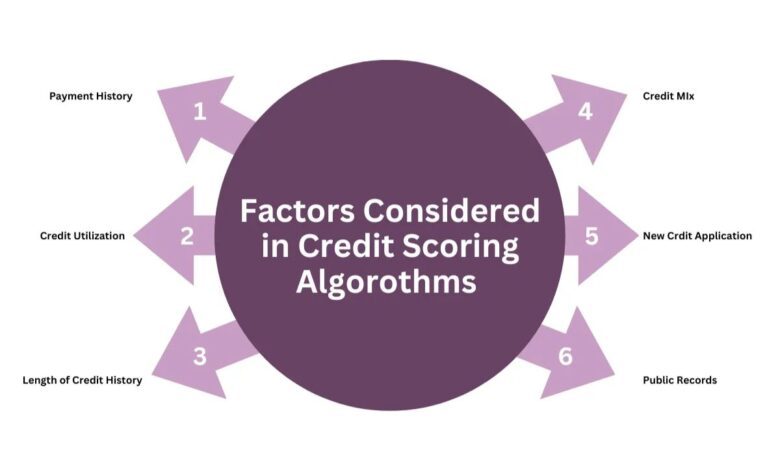
The emergence and growth of these ten startups reflect broader transformations in India’s financial ecosystem. Traditional credit scoring, relying primarily on repayment history and limited data points, has systematically excluded vast segments of the population from accessing formal credit. The Reserve Bank of India’s recent directive requiring credit information companies to update credit scores every seven days starting April 2026 represents official recognition that credit assessment must become more dynamic and responsive.
Alternative credit scoring leverages diverse data sources including utility payments, mobile phone usage, GST filings, e-commerce transactions, social media activity, and digital payment patterns. Machine learning algorithms process these multiple data streams to identify patterns and predict creditworthiness with greater accuracy than traditional models. Studies have demonstrated that alternative data in lending models can reduce rejection rates by 70% for borrowers typically excluded by traditional scoring while maintaining acceptable risk levels.
The Account Aggregator framework, launched by the Reserve Bank of India, has further accelerated this transformation by enabling consent-based data sharing across financial institutions. This infrastructure allows lenders to access comprehensive financial data instantly, reducing processing times and enabling more informed credit decisions. Companies like Lendingkart report that the Account Aggregator system could make nearly 90% of businesses eligible to seek digital credit, up from just 10% previously.
Technology Driving Innovation
Artificial intelligence and machine learning form the technological backbone of modern credit scoring startups. These companies employ sophisticated algorithms that continuously learn from new data, improving their predictive accuracy over time. Neural networks and logistic regression models have emerged as top performers in classifying loan repayment risk, with neural networks particularly effective at capturing complex borrower patterns.
The shift toward explainable AI, or “white box” models, represents an important evolution in 2026. As regulations increasingly demand transparency in credit decisions, lenders are adopting explainability tools that reveal how specific factors influence credit scores. This transparency benefits both lenders, who can justify their decisions to regulators, and borrowers, who can understand what actions might improve their creditworthiness.
Real-time processing capabilities have become standard expectations rather than competitive advantages. Borrowers increasingly expect instant credit decisions, and lenders must balance speed with accuracy. The integration of India Stack components including Aadhaar e-KYC, GST data, and UPI transaction histories through Account Aggregator frameworks enables this real-time assessment while reducing documentation requirements and fraud risk.
Challenges and Future Outlook
Despite remarkable progress, credit scoring startups face several ongoing challenges. Data privacy and consent management remain critical concerns as platforms process increasingly diverse personal information. The Personal Data Protection Act and other emerging regulations require robust governance frameworks to protect consumer data while enabling beneficial data usage.
Algorithmic bias represents another significant challenge. If machine learning models are trained on incomplete or skewed datasets, they may perpetuate or amplify existing biases in credit access. Regular fairness audits, diverse training datasets, and bias detection tools have become essential practices for responsible credit scoring platforms.
The risk of alternative data misinterpretation without proper context requires careful model design and ongoing validation. Social media activity, for example, may correlate with creditworthiness but doesn’t necessarily cause it, and algorithms must distinguish correlation from causation to avoid unfair outcomes.
Looking ahead, several trends will likely shape the credit scoring landscape through 2026 and beyond. Blockchain-based decentralized scoring systems are moving from proof-of-concept to practical implementation, particularly in mobile-first markets with limited credit infrastructure. These systems promise greater transparency and borrower control over credit data, though they also present challenges around data verification and privacy.
The integration of non-financial behavioral data will likely expand, with platforms analyzing patterns in utility payments, subscription services, educational credentials, and employment stability. The challenge will be identifying which alternative data sources provide genuine predictive value while respecting privacy boundaries and avoiding discriminatory outcomes.
Embedded lending, where credit offers are integrated directly into e-commerce platforms, procurement systems, and other digital ecosystems, will become increasingly prevalent. This trend requires sophisticated real-time credit scoring capabilities that can evaluate borrowers at the point of transaction with minimal friction.
Conclusion
India’s credit scoring startup ecosystem in 2026 represents one of the most dynamic and impactful segments of the country’s fintech revolution. These ten companies, each with distinctive approaches and specializations, are collectively transforming how creditworthiness is assessed and expanding access to formal credit for hundreds of millions of previously excluded Indians.
From CreditVidya’s pioneering work in alternative data to Perfios’s comprehensive financial data platform, from Lendingkart’s MSME focus to FinBox’s embedded credit infrastructure, these startups demonstrate that innovation in credit assessment can drive genuine financial inclusion. Specialized players like MedScore addressing sector-specific needs and platforms like SaveIN tackling informal lending markets show that opportunities for innovation remain abundant.
The path forward requires balancing innovation with responsibility, leveraging technology while protecting privacy, and expanding access while managing risk. As regulatory frameworks evolve, traditional financial institutions collaborate with fintech innovators, and technology capabilities advance, India’s credit scoring ecosystem is poised to continue its rapid evolution. The ultimate beneficiaries will be the millions of individuals and small businesses who gain access to fair, transparent credit that enables them to build better futures for themselves and their communities.