Why Noida is the most dangerous city to have a home or life, and why Noida builders are the most corrupted cohort of builders in the country? Till when the government, judiciary and bureaucracy will wake up and do the needful?
After the painful brutal ‘murder’ of Noida techie by the ‘system of India’; here we stand straight about how Noida is becoming one of the dangerous cities to survive (only if ‘system’ doesn’t kill you from their apathy of utter corruption and negligence).
Indian judiciary is a poignant example of where the ‘temple of justice’ can go wrong. By giving parole to rape culprits, and keeping environment activists in jail; the Indian judiciary have made us believe that the ‘temple of justice’ itself lacking the ‘spirit of justice’ in the very decade. Talking about bureaucracy, the one that was applauded with the title of steel frame of India, is now rusting somewhere behind the rods of negligence and corruption. All these two have made the nation a hell chamber every passing day. But let’s not forget the third leg of this corrupted system’s tripod, the builders, who have contributed a lot in making Noida a living hell.
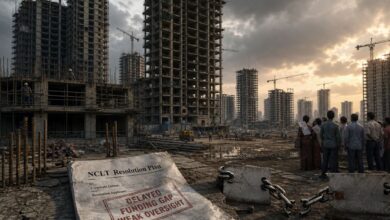
Noida has often been touted as a showcase of urban development, yet those paying for this “progress” have found themselves on a broken road. Private builders – Supertech, Amrapali, ATS Homes and others – have erected gleaming apartment blocks, but behind the façades lie scandals and unfinished dreams. At every turn, verified evidence reveals a pattern: builders colluding with authorities, siphoning homebuyers’ money, and vanishing without delivering homes.
Where FIRs have been filed, courts have exposed fraud and corruption; but far too often, projects remain incomplete and buyers defrauded. This expose chronicles the documented malfeasance of Noida’s builders, using public records, court orders, and investigative reports to ground every claim. It is a litany of court cases, regulatory actions, and investigative findings – delivered with the frankness this long-neglected issue demands, even as we strain to inject a note of bitter irony at the sheer audacity of these crimes.
Supertech: From Skyline Glory to Criminal Allegations
Once a celebrated real-estate name in NCR, Supertech Ltd. has become a poster child for Noida’s builder malaise. Its downfall peaked in 2021 when the Supreme Court ordered the demolition of the illegally built Apex and Ceyane twin towers on the Noida Expressway. The Court found that Supertech had “constructed Apex and Ceyane at Emerald Court, in violation of laws,” willfully flouting building regulations and endangering nearby residents.
Strikingly, the Court held Noida Authority officials complicit too, noting “instances of nefarious complicity of the planning authority,” a literal collusion between Supertech and bureaucrats. In effect, the apex court equated the scandal to a “dirty nexus between builders and Noida authority officials,” upholding the need to punish both.
But the avalanche of allegations against Supertech did not stop at illegal construction. In late 2023 the Enforcement Directorate (ED) and CBI pierced the PR veneer. A CBI FIR accused Supertech’s promoters of defrauding IDBI Bank of ₹126.07 crore. The ED has additionally alleged a colossal homebuyer fraud: according to ED’s findings, Supertech collected over ₹440 crore from homebuyers and then “siphoned off” these funds into unrelated ventures, while leaving the promised Noida apartments woefully incomplete.
The ED’s press report states that “huge amounts of money running into hundreds of crores were siphoned off” through shell companies, and that 20,000 homebuyers still await possession. In practical terms, Supertech took vast down-payments for homes but invested them elsewhere, essentially running a construction Ponzi. As one official source chillingly notes, of 26 FIRs filed, 670 homebuyers accuse Supertech of cheating them of ₹164 crore in total.
Even the manner of the towers’ removal illustrated Supertech’s fall from grace. On 28 August 2022, 3,700 kg of explosives were used to raze the Apex and Ceyane towers in mere seconds, a dramatic engineering feat meant to satisfy the Supreme Court’s order. This spectacle was carried out with hardly a hint of regret, even as the owner (promoter Ram Kishor “R K” Arora) later told media the company lost ₹500 crore due to the demolition. But sympathy is in short supply when hundreds of cheated customers remain in limbo. Indeed, the SC itself warned errant builders that realty business “can never prosper” if homebuyer funds are misused, and that fraud “strikes at the very core of urban planning”.

In sum, Supertech’s saga is well-documented: illegal construction, collusion with Noida officials, massive bank fraud and homebuyer cheatings. Its former CMD, Mr. Arora, now languishes in judicial custody (arrested in June 2023) as these cases churn on. As the Supreme Court commented in another context, “Law never permits unjust gain based upon fraud,” a principle glaringly relevant here. And yet Supertech is far from alone in this cesspool of deception.
Amrapali Group: Ghost Towns and a Supreme Rebuke
The story of the Amrapali Group reads like a horror tale for homebuyers. Once a booming builder in Noida and Greater Noida, Amrapali collected deposits from over 40,000 buyers across dozens of projects – only to leave most of those projects abandoned. The situation grew so dire that in 2017 the Supreme Court intervened. Court-appointed forensic audits found that Amrapali promoters had systematically diverted homebuyers’ money.
The apex court lambasted banks and even the Noida and GNIDA authorities for “violating the doctrine of public trust” by enabling the fraud. In July 2019 the Court took the unprecedented step of cancelling the RERA registrations of all Amrapali projects and ordered NBCC (a government construction arm) to finish the stalled buildings, offering relief to the 40,000+ cheated purchasers. The court explained that “real estate business can never prosper in case of breach of trust,” and that the scale of fraud was so large—“more than 70 percent of the various projects have not come up”—that the judiciary itself had to step in with an extraordinary remedy.
Court after court has piled on the evidence of Amrapali’s crimes. Multiple directors were ordered to surrender their passports and comply with audits; indeed, in October 2018 the Supreme Court ordered the arrest of Amrapali directors (including then-CMD Anil Sharma) for “playing hide and seek” and resisting a court-directed forensic audit. That order sent three key promoters to jail to coerce compliance. When the ED later probed Amrapali, it found massive money laundering: accounts were frozen and a Debts Recovery Tribunal officer was appointed to auction Amrapali’s unencumbered properties (which could fetch over ₹1,590 crore) to finance completion of projects.
Homebuyers’ anguish reached the Supreme Court yet again in 2023. The former Amrapali boss Anil Sharma, after spending years in custody, begged for bail. The court’s response was scathing: Justice Bela Trivedi famously scolded him, “You have cheated thousands of home buyers. You siphoned off their hard-earned money… You do not deserve any sympathy.
You better enjoy being in jail… This court is very aware of what you did. You created the mess and we are not able to find a way out of it.”. The bench noted that the offense “ran very deep” and insisted that this was not a “simple cheating” case, pointing out that countless innocent families now wait on the judgment of courts to salvage their life savings.
Meanwhile, creditors and authorities raked in more evidence. The Enforcement Directorate got involved on charges of money laundering, and the Serious Fraud Investigation Office (SFIO) and Delhi Police’s Economic Offence Wing also have cases open on Amrapali’s executives. The bottom line: as of early 2026, nearly all Amrapali projects in Noida/Greater Noida remain unfinished, banks have taken over land leases, and homebuyers still brace for actual homes that might never come. Courts have repeatedly declared the Amrapali group’s dealings as void and against public trust, but many victims suspect that without those dramatic SC interventions, the saga would have quietly stayed buried under piles of paperwork.
ATS Sports City: A Legacy of Defaults and Dues
Even before Amrapali’s fall from grace, the Noida Sports City project (Sector 150 and beyond) turned into another cautionary tale. ATS Infrastructure Ltd., a consortium led by Neelkamal Group, was allotted a 500,000 sqm plot in 2015 on condition that sports facilities be built within 5 years and residential buildings delivered by 2022. A 2025 investigation by The 420 reveals a very different reality.
The Noida Authority has formally notified ATS Homes of massive lease violations: the company owes ₹2,746 crore in outstanding dues to the Authority, yet sports facilities remain largely unbuilt and residential blocks stand only partially completed. Site inspections in November 2025 reportedly found the project “incomplete and work on green areas still untouched”, with numerous deadlines missed. The Authority asserts ATS repeatedly disregarded the approved master plan and building bylaws – charges ATS hotly disputes in court.
ATS is only the tip of the iceberg. Data made public in 2025 show Sports City developers collectively owe over ₹11,641 crore in unpaid dues, yet have recovered a mere ₹319 crore so far. The biggest offenders in this saga are not minor names: Lotus Greens (developers of “City of Joy”) owe ₹4,178 crore, Logix Infrastructure (developing “Imperial Avenue”) owes ₹4,082 crore, while Xanadu Estates (Beacon Estates) owes ₹636 crore. ATS’s own ₹2,746 crore liability ranks it the third-largest defaulter. In short, the “Sports City” master plan has been subverted into residential enclaves, and homebuyers – expecting golf courses and stadiums – now face delayed homes and unpaid utility charges.
Criminal investigations have followed these revelations. The Allahabad High Court in Feb 2025 ordered the CBI and ED to probe three Sports City projects (Logix, Lotus Green, Xanadu), citing “extremely serious fraud and corruption” in the allotment and development process. Its bench noted allottees had repeatedly broken conditions in collusion with Noida officials. In fact, the court described Sports City as “tainted by fraud and corruption”.
The CBI duly filed three FIRs under charges of criminal conspiracy, cheating and breach of trust, specifically naming Lotus Greens and Logix’s promoters, along with unidentified Noida Authority officers. Searches were even conducted at Noida Authority offices in late March 2025 as part of the probe. While ATS Homes was not explicitly named in those FIRs, it cannot claim innocence given the Authority’s own notice. The cumulative picture is damning: the once-model “Sports City” has become a byword for builder default and official inaction, with authorities now scrambling to recover dues or cancel allotments by relaunching projects under new names.
Other developers have drawn regulators’ fire as well. The Uttar Pradesh RERA authority has repeatedly warned builders against handing over “canvas” or incomplete flats – issuing penalties up to 5% of project costs for such violations (with Noida homebuyers recently being explicitly cautioned). But in practice, enforcement has been scant. Builders like Amrapali (again) and ATS had their RERA registrations cancelled in landmark court orders, but many smaller builders quietly let court stays or insolvency proceedings stall any real punishment. Whistleblowers and exposés have turned up more names.
Other projects in and around Noida (residential townships like Jagat Farms, Unitech’s Uniworld, etc.) have faced similar fates, though less publicized. A related example: Emaar MGF’s projects (like Palm Drive) saw ownership tussles and delays, and buyers cried foul when unsold flats were handed out to employees as “construction accounts”. Builders have often “charged extra” for phantom upgrades or threatened to block possession if buyers did not pay punitive amounts – with scant accountability. In short, evidence suggests that in Noida’s housing sector, if a developer is “big,” chances are high their projects are chronically delayed and their balance sheets questionable.
The Builder-Authority Nexus: Dirty Deals and Dirty Dues
What explains this endemic graft? Documented sources point repeatedly to a nexus between builders and Noida’s public agencies. The twin towers case made it explicit: SC judges cited the “nefarious complicity” of Noida Authority planners in sanctioning illegal towers. The Allahabad HC in the Sports City matter lamented that “the entire process… appears to be tainted by fraud and corruption” involving both developers and Noida officials.
A parallel CAG audit (circa 2019) had earlier flagged wholesale favouritism: land was often underpriced, penalties were waived, and 80+ hectares of designated sports or green zones were surreptitiously transferred for housing. The audit scolded authorities for lapses in recovering dues and warned that the Sports City saga would yield “losses to the tune of tens of thousands of crores” for the treasury.
More broadly, a 2022 investigative report noted that four successive state governments (SP, BSP, Congress, BJP) allowed this racket to flourish from 2005 onward. The CAG summary quoted by that probe highlights “widespread corruption, undue favouritism to private firms, collusion between officials and builders” in Noida land allotments, causing distress to “lakhs of homebuyers”. In essence, builders could secure prime land or relaxations without due process – often through political connections or kickbacks. A BJP memorandum even alleged a “Noida Maha Ghotala” of ₹40,000–60,000 crore at the turn of the last decade, tying developers to mega-land grabs (though this was a partisan charge, it was based on anecdotal evidence of gross underpricing of acreage).
At the operational level, the accusations came home. For example, Noida’s former chief engineer Yadav Singh was arrested by the CBI in 2020 for awarding ₹116.39 crore of contracts to private firms in a manner “grossly violating tender norms,” allegedly in exchange for bribes. He reportedly steered projects to builders he had pocketed payoffs from. This is telling: even the officials meant to check builders had become puppets.
In Greater Noida (GNIDA), similar scandals surfaced. In 2025, the GNIDA CEO ordered probes into two land-allotment cases in which officials and their relatives had illicitly re-marketed land using decade-old rates – one such plot was allegedly underpriced by over ₹30 crore. GNIDA’s own statement acknowledged that an OSD and manager had “bypassed both the authority and the GNIDA board’s approval” to favour a Delhi company in 2003, causing massive revenue loss.
Scams have not been limited to random allotments. The infamous farmhouse land scandal – where thousands of acres were diverted to build glorified villas for the elite – traces back to developers colluding with politicians and bureaucrats in Noida. Even sugar mills sold off to cronies surfaced in audit queries. The core theme is persistent: Noida Authority and GNIDA repeatedly allowed developers extraordinary concessions (huge discounts on land, long lease extensions, waivers of penalties) without vigilance, and police or vigilance agencies often refused to register FIRs when buyers’ complaints surfaced. The post-2017 vigilance culture yielded new probes (like the CBI FIR on sports city), but for years the system had been allowed to run on a gospel of self-interest.
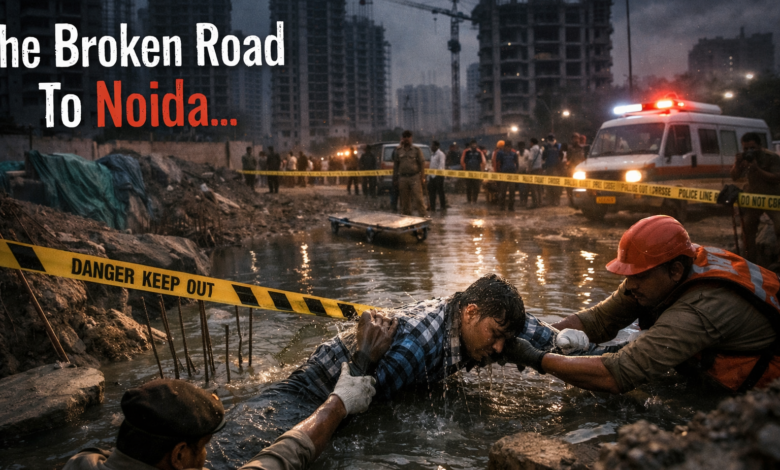
The tragic Noida techie death in 2023 painfully illustrates the consequences. When 27-year-old engineer Yuvraj Mehta drowned in a flooded construction pit, the FIR named two builders – Lotus Greens Construction and MZ Wiztown Planners – holding them responsible for the negligence. Both firms were sports-city developers.
The case exposed not only the builders’ crime (a deep open pit without barricades) but also the Authority’s passivity: Mehta’s father had complained for months that the Noida Authority failed to erect even basic safety barriers around the dug-out land. After Mehta’s death, the government finally acted – a special SIT was formed and Lotus/ MZ promoters faced culpable homicide charges. Would it be wrong if we headlined it a “murder” by the system. That word, though emotive, reflects buyers’ feelings: they invest their life-savings expecting a home, but instead face either deadly risks or empty plots – all while paying EMI on non-existent flats.
Onus on Regulators and the Law
In principle, RERA (the Real Estate Act) was supposed to prevent such fraud. In practice, homebuyers have relied more on courts and regulators chasing random leads. The Supreme Court itself, in its 2019 Amrapali judgment, directed central and state authorities to act against any errant project (beyond Amrapali) across Noida and other states, warning that “projects have not been completed” and homebuyers must not be defrauded. The Court asked for reports from banks, RERA authorities and housing officials to ensure stalled cases are tackled. Similarly, when the twin towers case was under judgment, the SC bench made clear that both developers and officials would pay the price for violating buyers’ rights and safety norms.
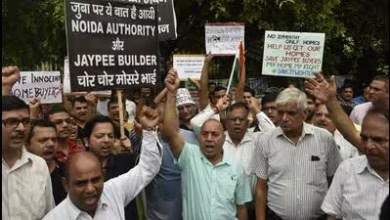
At the state level, UP RERA has begun handing out penalties: officials confirm that developers handing over incomplete flats can be fined up to 5% of the project cost. In Noida’s sports city, RERA cancelled the registration of a suspect project (Apex Flex) after a buyer petition, and declared forfeiture of registration amounts. The Allahabad HC’s recent orders create a precedent: any builder who dawdles may lose its lease and have its escrow encashed to reimburse victims. For buyers, cluster benches of NCLT (courts for insolvency) have prioritized homebuyer cases under Amrapali and Jaypee, aiming to protect their interests over banks or developers. Even so, relief is slow.
Meanwhile, media exposes and activists have tried to keep pressure up. In August 2024, reports surfaced of an ED attachment of ₹58.5 crore worth of lands in Uttar Pradesh and Haryana on homebuyers’ whistleblower complaints. These suggest that the system is finally opening to fight the abuse. Public interest litigants have also pressed for transparency: one 2021 PIL led the Allahabad HC to strike down key clauses in old MOUs that developers had used to wriggle out of obligations. In short, although the official machinery moves slowly, the combined force of CAG audits, court orders, and investigative journalism is now exposing Noida’s dirty secrets.
Conclusion: “Road” As Risk?
Noida was literally built by builders, but in many ways it has been ruined by them. Verified records paint a city where those tasked with providing housing often deliver empty promises. Private developers, from Supertech to Amrapali to ATS and beyond, have amassed homes and wealth while leaving thousands of citizens in limbo, often without so much as a single wall on which to hang a painting they paid for. Government agencies, once hailed as India’s steel frame, appear time and again entangled in these grievances – the “system” that should protect citizens has often abetted their undoing.
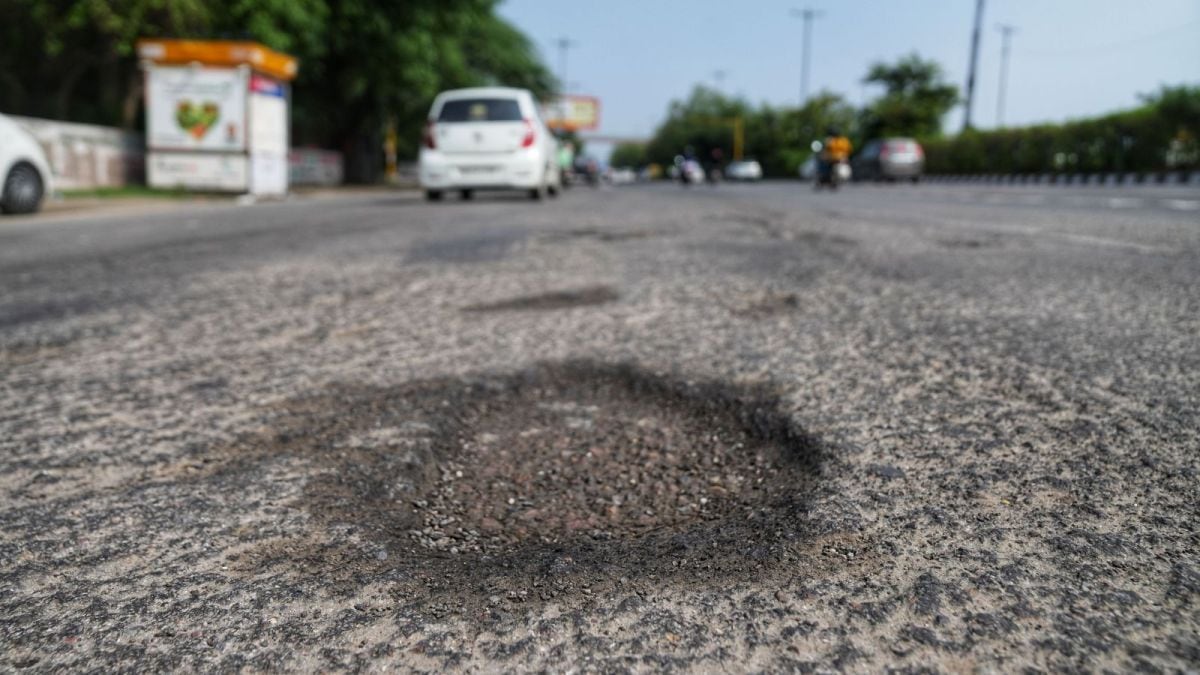
Yet the story is not one of helplessness. Each FIR, each judicial reprimand, each agency raid is a crack in the wall of impunity. Courts have been blunt: defrauding homebuyers is a breach of “public trust” and fraud “strikes at the very core” of society. When builders fail to deliver, regulators now insist on repossessing projects or seizing assets to compensate victims. The All-India situation – with RERA laws now active and ED/CBI at work – shows that even Noida’s builders can be hauled to account.
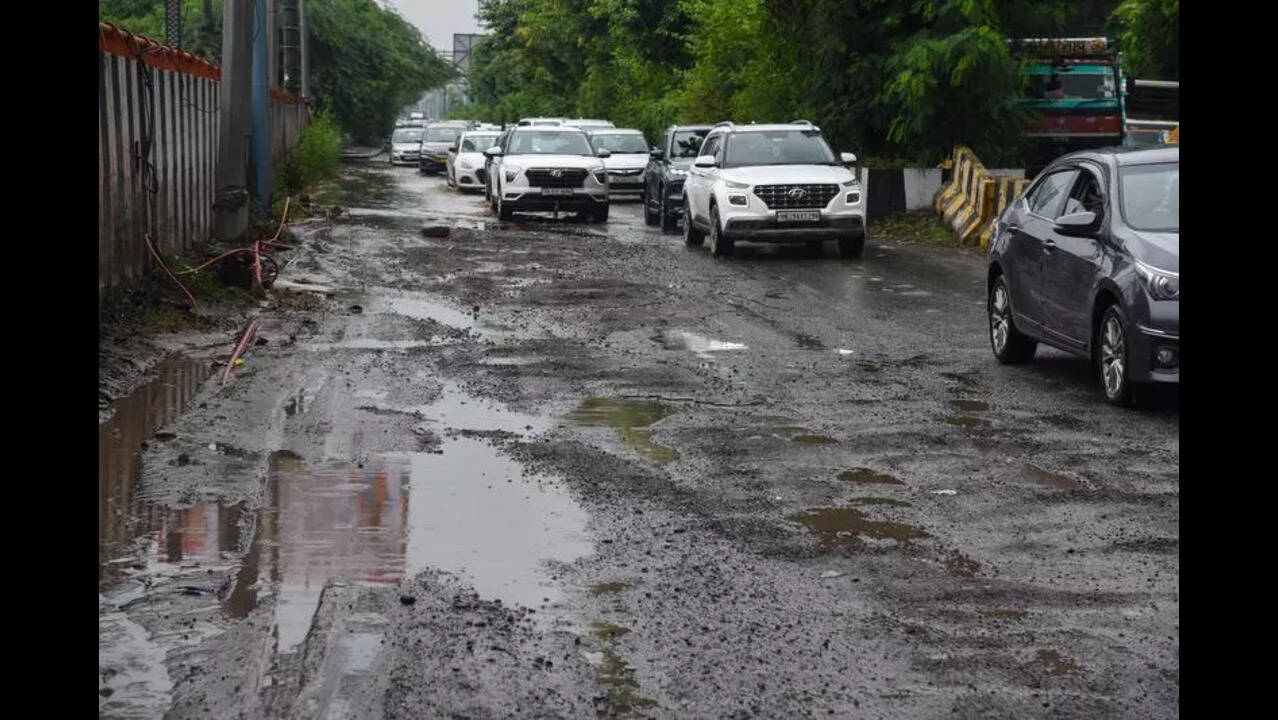
For a new Noida to truly emerge, however, accountability must be relentless. Noida’s future homeowners deserve far better than 5,000-word reckonings; they deserve finished homes, finished roads. Only when developers know they will face consequences – in courts, in jail, in ruined reputations – will the city’s broken road begin to heal.