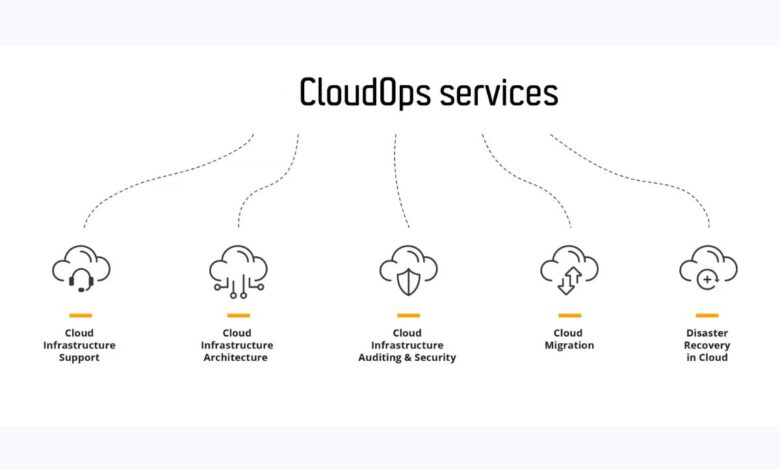
The cloud computing revolution has fundamentally changed how organizations build and operate their digital infrastructure. As businesses migrate increasingly complex workloads to the cloud, the discipline of CloudOps, which encompasses cloud operations management, has emerged as a critical success factor. CloudOps represents the specialized practices, processes, and automation needed to effectively manage cloud environments at scale while maintaining high availability, strong security, and cost efficiency.
The CloudOps market has experienced explosive growth as organizations recognize that simply migrating to the cloud is not enough. According to recent industry projections, cloud spending will reach approximately eight hundred and five billion dollars by the end of 2025 and is expected to grow to one point six trillion dollars by 2028. Goldman Sachs anticipates cloud revenues reaching two trillion dollars by 2030. This tremendous growth has created unprecedented demand for CloudOps expertise, as companies struggle with the operational complexity of managing multi-cloud and hybrid cloud environments while controlling costs and ensuring security compliance.
What distinguishes CloudOps from traditional IT operations is its emphasis on automation, continuous optimization, and cloud-specific governance. CloudOps teams combine DevOps principles of continuous integration and delivery with cloud-native tools and practices to achieve operational excellence. They focus on automating deployment workflows, implementing robust monitoring and observability, optimizing cloud spending through FinOps practices, and ensuring security and compliance across distributed cloud infrastructure. This article examines the top ten CloudOps companies that are leading the industry in 2026, helping organizations navigate the complexities of modern cloud operations.
1. CloudOps Inc.
CloudOps Inc. stands out as a specialized firm whose very name reflects its singular focus on cloud operations excellence. Founded in 2005, CloudOps has helped hundreds of enterprises and web-based companies build their businesses in the cloud without sacrificing compliance, performance, cost, or privacy. The company is a portfolio company of Aptum Technologies, a hybrid multi-cloud managed service and advisory consulting provider dedicated to driving tangible business outcomes.
CloudOps takes a comprehensive approach to cloud operations management, offering consulting services, managed services, and software solutions specializing in open source platforms, cloud-native technologies, networking, and DevOps practices. The firm supports public clouds including AWS, Google Cloud, and Azure, as well as cloud.ca, a regional cloud service designed for businesses requiring that data remain in Canada. This geographic data sovereignty capability makes CloudOps particularly valuable for organizations in regulated industries with strict data residency requirements.
The company actively contributes to open source communities, particularly OpenStack, Apache CloudStack, and Kubernetes, demonstrating deep technical credibility in cloud-native technologies. CloudOps holds Kubernetes Certified Service Provider status and offers comprehensive workshops on Docker and Kubernetes for teams at all skill levels. Their DevOps Platform and Practices Assessment provides organizations with objective understanding of the business impact, technical risks, and cultural changes required for successful cloud transformation, creating a clear path to DevOps best practices and cloud-native delivery. CloudOps emphasizes building client self-reliance, ensuring customers can move forward independently rather than creating long-term dependency relationships.
2. MontyCloud
MontyCloud represents the new generation of CloudOps companies leveraging artificial intelligence and automation to transform cloud operations. Founded in 2018 and based in Redmond, Washington, MontyCloud recently raised a Series B funding round in January 2026, signaling strong investor confidence in their CloudOps automation platform. The company has experienced remarkable growth, with cloud spend under management growing more than four hundred percent over two years and recurring revenue nearly tripling during that period.
MontyCloud builds software that helps companies run and control their cloud infrastructure automatically, from enforcing governance policies to optimizing cloud spend. The platform is part of a broader industry push to use AI not just for applications but for automating back-end IT operations. CEO Walter Rogers, a technology industry veteran who joined the company in 2022, emphasizes that the industry is moving away from manual processes and fragmented tools toward a model that enables teams to optimize and operate cloud environments while unlocking new opportunities to monetize CloudOps.
MontyCloud targets both Managed Service Providers and enterprise companies, providing them with comprehensive automation capabilities that reduce operational overhead while improving cloud efficiency. The company has eighty-five employees, with the majority based in India, reflecting a global delivery model common among CloudOps providers. MontyCloud’s emphasis on AI-driven automation positions them well for the future of CloudOps, where intelligent systems increasingly handle routine operational tasks while human operators focus on strategic optimization and innovation.
3. MegazoneCloud
MegazoneCloud has positioned itself as a leading AI-native digital transformation company with aggressive expansion plans for the United States market. Headquartered in Seoul, Korea, MegazoneCloud announced in December 2025 their intention to dramatically expand their U.S. presence, targeting ten times revenue growth in 2026 through significant headcount expansion and strategic partnerships. The company recognizes that the U.S. cloud computing market is expected to sustain a compound annual growth rate of sixteen point five percent over the next five years and grow to one trillion dollars by 2030.
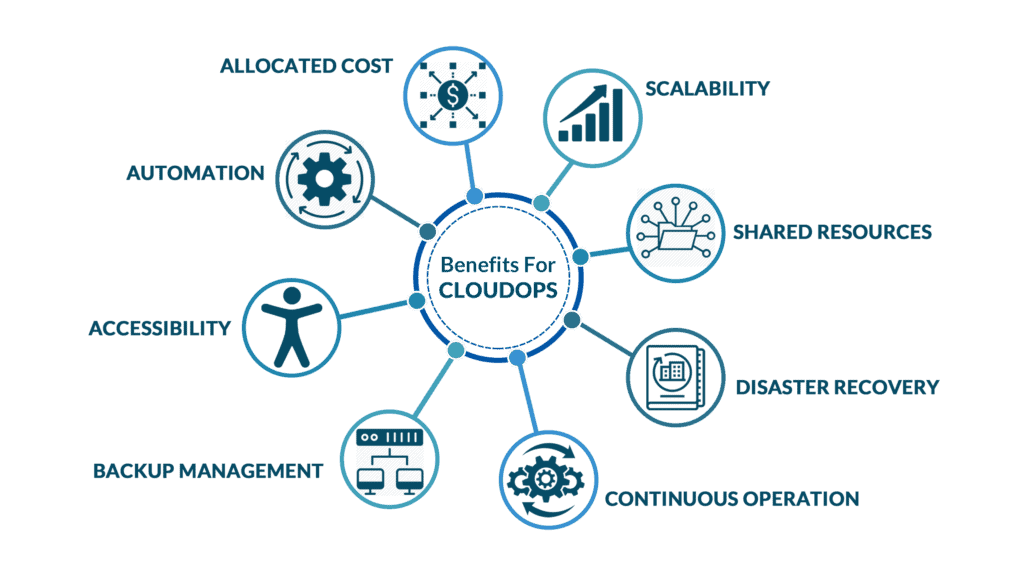
To help organizations become AI-native, MegazoneCloud delivers integrated solutions through proprietary platforms including AIR Studio for AI development, Space CloudOps for cloud operations management, Hyper Billing for cost optimization, and HALO Security for comprehensive cloud security. These platforms reflect MegazoneCloud’s commitment to innovation and customer success in the AI era, addressing the full spectrum of CloudOps requirements from operations automation to financial management and security governance.
MegazoneCloud has built a strong global presence through overseas subsidiaries and local branches across nine countries including the United States, Canada, China, Japan, Vietnam, and Singapore. Their partnership strategy centers on AWS as their core partner, with established top-tier partnerships with leading global technology companies including Databricks and Datadog. The company employs four AWS Ambassadors, technical leaders officially selected by AWS for their outstanding expertise, including their U.S. Chief Technology Officer. Based on this deep AWS specialization, MegazoneCloud drives professional services as key pillars in AI Strategy, Cloud Modernization, and Application Transformation, helping customers accelerate their AI and cloud transformation journeys.
4. Presidio
Presidio has recently launched Adaptive Cloud Services on AWS, representing a significant evolution in CloudOps service delivery. The offering rolled out in January 2026 with a focus on being adaptive rather than static, with services that learn, evolve, and respond to each customer’s unique environment. Senior Vice President of Managed Services Punish Malhotra explains that customers are dynamic, constantly growing, changing, and facing new challenges, requiring a partner whose services grow and change with them.
Adaptive Cloud Services is structured around three tiers designed to deliver meaningful value while providing a clear path to operational maturity. Cloud Essential offers a streamlined, self-service cloud management experience for organizations wanting full visibility and governance tooling while maintaining responsibility for day-to-day operations. Cloud Optimize combines CloudOps enablement with cost optimization for customers ready for around-the-clock operational oversight, best-practice alignment, structured cost governance, and technical advisory hours.
The third tier, Cloud Accelerate, offers a high-touch, fully optimized CloudOps and FinOps program with AI-driven automation, dedicated technical advisory hours, and comprehensive service level agreements for incident response, resolution, and request fulfillment. This tiered approach allows organizations to match their CloudOps maturity level with appropriate service offerings, scaling up as their needs and capabilities evolve. Presidio’s emphasis on AI-driven automation and adaptive service delivery positions them at the forefront of next-generation CloudOps management.
5. Mission Cloud
Mission Cloud, a CDW company, has established itself as a top AWS managed cloud service provider with deep specialization in AWS cloud management. As an AWS Generative AI Competency launch partner, Mission has delivered over one hundred AI solutions that transform businesses and produce real return on investment. They understand exactly what works and what doesn’t in AI implementations, ensuring that AI investments deliver immediate business value rather than remaining experimental.
Mission Cloud addresses a critical industry challenge revealed by research showing that ninety-six percent of businesses lack the skillsets needed to implement and manage AWS effectively. Their FastTrack service delivery model turns promising ideas into production-ready, value-driving solutions with greater speed and less risk, moving cloud projects from the whiteboard to the real world efficiently. Mission provides teams with a one-stop shop for spotting opportunities, eliminating extra steps, and optimizing platforms while clients focus on their business operations.
The company’s wide range of services gives customers flexibility to leverage their deep AWS expertise on various projects, from cloud modernization to application transformation. Mission Cloud also specializes in modern contact centers, combining deep Amazon Connect expertise with cutting-edge AI capabilities to build contact centers that transform customer experiences beyond traditional call management. Their CloudOps services keep customers functional around the clock, eliminating emergency calls and preventing team panic when issues arise after business hours through proactive monitoring and rapid incident response.
6. Rackspace Technology
Rackspace Technology stands as one of the most established names in CloudOps, known for its robust infrastructure and high-performance cloud solutions. The company offers a blend of public, private, and hybrid cloud environments tailored to meet diverse customer requirements across multiple cloud platforms including AWS, Azure, and Google Cloud. Their managed cloud services stand out in the industry, providing businesses with expert support and management that helps streamline operations and reduce the burden on internal IT teams.
One of Rackspace’s most distinctive features is its Fanatical Experience, a trademark approach to customer service that emphasizes responsiveness, expertise, and deep commitment to customer success. This service philosophy permeates everything Rackspace does, from initial consultation through ongoing operations management. The company provides round-the-clock monitoring and support, proactively identifying and resolving issues before they escalate into major problems that could impact business operations.
Rackspace serves target industries including financial services, healthcare, education, government, and retail, offering specialized expertise in multicloud strategy, AI and machine learning integration, cloud security, application modernization, and SaaS lifecycle management. While Rackspace’s pricing can be higher than some competitors, organizations consistently find value in the company’s deep expertise, comprehensive service offerings, and commitment to operational excellence. For businesses that view CloudOps as strategic rather than just operational, Rackspace represents a mature, proven partner with decades of cloud management experience.

7. Accenture Cloud Services
Accenture Cloud Services, including its joint venture Avanade, delivers comprehensive CloudOps solutions for global enterprises across multiple cloud platforms. As an AWS Premier Consulting Partner and Google Cloud Premier partner, Accenture offers cloud services that manage the entire cloud lifecycle from strategy development through migration execution and ongoing operations management. Their broad reach spans across industries including aerospace, automotive, banking, healthcare, and retail, serving large enterprises with complex cloud requirements.
Accenture helps organizations migrate workloads from legacy systems to new cloud-native applications, building customized strategies that define the cloud journey, prioritize business goals, and maximize results. Their data analytics and AI capabilities integrate throughout core cloud solutions to automate and optimize various operational processes, bringing intelligence to cloud operations that goes beyond traditional management. Accenture integrates security and compliance measures into cloud-managed solutions from the ground up rather than treating them as afterthoughts.
The Accenture AWS Business Group represents a dedicated joint venture focused specifically on AWS cloud operations, demonstrating the depth of investment Accenture has made in cloud platform specialization. Their CloudOps services emphasize tailored solutions for various industries, recognizing that financial services organizations have fundamentally different requirements than manufacturing companies or healthcare providers. This industry-specific approach, combined with global delivery capabilities and deep partnerships with major cloud platforms, makes Accenture a compelling choice for large enterprises pursuing complex multi-cloud transformations.
8. Capgemini
Capgemini has established itself as a global CloudOps leader helping organizations design, migrate, manage, and optimize their cloud environments with particular strength in managing complex hybrid setups ideal for large enterprises. The company specializes in managing environments that use hybrid configurations combining on-premises infrastructure with public cloud services, addressing one of the most challenging CloudOps scenarios organizations face.
Capgemini maintains strong partnerships with major cloud providers including AWS, Azure, and Google Cloud, holding AWS Premier Consulting Partner and Google Cloud Premier partner status. This multi-cloud expertise enables them to help organizations select the optimal cloud platform for each workload rather than forcing everything onto a single provider. The company focuses heavily on FinOps or cloud financial management to reduce costs, recognizing that cloud spending optimization has become a top priority as cloud adoption matures.
The firm’s cybersecurity solutions provide advanced protection against cyber threats, ensuring data integrity and security across distributed cloud environments. Their sustainability services help organizations implement eco-friendly practices that reduce environmental impact while maintaining operational efficiency, addressing the growing concern about the environmental footprint of large-scale cloud operations. Capgemini serves target industries including aerospace, automotive, banking, healthcare, and retail, providing industry-specific cloud solutions combined with around-the-clock monitoring services and managed operations that ensure business continuity.
9. DoiT International
DoiT International has built its CloudOps platform around making public cloud easy, focusing on cost optimization, cloud migration, machine learning, and comprehensive CloudOps management across cloud providers. The company recognizes that cloud environments are becoming more complex, and traditional infrastructure management methods often fall short as demand for faster, more reliable services increases. DoiT’s platform addresses these challenges through intelligent automation and optimization.
DoiT’s automated cost anomaly detection and optimization recommendations ensure resources are used efficiently without compromising performance. This addresses one of the most persistent CloudOps challenges: balancing cost optimization with performance requirements. The platform helps organizations cut cloud expenses through automated cloud resource management and intelligent scaling, though DoiT emphasizes the importance of weighing setup costs against potential returns and conducting proper cost-benefit analysis to determine fit for specific organizational needs and scale.
The company provides automated governance policies and continuous compliance monitoring that help reduce the chances of security breaches and regulatory issues, safeguarding both reputation and revenue. However, DoiT acknowledges that real-time monitoring and human-driven incident response remain necessary complements to automation. Their platform combines efficiency improvements with practical recognition of automation’s limitations, creating a balanced approach to CloudOps that leverages technology while maintaining appropriate human oversight. For C-suite leaders, DoiT offers key advantages including faster time to market through automated deployment, cost savings through intelligent resource optimization, and reduced compliance risk through automated policy enforcement.
10. nOps
nOps has created an all-in-one automated cloud optimization platform specifically designed to supercharge cloud efficiency through the power of cloud automation. The company currently optimizes over two billion dollars in AWS spend and maintains a five-star rating on G2, demonstrating strong customer satisfaction with their CloudOps optimization capabilities. nOps focuses on making it faster and easier for organizations to understand and optimize their cloud costs through comprehensive automation.
The platform provides complete cost visibility, enabling organizations to understand one hundred percent of their AWS bill through cost allocation, chargebacks, showbacks, tagging, and intuitive filters for breaking down cloud costs by purchase option, compute type, environment, team, or other dimensions. Their Compute Optimizer makes it easy to automatically manage workloads and save up to ninety percent through Spot instance discounts, addressing one of the most effective but underutilized cost optimization strategies in cloud operations.
nOps offers commitment management with automatic lifecycle management of EC2, RDS, and EKS commitments backed by a risk-free guarantee, removing the complexity and risk traditionally associated with reserved instance purchasing. Their waste reduction capabilities include one-click automatic rightsizing, storage optimization, scheduling, and other waste reduction techniques that immediately impact cloud spending. For organizations struggling with cloud cost management, nOps provides focused, measurable value through automation that directly reduces cloud spending while maintaining or improving performance.
The Evolution of CloudOps in 2026
The CloudOps landscape in 2026 reflects several important trends reshaping how organizations manage cloud infrastructure. First, AI-driven automation has moved from experimental to essential, with platforms like MontyCloud and Presidio integrating artificial intelligence throughout their CloudOps offerings to reduce manual intervention and improve decision-making. Second, FinOps practices have become integral to CloudOps rather than separate disciplines, with every major CloudOps provider now offering comprehensive cost optimization capabilities.
Third, multi-cloud and hybrid cloud management has become the norm rather than the exception, requiring CloudOps platforms to seamlessly manage workloads across AWS, Azure, Google Cloud, and on-premises infrastructure. Fourth, security and compliance automation has become foundational to CloudOps rather than an add-on, recognizing that manual security processes cannot scale to meet the demands of modern cloud environments. Finally, the industry has moved decisively toward building customer self-reliance rather than creating dependency, with leading CloudOps providers like CloudOps Inc. explicitly designing their services to empower customers to manage their own cloud infrastructure over time.
Organizations evaluating CloudOps providers should carefully consider their specific requirements, cloud maturity level, and strategic objectives. Companies deeply committed to AWS might prioritize specialists like Mission Cloud, while those pursuing multi-cloud strategies might favor providers like Accenture or Capgemini with broad platform expertise. Organizations focused primarily on cost optimization might find particular value in nOps or DoiT International, while those requiring comprehensive end-to-end CloudOps might prefer established providers like Rackspace or CloudOps Inc.
Conclusion
CloudOps has evolved from a niche technical discipline into a strategic business capability essential for cloud success. The companies highlighted in this article represent the leading edge of CloudOps innovation, combining deep technical expertise with automation, AI-driven optimization, and comprehensive service offerings that address the full spectrum of cloud operations challenges. As cloud adoption continues accelerating and cloud environments grow more complex, the value of partnering with specialized CloudOps providers will only increase.
Success in cloud operations requires more than just technical tools and platforms. It demands cultural transformation, continuous learning, strategic alignment between technology and business objectives, and commitment to operational excellence. The best CloudOps providers understand this holistic requirement and provide comprehensive support that extends beyond technology implementation to encompass organizational transformation and capability building.

Looking forward, CloudOps will continue evolving as new technologies like edge computing, serverless architectures, and AI-native applications reshape cloud infrastructure requirements. The CloudOps companies that will thrive are those that continue investing in innovation, building deep expertise in emerging technologies, and maintaining relentless focus on delivering measurable business value for their customers. For organizations embarking on cloud journeys or seeking to optimize existing cloud operations, these ten CloudOps companies provide the expertise, tools, and support needed to achieve cloud operations excellence in 2026 and beyond.