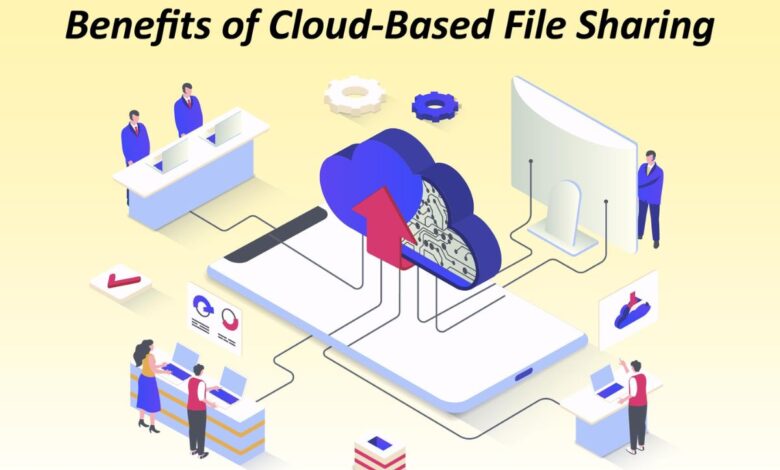
The cloud file-sharing landscape has evolved dramatically from the days when storing documents online seemed revolutionary. In 2026, the market has matured beyond simple storage solutions into specialized platforms addressing specific industry challenges, security concerns, and collaborative workflows. While established giants like Google Drive, Dropbox, and Microsoft OneDrive dominate consumer awareness, a dynamic ecosystem of innovative startups is reshaping how businesses share, collaborate on, and protect their most valuable digital assets. These emerging companies are not merely replicating existing solutions but rather pioneering new approaches to persistent challenges in data management, security compliance, creative collaboration, and cross-border file access.
Understanding the distinction between traditional cloud storage and modern file-sharing platforms is essential. Traditional cloud storage primarily focuses on backing up files and syncing them across devices, essentially replicating the experience of a local hard drive in the cloud. Modern file-sharing startups, however, address far more complex needs including real-time collaboration on massive files without downloading, zero-knowledge encryption that prevents even the service provider from accessing your data, compliance with industry-specific regulations like HIPAA or GDPR, and seamless integration with specialized professional workflows in fields ranging from video production to financial services. The startups featured in this analysis represent the cutting edge of these innovations, each carving out distinct niches within the broader file-sharing ecosystem.
1. LucidLink: Streaming the Future of Creative Collaboration
LucidLink has emerged as perhaps the most disruptive force in cloud file-sharing for creative industries, fundamentally reimagining how teams work with large media files. Founded in 2016 by Peter Thompson and George Dochev, this San Francisco-based startup has raised an impressive one hundred fifteen million dollars across multiple funding rounds, including a seventy-five million dollar Series C in 2024 led by Brighton Park Capital. The company’s valuation and investor confidence reflect not just potential but proven performance, with LucidLink achieving nearly five times growth in annual recurring revenue over two years while expanding its user base by over four hundred percent.
What makes LucidLink revolutionary is its approach to file access. Rather than requiring users to download entire files or wait for synchronization, LucidLink streams data directly from cloud object storage on demand, similar to how Netflix streams video content. When a video editor opens a four-hour 8K video file in Adobe Premiere, LucidLink only downloads the specific segments needed at that moment, dramatically reducing wait times and enabling instant collaboration. The platform’s Filespaces feature creates a single source of truth in the cloud while caching frequently accessed data locally for optimal performance. This architecture eliminates the traditional tradeoff between accessibility and performance that has plagued remote creative teams for years.
The startup’s customer base reads like a who’s who of media and creative industries, including Adobe, Spotify, BuzzFeed, A&E Networks, Whirlpool, and even the United States federal government. Beyond media and entertainment, LucidLink has found traction in architecture, engineering, construction, and gaming sectors where professionals regularly work with massive CAD files, 3D models, and other data-intensive content.
The platform supports all major operating systems including Windows, macOS, and Linux, and integrates seamlessly with cloud storage providers like AWS, Azure, Google Cloud Platform, and private cloud solutions from IBM, Wasabi, and others. With pricing starting at seven dollars per user monthly for small teams and scaling to enterprise tiers, LucidLink makes sophisticated cloud file streaming accessible across company sizes. The startup’s continued investment in features like custom snapshot schedules, proxy support for corporate networks, and Windows headless service mode demonstrates its evolution toward enterprise readiness while maintaining the performance that creative professionals demand.
2. Kiteworks: The Security-First Platform for Regulated Industries
Kiteworks stands as a unicorn in the cloud file-sharing space, valued at over one billion dollars following a massive four hundred fifty-six million dollar funding round in August 2024 from Insight Partners and Sixth Street. This San Mateo-based company, formerly known as Accellion until rebranding in 2021, has built an impressive platform around a simple but critical premise: sensitive content requires purpose-built security and governance infrastructure that consumer file-sharing services simply cannot provide. With more than thirty-eight hundred organizations and one hundred million users relying on Kiteworks globally, the platform has become essential infrastructure for enterprises in healthcare, financial services, government, and other highly regulated sectors.
The Kiteworks Private Data Network represents a fundamentally different approach to file sharing compared to traditional cloud storage platforms. Rather than offering file sharing as a standalone feature, Kiteworks unifies multiple sensitive content communication channels including email, file sharing, managed file transfer, web forms, and SFTP under a single governance framework with centralized policy enforcement and comprehensive audit trails. This unified approach addresses a critical challenge facing regulated organizations: demonstrating compliance across dozens of different communication channels requires consolidating logs from multiple systems, with some organizations spending over fifteen hundred hours annually just on compliance reporting. Kiteworks simplifies this dramatically by providing a single platform with immutable audit logs and integrated reporting across all channels.
Security features go far beyond standard encryption. Kiteworks provides end-to-end encryption with customer-controlled keys, achieving FIPS 140-3 Level 1 validation for its cryptographic modules. The platform supports comprehensive compliance frameworks including FedRAMP High Authorization for federal agencies, HIPAA for healthcare organizations, GDPR for European data protection, CMMC 2.0 for defense contractors, and dozens of other industry-specific standards.
Deployment flexibility allows organizations to choose between cloud, on-premises, or hybrid architectures depending on data sovereignty requirements and existing infrastructure. Advanced features include virtual data rooms for high-stakes transactions like mergers and acquisitions, digital rights management with watermarking and view-only modes, integration with existing security infrastructure including DLP and SIEM systems, and an AI Data Gateway introduced in 2024 that enables safe use of artificial intelligence tools without exposing sensitive data.
The platform’s extensive acquisition history demonstrates Kiteworks’ commitment to comprehensive coverage of sensitive content communications. In 2022, the company acquired totemo, a Swiss email encryption gateway provider, strengthening its email security capabilities. In September 2024, Kiteworks acquired 123FormBuilder to enhance web-based data collection and form-driven workflows. Most recently, in June 2025, Kiteworks acquired Zivver, a Dutch secure communication company, expanding its European presence while also drawing some controversy around data sovereignty concerns for government data. For organizations where a data breach could mean millions in fines, regulatory violations, or reputational damage, Kiteworks represents the gold standard in secure file sharing, albeit at premium pricing reflective of its enterprise focus.
3. Nasuni: Bridging Legacy Infrastructure and Cloud Innovation
Nasuni has carved out a unique position in the cloud file-sharing landscape by addressing a challenge that many enterprises face: how to modernize file infrastructure without abandoning existing investments or disrupting established workflows. Founded in 2009 by Andres Rodriguez and Robert Mason, this Boston-based startup has raised two hundred nineteen million dollars and achieved a valuation of one point two billion dollars following strategic investments from Vista Equity Partners, TCV, and KKR in 2024. Unlike pure cloud-native solutions, Nasuni specializes in hybrid cloud architecture that enables organizations to consolidate file data from disparate locations while maintaining edge performance.
The Nasuni File Data Platform employs a sophisticated architecture centered on UniFS, the company’s patented global file system that fuses cloud object storage with enterprise file services. This architecture eliminates the capacity constraints, performance bottlenecks, and administrative complexity of traditional network-attached storage while delivering unlimited scalability through integration with major cloud providers including Amazon S3, Microsoft Azure Blob Storage, Google Cloud Storage, and private cloud platforms from IBM and others. The platform stores customer data as versioned snapshots that capture every version of every file, enabling organizations to demonstrate the ability to store over one billion objects in a single storage volume while maintaining complete version history.
What distinguishes Nasuni from other cloud file solutions is its edge appliance architecture. These appliances, which can be deployed as virtual machines on existing infrastructure including VMware, Nutanix, Microsoft Hyper-V, or as cloud instances on AWS, Azure, or Google Cloud Platform, provide local caching of active files while maintaining a single source of truth in cloud object storage. This approach delivers the performance of local file servers while gaining cloud benefits including unlimited scalability, built-in disaster recovery, and dramatically reduced costs that can reach up to sixty-five percent savings compared to traditional infrastructure. The intelligent caching system ensures that frequently accessed files remain available locally, reducing cloud egress charges by ninety percent or more while enabling fast access.
Nasuni serves over eight hundred fifty enterprise clients across diverse sectors including manufacturing giant Dow, which leveraged Nasuni to optimize its global storage infrastructure using Azure blob storage for improved cost efficiency and security. The platform’s fiscal 2024 performance was exceptional, with twenty-six percent revenue growth while remaining profitable and cash flow positive, demonstrating that the company has achieved the elusive combination of growth and profitability.
The platform’s multi-site collaboration features enable users in different locations to work on the same files simultaneously with global file locking to prevent conflicts, while rapid recovery capabilities protect against ransomware attacks that have become increasingly sophisticated. With nearly six hundred employees globally and continued innovation around AI integration including enhanced compatibility with Microsoft Copilot, Nasuni represents a mature solution for enterprises navigating the complex transition from legacy file infrastructure to modern hybrid cloud architecture.
4. Egnyte: Governance and Compliance for Content-Centric Businesses
Egnyte has built a reputation as the go-to platform for organizations that need to balance aggressive collaboration with stringent governance requirements. This cloud platform unifies file sharing, collaboration, and data compliance into a comprehensive solution that addresses the reality facing modern enterprises: content is scattered across multiple repositories, shadow IT proliferates as users adopt unsanctioned tools, and compliance teams struggle to maintain visibility and control. Egnyte’s hybrid cloud approach allows businesses to keep sensitive data on-premises while leveraging cloud benefits for collaboration, providing flexibility that pure cloud solutions cannot match.
The platform’s strength lies in its governance capabilities that go beyond basic access controls. Egnyte provides comprehensive data classification, automated compliance workflows, and integration with over fifteen hundred third-party applications ranging from productivity suites to industry-specific tools. The system can automatically detect sensitive information like credit card numbers, social security numbers, or protected health information and apply appropriate security policies, dramatically reducing the risk of accidental exposure. For industries like healthcare and financial services where compliance failures result in massive fines and reputational damage, these automated governance capabilities prove invaluable.
Egnyte’s hybrid cloud storage model deserves special attention because it addresses data sovereignty concerns that many global enterprises face. Organizations can maintain sensitive data in on-premises storage while using cloud storage for less sensitive content, all managed through a unified interface. This flexibility proves particularly valuable for companies operating under strict regulatory frameworks or in jurisdictions with specific data residency requirements.
The platform integrates deeply with major cybersecurity solutions, enabling customers to leverage existing investments in data loss prevention, advanced threat protection, and security information and event management systems rather than replacing them. With a focus on enterprise customers across creative services, technology, and regulated industries, Egnyte represents a mature platform for organizations where content governance cannot be an afterthought.
5. Bynder: Digital Asset Management for Brand Consistency
Bynder occupies a specialized niche within cloud file-sharing by focusing specifically on digital asset management for marketing and creative teams. While this might seem like a narrow focus, it addresses a critical challenge facing modern brands: maintaining consistency across hundreds or thousands of creative assets used across multiple channels, campaigns, and geographic markets. The platform functions as a central hub where marketing teams can organize, find, and share digital assets including images, videos, design templates, and brand guidelines, ensuring that everyone from internal teams to external agencies uses current, approved assets rather than outdated materials.
The value proposition becomes clear when considering the alternative. Without centralized digital asset management, organizations often face chaos: designers waste hours searching for the right version of a logo, marketers accidentally use outdated product images, agencies work with incorrect brand guidelines, and legal teams struggle to track asset usage rights and licensing restrictions. Bynder solves these problems by providing a single source of truth for all creative files, with powerful search capabilities, automated workflow approvals, and granular permissions that control who can access, download, or modify specific assets.
Beyond basic file storage and retrieval, Bynder provides sophisticated features tailored to marketing workflows. Brand portals enable organizations to create custom-branded environments where external partners can access approved assets without navigating complex folder structures. Digital rights management tracks licensing restrictions and usage rights, automatically flagging when assets approach expiration or require renewal.
Integration with creative tools including Adobe Creative Suite enables designers to access assets directly within their workflow without context switching. For global brands managing thousands of assets across multiple markets, Bynder represents an essential infrastructure layer that transforms creative asset management from a source of friction into a competitive advantage. The platform’s focus on marketing and brand teams rather than general file sharing allows deep specialization that general-purpose storage solutions cannot match.
6. FutureVault: AI-Powered Secure Collaboration for Financial Services
FutureVault represents a newer generation of specialized file-sharing platforms, purpose-built for the unique needs of financial institutions and wealth management firms. This platform recognizes that financial services face distinct challenges around document management: regulatory requirements mandate long-term document retention, client communications involve highly sensitive information requiring exceptional security, complex workflows involve multiple parties including clients, advisors, compliance teams, and external service providers, and artificial intelligence capabilities are increasingly essential for extracting insights from vast document repositories.
The FutureVault platform employs intelligent document processing powered by artificial intelligence to automatically categorize, extract data from, and route financial documents through appropriate workflows. When a client uploads tax documents, insurance policies, or investment statements, the system can automatically recognize document types, extract key information, and make the documents searchable without manual tagging. This automation dramatically reduces the administrative burden on financial advisors while ensuring that critical information remains accessible when needed.
Security features reflect the sensitivity of financial data. The platform provides secure collaboration tools that enable clients and advisors to share documents safely, with comprehensive audit trails that demonstrate compliance with regulations like SEC recordkeeping requirements or FINRA communications rules. Integration with existing financial planning software and customer relationship management systems means that FutureVault fits into established workflows rather than requiring wholesale process changes. For wealth management firms juggling documents for hundreds or thousands of high-net-worth clients, FutureVault’s specialized approach delivers capabilities that generic file-sharing platforms lack, though this specialization means the platform serves a narrower market than general-purpose solutions.
7. Tresorit: Swiss-Grade Security with Zero-Knowledge Architecture
Tresorit has built its entire value proposition around a single compelling promise: absolute privacy through zero-knowledge encryption implemented with Swiss precision. Headquartered in Switzerland and operating under that country’s stringent data protection laws, Tresorit ensures that even the company itself cannot access customer files because encryption and decryption happen entirely on client devices before data ever reaches Tresorit servers. This architecture provides mathematical certainty rather than mere policy promises about data privacy.
The zero-knowledge approach addresses a fundamental trust issue with traditional cloud storage: users must trust that providers will not access their data, either through employee malfeasance, government pressure, or security breaches. Tresorit eliminates this trust requirement through cryptographic design. Files are encrypted on the user’s device using keys that never leave that device, meaning Tresorit’s servers only ever see encrypted data that is mathematically impossible to decrypt without the client’s keys. This approach proves particularly valuable for legal firms handling confidential client communications, healthcare organizations managing protected health information, and businesses operating in jurisdictions with strong data privacy requirements.
Beyond core encryption, Tresorit provides enterprise-grade features including two-factor authentication, device management, remote wipe capabilities for lost devices, granular sharing controls with expiration dates and download limits, and comprehensive compliance certifications including ISO 27001, SOC 2 Type II, and GDPR. The platform’s collaboration features use encrypted links and shared folders with granular permissions, though its ecosystem of integrations remains smaller than mainstream enterprise platforms.
Pricing reflects the premium positioning, with plans starting at eight dollars monthly for two terabytes of storage. For organizations where data privacy is non-negotiable and the cost of a breach far exceeds premium service fees, Tresorit represents the gold standard in encrypted file sharing, though its zero-knowledge architecture imposes some limitations on features like server-side search that require the provider to access file contents.
8. Sync.com: Canadian Privacy with Consumer-Friendly Pricing
Sync.com has emerged as a compelling option for privacy-conscious users and businesses, combining strong encryption with more accessible pricing than enterprise-focused competitors. Based in Canada and operating under that country’s privacy-protective legal framework, Sync.com provides end-to-end encryption and zero-knowledge architecture similar to Tresorit but with pricing starting at just eight dollars monthly for two terabytes, making robust privacy accessible to small businesses and individual users.
The platform’s appeal lies in delivering enterprise-grade security without enterprise complexity or pricing. Files are encrypted on user devices before upload, synchronized across multiple devices without ever existing in unencrypted form on Sync.com servers, and shared through encrypted links that maintain privacy while enabling collaboration. The service supports team collaboration with shared folders, administrative controls, and activity monitoring, though it lacks some advanced features that larger organizations might require like single sign-on integration or detailed compliance reporting.
What distinguishes Sync.com in a crowded market is its commitment to privacy without the premium pricing that typically accompanies zero-knowledge encryption. The company has positioned itself as a direct alternative to mainstream services like Dropbox for users who prioritize privacy but cannot justify the cost of solutions like Tresorit. Integration with Microsoft Office enables online document editing, though this necessarily happens in a browser-based environment rather than through native applications. For small businesses, privacy-conscious professionals, and organizations in privacy-sensitive jurisdictions, Sync.com represents an attractive middle ground between consumer services with questionable privacy practices and enterprise platforms with prices that small teams cannot justify.
9. Papermark: Open-Source Innovation with Built-In Analytics
Papermark represents a fundamentally different approach to file sharing through its open-source architecture and focus on analytics-driven sharing. Unlike proprietary platforms where users must trust vendor promises about security and capabilities, Papermark’s open-source nature enables organizations to inspect the code, verify security implementations, and even self-host the platform on their own infrastructure for complete control. This transparency proves particularly valuable for security-conscious organizations and those with strict data sovereignty requirements.
The platform’s distinguishing feature is its built-in page analytics that provide unprecedented visibility into how recipients interact with shared documents. When you share a pitch deck with potential investors or a proposal with clients, Papermark tracks which pages recipients viewed, how long they spent on each page, and whether they completed viewing the entire document. These insights prove invaluable in contexts like fundraising where understanding investor interest helps inform follow-up strategy, sales processes where document engagement indicates purchase intent, and client communications where analytics reveal what information resonates.
Additional capabilities include custom domain support enabling organizations to share files from branded URLs rather than generic sharing links, and the ability to self-host for complete control over data and infrastructure. The open-source model has enabled Papermark to build a community of developers who contribute features and improvements, accelerating innovation beyond what a small startup team alone could achieve. Companies like Medusa JS, a rapidly growing e-commerce platform, use Papermark to streamline their marketing materials distribution and sales prospecting, benefiting from the combination of security, analytics, and customization that proprietary platforms often cannot match. While Papermark may lack some polish and enterprise features of well-funded competitors, its open-source foundation and analytics capabilities create compelling value for certain use cases.
10. MASV: Specialized Excellence in Large File Transfer
MASV has achieved success by deliberately focusing on doing one thing exceptionally well: sending very large files quickly and securely. While many platforms struggle with file size limits or impose prohibitive costs for transferring multi-gigabyte or terabyte-scale files, MASV has built its entire infrastructure specifically for this use case. The platform’s pay-as-you-go pricing model charges only for successfully delivered files, eliminating the waste of paying for unused monthly allowances when file transfer needs are sporadic.
The startup’s focus on large file transfer addresses a persistent pain point in creative industries including video production, 3D animation, architecture, and medical imaging where individual files routinely exceed hundreds of gigabytes. Traditional file-sharing platforms either cannot handle such files or make the transfer process prohibitively slow and expensive. MASV solves this through optimized infrastructure specifically designed for large payloads, with features including accelerated transfer speeds, automatic retry on connection interruptions, and cloud-to-cloud workflow automations that enable files to flow directly between cloud storage services without requiring local download and re-upload.
What makes MASV particularly valuable is its role as a specialized secondary service. Many businesses maintain primary file-sharing platforms for day-to-day collaboration but need MASV for those occasions when they must quickly send massive files to external recipients who may not have accounts on their primary platform. The platform’s browser tools and integrations streamline workflows, while guaranteed delivery or free transmission provides confidence that critical files will reach their destinations.
An innovative integration with LucidLink enables users to receive large files from external contributors directly into their LucidLink filespace without requiring contributors to sign up for LucidLink accounts, combining MASV’s transfer capabilities with LucidLink’s streaming collaboration. For businesses with occasional large file transfer needs, MASV represents focused excellence that general-purpose platforms cannot match, though its narrow specialization means it complements rather than replaces broader collaboration tools.
Conclusion: Specialized Solutions for Evolving Needs
The cloud file-sharing startup landscape in 2026 demonstrates remarkable diversity and specialization compared to the homogeneous storage solutions of the past. Rather than one-size-fits-all platforms, businesses can now select solutions precisely matched to their specific challenges whether those involve streaming massive creative files without downloading, maintaining zero-knowledge encryption for absolute privacy, demonstrating compliance across dozens of regulatory frameworks, managing thousands of brand assets for marketing consistency, or transferring terabyte-scale files with guaranteed delivery.
Several clear trends emerge from examining these ten startups. Security and compliance have evolved from checkbox features to core architectural principles, with platforms like Kiteworks and Tresorit building their entire value propositions around protection of sensitive content. Industry specialization is increasingly valuable, as platforms like FutureVault for financial services and Bynder for marketing demonstrate that deep understanding of specific workflows creates defensible competitive advantages. Hybrid cloud architectures like those pioneered by Nasuni acknowledge that the future is not purely cloud-native but rather a thoughtful combination of cloud benefits and on-premises control. Open-source approaches like Papermark provide transparency and customization that proprietary platforms cannot match, creating value for organizations with specific security or sovereignty requirements.
For businesses selecting cloud file-sharing solutions in 2026, the key is matching platform capabilities to actual requirements rather than defaulting to familiar names. A video production company struggling with slow file access should evaluate LucidLink’s streaming architecture. A healthcare organization facing strict HIPAA compliance should prioritize Kiteworks’ comprehensive governance framework. A global brand managing thousands of creative assets needs Bynder’s specialized digital asset management rather than generic file storage. The continued innovation from these startups ensures that businesses have access to sophisticated solutions addressing their specific challenges, though the proliferation of specialized tools also requires careful evaluation to avoid the complexity and cost of tool sprawl across the organization.