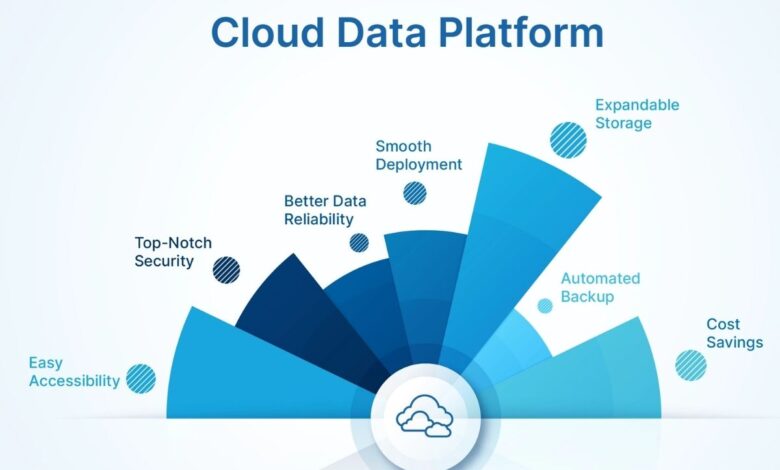
The global cloud database market is experiencing explosive growth in 2026, with projections showing the industry valued at approximately nine hundred forty-three billion dollars and on track to surpass one trillion dollars in early 2026. This remarkable expansion reflects a fundamental shift in how organizations manage data, driven by the convergence of artificial intelligence workloads, hybrid cloud adoption, and the relentless demand for real-time analytics. Cloud databases have evolved far beyond simple storage solutions, now serving as intelligent platforms that automatically scale, optimize performance using machine learning, and provide seamless integration across complex multi-cloud environments.
The database landscape in 2026 looks dramatically different from even two years ago. Modern cloud databases must handle diverse workload patterns ranging from traditional transactional processing to real-time analytics, vector search for AI applications, and event streaming. The architecture that powers these systems has matured significantly, with separation of storage and compute becoming the standard approach that enables serverless scaling and cost optimization. Organizations no longer choose between relational and non-relational databases based on rigid categories but instead select platforms that converge multiple data models within unified systems, eliminating the complexity of managing specialized databases for different data types.
This comprehensive guide examines the ten cloud database platforms that are defining the future of data management in 2026. These platforms represent the cutting edge of database technology, combining autonomous operations, AI-ready capabilities, and developer-friendly experiences that accelerate application development while maintaining enterprise-grade reliability and security.
1. Oracle Autonomous AI Database: Self-Driving Intelligence
Oracle Autonomous AI Database represents the pinnacle of automated database management, leveraging machine learning to create truly self-driving systems that require minimal human intervention. The platform’s converged architecture supports multiple data models including relational, JSON, graph, spatial, and vector within a single database, eliminating the complexity of managing separate specialized systems. Oracle’s Database 26ai release in late 2025 brought significant enhancements specifically targeting AI workloads, including built-in AI Vector Search and in-database machine learning that enables organizations to run analytics and train models directly within the database without moving data.
The autonomous capabilities extend across the entire database lifecycle. Self-tuning algorithms continuously optimize query performance, automatic indexing creates and drops indexes based on workload patterns, and self-patching applies security updates without downtime or performance degradation. Performance benchmarks demonstrate Oracle Cloud databases processing over one million transactions per second with built-in machine learning optimizing execution plans in real time. The platform’s Maximum Availability Architecture delivers uptime guarantees of ninety-nine point nine nine five percent through automated failover and recovery mechanisms that detect and respond to failures faster than human operators.
Oracle’s unique Cloud at Customer offering addresses a critical enterprise requirement by enabling organizations to run Oracle Cloud databases in their own data centers while maintaining full compatibility with public cloud deployments. This hybrid capability proves essential for organizations with data residency requirements or those managing the gradual migration of legacy workloads. The platform integrates seamlessly with Apache Iceberg, the de facto standard open table format, enabling customers to run AI and analytics securely across all their data regardless of where it resides, spanning Oracle Cloud Infrastructure, Amazon Web Services, Microsoft Azure, Google Cloud Platform, and Exadata Cloud at Customer deployments.
2. Amazon Aurora: Relational Power at Cloud Scale
Amazon Aurora has established itself as the gold standard for cloud-native relational databases, delivering the performance and availability of commercial databases at one-tenth the cost while maintaining full compatibility with MySQL and PostgreSQL. Aurora’s architecture separates compute from storage, with a distributed, fault-tolerant storage system that automatically replicates data across multiple availability zones and continuously backs up to Amazon S3. This design enables Aurora to deliver up to five times better throughput than standard MySQL and three times better than standard PostgreSQL while providing automatic storage scaling from ten gigabytes to one hundred twenty-eight terabytes without downtime.
The platform’s serverless offering, Aurora Serverless, represents a breakthrough in database economics by automatically starting up, shutting down, and scaling capacity based on application needs. This eliminates the need to provision database instances for peak capacity, dramatically reducing costs for applications with variable or unpredictable workloads. Amazon has unveiled Graviton5 processors specifically optimized for memory-intensive database workloads, delivering significant performance improvements for Aurora deployments while reducing energy consumption.
Aurora’s integration with the broader Amazon Web Services ecosystem provides powerful capabilities that extend beyond traditional database functionality. Zero-ETL integrations with Amazon Redshift enable organizations to combine operational and analytical workloads without building and managing complex data pipelines, automatically replicating source data for real-time analytics and machine learning. Aurora supports both MySQL and PostgreSQL wire protocols, ensuring compatibility with existing applications and tools while providing cloud-native features like automated backups with point-in-time recovery, continuous monitoring with Performance Insights, and automated failover that typically completes in under thirty seconds.
3. Google Cloud AlloyDB: PostgreSQL Reinvented
Google Cloud AlloyDB represents a fundamental rethinking of PostgreSQL for cloud-native environments, delivering performance that is four times faster than standard PostgreSQL for transactional workloads while providing up to two times better price-performance compared to self-managed deployments. AlloyDB’s architecture combines a PostgreSQL-compatible database engine with Google’s expertise in distributed systems, implementing a columnar engine for analytical queries that eliminates the need for separate data warehouses for many use cases.
The platform’s AI capabilities distinguish it from traditional PostgreSQL offerings. Built-in vector search enables developers to build sophisticated AI applications directly within their existing database infrastructure without moving data between systems or managing separate vector databases. Google has integrated Gemini AI capabilities throughout AlloyDB, providing AI-powered assistance for database development, performance optimization, fleet management, governance tasks, and migration planning. These AI-assisted features help development teams troubleshoot performance issues by analyzing query execution patterns, detecting anomalies, and providing evidence-based recommendations.
AlloyDB Omni extends the platform’s reach beyond Google Cloud, supporting multi-cloud and hybrid deployments that enable organizations to run the same database service across Google Cloud Platform, Amazon Web Services, Microsoft Azure, and on-premises infrastructure. This portability proves essential for enterprises with regulatory requirements or those seeking to avoid vendor lock-in while maintaining consistent operational practices. Character AI, serving millions of generative AI requests, chose AlloyDB specifically for its ability to handle five times the query volume at fifty percent lower latency compared to their previous database solution, demonstrating the platform’s effectiveness for demanding AI workloads.
4. Microsoft Azure Database Services: Comprehensive Cloud Data Platform
Microsoft Azure offers a comprehensive portfolio of database services that span relational, NoSQL, caching, and analytical workloads, providing organizations with integrated solutions for diverse data management requirements. Azure SQL Database delivers fully managed, intelligent SQL capabilities built for the cloud with automatic tuning, threat detection, and vulnerability assessments that continuously optimize performance and security without manual intervention. The platform leverages machine learning to recommend and automatically implement performance improvements, making it particularly accessible for teams without deep database administration expertise.
Azure Cosmos DB stands as Microsoft’s globally distributed, multi-model database service designed for applications requiring single-digit millisecond latency at any scale. The platform provides turnkey global distribution with transparent multi-region replication, comprehensive service level agreements covering throughput, consistency, availability, and latency, and support for multiple data models including document, key-value, graph, and column-family within a single service. Azure’s recent focus on AI readiness has resulted in enhanced support for vector search capabilities across multiple database services, enabling developers to build intelligent applications that combine traditional data with AI-powered similarity searches.
The integration between Azure database services and the broader Microsoft ecosystem creates compelling synergies for organizations already invested in Microsoft technologies. Azure Database for PostgreSQL provides a managed PostgreSQL service with enterprise-grade capabilities at commercial open-source database prices, representing Microsoft’s answer to Amazon Aurora and Google AlloyDB. For organizations migrating from on-premises SQL Server deployments, Azure SQL Managed Instance offers a fully managed service that provides near one hundred percent compatibility with the latest SQL Server Database Engine, enabling straightforward migration of existing applications without code changes. Azure’s commitment to hybrid cloud scenarios through Azure Arc extends database services to on-premises, edge, and multi-cloud environments while maintaining consistent management and governance.
5. MongoDB Atlas: Document Database Dominance
MongoDB Atlas has emerged as the leading cloud platform for document-oriented databases, serving development teams worldwide with a developer data platform that handles the increasing demands of modern applications. Built on the foundation of MongoDB, the most popular NoSQL database, Atlas provides a fully managed service that automates routine database tasks including provisioning, patching, scaling, and backup operations while delivering enterprise-grade security and compliance capabilities.
The platform’s flexible document model enables developers to work with data in formats that match their application code, eliminating the impedance mismatch between object-oriented programming and relational database schemas. MongoDB’s aggregation framework provides powerful capabilities for data transformation and analysis, while native support for horizontal scaling through sharding enables applications to handle massive data volumes and high-throughput workloads. Atlas deploys across Amazon Web Services, Microsoft Azure, and Google Cloud Platform with global clusters that automatically replicate data across multiple geographic regions for disaster recovery and low-latency access.
MongoDB’s focus on developer experience extends beyond the database itself. Atlas Search provides full-text search capabilities integrated directly into the database, eliminating the need for separate search infrastructure. Atlas Data Lake enables organizations to query data stored in Amazon S3 using the MongoDB Query Language, bridging operational and analytical use cases. The platform’s Charts feature provides built-in data visualization, while Atlas App Services delivers backend-as-a-service functionality including authentication, authorization, and serverless functions. Recent enhancements have strengthened MongoDB’s AI capabilities, with vector search support enabling developers to build retrieval augmented generation applications that combine the benefits of large language models with company-specific data.
6. Snowflake: Cloud Data Warehousing Redefined
Snowflake has revolutionized cloud data warehousing through its unique architecture that separates storage, compute, and services into independently scalable layers. This design enables organizations to scale compute resources for query processing without impacting storage, pay only for resources actually consumed, and support unlimited concurrent workloads without performance degradation. Snowflake’s multi-cluster shared data architecture provides a solution to the traditional trade-off between scalability and consistency, enabling multiple compute clusters to access the same data simultaneously while maintaining ACID transaction guarantees.
The platform’s zero-copy cloning capability allows organizations to create instant copies of entire databases for development, testing, or analytics without duplicating storage, dramatically accelerating development cycles and enabling experimentation without impacting production systems. Data sharing features enable secure, governed sharing of live data between organizations without copying or moving data, creating new collaboration models and data marketplace opportunities. Snowflake’s recent Gen2 premium compute tier announcement brought significant performance improvements for demanding analytical workloads, while continued investment in AI and machine learning capabilities positions the platform for the next generation of intelligent applications.
Snowflake’s approach to data integration has evolved significantly, with data sharing becoming a preferred pattern for accessing data from third-party applications including SAP, ServiceNow, Salesforce, and Oracle without building fragile ETL pipelines. The platform’s support for Apache Iceberg table format, following industry consolidation around this open standard, provides flexibility for organizations seeking to avoid vendor lock-in while maintaining the benefits of Snowflake’s query optimization and governance capabilities. Integration with emerging AI platforms and support for vector data types position Snowflake as more than a traditional data warehouse, evolving into a comprehensive cloud data platform that bridges operational, analytical, and AI workloads.
7. PlanetScale: Vitess-Powered MySQL at Scale
PlanetScale delivers the world’s fastest and most scalable cloud hosting for MySQL through its foundation on Vitess, the horizontal sharding technology originally developed at YouTube to scale MySQL databases across thousands of servers. The platform’s architecture enables databases to handle millions of queries per second on hundreds of terabytes of data, making it ideal for demanding applications that have outgrown traditional MySQL deployments. PlanetScale’s unique approach combines the familiarity and ecosystem of MySQL with cloud-native capabilities including branching, zero-downtime schema changes, and automated horizontal scaling.
The database branching feature represents a paradigm shift in how teams manage database changes, enabling developers to create isolated copies of production databases for testing schema modifications, experimenting with new features, or debugging issues without impacting production systems. Deploy requests provide a code review process for database changes, allowing teams to review and approve modifications before merging them into production through automated, zero-downtime migrations. The platform’s rollback capabilities enable teams to reverse problematic schema changes without downtime or data loss, dramatically reducing the risk associated with database modifications.
PlanetScale’s Metal offering differentiates the platform through use of blazing fast NVMe drives that unlock unlimited IOPS and drastically lower latencies compared to other cloud database providers including Amazon Aurora and Google Cloud SQL. Performance benchmarks demonstrate significant improvements in p50, p95, and p99 latency metrics after migrating databases to Metal infrastructure. The platform provides comprehensive observability through Insights, delivering detailed cluster health monitoring, query performance analysis, and actionable recommendations for optimization. Recent additions of vector support enable developers to store vector data alongside traditional relational data within the same MySQL database, simplifying architecture for AI-powered applications.
8. Neon: Serverless PostgreSQL Innovation
Neon has emerged as the most innovative serverless PostgreSQL platform, pioneering a usage-based pricing model that charges only for actual compute and storage consumed rather than provisioned capacity. Following its acquisition by Databricks in May 2025, Neon has accelerated product development and dramatically improved pricing, with compute costs falling fifteen to twenty-five percent, storage pricing dropping eighty percent, and enterprise features transitioning from premium add-ons to standard inclusions. The platform’s free tier now provides one hundred compute unit hours per month, more than doubling the previous allocation and removing financial barriers for learning and prototyping.
Neon’s architecture separates storage from compute using a custom-built multi-tenant storage system that enables remarkable capabilities including instant database branching, scale-to-zero during idle periods, and bottomless storage that grows automatically with data volumes. The branching feature leverages copy-on-write mechanisms that make database cloning instantaneous and cost-effective, enabling development workflows where every pull request gets its own isolated database environment for testing. Internal telemetry reveals that over eighty percent of databases provisioned on Neon are created automatically by AI agents rather than humans, underscoring the platform’s alignment with agentic workloads where applications dynamically create and destroy thousands of ephemeral databases.
The platform’s serverless architecture delivers millisecond-scale scaling adjustments that respond to workload changes faster than traditional autoscaling approaches. Scale-to-zero functionality eliminates charges during idle periods, making Neon exceptionally cost-effective for development environments, preview deployments, and applications with pronounced traffic patterns that include quiet periods. For production workloads with variable demand, Neon’s continuous scaling delivers lower effective costs compared to alternatives that require provisioned capacity even during low-utilization periods. The integration with platforms like Vercel enables high-fidelity preview environments that provide production-like database instances for every deployment, improving testing quality while maintaining cost efficiency.
9. Supabase: Open Source Backend Platform
Supabase positions itself as an open-source alternative to Google Firebase, providing a comprehensive backend-as-a-service platform where PostgreSQL serves as the foundation for a broader suite of developer tools. The platform combines a managed PostgreSQL database with authentication services, real-time APIs, file storage, and edge functions, creating an integrated solution that accelerates application development by eliminating the need to assemble and manage separate services. Supabase’s commitment to PostgreSQL and open source principles differentiates it from proprietary backend platforms, providing developers with the flexibility to self-host if needed and avoiding vendor lock-in.
The authentication system built into Supabase leverages PostgreSQL’s row-level security features, enabling developers to implement sophisticated authorization rules directly in the database layer rather than in application code. This approach reduces the attack surface for security vulnerabilities while providing fine-grained access control that scales with application complexity. Real-time capabilities enable applications to subscribe to database changes and receive updates immediately, supporting collaborative features and live dashboards without complex infrastructure. The platform’s edge functions run on Deno, providing serverless TypeScript execution close to users for minimal latency.
Supabase’s integration capabilities and ecosystem support make it particularly attractive for rapid application development. A vibrant community has created numerous SaaS boilerplates and starter templates based on Supabase, accelerating time-to-market for new projects. The platform achieves SOC2 Type 2 certification and HIPAA compliance, meeting the security and regulatory requirements of healthcare and other regulated industries. While more AI application builders including Lovable and bolt are adopting Supabase for their default database, the platform faces competition from Neon in agentic workloads where instant provisioning and scale-to-zero capabilities provide advantages. Supabase excels for steady, high-traffic applications where its predictable instance-based pricing model and comprehensive feature set deliver excellent value.
10. CockroachDB: Globally Distributed SQL
CockroachDB stands apart as the only true distributed SQL database designed for mission-critical applications requiring global distribution, financial services needing ACID compliance across regions, and large enterprises with complex multi-region requirements. Built on a transactional and strongly consistent key-value store inspired by Google’s F1 and Spanner technologies, CockroachDB delivers the familiarity of PostgreSQL through wire protocol compatibility while providing horizontal scalability, strong consistency, and automatic survivability that traditional databases cannot match.
The platform’s architecture replicates data across multiple geographic regions automatically, enabling applications to survive entire datacenter failures without data loss or extended downtime. CockroachDB’s consensus-based replication using the Raft protocol ensures that all nodes agree on transaction order, maintaining consistency even during network partitions or node failures. This design proves essential for financial applications where eventual consistency models are unacceptable and data loss could have severe business consequences. The platform’s ability to scale horizontally by adding nodes without downtime or manual sharding eliminates the growth ceiling that traditional relational databases impose.
Recent developments have strengthened CockroachDB’s position in the market. The version twenty-five point two release in 2025 brought significant performance improvements and vector indexing capabilities, positioning the platform for AI-driven applications that require both transactional guarantees and similarity search. CockroachDB Serverless provides a fully managed offering that abstracts infrastructure complexity while maintaining the platform’s core distributed systems benefits. The platform’s comprehensive compliance certifications including SOC2, GDPR, and industry-specific requirements make it suitable for regulated industries. Organizations choosing CockroachDB typically prioritize resilience and global distribution over cost optimization, accepting higher operational complexity in exchange for superior availability guarantees and the ability to place data close to users worldwide while maintaining strong consistency.
Choosing the Right Platform for Your Requirements
Selecting among these leading cloud database platforms requires careful evaluation of technical requirements, team capabilities, and business priorities. Organizations must honestly assess their current scale and realistic growth projections, avoiding the temptation to over-engineer for hypothetical future scenarios while ensuring chosen platforms can accommodate actual growth trajectories. Team expertise significantly influences platform selection, as databases requiring specialized knowledge or extensive operational overhead may overwhelm teams lacking database administration experience, while platforms with strong automation and developer-friendly interfaces enable smaller teams to manage sophisticated deployments.
Performance requirements and geographic distribution needs vary dramatically across applications. Real-time applications serving global users benefit from platforms like CockroachDB or Azure Cosmos DB that provide low-latency access through globally distributed architectures, while applications serving regional markets may find single-region deployments with read replicas sufficient. Workload characteristics determine optimal database choices, with transactional applications favoring platforms like Aurora or CockroachDB, analytical workloads gravitating toward Snowflake or Google BigQuery, and mixed workloads potentially requiring converged platforms like Oracle Autonomous Database or specialized combinations.
Cost structures and budget predictability represent critical considerations that extend beyond headline pricing. Usage-based models like Neon deliver exceptional value for variable workloads but may prove expensive for consistent high-utilization scenarios where reserved capacity or instance-based pricing provides better economics. Organizations must account for hidden costs including data transfer fees, backup storage, and premium feature pricing that can significantly impact total cost of ownership. The choice between serverless and provisioned deployments involves tradeoffs between operational simplicity and cost predictability that different organizations weigh differently based on their risk tolerance and operational maturity.
Platform lock-in considerations increasingly influence database selections as organizations recognize the long-term implications of architectural decisions. Platforms built on open-source foundations like PostgreSQL or MySQL provide greater flexibility for future migrations compared to proprietary systems with unique query languages or data models. Support for open table formats like Apache Iceberg enables organizations to maintain data portability even when using platform-specific features. The vendor ecosystem surrounding each platform affects both current productivity through integration availability and future flexibility through the breadth of compatible tools and services.
The Future of Cloud Databases
The cloud database landscape continues evolving rapidly as platforms adapt to emerging requirements including AI workload optimization, multi-cloud portability, and increasingly sophisticated automation. The integration of machine learning throughout database systems extends beyond query optimization to encompass autonomous operations, predictive capacity planning, and intelligent data organization that adapts to access patterns. Vector search capabilities have transitioned from specialty features to standard functionality as organizations build retrieval augmented generation applications that ground large language models with enterprise data.
The consolidation of transactional and analytical workloads within unified platforms through hybrid transactional analytical processing architectures eliminates the traditional separation between operational databases and data warehouses. This convergence enables real-time analytics on operational data without complex ETL pipelines, supporting decision-making that responds to current rather than historical conditions. The rise of semantic layers and knowledge graphs provides structure that makes data more understandable to both humans and AI systems, with initiatives like the Open Standards Interface forming in response to proprietary semantic layers that threaten to create new forms of vendor lock-in.
Regulatory pressure around cloud concentration risk is driving organizations from theoretical multi-cloud to active-active deployments that provide genuine insurance against provider-specific outages. Databases enabling seamless application failover between cloud regions and providers gain strategic importance as financial services regulators and other oversight bodies express concerns about concentration risk. The evolution toward true data portability through open formats, API standardization, and cross-platform compatibility represents a maturation of the cloud database market where vendor lock-in is increasingly unacceptable to sophisticated buyers.
The platforms highlighted in this guide represent the current state of the art in cloud database technology, each bringing distinct strengths to different aspects of the data management challenge. Organizations that thoughtfully evaluate their specific requirements, team capabilities, and business constraints position themselves to maximize value from these powerful platforms while maintaining the agility to adapt as both their needs and the technology landscape continue evolving. The database decisions made today ripple through application architecture, operational practices, and cost structures for years, making thorough evaluation an investment that pays ongoing dividends.