Paper Tigers Of India: Regulators Roar, Giants Ignore
Why are Indian regulators becoming toothless? Are our regulators becoming that principal whose words are heard by all by learned/followed by none?


The Toothless Watchdogs: Are India’s Regulators Losing Their Bite?
Indian regulators are starting to resemble a strict school principal whose lectures are heard by everyone but obeyed by no one. From banking to aviation, food safety to financial markets, powerful industry players nod along to regulatory warnings – then carry on as usual until crisis strikes. The Reserve Bank of India (RBI), the Directorate General of Civil Aviation (DGCA), the Food Safety and Standards Authority of India (FSSAI), the Securities and Exchange Board of India (SEBI), and even sectoral watchdogs like TRAI and the Competition Commission of India (CCI) have all talked tough.
Yet time and again their directives are flouted or enforced too late, allowing corporate giants and monopolies to run roughshod over rules. The result? WE, THE PEOPLE OF INDIA, the common man, THE AAM JANTA, the very consumers who are injecting their hard earned money to these big giants (on the ask of better services), passengers, small investors, all end up bearing the brunt of chaos and malpractices that stronger oversight should have prevented.
This article dives into several high-profile cases that expose how India’s regulators, for all their official powers, often appear toothless in the face of non-compliance and corporate clout. It seems like the regulators are just sitting on official posts, taking hefty government salaries and just living on mammoth houses (on taxpayer’s money) and the taxpayers are nothing, just burning their pockets!
RBI vs Kotak Mahindra Bank – Warnings Unheeded, Customers Suffer
In April 2024, the RBI took the extraordinary step of barring Kotak Mahindra Bank from onboarding new customers via its online platforms and from issuing fresh credit cards. This drastic action came only after two years of futile prodding. For 2022 and 2023, RBI examiners found Kotak’s IT infrastructure and cybersecurity governance severely deficient, with serious lapses in everything from managing software updates to controlling user access and preventing data leaks. The regulator didn’t just point out problems; it gave the bank corrective action plans and engaged in “continuous high-level engagement” over two years to ensure fixes. But Kotak, India’s third-largest private lender, failed to address the concerns in a comprehensive or timely manner.
The consequences of this foot-dragging were dire. In those two years, Kotak’s fragile IT systems suffered frequent outages, including a major crash of its core banking platform on April 15, 2024 that paralyzed digital services and caused serious inconvenience to customers. Imagine thousands of customers unable to make online transactions or pay bills, caught by surprise as a big bank’s app and website went dark.
Only after this very public fiasco did RBI finally clamp down with strict business restrictions to prevent “any possible prolonged outage” that could disrupt not just Kotak’s customers but the wider digital payment ecosystem. In RBI’s own words, the bank had “continued failure” in resolving critical IT risks, and its operational resilience was “materially deficient” relative to its growth.
It’s a textbook case of a regulator barking warnings for years while the bank shrugged them off, until the RBI was left with no choice but to bite hard. Who ultimately paid the price for Kotak’s laxity? Its customers, of course. They endured service disruptions and then had to watch their bank effectively put in the penalty box, unable to offer new digital accounts or credit cards. For a growth-hungry bank in India’s digital age, that’s a major sanction, but one that came after significant consumer harm.
It’s the public that “felt the pain of mismanagement” while the regulator’s earlier words went unheeded. The episode also raises a discomforting question: if a prominent bank like Kotak can brush off two years of RBI directives about something as vital as tech infrastructure, how toothy was the RBI’s supervision in practice? The central bank ultimately showed it has sharp teeth, but only after being provoked by repeated non-compliance. A proactive bite two years earlier might have saved everyone a lot of trouble.
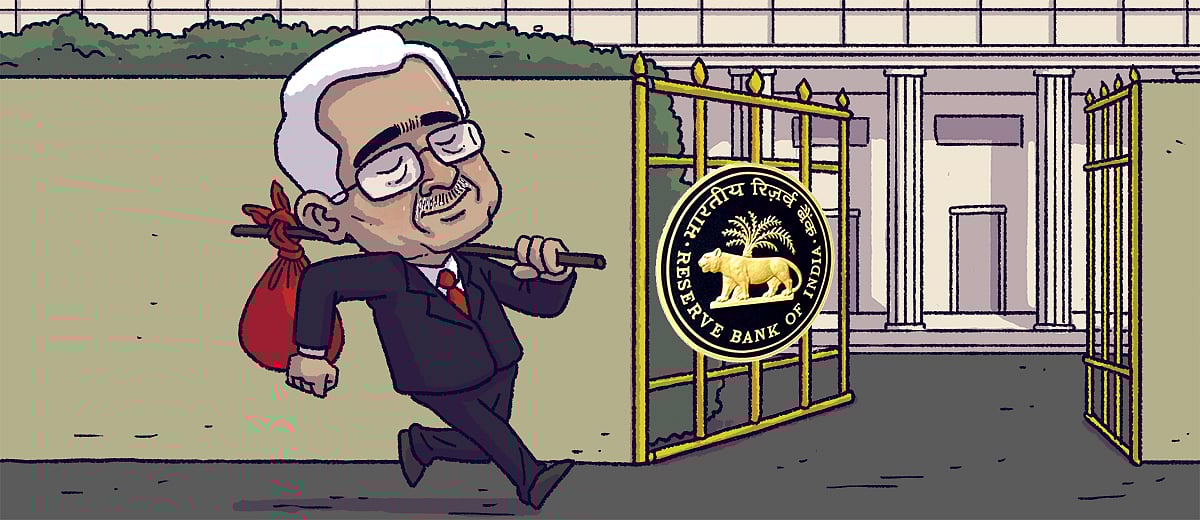
Notably, Kotak’s case is not isolated. RBI has in recent years penalized or restricted other banks (HDFC Bank, American Express, Diners Club, etc.) for IT outages or data governance failures, indicating a pattern of reactive enforcement. By the time action is taken, customers have already suffered through outages or data breaches. Regulatory critics argue that RBI’s approach often gives large banks ample time (sometimes too much) to set their house in order, perhaps to avoid spooking markets, but this forbearance can be read by banks as weakness.
In Kotak’s saga, the bank’s stock even rose during the ban period (up ~5.5% from April to Dec 2024, lagging but still up), suggesting investors didn’t fear the regulator’s wrath too much. Only after an external audit and tech overhaul did RBI lift the ban in Feb 2025, satisfied that Kotak finally “beefed up” its IT systems with help from third-party tech firms. It’s a relief the story ended with remediation, but one has to wonder why a top bank needed such drastic prompting to take customer-impacting tech issues seriously. The RBI’s warning growl clearly wasn’t enough; it had to show its bite, belatedly, to make the bank listen.
DGCA vs IndiGo – A Fatigue Rule Meant for Safety Ends in Chaos
In civil aviation, the regulator DGCA tried to enforce a crucial safety reform of stricter limits on pilot flying hours and mandated rest, only to find the country’s largest airline, IndiGo, essentially ignored the memo until disaster struck. The DGCA’s updated Flight Duty Time Limitations (FDTL) were rolled out in phases during 2025 to combat chronic pilot fatigue. Key changes included increasing mandatory weekly rest for pilots from 36 to 48 hours, capping red-eye (night-time) flights, and importantly, prohibiting airlines from counting a pilot’s leave as rest. These rules, aligned with global best practices, were meant to ensure safer skies by preventing overworked pilots from flying without adequate downtime.
IndiGo was well aware of these impending rules (initially set to kick in mid-2024, but delayed to late 2025 after industry pushback). DGCA even staggered implementation to give airlines time to hire or reschedule. Yet, as the final phase took effect in November 2025, IndiGo hadn’t hired enough pilots or adjusted rosters to comply. The airline known for its hyper-efficiency and cost-cutting simply gambled that it could manage, or some cynics say, it gambled that if things went wrong, the regulator would blink first.
Things went very wrong. In the first week of December 2025, IndiGo’s operations imploded in a wave of flight cancellations the likes of which India had never seen. It started around Dec 3–4 as the new pilot-rest rules pinched a carrier running on “wafer-thin” crew reserves. Hundreds of flights were canceled for lack of rested crew, and the chaos quickly snowballed to over 2,000 scrapped flights nationwide. Departure boards across major airports (Delhi, Mumbai, Bengaluru – you name it) glowed red with cancelations.
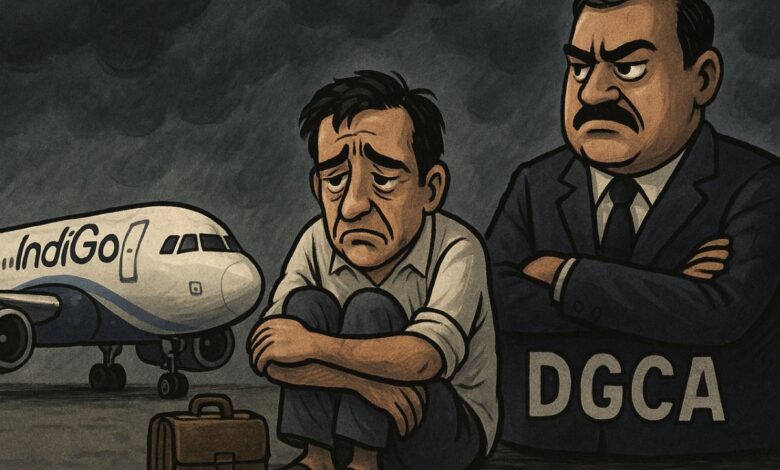
Passengers were stranded by the tens of thousands, which is (perhaps) a planned, veritable humanitarian crisis in airports during peak holiday and wedding travel season. Bags piled up, furious travellers flooded social media and news channels. On a single day, Dec 4, IndiGo cancelled 550 flights, which is the most by any airline in India in one day, ever. By the week’s end, the numbers were staggering. One report tallied 1,200+ IndiGo cancellations in a matter of days, affecting some 260,000 passengers in one week at Mumbai airport alone when counting cancellations and delays.
India’s civil aviation minister told Parliament he wouldn’t let any airline “however large” inflict such hardship on flyers. It may be a tough talk, yet the Ministry and DGCA’s next move was an about-face that exposed the regulator’s quandary. Faced with irate customers and a near-paralysis of domestic air travel (since IndiGo controls ~60% of the market), the authorities caved. The DGCA hastily relaxed the very rules that triggered the crisis, granting IndiGo a temporary exemption from key fatigue provisions.
Within 24 hours, the regulator extended the cap on a pilot’s consecutive duty from 12 to 14 hours, and suspended the “no leave as rest” rule until Feb 2026. It even lifted limits on night landings for IndiGo during this period. In essence, the safety regulator blinked, loosening safety rules to let the airline catch up. To be fair, DGCA did impose conditions, as IndiGo had to report every 15 days and present a plan for full compliance in 30 days.
The Civil Aviation Ministry also ordered the airline to slash its winter schedule by 10% to ease the pressure and put rival carriers on standby to add flights for stranded passengers (government even roped in railways to run special trains). And DGCA wasn’t entirely done flexing. It served a show-cause notice to IndiGo’s CEO and deployed an oversight team to the airline’s headquarters, probing whether the chaos was deliberately orchestrated to “arm-twist” the regulator into rolling back the fatigue rules. IndiGo’s chairman vehemently denied any deliberate engineering of the crisis, issuing a public apology and blaming a confluence of unexpected events. Still, the fact that such an allegation arose shows the trust deficit at play.
When the dust settled, one thing was crystal clear. DGCA’s authority had taken a hit. A well-intentioned safety regulation, where pilots need proper rest to fly safely, after all, was implemented without ensuring the dominant airline fell into line. IndiGo’s failure to prepare (they even reduced their pilot count in 2025 while asking DGCA for permission to add more flights) suggests either gross mismanagement or cynical brinkmanship.
Either way, regulatory oversight wasn’t strong enough to prevent the predictable outcome. Pilots themselves saw it coming. They had warned that without hiring more staff, these rules would push operations past the breaking point. Indeed, the Airline Pilots’ Association wrote to the minister calling the meltdown a “failure in planning” and a “calculated strategy” by the airline to force the regulator’s hand. The end result? The DGCA did soften the rules, at least temporarily, essentially rewarding the airline’s lack of compliance to get planes flying again. Thousands of travelers went through hellish days of canceled flights, missed weddings, missed exams and holidays, which is a classic case of customers paying for an airline’s non-compliance.
From a safety perspective, the whole episode was ironic. The regulator’s mandate is to prioritize safety, yet to resolve the crisis it had to dial back safety measures (like allowing more pilot duty hours), which is a decision surely not taken lightly. Aviation experts noted that India’s regulatory oversight and safety culture have long lagged, with pilot fatigue concerns swept under the rug.
When DGCA finally tried to enforce stricter norms (after years of pilot groups lobbying and even court cases in 2019 for better fatigue rules), the industry’s nonchalant response turned the effort into a mess. One veteran pilot summed it up: “They (airlines) want to squeeze everything out of us… treating limits as guidelines”. And until now, regulators largely let them. So, was the DGCA toothless or just outmaneuvered? Perhaps a bit of both. The IndiGo saga shows that without proactive enforcement and contingency planning, even a well-meaning regulator can be reduced to scrambling reactionarily, and even reversing its own rules under pressure.
It’s a sobering precedent that if the country’s biggest airline can run afoul of safety regs and effectively get a timeout instead of a penalty, what message does that send? As one analysis put it, “60% of seats sit on one airline” in India; a single carrier’s failings can “paralyze an entire domestic market.” The regulator has now warned airlines to build in “fatter crewing buffers” or face coercive action like fines and schedule curbs. That’s nice in theory, but one imagines industry execs smirking, given how things played out. The DGCA must prove it won’t be arm-twisted again, or it risks becoming just another paper tiger.
FSSAI and Food Adulteration – Lots of Raids, Little Deterrence
Food safety in India often seems like a game of Whac-A-Mole. The regulators crack down in one spot, only for adulteration rackets to pop up elsewhere. The FSSAI, tasked with keeping our food clean and safe, regularly issues warnings and orders raids. Yet stories of rampant adulteration keep surfacing, highlighting an enforcement gap. Take the case of paneer (Indian cottage cheese), a staple protein for millions of vegetarian households. In 2025, a series of investigations across states revealed what can only be termed a fake paneer epidemic.
A food safety raid in Noida (Uttar Pradesh) found that a shocking 83% of paneer samples failed quality standards, with nearly 40% of them deemed unsafe due to harmful chemicals and unidentified substances. Around the same time, Ahmedabad authorities seized 1,500 kg of fake paneer being supplied to eateries, and Pune’s Food and Drug Administration raided a factory, confiscating 1,400 kg of adulterated paneer laced with emulsifying chemicals and skim milk powder. Even some high-end hotels were caught in allegations of serving “analogue” faux-paneer while passing it off as the real thing. These are not isolated incidents, but they point to a widespread problem of food fraud that basic enforcement has failed to stamp out.
FSSAI’s response has been to direct aggressive crackdowns. In late 2025, alarmed by “repeated reports of adulterated and fake dairy products”, the authority ordered a nationwide enforcement drive focusing on milk, paneer, khoya and other dairy products. Under Section 16 of the Food Safety Act, it instructed all states to immediately intensify inspections across the dairy supply chain; from production to retail, and to take “strict action” against violators. Food Safety Officers were told to draw samples, verify licenses, do traceability to bust source networks, and upload all actions to a central system for monitoring.
The directive warned of seizures, shutdown of illegal units, license cancellations, product recalls and destruction of adulterated batches as possible penalties. Hotels, restaurants, and catering outlets were specifically put on notice not to procure adulterated paneer, with FSSAI threatening punitive action against any establishment found serving it. In essence, FSSAI sounded a battle cry, acknowledging that food fraud was posing “serious health risks” and eroding consumer trust in daily staples.
And yet, the ground reality remains grim. The very need for a nationwide crackdown indicates that earlier warnings went unheeded. It’s not as if food adulteration emerged overnight; it’s been called out for decades (who hasn’t heard the tales of milk diluted with water or worse?). FSSAI has conducted national milk surveys in the past and found high rates of non-compliance (a 2018 milk survey famously found a significant percentage of samples substandard or adulterated, though the government often downplays some findings).
The difference now is the brazenness and scale. Using cheap vegetable oil, starch, and chemicals to create “paneer” that mimics the real thing in looks but has none of the nutrition, and selling this toxic imitation widely. Why do they do it? Because real paneer from milk is expensive to produce and perishable, so adulterators cut costs and corners with impunity. The profits are huge, the risk of getting caught traditionally low. Even when caught, how severe are the consequences? A factory might get raided and goods seized, but the kingpins often evade serious jail time, and penalties have historically been weak enough to be chalked up as the cost of doing business.
It’s telling and damning that FSSAI’s own data led to the admission that “83% of paneer samples” were failing safety norms. That figure, albeit from targeted surveillance in hotspots is eye-popping. It suggests adulteration is more common than authenticity in some markets. In other words, consumers have a higher chance of buying fake paneer than real; essentially a market failure in food safety. What does this say about the regulator’s teeth?
Clearly, the fear of getting caught isn’t enough to deter adulterators on the ground. FSSAI relies on state food safety departments to do the legwork (sampling, raids, prosecution), and those are uneven in resources and, frankly, often compromised by corruption or political interference at local levels. The central authority can warn and coordinate, but it can’t possibly police every dairy vendor in every town. Adulteration rackets exploit this gap, operating in the shadows until occasionally busted.
One might argue FSSAI is doing all it can; after all, it is actively warning, conducting surveillance, and engaging in public awareness (issuing advisories on how consumers can test paneer at home with simple methods, etc.). But the persistence of the problem indicates the penalties or probability of punishment is still too low. If 83% of samples in a region are non-compliant, that’s basically open flouting of the law by the majority of producers. It’s akin to a classroom where almost everyone is cheating on the test. At that point you have to question the effectiveness of the invigilator.
Laws exist on paper to punish such fraud (including criminal provisions for selling unsafe food), but how many perpetrators are actually put behind bars or put out of business? The fact that FSSAI had to launch a “nationwide crackdown” in 2025, and again in 2026, implies we’ve been here before. Indeed, look at the pattern: milk adulteration has made headlines repeatedly (one survey in 2011 found a whopping 68% of milk samples adulterated or substandard, leading to periodic drives, but milk still gets tampered with). Now paneer and milk products are in focus, until the attention fades and the bad actors slither back.
The net effect is erosion of trust. Consumers don’t know if that white block of paneer in their fridge is genuine dairy or some cocktail of trans-fats and chemicals. Public confidence in regulators takes a hit each time a scandal breaks. We see FSSAI tweets and press releases about raids, but on the dinner table the anxiety remains: what am I really eating? The regulator sometimes looks like it is playing catch-up; always warning, rarely preventing. A sarcastic observer might note that FSSAI’s initials could stand for “Food Sometimes Safe Authority of India.” Jokes aside, food safety is a life-and-death matter (adulterated products can cause organ damage, cancers, etc. over time).

It demands an uncompromising enforcement stance. To be fair, FSSAI’s latest actions, like pushing for new standards on dairy analogues labelling and consulting on stricter definitions to prevent consumer confusion show it’s trying to close loopholes. But unless the odds of getting caught and punished rise sharply, the adulteration economy will thrive. Right now, too many feel they can get away with it, and largely they do.
That, ultimately, signals a regulator whose bark, frequent as it is, doesn’t quite inspire enough fear in the hearts of wrongdoers. It warns, but cannot decisively purge our markets of toxic food. And until that changes, the tainted paneer problem (and whatever next scandal replaces it) will keep returning like a bad meal.
SEBI and Market Mayhem – IPOs That Burn Investors
The stock market is another arena where questions swirl about regulatory effectiveness. In theory, SEBI is a vigilant gatekeeper for investors, vetting companies that seek to list on exchanges and policing market conduct. In practice, the last few years saw a spree of overhyped, overpriced IPOs that left retail investors holding the bag, raising doubts about SEBI’s gatekeeping rigor. The poster child of this phenomenon was Paytm’s IPO in November 2021, India’s largest ever at the time. Despite red flags about the loss-making fintech’s valuation, the issue sailed through approvals and the company raised $2.5+ billion from the public.
On listing day, reality struck. Paytm’s stock plunged 27% in its trading debut, one of the worst first-day performances ever for a major IPO. The shares closed that day at ₹1,564 vs an IPO price of ₹2,150. And that was just Day 1; the decline kept going. Within six months, Paytm was down over 70%. By May 2022, about half a year post-IPO, Paytm’s stock was “worth not much more than a quarter of its IPO price”, as Reuters dryly noted. An 75% erosion of value means lakhs of retail investors (many of whom bought into the “next big tech” narrative) got severely burned.
Paytm wasn’t an isolated case. A number of high-profile IPOs around that period met similar fates. Food-delivery app Zomato listed to fanfare in 2021 and initially popped, but within a year or so its stock too traded well below its offer price. Beauty retailer Nykaa, which listed in 2021, saw its lofty valuations come crashing down thereafter, also ending up at a large discount to IPO price. Even India’s venerable state-run insurer, LIC (Life Insurance Corporation), wasn’t immune.
The government pushed through LIC’s record-breaking IPO in May 2022, valuing the behemoth at an aggressive ₹6 lakh crore+ market cap. Despite a mild discount offered to retail buyers and policyholders, LIC’s shares listed at an 8% discount and slid further, ending 7.8% down on debut. Investors who expected a quick profit instead saw immediate losses. Over the following weeks, LIC’s stock kept falling; a month in, it was nearly 30% below issue price, wiping out ₹1.3 lakh crore (~$17 billion) in market value. By early 2023, LIC was among the top wealth destroyers in Asia’s recent IPO history, down ~40% from IPO price, betraying the millions who had trusted the government’s sales pitch.
What’s troubling is not that stocks can go down (that’s normal market risk), but that some of these IPOs were arguably mismarketed or mispriced to begin with. SEBI’s role is to ensure disclosures are fair and that companies coming to market meet certain standards of governance and financial soundness. Yet clearly many companies with shaky fundamentals or sky-high private valuations were greenlit for public listing. One could ask, did SEBI scrutinize the assumptions in these prospectuses, especially for the tech unicorn types?
After the Paytm fiasco, there were indeed murmurs in the market community that SEBI should have been more cautious. Moneylife, a well-known investor advocacy publication, even termed Paytm’s issue a case of “deliberate overpricing” and expressed hope that SEBI would insist on more realistic valuation justifications. Subsequently, SEBI did introduce guidelines for so-called “new-age” tech companies; now they are required to disclose key performance indicators and details of how they arrived at the IPO price band in their offer documents, ostensibly so investors can gauge if valuations are justified. But these rules came after the damage was done, a reactive measure.
Meanwhile, retail investors faced not just IPO pain but also derivatives trading hazards, which is another area SEBI has struggled to rein in. A recent SEBI study found an astounding 91% of individual traders in equity derivatives (futures & options) lost money in FY2022, with the average loss per loser being ₹1.1 lakh. Despite that, retail participation in risky F&O has only grown, turning the market into a casino for many first-timers.
SEBI in 2022-2023 implemented tighter margin and risk disclosure rules; brokers must now show clients stark warnings about the odds of loss. Yet the losses mounted to ₹1.06 trillion for retail derivatives traders in FY2025 (a 41% worse outcome than the previous year). That implies SEBI’s efforts are barely scratching the surface of rampant speculation; people are still jumping into complex trades they don’t understand, and losing en masse.
While one could argue adults are free to make bad decisions, the role of a regulator is to protect inexperienced investors from predatory practices and themselves. Here again, SEBI’s impact appears limited as the allure of quick profits and the aggressive marketing by trading platforms have outpaced the regulator’s educational campaigns.
Returning to IPOs, when retail investors lose crores in dud IPOs or market crashes, it erodes faith in the equity market itself. In the IPO mania of 2021-22, many first-time investors jumped in, only to see their capital erode. It’s not that SEBI can guarantee profits – but it is expected to filter out grossly overpriced or fraudulent offerings.
Historically, SEBI has indeed intervened at times (for instance, halting IPOs that had clear irregularities or ordering refunds). But in the recent boom, perhaps the pressure to make India a startup heaven and facilitate capital raising took precedence over investor caution. LIC’s case is instructive. It was a government divestment; pricing was arguably political (to meet fiscal targets). SEBI allowed LIC to sell only 3.5% stake (down from originally planned 5-10%), perhaps recognizing the market couldn’t absorb more.
Even so, that IPO “raised far less than expected” for the government and then saw price go south. Analysts pointed out that LIC’s issue had been scaled down after investors “pushed back against lofty valuations”, initial government hopes valued LIC at ₹17 trillion, which was cut by half to ~₹6 trillion for IPO. That more realistic pricing was still not enough to prevent a weak debut and ongoing slide. The common thread where lofty valuations eventually meet reality, and small investors often realize they overpaid by trusting the hype. Where was SEBI? Approving the sale, ensuring rules were ticked, but not really safeguarding the end investor from euphoria or overoptimism.
SEBI often reminds investors caveat emptor – buyer beware. True, but what about seller be fair? The regulator should ensure companies and investment banks aren’t selling snake oil. On that front, the scorecard is mixed. Many of the “crash-and-burn” IPOs did comply with disclosure norms technically, yet left out perhaps the most important detail – that the issue pricing assumed perfection for the next 10 years. When Paytm’s prospectus runs into hundreds of pages, the average retail buyer isn’t digging through it; they trust that if SEBI approved it and marquee investors backed it, it must be fine.
This trust was exploited. By May 2022, Reuters noted pointedly: “LIC is the latest in a string of Indian companies that has fallen sharply after listing as investors looked closely at potential profitability and questioned valuations. Fintech firm Paytm plunged… and its shares now are worth not much more than a quarter of its IPO price.” In other words, reality check belatedly happening after listing. This pattern indicates a regulatory gap in vetting the optimism baked into IPO pricing and narratives.
Going forward, one hopes SEBI sharpens its teeth. It has begun to by, for example, tightening governance norms for listed startups and probing unusual stock moves (the ongoing investigations into the Adani Group’s stock manipulation allegations, for instance, show SEBI trying to assert itself in the face of a very powerful corporate empire – though critics say its response was slow and prodded mainly by a Supreme Court order). If SEBI doesn’t visibly hold issuers and market operators accountable, it risks losing credibility.
Already, in popular forums one hears jibes that SEBI stands for “See Everything, Blindly Ignore” – a harsh and unfair quip, but reflective of public frustration when scams or market shenanigans go unchecked for too long. The regulator did succeed in some areas (e.g. implementing T+1 settlement, cracking down on insider trading in several cases), but in the court of retail investor sentiment, the big tests are these headline events – IPO flops, major frauds, monopolistic market manipulation. On those, the jury is still out.
The pattern of passing losses to retail customers while insiders and promoters make a killing is something a strong regulator would strive to break. SEBI’s challenge is to prove it’s not a passive monitor but an active referee that will throw a flag when the game isn’t fair. Otherwise, it risks being seen as yet another principal whose stern speeches don’t translate into discipline in the playground.
The Rise of Duopolies – Where Are the Competition Watchdogs?
Zooming out, a worrying trend across sectors is the rise of gigantic monopolies or duopolies, which regulators either allowed or were powerless to prevent. India’s aviation and telecom sectors are prime examples. After years of consolidation, two players effectively rule the skies and the airwaves. In aviation, as noted, IndiGo controls about 64% of the domestic market while the Tata-owned Air India group has around 27%.
That leaves all other airlines combined with single-digit share. This duopoly can squeeze out competition and, as analysts note, practice “capacity discipline” – cutting or limiting flights to keep fares high. For consumers, it means higher ticket prices and fewer choices, which was evident in Dec 2025: when IndiGo’s crisis hit, there weren’t enough alternative seats, and airfares on remaining flights skyrocketed, gouging passengers who urgently needed to travel. One could ask: how did we get here?
The Competition Commission of India (CCI) had a say when airlines merged or shut down. Jet Airways’ collapse (2019) and Kingfisher’s earlier demise were market exits that CCI couldn’t do much about. But when the government sold Air India to the Tatas (merging it with Vistara) and when smaller airlines continuously lost ground, regulators seemingly had no strategy to maintain a level playing field. Now, with just two giants, DGCA and the government are wary of upsetting them, because if either falters, the whole system wobbles. It’s a classic case of “too big to fail” being implicitly tolerated in the interest of short-term stability, at the cost of long-term competitive health.
In telecom, the story is similar, perhaps even starker. Reliance Jio and Bharti Airtel now command roughly 75% of India’s mobile subscriber base, making the sector an effective duopoly. Vodafone Idea, the distant third, is hanging by a thread at ~17% share and is widely seen as a “zombie” operator kept on life support. In fact, the government itself stepped in as a quasi white-knight for Vodafone Idea, converting the company’s owed interest into equity and becoming a one-third owner in 2023, all to prevent its outright collapse. That extraordinary intervention shows how the state bent over backwards to avoid a monopoly situation – yet the result is still a duopoly with one weak player.
TRAI, the telecom regulator, in the mid-2010s watched (some say abetted) a brutal price war unleashed by Jio’s entry. Predatory pricing of months of free data and calls drove smaller telcos out and forced mergers (Vodafone with Idea, Tata Tele folded into Airtel, etc.). At the time, incumbents cried foul and sought regulatory relief, but TRAI largely let the market forces play out. Jio’s tactics, while great for consumers initially, were clearly aimed at grabbing market share at any cost. By the time TRAI imposed floors or other measures, it was too late – the damage to industry finances was done.
Now, Jio and Airtel dictate terms, hiking tariffs in lockstep as “rational pricing” returns. Consumer choice is at the mercy of two companies’ strategies, and both are raising prices to improve ARPUs. Complaints about network quality or billing issues? With one alternative (or none in some circles), consumers have little leverage. The regulator TRAI issues consultation papers and mild rebukes on call drop rates, but the fact is, competition – the best driver of service quality – has ebbed.
Other sectors exhibit similar concentration. e-commerce (Amazon and Flipkart duopoly), ride-hailing (Ola/Uber), online food delivery (Zomato/Swiggy), etc. The CCI has tried to flex muscles at times – it fined Google over ₹2,200 crore in 2022 for abusing its dominant Android position in India, one of the largest antitrust penalties. It also opened probes into Amazon/Flipkart for preferential treatment of sellers. But the wheels of antitrust turn slowly, and by the time orders come, the market may already be irrevocably tilted.
Moreover, big tech firms often appeal and get such orders stayed or diluted. We lack a proactive framework to prevent duopolies from entrenching. Only now is India mulling a Digital Competition law to impose ex-ante rules on tech giants – a step the EU has taken. Domestically grown monopolies – say in ports, airports, power, etc. – often flourish via political patronage, and regulators tiptoe around them. The Adani Group’s spectacular growth across sectors (from ports to airports to energy) occurred under the noses of sector regulators and CCI. Only after a U.S. short-seller alleged fraud in 2023 did SEBI and others seriously look into some of these matters, which suggests a reactive rather than preventive stance.
The pattern that emerges is of regulatory inertia or hesitation in the face of big players. Perhaps it’s fear of litigation, or pressure from political masters (no regulator is entirely independent in India; top appointments are often former bureaucrats or those close to the establishment). The result is policies that sometimes favour the growth of national champions at the expense of competitive markets. For instance, when Jio was allowed to keep its free pricing beyond the usual 90-day promotional period (by offering a “Happy New Year” extension in 2017), rivals were furious and called it predatory.
But neither TRAI nor CCI stopped it decisively. Jio eventually started charging on its own timeline. By then, multiple operators had died. One could say the regulator enabled a market structure where now consumer welfare relies on the benevolence of two firms rather than robust competition. Trade Brains, analyzing this trend, dubbed it “Dangerous Duopolies,” warning that such concentration “reduces competition, limits consumer choices, and increases pricing power” to the detriment of consumers and the economy. In their analysis, these duopolies persist in part because regulators and the government allowed them, sometimes intentionally (to ensure industry viability) and sometimes by neglect.
All of this circles back to the theme where it all points to toothless regulators or perhaps declawed regulators. A watchdog can be toothless either because it lost its teeth or because it refuses to bite, fearing the repercussions. In India’s case, it seems a bit of both. We have no shortage of regulatory bodies; indeed often multiple for each sector, and they issue plenty of guidelines, orders, show-cause notices. But when push comes to shove, will they take on the giants decisively?
Will they strike before a crisis forces their hand? Or are they content being after-the-fact fire-fighters? The evidence suggests a lot of firefighting, not enough fire prevention. The rise of monopolies and the open flouting of rules by big players underscore that regulators are struggling to command respect. The regulators might not be literally toothless as they have legal powers, but if those powers are not wielded timely, the effect is the same as having none.
At the end, Can We Expect Our Regulators To Be Fearless From Toothless?
Each of the cases we explored carries the same moral; where a regulator’s strength is measured not by the rules it writes, but by the actions it enforces. Right now, Indian regulators speak loudly but carry a small stick. Industry behemoths have learned that the compliance burden is often negotiable, and penalties (if they come at all) manageable. RBI had to publicly shame and restrict a major bank to finally get its IT risks fixed; something that could have perhaps been achieved quietly had the bank truly feared the regulator from the start. DGCA attempted to prioritize safety, but an airline’s non-compliance forced it to retreat and make compromises, a blow to its authority.
FSSAI announces crackdowns and new standards, yet adulteration remains rampant, indicating that offenders don’t truly fear getting caught; it’s almost a cat-and-mouse routine. SEBI oversees one of the world’s largest equity markets, but couldn’t prevent naïve investors from being sold overvalued dreams in broad daylight, nor has it stamped out market manipulation perceptions – trust in fair play is eroding. The competition and sector regulators watch over increasing concentration with a mix of powerlessness and permissiveness, issuing occasional fines that big corporations treat as parking tickets.
For India’s economy to truly modernize, this equation has to change. Regulators must regain their bite – and that means being willing to draw blood when necessary (figuratively, of course). Sarcasm aside, it’s about time our watchdogs got some dentures or learned to gum harder. The companies and industries they regulate should lie awake at night fearing the consequence of non-compliance, rather than betting that “nothing will happen.”
We need to see, for example, bank CEOs held personally accountable for repeated regulatory breaches, airline licenses in jeopardy if safety is compromised, food businesses shut down and owners jailed for endangering public health, and IPO promoters facing class-action style consequences for misguiding investors. Some of these things are beginning to happen – but not nearly enough to change the culture.
Right now, one could be forgiven for picturing the regulators as that school principal who keeps scolding the same bullies every day. The students politely listen during the lecture (the companies attend the meetings, file the reports), then go back to the playground and continue their antics while the principal’s back is turned. In a well-run school, the bullies would be expelled after a warning or two – or at least detained – pour encourager les autres.
In India Inc’s school, detention is rare and expulsion almost unheard of, especially for the star pupils. This dynamic has to shift if regulators want to be taken seriously. They have the mandate to protect the public interest – millions of ordinary citizens who rely on them as a check on corporate excesses and systemic risks. When regulators fail, it’s those citizens who pay: through lost money, unsafe food, higher prices, or even loss of life in worst cases.
India aspires to be a global economic powerhouse and a safe investment destination. That won’t happen if our regulatory institutions are perceived as weak or captive. The uncomfortable truth is that some regulators may have gotten too cozy with industry, or too constrained by political considerations, and thus lost their edge. Shying from the truth is not an option if things are to improve.
We must acknowledge that yes, our regulators in many sectors are at risk of becoming toothless – and then empower them (legally, financially, and politically) to grow those teeth back. Strong, independent regulators may occasionally cause short-term pain to corporations (fines, mandates to invest in safety/IT, etc.), but in the long run they save everyone pain by preventing disasters.
To end on a cautiously optimistic note, these crises have at least put a spotlight on regulatory shortcomings. Public outrage and media scrutiny can embolden regulators – in the RBI-Kotak case, RBI won praise for finally acting decisively; in the IndiGo case, DGCA’s probe and the government’s promises of accountability show they felt the heat. Sunlight is a disinfectant. If enough people ask, “Where were the watchdogs?” every time something goes wrong, perhaps the watchdogs will start baring their fangs more preemptively.
After all, no regulator wants the legacy of having slept on duty. It’s high time they prove they can be tigers and not toothless kittens. The next time a Kotak, an IndiGo, a mass adulterator, or a dubious IPO is in the making, the regulators should strike early – and strike hard – so that these cautionary tales need not repeat. The principal’s words must be followed, not just heard. Otherwise, we risk being a nation of excellent rulebooks and eloquent speeches, signifying nothing when the moment of truth arrives.