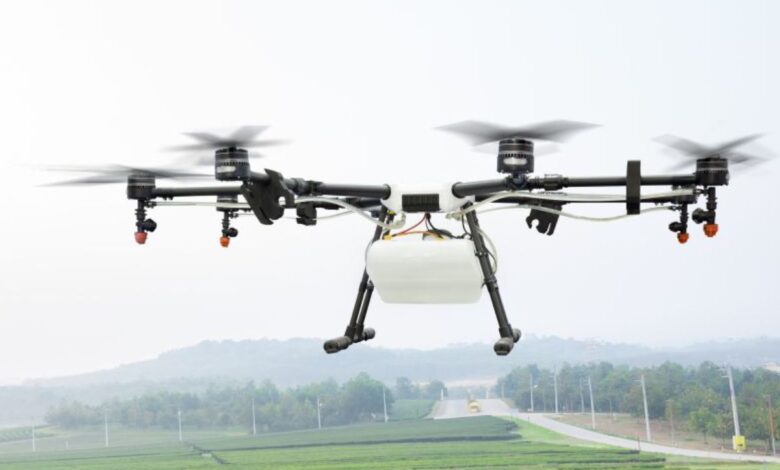
Revolutionizing Precision Agriculture From Above
The agricultural drone industry stands at the forefront of a transformation that is fundamentally changing how humanity grows food and manages farmland across the globe. The agriculture drones market has demonstrated explosive growth, projected to expand from 2.63 billion dollars in 2025 to an impressive 10.76 billion dollars by 2030, representing a compound annual growth rate of 32.6 percent during this forecast period. This remarkable expansion reflects the urgent need for agricultural innovation as farms worldwide face mounting pressures from labor shortages, climate uncertainty, increasing food demand from growing populations, and the imperative to adopt more sustainable farming practices that reduce chemical inputs and environmental impacts.
Understanding the companies leading this transformation provides crucial insight into where agricultural technology is heading and which innovations will shape farming operations in the coming years. The competitive landscape includes established technology giants with decades of engineering expertise, specialized agricultural technology firms deeply rooted in farming communities, and ambitious startups pushing the boundaries of automation and artificial intelligence. These companies compete not just on drone hardware capabilities but increasingly on the sophistication of software platforms, data analytics tools, and integrated agricultural management systems that turn raw aerial imagery into actionable insights farmers can use to improve yields and profitability.
1. DJI (Da-Jiang Innovations): The Undisputed Market Leader
DJI dominates the agricultural drone market with a commanding presence that extends far beyond its well-known consumer and professional camera drones. Based in Shenzhen, China, DJI has leveraged over twelve years of dedicated research and development in agricultural applications to create what many industry observers consider the most advanced and reliable agricultural drone systems available today. The company’s Agras series has become synonymous with agricultural drones in many markets, much as the Xerox brand once dominated photocopiers, and DJI’s market leadership position appears virtually unassailable given its combination of technical capabilities, manufacturing scale, global distribution networks, and continuous innovation.
In July 2025, DJI launched its newest generation agricultural drones, the Agras T100, T70P, and T25P, showcasing technological advances that set new benchmarks for the entire industry. The flagship Agras T100 represents the pinnacle of current agricultural drone capabilities, designed specifically for large-scale commercial growers who need to cover vast acreages efficiently.
This powerhouse can carry a maximum payload of 100 liters for spraying operations, 150 liters when configured for spreading fertilizers or seeds, or an impressive 100 kilograms for lifting and transport tasks, with maximum operation speeds reaching 20 meters per second. The spraying flow rate using standard dual sprinklers reaches 30 liters per minute and increases to 40 liters per minute with an optional four-sprinkler configuration, enabling the T100 to achieve operational efficiency twice that of its predecessor for high-volume spraying tasks.
What truly distinguishes DJI’s latest offerings is the integration of industry-leading safety systems that address one of the primary concerns farmers have about autonomous drone operations. The T100 comes equipped with LiDAR sensors, millimeter-wave radar, and a sophisticated Penta-Vision system that work together to create a comprehensive three-dimensional understanding of the drone’s environment.
This multi-sensor approach enables the T100 to detect and avoid obstacles including power lines, trees, buildings, and even other aircraft with remarkable reliability, delivering what DJI describes as an unparalleled safe and intelligent operational experience. The spreading system employs a brand-new screw feeder design that doubles load capacity while increasing maximum flow rate by an astonishing 270 percent compared to previous models, addressing farmer complaints about the time required to complete spreading operations across large fields.
The mid-tier Agras T70P provides many of the T100’s advanced capabilities in a platform optimized for medium-sized farming operations that need efficiency but may not require the absolute maximum payload capacity. Capable of carrying 70 liters for spraying, 100 liters for spreading, or 65 kilograms for lifting, the T70P maintains the same impressive flow rates and fine mist droplet sizes as its larger sibling while offering the new spreading and lifting systems. The T70P incorporates Safety System 3.0, which features millimeter-wave radar and a Tri-Vision obstacle detection array, providing smarter route selection and significantly improved obstacle clearance rates that reduce the need for operator intervention during autonomous flights.
For individual farmers and smaller operations, DJI offers the compact Agras T25P, which retains a foldable design that makes it easy to transport in standard vehicles while offering upgraded capabilities including the high-precision 25-kilogram screw feeder spreading system 4.0 and Safety System 3.0. For spraying applications, the T25P can carry 20 kilograms with a flow rate of 16 liters per minute, and it delivers droplet sizes ranging from 50 to 500 micrometers, providing the flexibility to adjust application characteristics based on specific crop and chemical requirements.
The T25P’s design philosophy centers on enabling solo operations where a single farmer can transport, set up, and deploy the system for fully automated aerial mapping and plant protection without requiring additional personnel, making advanced drone technology accessible to operations that might lack the staff or budget for larger systems.
DJI Agriculture has complemented its hardware innovations with the official launch of new pilot training courses under the DJI Academy umbrella, initially available in 15 countries across the Americas and Asia with plans for European expansion. These courses cover essential skills for agricultural drone operations including crop protection spraying techniques, spreading best practices, safe piloting procedures, and methods for improving efficiency and effectiveness. By investing in operator training and certification, DJI addresses one of the key barriers to drone adoption—the knowledge gap between traditional farming practices and advanced autonomous aerial systems.
2. XAG: China’s Rising Agricultural Robotics Giant
XAG Co., Ltd. has emerged as a formidable competitor to DJI, positioning itself as the world’s largest agriculture drone service provider and a leader in autonomous agricultural technology that extends beyond drones to encompass complete smart farming ecosystems. Based in Guangzhou, China, XAG has accumulated 18 years of development experience and holds the world’s largest portfolio of agricultural drone patents, providing a strong foundation of intellectual property that protects its innovations from easy replication by competitors. The company’s P Series drones have been proven across tens of millions of hectares, totaling over 9.3 million flight hours since 2022 alone, demonstrating reliability at scale that gives farmers confidence these systems will perform consistently under demanding real-world conditions.
At Agritechnica 2025, the world’s leading trade fair for agricultural machinery held every two years in Hanover, Germany, XAG unveiled its latest innovations including the P150 Max Agricultural Drone and the R Series Agricultural Rover. The P150 Max represents XAG’s answer to the needs of large-scale farming operations facing rising labor shortages and cost pressures.
This robust and fully autonomous agricultural drone balances reliability, safety, and operating efficiency through increased payload capacity, modular design that allows rapid reconfiguration between different tasks, and upgraded flight control systems incorporating the latest advances in autonomous navigation. The P150 Max operates as a genuine multitasker, capable of switching between spraying, spreading, field mapping, and logistics operations by changing between modular task systems within just minutes, providing operational flexibility that reduces the need for multiple specialized machines.
XAG’s V40 Agricultural Drone showcases a different design philosophy, employing dual rotors rather than the quadcopter configuration favored by many competitors. Designed specifically for row crops, orchards, and specialty agriculture, the V40 features smart flight systems and rugged construction engineered for demanding agricultural environments. The drone carries a 44-pound spray tank and operates autonomously for up to 15 minutes during spraying operations, with AI-powered flight planning and terrain-following capabilities that enable precise application even on hillsides and uneven ground. The V40 supports variable-rate application, allowing farmers to adjust chemical concentrations and flow rates dynamically based on crop needs detected by sensors, optimizing resource use while ensuring adequate coverage where plants need it most.
What distinguishes XAG from competitors focusing primarily on drone hardware is the company’s holistic approach to agricultural automation. XAG integrates robotics and intelligence across multiple platforms including multifunction drones, lightweight rovers for ground-based operations, autopilot consoles that can be retrofitted to existing tractors and transplanters, smart fertigation systems that automate irrigation and nutrient delivery, and IoT sensors that continuously monitor field conditions.
This comprehensive ecosystem approach allows farmers to build integrated smart farming operations where different systems share data and coordinate activities, creating efficiencies impossible with standalone tools. The Smart Fertigation System features smart electric valves and fertilizer injectors that deliver water and nutrients directly to plant roots with precision, managed through a smartphone app that enables farmers to plan, monitor, and adjust operations remotely from anywhere at any time.
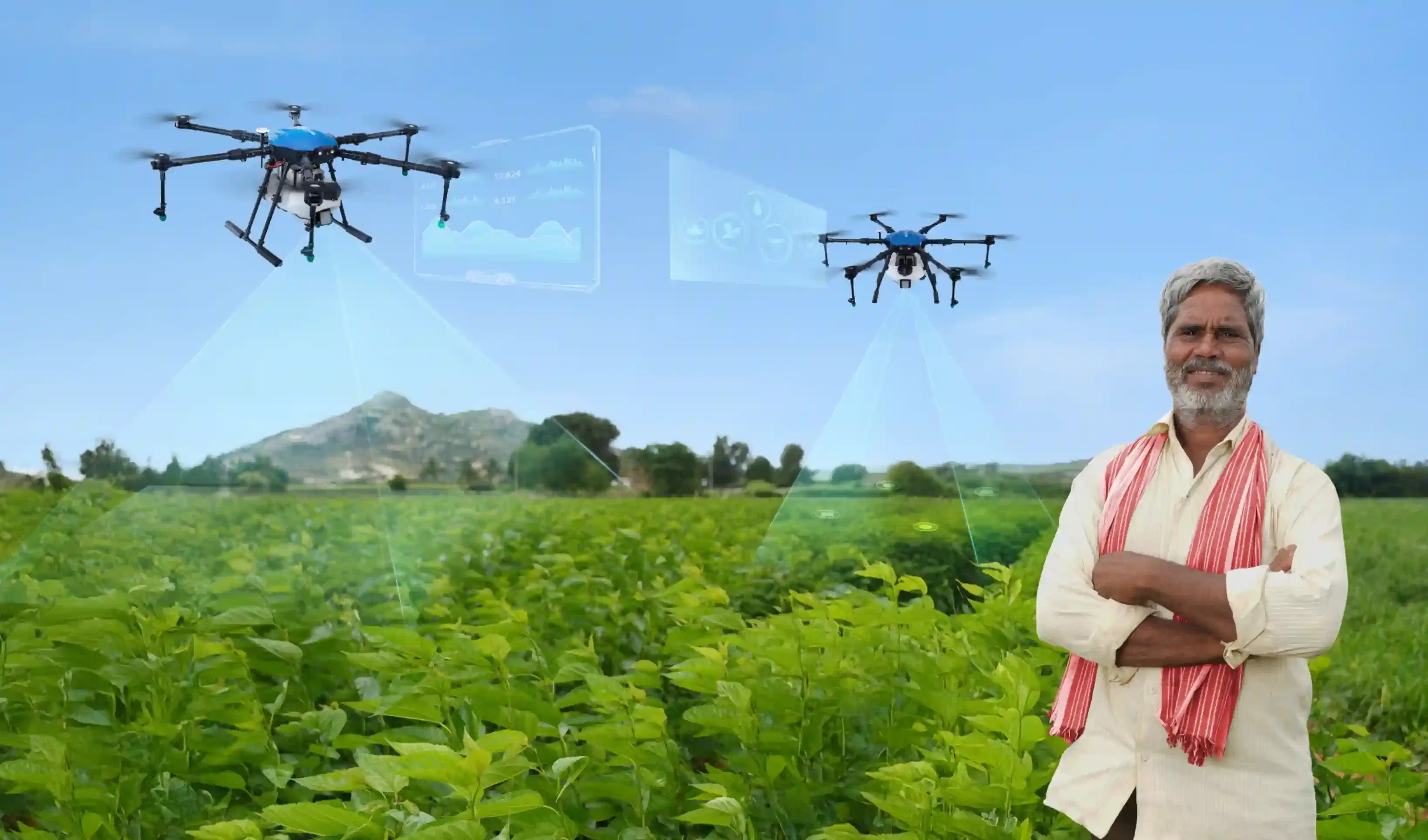
XAG has invested heavily in ensuring reliable connectivity even in rural areas where cellular coverage may be limited or nonexistent. The XAG Local Server and Wireless Relay system maintains stable connectivity and data security without depending on external networks, addressing a critical limitation that has hampered adoption of cloud-dependent agricultural technologies in remote farming regions. This infrastructure investment demonstrates XAG’s understanding that successful agricultural technology must work reliably under real-world conditions rather than only in idealized environments with perfect connectivity.
3. Yamaha Motor Co., Ltd.: Decades of Agricultural Aviation Experience
Yamaha Motor Company brings a unique perspective to agricultural drones, drawing on decades of experience developing remote-controlled helicopters for crop spraying dating back to the 1980s when the company began selling unmanned helicopters to Japanese rice farmers. This long history has given Yamaha deep insights into the practical requirements of aerial agricultural application, the regulatory challenges involved in operating unmanned aircraft over farmland, and the reliability standards necessary for farmers to trust autonomous systems with expensive crops and chemicals. Yamaha’s agricultural drones benefit from this institutional knowledge, incorporating design principles and operational best practices refined through generations of products.
Yamaha’s current agricultural drone offerings emphasize reliability, durability, and precision application capabilities that meet the stringent requirements of professional agricultural applicators. The company’s drones feature advanced stabilization systems that maintain precise position even in challenging wind conditions common in agricultural environments, ensuring uniform application and preventing drift that could damage adjacent crops or property. Yamaha has developed sophisticated spray systems that deliver fine mist droplets with carefully controlled characteristics, optimizing coverage while minimizing waste and environmental impact.
In May 2025, Yamaha Motor announced a joint research initiative with Mitsubishi Heavy Industries to develop a hybrid-powered medium-sized unmanned aerial vehicle, signaling the company’s commitment to addressing one of the key limitations of current battery-electric agricultural drones—limited flight time and the need for frequent recharging that interrupts operations. Hybrid propulsion systems that combine electric motors with small internal combustion engines generating electricity could dramatically extend operational endurance, potentially enabling drones to operate for hours rather than minutes between refueling stops. This development could be particularly significant for large-scale farming operations where maximizing productive flight time directly impacts economic viability.
Yamaha’s reputation in agricultural markets, particularly in Asia where the company established agricultural aviation decades before Western competitors, provides substantial competitive advantages. Farmers and agricultural service providers familiar with Yamaha’s heritage of reliability are more likely to consider the company’s new offerings, and this brand equity enables Yamaha to command premium pricing in markets where trust and proven performance matter more than cutting-edge features. The company’s established service and support networks, built to maintain its previous generation of agricultural helicopters, provide reassurance to customers that they will receive ongoing support and parts availability throughout the operating life of equipment.
4. AgEagle Aerial Systems: Integrated Hardware and Analytics
AgEagle Aerial Systems Inc., headquartered in Kansas, United States, has carved out a significant position in the agricultural drone market by specializing in highly integrated solutions that combine drone hardware with sophisticated cloud-based software for agricultural imaging and analytics. Founded in 2012, AgEagle initially focused on fixed-wing drones optimized for aerial mapping and crop monitoring, recognizing that many farming operations need efficient coverage of large areas more than vertical takeoff and landing capabilities. Fixed-wing drones can cover significantly more ground per battery charge compared to multirotor designs, making them economical for large-scale crop scouting and field mapping operations where multiple flights over the same area may be unnecessary.
AgEagle’s product portfolio has expanded to include both fixed-wing and multirotor platforms, giving farmers options suited to different applications and field configurations. The company’s fixed-wing drones excel at creating detailed field maps, generating normalized difference vegetation index imagery that reveals crop health patterns, and conducting rapid surveys across thousands of acres. Meanwhile, AgEagle’s multirotor platforms provide the flexibility needed for detailed inspection of specific problem areas, precision application in irregular fields or around obstacles, and operations in confined spaces where fixed-wing aircraft cannot safely operate.
In August 2025, AgEagle announced the launch of RedEdge P green, a new multispectral camera tailored specifically for precision agriculture applications. This advanced sensor offers modular configurations and captures rich spectral data with particular focus on detecting chlorophyll, carotenoids, and flavonoids—plant pigments that provide insights into crop health, stress levels, and nutritional status.
The RedEdge P green integrates seamlessly with various drone platforms, enabling agronomists and researchers to improve crop health monitoring, optimize input applications, and make informed decisions throughout the growing season based on quantitative data rather than visual observation alone. The sensor’s ability to detect subtle variations in plant physiology enables early identification of problems like nutrient deficiencies, water stress, or disease pressure before these issues become visible to the naked eye and potentially cause irreversible yield loss.
AgEagle’s business model emphasizes not just selling hardware but providing complete solutions that help farmers extract actionable insights from aerial data. The company’s cloud-based analytics platform processes raw imagery captured by drones, generating prescription maps that variable-rate equipment can use to apply inputs precisely where needed, field health reports that track changes over time, and alerts that notify farmers when sensor data indicates emerging problems requiring attention. This integrated approach addresses a common challenge in precision agriculture—farmers often struggle to translate data into decisions and actions, leaving sophisticated sensing capabilities underutilized.
5. Trimble Inc.: Precision Agriculture Integration Leader
Trimble Inc., a long-established American company founded in 1978 and known for GPS technology and precision positioning systems used across numerous industries, has leveraged its expertise to become a major player in agricultural technology including drone-based solutions. Trimble’s approach to agricultural drones differs from pure-play drone manufacturers by emphasizing integration with the company’s broader precision agriculture ecosystem that includes GPS guidance systems for tractors and implements, farm management software, weather monitoring, and data analytics platforms. This integration enables seamless data flow from drones to farm management systems and field equipment, creating closed-loop precision agriculture workflows where aerial observations inform ground-based operations.
Trimble’s drones work in concert with the company’s GPS and positioning technologies to deliver exceptional accuracy in both data collection and application. When Trimble drones create field maps showing areas needing additional nitrogen fertilizer, those maps can be loaded directly into Trimble-equipped sprayers or spreaders that then apply variable rates automatically as they traverse the field, with GPS guidance ensuring that application precisely matches the prescription without overlap or gaps. This level of integration reduces the friction involved in implementing precision agriculture practices, eliminating manual data transfer steps where errors can occur and farmers might abandon the process in frustration.
The company’s sophisticated data management systems unite drone hardware with GPS technology and advanced analytics, helping farmers drive efficiency and meet the emerging demands of digital agriculture. Trimble’s platforms store historical data spanning multiple growing seasons, enabling farmers to identify patterns and trends that would be invisible when looking at single-season snapshots. For example, yield data combined with multi-year soil fertility maps and weather records might reveal that certain field areas consistently underperform in dry years due to shallow topsoil, guiding investment in soil improvement or tile drainage that addresses root causes rather than treating symptoms annually.
Trimble serves customers ranging from individual farmers to large agricultural service providers and farm management companies overseeing tens of thousands of acres. The company’s reputation for reliability and its extensive dealer and support network provide reassurance to conservative agricultural buyers who need confidence that technology investments will be supported long-term. Trimble’s financial stability as a publicly traded company with revenue streams across multiple industries also provides assurance that the agricultural division will remain operational and innovative even if agricultural markets experience cyclical downturns that might threaten specialized startups.
6. Parrot Drone SAS: European Innovation in Agricultural UAVs
Parrot Drone SAS, based in Paris, France, brings European engineering sensibilities and regulatory expertise to the agricultural drone market. Founded initially as a company producing wireless devices, Parrot pivoted to drones and has become one of Europe’s leading UAV manufacturers with significant presence in agricultural applications. Parrot’s agricultural drones emphasize ease of use, sophisticated sensors, and compliance with stringent European regulations governing drone operations over farmland, providing farmers in EU countries with solutions designed specifically for their regulatory environment rather than adaptations of products developed primarily for other markets.
Parrot’s agricultural offerings include both fixed-wing and multirotor platforms optimized for different agricultural applications. The company’s fixed-wing ANAFI platform combines long flight endurance with professional-grade imaging sensors, enabling efficient mapping of large fields with high-resolution imagery suitable for detailed crop analysis. Parrot has invested heavily in developing user-friendly mission planning software that allows farmers with limited technical background to program flight paths, define coverage areas, and adjust camera settings through intuitive tablet interfaces that eliminate the steep learning curves associated with some competitors’ systems.
The company’s multispectral sensors capture imagery in carefully selected wavelengths that maximize sensitivity to crop health indicators. Parrot works closely with agronomists and crop scientists to validate that its sensor outputs correlate reliably with ground-truth measurements, ensuring that the vegetation indices and health metrics displayed in analysis software accurately reflect actual field conditions. This scientific rigor differentiates Parrot from some competitors whose marketing emphasizes sensor specifications but may not adequately validate that those specifications translate into agronomically useful information.
Parrot has established strong partnerships with agricultural software providers, enabling its drones to integrate with popular farm management platforms used throughout Europe. These partnerships expand Parrot’s addressable market by allowing farmers already invested in particular software ecosystems to add Parrot drones without needing to switch to new platforms or maintain multiple disconnected systems. The company’s commitment to open standards and interoperability reflects European regulatory and market preferences for avoiding vendor lock-in and preserving farmer control over their data.
7. Sentera: Advanced Sensors and Agricultural Intelligence
Sentera, based in the United States, has specialized in agricultural drone solutions with particular emphasis on advanced sensors that provide fast and accurate data for enhanced vegetation analysis. With nearly a decade of experience building agricultural drone solutions, Sentera has developed deep expertise in the specific sensing and analysis requirements of modern farming, creating products tailored to real-world agricultural applications rather than general-purpose drones adapted for farming. The company’s technology supports data-driven decision-making that is crucial for maximizing agricultural outcomes and adapting to the evolving landscape of precision farming.
Sentera’s sensor portfolio includes multispectral cameras that capture imagery in precisely calibrated spectral bands optimized for detecting crop stress, nutrient deficiencies, disease pressure, and other agronomic factors. The company’s sensors are designed for easy mounting on various drone platforms, giving farmers flexibility to choose drone hardware based on their specific operational requirements while still accessing Sentera’s advanced sensing capabilities. This sensor-agnostic approach recognizes that different farming operations may prefer different drone platforms based on factors like field size, crop type, existing equipment investments, and operator preferences.

What distinguishes Sentera is its focus on delivering actionable intelligence rather than simply providing data. The company’s analytics platform processes sensor imagery using sophisticated algorithms that translate spectral measurements into specific agronomic insights presented in formats farmers can readily understand and act upon. Rather than displaying abstract vegetation indices that require specialized interpretation, Sentera’s software might highlight specific field areas with nitrogen deficiency requiring additional fertilizer application, or identify zones where crop emergence is below expected levels suggesting replanting or investigation of soil problems.
Sentera has developed solutions that fit diverse business requirements from individual farmers to agricultural service providers offering drone imaging as a commercial service to multiple farm clients. For service providers, Sentera offers enterprise-level platforms that streamline data collection across numerous farms, standardize analytical workflows, and generate professional reports that can be delivered to customers. This flexibility in serving different market segments has enabled Sentera to build a broad customer base spanning the full spectrum of agricultural operations from small family farms to large commercial enterprises.
8. American Robotics: Fully Autonomous Drone Operations
American Robotics, Inc., now operating as part of Ondas Holdings Inc., leads in developing fully autonomous drone systems specifically designed for agricultural environments. The company’s breakthrough innovation is creating drones that operate without direct human supervision, addressing one of the primary limitations of conventional agricultural drones that require trained pilots actively monitoring and controlling each flight. American Robotics’ Scout System achieves hands-off drone operations through sophisticated autonomous flight systems, advanced obstacle avoidance using multiple sensor types, and intelligent mission planning that adapts to changing conditions, enabling scalable continuous crop monitoring that would be economically impractical with piloted systems.
The Scout System operates from an autonomous base station that houses the drone, charges batteries, downloads collected data, and provides weather monitoring to ensure safe flight conditions. When programmed for regular monitoring missions, the system can automatically deploy the drone according to schedule, fly predetermined routes capturing imagery and sensor data, return to base for battery swapping and data offload, and then launch again for subsequent missions—all without requiring human intervention beyond initial setup and periodic maintenance.
This level of autonomy dramatically reduces operational costs compared to systems requiring a trained pilot for each flight, potentially making frequent drone monitoring economically viable for applications where the value of information gathered in any single flight might not justify the cost of deploying a piloted system.
American Robotics has worked closely with the Federal Aviation Administration to establish regulatory frameworks allowing autonomous drone operations without visual observers, a significant achievement given traditional drone regulations requiring either a human pilot maintaining visual contact with the aircraft or at least a visual observer watching the drone while a remote pilot controls it. The regulatory approvals American Robotics has obtained provide competitive advantages and demonstrate pathways other companies may follow to enable broader autonomous operations as the technology matures and regulators gain confidence in autonomous safety systems.
The company’s real-time analytics capabilities process collected data immediately upon drone landing, generating alerts and reports without delays associated with manual data processing. For time-sensitive applications like pest or disease detection where early intervention can prevent widespread damage, this immediate processing and notification can be the difference between minor localized treatment and major crop loss across entire fields. American Robotics markets its system as enabling proactive farm management where potential problems are detected and addressed early rather than reactive management where farmers respond to problems after they become visible and potentially severe.
9. AeroVironment Inc.: Pioneering Precision Agriculture UAVs
AeroVironment Inc. is recognized for its pioneering unmanned aerial systems tailored specifically for precision agriculture, bringing decades of experience developing UAVs for defense and commercial applications. The company’s robust drone platforms offer advanced crop monitoring and data analytics capabilities that aid farmers in maximizing yields and operational efficiency. AeroVironment’s strong research and development focus enables continuous innovation in sensor payloads and autonomous flight capabilities, keeping the company at the cutting edge of agricultural drone technology even as competitors rapidly introduce new features and capabilities.
AeroVironment’s Quantix agricultural drone employs a hybrid design that combines vertical takeoff and landing capability with efficient fixed-wing flight, offering advantages of both multirotor and fixed-wing platforms. The drone takes off and lands vertically like a helicopter, eliminating the need for runways or catapult launch systems that can be impractical in agricultural settings with limited space or uneven terrain. Once airborne, the Quantix transitions to fixed-wing flight for efficient coverage of large areas, and then transitions back to vertical flight mode for precision landing. This hybrid approach provides operational flexibility that pure multirotor or pure fixed-wing designs cannot match.
The company’s Decision Support System integrates data from Quantix flights with agronomic models and historical information to generate specific recommendations for farm management actions. Rather than leaving farmers to interpret raw data or even processed imagery, the Decision Support System might provide guidance like specific field zones where additional irrigation is recommended based on detected moisture stress, timing suggestions for harvest based on crop maturity assessment, or fertilizer prescription maps optimized for detected variability in crop vigor. This transition from providing information to providing recommendations represents an evolution in precision agriculture tools from data collection devices to intelligent advisors.
AeroVironment serves both individual farmers and agricultural service providers, with different business models and support offerings tailored to each customer segment’s needs. Agricultural consultants and crop advisors who provide services to multiple farm clients can use AeroVironment’s enterprise platforms to efficiently manage monitoring across numerous fields and generate standardized reports for each client, while individual farmers receive simplified interfaces and support focused on managing their specific operation.
10. Hylio: Innovative Agricultural Drone Solutions
Hylio, based in the United States, has established itself as an innovative provider of agricultural drone solutions with particular strength in spray systems and autonomous flight capabilities. The company focuses on developing practical, cost-effective drones that address specific pain points farmers experience with agricultural operations, emphasizing real-world reliability and ease of use over maximum specification numbers that may not translate into genuine operational advantages. Hylio’s approach reflects the company’s origins serving farmers directly rather than developing technology in isolation from agricultural realities.
Hylio’s agricultural drones feature advanced spraying systems designed to deliver precise droplet sizes and uniform coverage across challenging agricultural terrain. The company has invested in spray system engineering to optimize nozzle designs, pump configurations, and droplet atomization characteristics specifically for agricultural chemicals, recognizing that spray quality directly impacts application efficacy and cost-effectiveness. Hylio works with agricultural chemical companies and university extension services to validate that its spray systems deliver appropriate coverage and penetration for various crop types and growth stages, ensuring that drone applications achieve biological efficacy comparable to or better than traditional ground-based application methods.
The company’s drones incorporate terrain-following capabilities that maintain consistent height above crop canopies even as ground elevation changes, ensuring uniform spray deposition across hillsides and irregular fields. This automated altitude adjustment eliminates the need for operator intervention to manually adjust flight height, reducing workload and improving application consistency. Hylio’s autonomous flight planning software analyzes field boundaries and obstacles to automatically generate efficient flight paths that optimize coverage while avoiding hazards, making drone operations accessible to farmers without extensive piloting experience.
Hylio offers drone-as-a-service models alongside equipment sales, recognizing that some farmers prefer to purchase application services rather than investing in equipment and developing in-house expertise. Through service provider partnerships, Hylio enables farmers to access drone technology benefits without capital investment or operational overhead, expanding the addressable market beyond farmers willing and able to operate their own drones. This flexible business model approach positions Hylio to serve diverse farm operations regardless of their preferred acquisition and operating model.
)
Conclusion: The Sky Is No Longer The Limit
The ten agritech companies profiled here represent the vanguard of a technological revolution transforming agriculture from ancient practices refined over millennia to data-driven precision systems informed by real-time aerial intelligence. From DJI’s market-dominating Agras series to XAG’s comprehensive smart farming ecosystems, from Yamaha’s decades of agricultural aviation expertise to innovative specialists like Sentera and American Robotics pushing specific technological boundaries, these companies collectively are redefining what is possible in agricultural operations.
The agriculture drones market’s projected expansion from 2.63 billion to 10.76 billion dollars over five years reflects genuine transformation rather than speculative enthusiasm, driven by measurable economic benefits, pressing labor challenges, and sustainability imperatives that align environmental responsibility with operational efficiency. As these technologies mature and costs decline through production scale and competition, agricultural drones will transition from cutting-edge innovations adopted primarily by large progressive operations to standard equipment found on farms of all sizes and types worldwide.
The companies succeeding in this dynamic market will be those that most effectively address the complete spectrum of farmer needs—not just technical capabilities but also ease of use, reliability, affordability, integration with existing systems, and support services that help farmers extract maximum value from their investments. The future of agriculture increasingly looks skyward, and the companies profiled here are charting the course that hundreds of millions of farmers will follow as they embrace aerial intelligence to feed a growing world while protecting the resources upon which all agriculture ultimately depends.