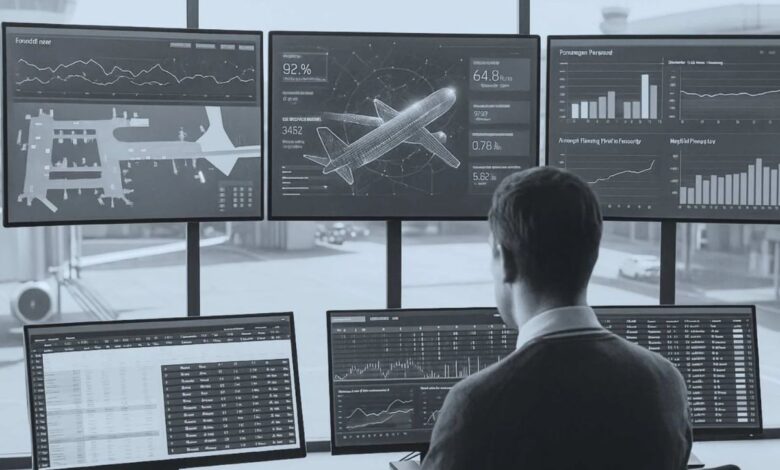
The global aviation industry stands at a transformative crossroads in 2026. With passenger numbers expected to double to over eight billion annually by 2041, and many travelers already surpassing pre-pandemic levels, airports worldwide face unprecedented pressure to enhance capacity, improve efficiency, and deliver seamless experiences without massive infrastructure expansion. The answer lies not in building bigger terminals but in deploying smarter technology. From biometric systems that eliminate the need for boarding passes to autonomous robots that handle baggage with precision, the airports of 2026 are fundamentally different from those just five years ago. This comprehensive guide explores the ten most impactful technology solutions reshaping airport operations and passenger experiences in 2026.
1. Biometric Single-Token Journey Systems: The Foundation of Seamless Travel
The biometric single-token journey represents the most transformative passenger processing innovation in aviation history. This technology fundamentally reimagines how travelers move through airports by creating a single digital identity token, typically based on facial recognition, that serves as verification throughout the entire journey from check-in through boarding. Rather than repeatedly presenting passports and boarding passes at multiple touchpoints, passengers complete biometric enrollment once, usually through a mobile app or airport kiosk, where their facial scan is linked to their travel documents. This creates a secure digital token that follows them through every stage of their airport experience.
The numbers tell a compelling story about adoption velocity. According to the 2024 Air Transport IT Insights report from SITA, seventy percent of airlines expect to implement biometric identity management systems by 2026, while over half of global airports plan to deploy biometrics for both check-in and bag drop by the same year.
The European Union’s Entry and Exit System, which went live in October 2025 with full implementation required by April 2026, mandates biometric registration for travelers from non-EU countries crossing EU borders. In the United States, Customs and Border Protection’s Seamless Border Entry program and Enhanced Passenger Processing initiatives at major airports like Orlando International are deploying facial biometrics that verify passenger identities in under three seconds compared to thirty to sixty seconds at traditional booths.
Real-world implementations demonstrate remarkable results. Hong Kong International Airport’s Flight Token system allows passengers to move through automated bag drop, security checkpoints, immigration clearance, and boarding by simply scanning their faces at each touchpoint. India’s DigiYatra program, coordinated by the Ministry of Civil Aviation, has already processed over sixty million domestic journeys across more than fifteen airports using facial recognition linked to the Aadhaar national identity system. International testing of IATA’s One ID program in Asia found a forty percent reduction in passenger processing times, while broader studies suggest biometric systems can deliver thirty percent improvements in processing efficiency and sixty percent reductions in wait times.
What distinguishes successful implementations is the attention to privacy and data security. Modern systems increasingly store biometric identifiers on passengers’ own devices rather than in centralized databases, employing privacy-by-design frameworks that give travelers control over their data. The technology works seamlessly with existing airport infrastructure, integrating with common-use self-service kiosks and border control systems.
For airports, the benefits extend beyond faster processing to include reduced staffing requirements for document verification, enhanced security through more accurate identity matching, and improved passenger satisfaction scores. The willingness of travelers to adopt biometrics has climbed dramatically to seventy-two percent in 2025 from just fifty-seven percent in 2021, according to ACI World surveys, indicating growing comfort with the technology as implementation quality improves and privacy protections become more robust.
2. Artificial Intelligence for Operational Optimization: The Intelligent Airport Brain
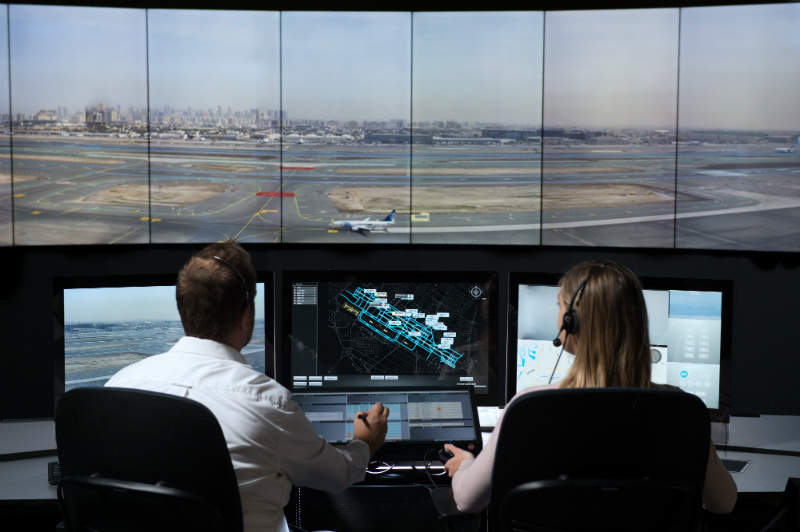
Artificial intelligence has evolved from experimental add-on to essential operational backbone for airports in 2026. Unlike isolated applications of machine learning for specific tasks, modern airport AI systems function as comprehensive decision support platforms that orchestrate complex operations across multiple domains simultaneously. These systems ingest data from hundreds of sources including flight schedules, weather forecasts, security checkpoint sensors, baggage handling systems, parking facilities, retail operations, and passenger flow tracking to create real-time operational intelligence that enables proactive rather than reactive management.
Copenhagen Optimization’s Better Airport platform exemplifies this integrated approach. The cloud-based airport management software allows airports to mix and match nine different modules covering passenger flow forecasting, baggage management, security operations, stand and gate allocation, and immigration processing. What makes these systems powerful is their ability to understand dependencies and cascading effects. When weather delays affect incoming flights, the AI doesn’t just reschedule gates but simultaneously adjusts security staffing levels based on predicted passenger arrival patterns, reallocates baggage handling resources, updates retail and food service partners about expected customer flow changes, and communicates revised timings to passengers through mobile apps and digital signage.
The implementation of AIRHART from Netcompany represents another dimension of airport AI focused on reducing inefficiencies in development and operations. Generative AI capabilities help airports build and integrate complex systems faster by automating laborious coding tasks and creating sophisticated connections between legacy systems that previously required extensive manual programming. This accelerates the deployment of new capabilities and allows airports to adapt more quickly to changing operational requirements. Airports using advanced AI systems report significant improvements in on-time performance, reductions in passenger congestion, optimized staffing allocation that matches actual demand patterns rather than static schedules, and enhanced ability to predict and mitigate disruption cascades before they impact passengers.
The predictive capabilities prove particularly valuable during peak periods or irregular operations. By analyzing historical patterns combined with real-time conditions, AI systems can forecast bottlenecks thirty to sixty minutes in advance, allowing airports to deploy additional staff or open extra security lanes before queues form rather than responding after passengers have already experienced delays.
Computer vision systems integrated with AI monitor apron safety, track aircraft movement, and identify potential hazards, contributing to enhanced ground operation safety. For passengers, the experience improvement comes through reduced uncertainty and wait times, more accurate information about processing times at security and immigration, personalized recommendations for dining and shopping based on available connection time, and proactive rebooking during disruptions before travelers even reach service counters.
3. Robotics and Autonomous Systems for Baggage Handling: Addressing the Labor Crisis
Baggage handling represents one of the most labor-intensive and physically demanding aspects of airport operations, making it prime territory for robotic automation. The persistent workforce shortages afflicting airports globally, particularly in physically demanding roles, have accelerated robotics adoption from interesting pilot to operational necessity. Multiple airports are now deploying or testing autonomous systems that transport, sort, and load baggage with minimal human intervention, fundamentally transforming how checked luggage moves through the airport ecosystem.
The BOOST initiative, launched by Future Travel Experience in partnership with innovation consultancy nlmtd and including core members Amsterdam Schiphol, Avinor, Incheon International Airport Corporation, and Brussels Airport, exemplifies industry-wide commitment to robotics transformation. Each participating airport conducts on-site proof-of-concept testing for different aspects of automated baggage handling, sharing learnings across the network to accelerate implementation. Schiphol Airport, which has pioneered robotics innovation for over a decade, provides particularly valuable insights given its extensive operational experience with automated systems at scale.
Specific robotic solutions deployed in 2026 showcase remarkable technological sophistication. Aurrigo International’s Auto-Dolly Tug, tested extensively at Changi Airport and London Gatwick, combines the utility of traditional baggage tractors with autonomous navigation and robotic loading arms. The electric-powered vehicle can rotate in its own length, move directly sideways using its lateral drive system to navigate tight apron spaces, and autonomously load and unload unit load devices from aircraft cargo holds. British Airways reports that these autonomous tugs require ninety percent less labor and equipment compared to conventional baggage handling, with units priced between one hundred thousand and two hundred fifty thousand pounds representing compelling return-on-investment calculations given ongoing labor costs and recruitment difficulties.
Journey Robotics, based in Pittsburgh and participating in Pittsburgh International Airport’s xBridge innovation program, has developed drop-in robotic baggage handling systems that integrate with existing conveyor infrastructure without requiring complete terminal renovations. Their touchless system uses advanced machine learning and patent-pending end effectors designed for bag hygiene to ensure consistent, reliable handling across varying bag sizes, shapes, and weights. Azalea Robotics secured 3.5 million dollars in seed funding in April 2025 to expand its autonomous baggage operations platform, which leverages artificial intelligence, computer vision, and machine learning to streamline baggage movement and reduce mishandled luggage incidents.
The operational benefits extend well beyond labor cost reduction. Autonomous systems deliver consistent accuracy regardless of shift timing or workload intensity, dramatically reducing mishandled baggage rates. RFID tracking integrated with robotic systems provides real-time visibility of every bag’s location, enabling passengers to monitor their luggage through mobile apps and airports to quickly identify and resolve irregularities.
The physical demands of baggage handling contribute to high injury rates among airport workers, particularly musculoskeletal disorders from repetitive lifting. Robots handle the most strenuous tasks, improving workplace safety and reducing workers’ compensation costs while allowing human employees to focus on exception handling and customer service roles. Autonomous systems also operate faster than human handlers, moving luggage more quickly between check-in, sorting, loading, and retrieval, which directly translates to improved on-time performance and shorter connection windows for passengers.
4. Digital Travel Credentials and Identity Management: Building Trust in the Digital Journey
Digital Travel Credentials represent the evolution of passport and identity verification from physical documents to cryptographically secured digital credentials stored on smartphones or other personal devices. The International Civil Aviation Organization has established standards for DTCs that allow travelers to store verified identity information on their devices and share it selectively with airlines, airports, and border agencies under privacy-preserving frameworks. This technology complements biometric systems by providing the underlying verified identity data that biometric matching confirms, creating a complete digital identity ecosystem for aviation.
The rise of DTC adoption in 2026 reflects growing alignment between national identity programs, border systems, and airport infrastructure. Twenty-seven percent of airlines and airports surveyed by SITA indicate plans to support ICAO Digital Travel Credentials, while thirty-eight percent plan to use national or regional credentials such as the EU Digital Identity Wallet. Mobile driver’s licenses are on the implementation roadmap for seventeen percent of respondents. These credentials employ self-sovereign identity principles, meaning travelers control their own identity data and decide what information to share with whom, rather than relying on centralized databases that create privacy concerns and attractive targets for cyberattacks.
The operational model centers on consent and governance. During initial setup, travelers undergo identity verification, typically through government-issued identity documents and biometric capture, to create a verified digital credential stored securely on their device. When interacting with airlines or airports, travelers selectively share only the specific attributes required for that transaction, such as nationality and date of birth for booking but full passport details for border crossing. Cryptographic verification ensures the credential hasn’t been tampered with and confirms it was issued by a legitimate authority. Blockchain-based approaches used by some implementations create immutable audit trails while maintaining privacy through zero-knowledge proof techniques.
The security advantages over physical documents are substantial. Digital credentials incorporate multiple layers of protection including device-level encryption, biometric device unlock requirements, credential-specific encryption, and revocation capabilities if devices are lost or stolen. They cannot be easily forged or altered in the way physical documents can. The user experience improvements are equally significant. Travelers no longer worry about losing passports or boarding passes, as credentials remain safely on their phones.
They can update information instantly rather than requesting new physical documents. Pre-enrollment in trusted traveler programs becomes seamless, with verified credentials automatically communicating eligibility. For airports and airlines, digital credentials reduce document processing time, minimize fraud risk, enable more personalized service through richer customer data, and create foundation for extending identity verification to commercial applications like lounge access, parking, and retail with appropriate passenger consent.
5. Contactless and Remote Processing: Extending the Airport Beyond Terminal Walls
Contactless technology has evolved far beyond its pandemic-era hygiene focus to become a strategic tool for managing airport capacity and extending passenger processing capabilities beyond traditional terminal boundaries. Remote processing solutions allow travelers to complete check-in, bag drop, and even some security procedures at locations distant from the airport, shifting demand away from peak terminal congestion periods and creating more flexible, convenient travel experiences. In 2026, passengers can increasingly check bags at city center locations, hotels, cruise terminals, convention centers, and train stations hours before their flights, arriving at airports already processed and ready to proceed directly through security.
The operational logic driving remote processing reflects airport economics and passenger behavior. Terminal space, particularly at mature airports in constrained urban locations, is expensive and difficult to expand. By moving some processing functions off-site, airports can effectively increase capacity without construction. Passengers benefit by avoiding peak congestion periods and having more predictable, streamlined terminal experiences. Airlines benefit through better load balancing of check-in counter demand and reduced staffing requirements at terminal locations. Cities benefit by creating opportunities for intermodal transportation integration, allowing travelers arriving by train or cruise ship to seamlessly transition to air travel.
Dubai International Airport’s remote check-in facilities at Dubai Metro stations and Hong Kong International Airport’s in-town check-in at Hong Kong Station pioneered this model years ago, but 2026 sees much broader adoption globally with enhanced technology integration. Modern remote processing locations employ the same biometric and digital credential systems used at airport terminals, creating consistent experiences across touchpoints. RFID-tagged luggage dropped at remote locations is tracked continuously through the baggage handling system, with passengers receiving real-time updates about bag status through mobile apps. Some implementations even allow travelers to drop bags the evening before early morning flights, providing exceptional convenience for business travelers.
Contactless extends beyond remote locations to encompass touchless interactions throughout airport facilities. Self-service kiosks with gesture control and voice commands minimize physical contact. Mobile boarding passes and digital identity eliminate the need to handle paper documents or touch multiple card readers. Biometric gates open automatically when facial recognition confirms identity. Payment systems use near-field communication or QR codes rather than cash or card insertion. While hygiene remains relevant, the primary driver in 2026 is operational efficiency and convenience. Contactless interactions are faster than traditional alternatives, reducing processing times and enabling higher throughput. They also generate detailed data about passenger flows and dwell times that feed into AI optimization systems.
6. Internet of Things Sensor Networks: Creating Intelligent Infrastructure
Internet of Things deployments in airports have reached scale in 2026, with an estimated seventy-five percent of global airports deploying IoT devices across their facilities according to industry analyses. These sensor networks transform passive airport infrastructure into intelligent systems that continuously monitor conditions, detect anomalies, and provide real-time operational intelligence. Unlike traditional building management systems focused primarily on climate control and energy, modern airport IoT platforms integrate sensors for diverse purposes including passenger flow tracking, asset location monitoring, environmental quality measurement, equipment performance monitoring, and security surveillance.
Passenger flow sensors, often using sophisticated computer vision technology from companies like Xovis rather than simpler motion detectors, track how travelers move through terminal spaces with remarkable precision. These systems count passengers entering and exiting specific zones, measure queue lengths at security checkpoints and immigration, identify congestion developing in particular areas, and map typical journey paths through the facility. This real-time flow data feeds into AI optimization systems that adjust staffing allocations, open or close processing lanes, activate wayfinding guidance directing passengers to less congested areas, and predict bottlenecks before they fully develop. Airports using advanced passenger flow analytics report thirty percent improvements in security checkpoint efficiency and significant reductions in passenger complaints about congestion.
RFID baggage tracking represents another high-impact IoT application. Following IATA mandates for baggage tracking implementation, airports worldwide have deployed RFID readers at key transfer points throughout baggage handling systems. Unlike traditional barcode scanning that requires line-of-sight and often fails to register bags in certain orientations, RFID readers automatically detect tagged bags passing within range, providing near-perfect tracking accuracy. Passengers can view their baggage location in real-time through airline mobile apps, dramatically reducing anxiety about lost luggage. Airlines benefit through faster baggage reconciliation, reduced mishandling rates, and improved ability to locate and reroute bags during irregular operations. Amsterdam Schiphol, which fully implemented RFID tracking system-wide, reports exceptional reliability and passenger satisfaction improvements.

Environmental sensors throughout terminals monitor air quality parameters including carbon dioxide levels, volatile organic compounds, particulate matter, temperature, and humidity. Advanced air handling systems use this data to optimize ventilation dynamically, ensuring passenger comfort while minimizing energy consumption. Some airports deploy sensors that detect specific compounds associated with potential security threats, providing additional safety layers. Asset tracking tags on ground service equipment, baggage carts, wheelchairs, and maintenance vehicles provide real-time location awareness.
This prevents equipment loss, optimizes utilization by identifying underused assets that could be reallocated, enables predictive maintenance by tracking usage patterns, and improves response times when specific equipment is needed urgently. The data generated by IoT networks creates valuable archives for long-term optimization, allowing airports to identify patterns, validate capital investment decisions, and continuously refine operations based on actual measured performance rather than assumptions.
7. Predictive Analytics and AI-Powered Forecasting: From Reactive to Anticipatory Operations
Predictive analytics has matured from interesting possibility to operational requirement for airports managing the complexity of modern aviation. These systems employ machine learning models trained on years of historical operational data combined with real-time inputs to forecast future conditions with remarkable accuracy, typically predicting disruptions and bottlenecks thirty to sixty minutes in advance. This advance warning transforms airport operations from reactive firefighting to anticipatory management, allowing interventions before passengers experience negative impacts.
Demand forecasting applications predict passenger arrival patterns at terminals, security checkpoints, and gates based on flight schedules, historical behavior patterns, special events, weather forecasts, and ground transportation conditions. This enables dynamic staff scheduling that matches actual demand rather than relying on static shift patterns that inevitably create either overstaffing during quiet periods or understaffing during unexpected surges. Some airports report labor cost reductions exceeding fifteen percent through optimized scheduling while simultaneously improving service levels by having staff positioned correctly when and where needed.
Aircraft turnaround prediction represents another high-value application. Machine learning models consider aircraft type, incoming flight delay status, required maintenance, cleaning requirements, catering complexity, passenger load, and baggage volume to forecast actual turnaround duration. These predictions enable more realistic gate allocation and downstream flight scheduling, reducing cascading delays from overly optimistic turnaround assumptions. When predictions indicate a turnaround will take longer than scheduled, airlines and airports can proactively adjust gate assignments, communicate revised times to connecting passengers, and reallocate ground service equipment.
Weather impact modeling goes beyond simple weather forecasts to predict operational consequences. Advanced systems consider how specific weather conditions will affect different aspects of operations including runway capacity under various crosswind or visibility conditions, ramp operation delays from precipitation or lightning, passenger arrival rate changes when ground transportation is affected, and airspace congestion from weather-related routing. This allows airports to implement contingency plans proactively, such as opening additional security lanes before passenger surges from delayed flights materialize or repositioning de-icing equipment before freezing precipitation arrives.
The integration of predictive analytics with automated systems creates powerful feedback loops. Predictions trigger automated responses such as adjusting HVAC systems in advance of predicted temperature changes, activating digital signage directing passengers to less congested routes, sending staff deployment instructions to supervisors’ mobile devices, and initiating communication workflows to inform passengers about anticipated delays before they occur. Airports using comprehensive predictive analytics platforms report significant improvements in key performance indicators including on-time performance improvements from reduced cascading delays, passenger satisfaction increases from proactive communication and reduced wait times, cost reductions from optimized resource allocation, and sustainability gains from better energy and equipment utilization.
8. Advanced Automated Security Screening: Balancing Safety and Speed
Security screening represents one of the most challenging operational and passenger experience aspects of air travel. Ensuring comprehensive threat detection while moving thousands of passengers hourly through checkpoints requires sophisticated technology and careful process design. The automated security solutions deployed in 2026 achieve significantly better outcomes than earlier generation systems through computed tomography screening, artificial intelligence-based threat detection, automated screening lanes, and biometric verification integration.
CT-based baggage screening technology, which provides three-dimensional images of bag contents rather than traditional two-dimensional X-ray images, has become standard at major airports. These systems allow security personnel to rotate and examine bag images from multiple angles, dramatically improving threat detection capabilities while simultaneously allowing passengers to leave laptops and liquids in their bags. The operational efficiency gains are substantial. By eliminating the need to remove electronics and liquids, screening throughput increases by approximately twenty-five percent while passenger experience improves through reduced complexity and preparation requirements.
AI-powered threat detection represents a fundamental advance in screening effectiveness and efficiency. Modern systems employ deep learning models trained on millions of baggage scan images to automatically identify potential threats. When the AI flags a suspicious item, it highlights the specific area of concern for human reviewers, accelerating analysis and reducing the cognitive burden on security personnel. These systems demonstrate detection rates that meet or exceed human operator performance while maintaining consistency across shifts and fatigue levels. Some airports report fifty percent reductions in false positive rates, which directly translates to fewer bag searches and shorter queue times.
Automated screening lanes incorporate mechanical systems that streamline the screening process through automatic bin return systems that move empty bins back to the input side, reducing congestion, centralized image viewing stations where multiple lanes feed into consolidated review positions staffed by expert threat analysts, parallel processing where bags are analyzed while subsequent passengers are already loading their items, and automated divestment stations with clear instructions and optimized bin sizes. Leading automated screening lane installations achieve throughput exceeding two hundred fifty passengers per hour per lane compared to approximately one hundred fifty for traditional lanes, while simultaneously improving detection capabilities.
The integration of biometric verification with security screening creates additional efficiency opportunities. When passenger identity is confirmed through facial recognition, the security system can access their trusted traveler status, adjust screening protocols accordingly, and expedite processing for pre-verified low-risk travelers while focusing enhanced attention on unknown or higher-risk passengers. This risk-based approach, pioneered by programs like TSA PreCheck in the United States, becomes more sophisticated and widely accessible through biometric integration. Some airports are piloting systems where passengers walk through security corridors without stopping for identity verification or bag inspection, with sensors and imaging systems conducting screening as they move and only stopping individuals when specific concerns are identified.
9. Digital Twin Technology: Simulating Operations Before They Happen
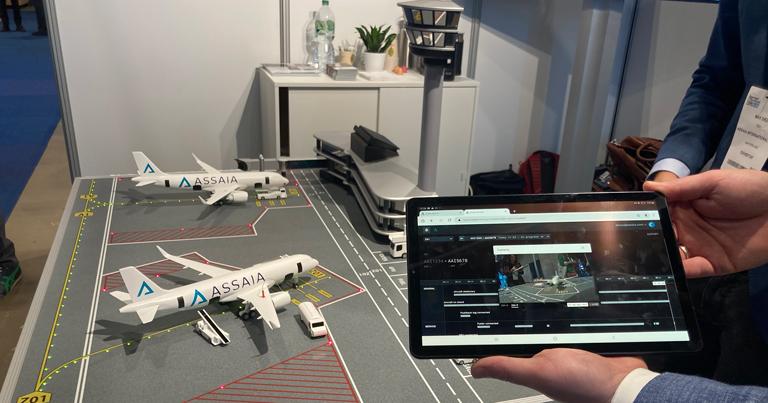
Digital twin technology creates detailed virtual replicas of physical airport environments that update in real-time to mirror actual conditions. These sophisticated simulations combine three-dimensional models of airport infrastructure, live data feeds from operational systems, AI-based modeling of passenger and aircraft behavior, and scenario testing capabilities that allow operators to evaluate proposed changes before implementing them in the physical environment. While the concept of digital twins isn’t new, the computational power and data integration capabilities available in 2026 enable unprecedented fidelity and practical operational utility.
Dubai Airport and Munich Airport represent leaders in digital twin deployment, using comprehensive virtual environments that replicate terminals, runways, taxiways, baggage systems, and passenger flows. Operators can visualize current conditions from any perspective, zoom into specific problem areas, and understand cause-and-effect relationships that might not be immediately apparent from traditional monitoring systems. When unusual congestion develops at a particular gate cluster, the digital twin can trace contributing factors including late arriving aircraft, higher than expected passenger loads, concession placement that creates bottlenecks, and wayfinding inadequacies that cause passenger confusion.
The scenario testing capabilities prove particularly valuable for planning and optimization. Before implementing changes like reconfiguring security checkpoint layouts, adjusting gate assignments, or modifying retail placement, airports can test these modifications in the digital twin environment to evaluate impacts on passenger flows, processing times, and operational efficiency. This dramatically reduces the risk of expensive physical modifications that fail to deliver expected benefits. One airport reported avoiding a five million dollar checkpoint reconfiguration project after digital twin testing revealed it would create worse congestion than the existing layout, despite appearing promising on paper.
Digital twins also support training and familiarization. New employees can virtually navigate the airport environment and practice procedures before beginning floor work. Airlines planning to begin service at an airport can use the digital twin to understand gate locations, ground handling procedures, and passenger routing. During emergencies or irregular operations, the digital twin provides a shared visualization platform where multiple stakeholders can coordinate response activities with common situational awareness. Brussels Airport has integrated its digital twin with sustainability monitoring, tracking energy consumption patterns, waste generation, and carbon emissions across the facility, providing granular data to guide sustainability improvement initiatives.
10. Sustainable Aviation Technology: Green Operations Infrastructure
Sustainability has transitioned from aspirational goal to operational imperative for airports in 2026, driven by regulatory requirements, corporate environmental commitments, and passenger expectations. A comprehensive suite of green technologies are now embedded in airport operations to reduce environmental impact while often simultaneously improving operational efficiency and reducing costs. These solutions span energy generation and management, ground transportation, water systems, and waste handling, creating holistic approaches to sustainable operations.
Electric and hybrid ground service equipment has largely replaced diesel-powered alternatives at forward-thinking airports. Electric baggage tugs, passenger stairs, cargo loaders, and pushback tractors eliminate direct emissions from ground operations while reducing noise pollution, which proves particularly valuable for airports in dense urban areas where community noise concerns affect operating permissions. Battery technology improvements in recent years have addressed earlier concerns about charge duration and power delivery, with modern electric ground vehicles delivering performance matching diesel equivalents. Some airports have deployed hydrogen fuel cell vehicles for ground operations, providing zero-emission alternatives with faster refueling times than battery-electric options for high-utilization equipment.
Advanced energy management systems optimize electricity consumption across airport facilities through machine learning-based controls that adjust lighting, heating, cooling, and ventilation based on occupancy patterns, weather conditions, and energy cost structures. LED lighting retrofits, now essentially universal at major airports, reduce lighting energy consumption by seventy percent or more compared to legacy systems while enabling dynamic control capabilities. Many airports have deployed substantial solar panel installations on terminal roofs, parking structures, and airport property to generate renewable electricity. Singapore Changi Airport operates one of the world’s largest airport solar installations, generating electricity equivalent to powering several thousand homes annually.
Terminal infrastructure incorporates numerous sustainability features that have become standard in new construction and major renovations. High-performance glazing reduces heat gain while maximizing natural light, decreasing both cooling and lighting energy requirements. Rainwater harvesting systems capture precipitation for irrigation and toilet flushing, significantly reducing potable water consumption. Some airports have implemented advanced wastewater treatment systems that enable water recycling for appropriate applications. Waste management has evolved beyond basic recycling to encompass comprehensive programs including organic waste composting, construction material reuse, and partnerships with airlines and concessionaires to eliminate single-use plastics.
Making Sense of the Airport Technology Landscape
The technologies transforming airports in 2026 share common characteristics that explain their success. They address real operational pain points rather than pursuing technology for its own sake, typically focusing on labor shortages, capacity constraints, or passenger experience friction. Successful implementations integrate with existing infrastructure and systems rather than requiring complete operational rebuilds, enabling incremental adoption that manages risk and capital requirements. The technologies generate operational data that improves performance over time through machine learning and continuous optimization. They deliver measurable return on investment through cost reduction, revenue enhancement, or risk mitigation rather than relying solely on intangible benefits.
For passengers, the cumulative impact of these technologies transforms the airport experience from stressful, unpredictable, and time-consuming to streamlined, informative, and often enjoyable. Biometric systems eliminate repetitive document presentations. AI optimization reduces wait times and improves reliability. Contactless interactions minimize touch points and speed processing. Digital services provide real-time information and control. For airport operators, these technologies enable sustainable growth in passenger volumes without proportional increases in infrastructure investment, staffing levels, or operational cost, while simultaneously improving safety, security, and environmental performance.
The airports leading in technology adoption in 2026 recognize that successful implementation requires more than procuring hardware and software. It demands comprehensive change management to help staff adapt to new workflows and tools, strong cybersecurity frameworks to protect operational systems and passenger data from increasingly sophisticated threats, clear governance of passenger data that respects privacy while enabling personalization, continuous upskilling of workforce to develop technical capabilities needed for high-tech environments, and robust vendor partnerships with technology providers who understand aviation’s unique requirements and constraints.
Looking forward, the technologies deployed in 2026 create foundations for even more advanced capabilities on the horizon. Autonomous electric aircraft for ground transportation, urban air mobility integration for passenger access, augmented reality wayfinding and passenger assistance, blockchain-based credentialing and supply chain tracking, and advanced materials and construction techniques for sustainable terminal design represent the next wave of innovation building on today’s technology infrastructure. The airports that thrive in the coming decades will be those that embrace continuous technological evolution while maintaining focus on their fundamental mission of moving people safely, efficiently, and sustainably through the complex aviation ecosystem.