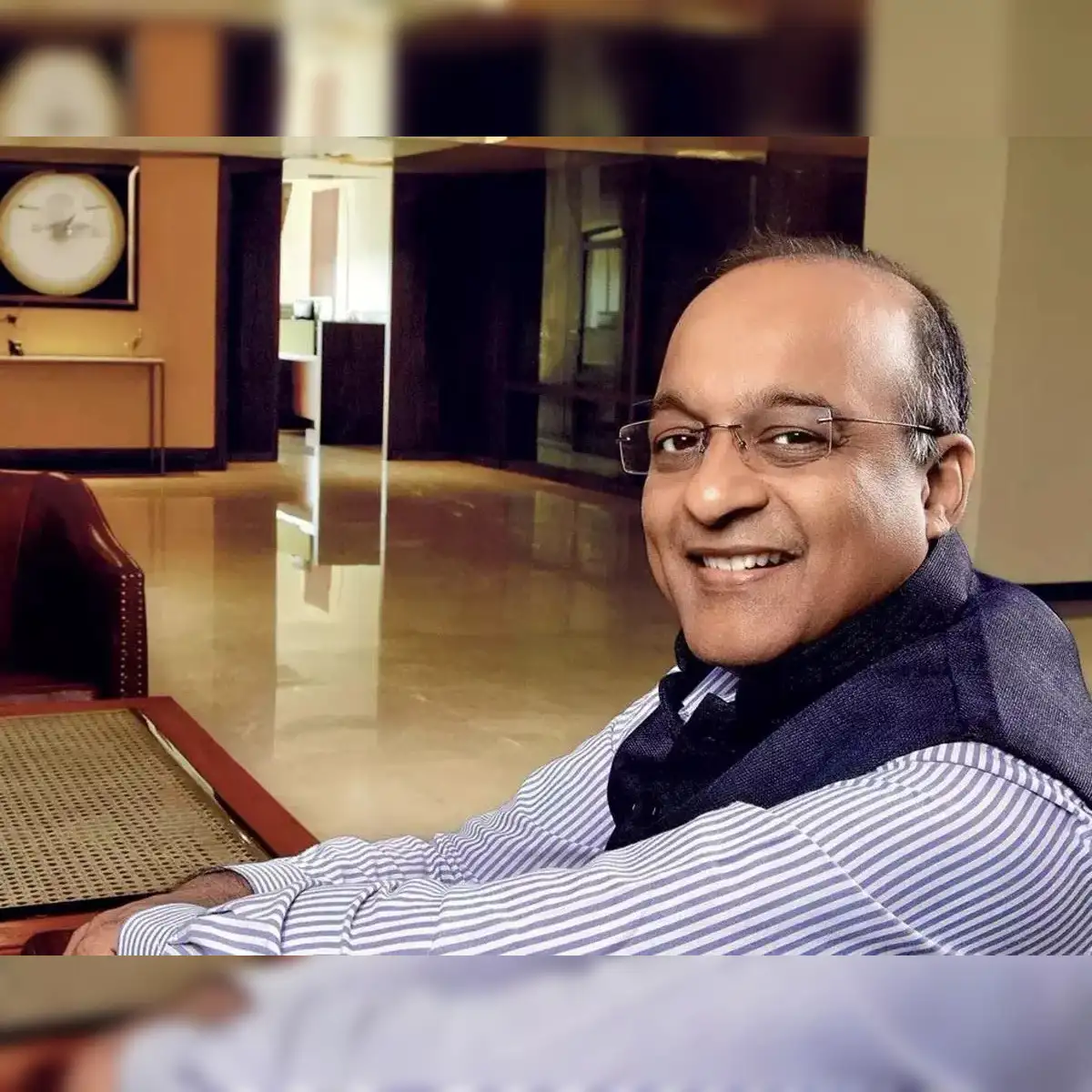
Sashidhar Jagdishan’s 2025 has been a tale of two extremes. In July he was feted by The Economic Times as “India’s highest-paid banker of FY25,” pocketing over ₹12 crore in salary (up 12% year-on-year) plus ESOPs worth over ₹42 crore. By October the same year, news broke that he had been named in an FIR alleging financial fraud by Mumbai’s Lilavati Kirtilal Mehta Medical Trust.
One might call it cosmic irony that the banker celebrated for fat paychecks suddenly found his name in headlines about fraud accusations,- aren’t we wrong if we say this as a textbook case of two sides of the coin. Down the line, we trace the cold, hard facts of the shift, then zooming out, we focus on “what does this saga mean for corporate governance, executive privilege, and accountability in India’s banking sector?” The reporting leaves no doubt about the key events, and the unsettling questions they raise.
A Golden Throne Meets a Smoke-filled Room
On June 8, 2025, the Lilavati Kirtilal Mehta Medical Trust (LKMMT), a charity running a Mumbai hospital, filed an FIR against Jagdishan. The Trust’s trustees, a fractious Mehta family, accused Jagdishan and eight others (former trust office-bearers) of a “series of financial frauds”. According to the complaint (FIR No. 818/2025), Jagdishan had allegedly accepted a ₹2.05 crore kickback while serving as a financial advisor to the Trust, in return for helping a certain Chetan Mehta faction retain “illegal and undue control” over the hospital’s affairs.
The complaint even cites a “seized cash diary” detailing ₹14.42 crore misappropriated by trust members, of which ₹2.05 crore ended up with Jagdishan. In short, the Trust accused the HDFC Bank CEO of serious offenses like cheating, criminal breach of trust (Sections 406, 409, 420 of the IPC) and conspiracy, essentially charging that he used his clout as the head of India’s biggest private bank to interfere in the internal affairs of a charitable trust.
HDFC Bank’s reaction was swift and scathing. Within hours of the FIR’s filing, the bank informed stock exchanges that its executives were being “targeted by unscrupulous persons who aim to abuse the legal process”. An official HDFC statement called the FIR “frivolous”, “malicious and baseless”, and a “gross misuse of the legal process”. The bank pleaded that Jagdishan and other senior officials are simply doing their duty of recovering decades-old loans and are now being attacked to derail those recoveries.

In filings to regulators and in press quotes, HDFC pointed out that the Mehta family’s company Splendour Gems took a loan in 1995 (with Jagdishan’s Bank) that was defaulted by 2001, and a 2004 Recovery Tribunal award still leaves ₹65.22 crore unpaid. In HDFC’s telling, “the allegations are retaliatory and have a mala fide intention solely to evade repayment of long-standing dues”. A spokesperson blurted that having “exhausted all legal avenues”, the Mehtas were now leveling “mala fide personal attacks” on the bank’s MD & CEO to “bully the bank and its MD & CEO from carrying out” legitimate recovery measures.
In short, the public record is one of starkly competing narratives. The Lilavati camp accuses Jagdishan of crookery, conspiracy, and betrayal of a charitable trust. HDFC Bank says the accusations are nothing but revenge by a defaulter. Both sides pack their statements with high drama; one demands the CEO’s suspension and prosecution, the other denounces “vexatious”, “preposterous” claims. What cannot be disputed is that Jagdishan was promptly booked by Mumbai’s Bandra police (at the behest of a Magistrate’s order) under sections for cheating and criminal breach of trust. Yet as of this writing he has not been arrested; instead he has gone on the attack, seeking to quash the FIR.
Judicial Bizarre: Judges on the Sidelines
By late June, this controversy had morphed into a legal circus. Jagdishan approached the Bombay High Court to quash the FIR, but every bench that touched the case stepped back. At least four different benches recused themselves from hearing his plea. News daily report that judges cited the slightest hint of conflict: one judge disclosed he held HDFC Bank shares, others had “worked with either the Trust or the lawyers appearing for it”, or had previous ties to one of the trustee factions. Even a bench member recused himself without explanation.
When Senior Advocate Mukul Rohatgi finally took the case to the Supreme Court on July 4, he scathingly told the bench that “A frivolous FIR has been lodged against the MD” by trustees who themselves owe money to HDFC, done purely “to twist the Bank’s arm” in the debt recovery process. The Supreme Court agreed to hear Jagdishan’s petition as an urgency, noting that numerous high court hearings had been adjourned or recused. (However, on July 4 the SC refused immediate relief, observing that the HC had set a July 14 hearing date.)
This string of recusals and appeals is itself telling. It underscores how sensitive the case is, where a bank chairman accusing a CEO of fraud, or vice versa, stretches the norms of litigation. As PTI noted, “the matter will now have to be placed before another bench”. It also highlights that every institution feels exposed. Judges fear perception of bias – one admitted owning HDFC stock, another had a history with the Trust – so the entire judiciary tiptoes around the case. The only certainties so far are the headlines, and a question gnawing at industry watchers: if a CEO charged under the Bharatiya Nagarik Suraksha Sanhita’s fraud provisions can make banks and bench-rooms twist, where does that leave accountability?
A Glimpse of the Broader Picture
Setting aside legal maneuvering, what emerges is a cautionary portrait of modern Indian banking culture. On one hand, Jagdishan is the consummate success story: a physics graduate turned career banker, he climbed HDFC from a 1996 finance trainee to CFO (2008) to Group Head and finally CEO in October 2020 (succeeding Aditya Puri). His leadership is credited with HDFC’s continuing profitability. In March 2023 the Reserve Bank of India explicitly blessed his stewardship by reappointing him for three more years. Meanwhile he became a poster child for executive compensation: by FY25 he was paid more than any other bank chief in India.
On the other hand, the Trust’s allegations paint him as a shadowy figure meddling in a hospital dispute. That contrast stings. It spotlights perennial corporate-governance questions: Who watches the watchers? Jagdishan’s double-hatting (as alleged adviser to the Trust) was a red flag that presumably should have surfaced internally. Yet the HDFC board, with its mix of insiders and independent directors, appears to have known nothing of this “covert” Trust appointment until the FIR broke, according to the Trust.
The bank’s ethics and compliance systems clearly had no way of foreseeing or flagging Jagdishan’s private side-deals. Were board members asleep at the switch, or is it simply impossible for any board to police every off-the-record counsel a CEO may give? This case suggests a gap. If a bank CEO can be secretly enlisted as a “financial advisor” by outsiders without informing the regulators or board, then the lines of accountability are worryingly blurred.
Consider RBI’s Fit-and-Proper framework. In principle, RBI must vet every bank CEO to ensure integrity. In practice, it relies on declarations and promises. The Lilavati trustees pointedly invoked these norms, arguing that “active criminal allegations of conspiracy, corruption, and breach of trust” should automatically render Jagdishan unfit for office.
Yet the RBI had already cleared Jagdishan for 2023–2026, presumably seeing none of that pending indictment. It’s not public whether RBI has formally reviewed the new FIR. At least one legal expert has noted this conflict: the Financial Express concludes the case will test not just Jagdishan’s fate but “the RBI’s ‘fit and proper’ framework for top executives in the financial sector”. If regulators are truly vigilant, an ongoing FIR of this gravity ought to be a red light under those rules. But the system remains reactive, not proactive; only now, under public pressure, will RBI and others take a second look.
And what of corporate governance more widely? India’s banking sector has recently been jolted by scandals; where cooperative bank collapses, credit-card frauds, and more. HDFC Bank was supposed to be different: a well-run private lender with a stable leadership, run by non-promoter professionals.
But any bank leader, however staid, sits in a vulnerable seat. The Jagdishan controversy underscores the perennial problem of executive privilege. Top bankers in India indeed wield immense power and enjoy perks, such as salaries that dwarf those of most corporate CEOs, high-profile profiles in the media, and direct access to policy-makers. Jagdishan’s ₹12+ crore salary (before bonuses) is an emblem of that privilege. In theory, such pay is earned by performance. In reality, it also reflects the deference bankers receive – a deference perhaps conditioned by fear of destabilizing big banks or losing talent.
Yet privilege must come with ironclad accountability, which appears in short supply. Look at what HDFC’s own filings show. Year after year, the board rubber-stamps the CEO’s pay hike and stock grants, and the board issues official statements defending him at the first sign of trouble. Until now, Jagdishan was beyond reproach, embodying the idea that top bankers are above the fray.
The Lilavati FIR brutally punctures that assumption, even if it turns out to be a delayed scheme by disgruntled debtors. It begs broader questions- should the highest-paid executives be forced to step down (or at least step aside) when charged with a crime? Or do we trust in due process? Should we re-examine the laws that let an executive be tried under the very sections on criminal breach of trust (406, 409) meant for government servants – a reminder that RBI raised its own rules only in 2024 to explicitly forbid CMDS from public office if facing certain charges?
RBI has indeed tightened the leash on bank leaders in other ways. This year’s data on CEO pay showed only modest rises precisely “reflecting RBI’s close scrutiny of CEO remuneration”, and noted that every bonus or stock grant now needs prior RBI approval. Jagdishan’s 12% raise was granted, but future ones might be hard if regulators doubt the “integrity” piece of fit-and-proper.
Moreover, after the Punjab National Bank fraud and others, banks have dramatically beefed up internal audit and risk departments – except, it seems, for monitoring whether a CEO moonlights as someone else’s advisor. How does compliance measure this? Who on the HDFC board or in its compliance office would have known about Jagdishan’s alleged secret Trust role? The trust’s own charge – that this was a “clandestine”, undisclosed appointment – speaks volumes of the opacity here.
Privilege, Perk, and Punishment
In the end, Jagdishan’s story is a stress test for multiple principles. It tests HDFC’s governance: can a supposedly prudent, well-run bank have blind spots so obvious that private trustees are its fiercest critics? It tests legal norms: a sitting bank CEO challenged under criminal law, judges struggling with recusals – is our justice system equipped to handle such a conflation of commerce and crime? It tests regulators: RBI has stamped re-approvals in the past and controls CEO pay now, but does it have the backbone to re-examine its leader mid-term?
And it tests public faith: depositors and ordinary citizens watch this saga and wonder if the system polices the powerful at all, or simply protects them until public pressure forces action. Strong words, whether you agree or not, but they capture the gravity of what’s at stake.
Perhaps the fairest statement is that the coin is still in the air. Jagdishan’s leadership has brought HDFC Bank success and shareholders rich dividends. The allegations (once just hearsay) are now in court. India’s largest private bank has publicly defended its leader while regulators privately deliberate. The worst-case scenario – if Jagdishan is eventually convicted – would send shockwaves through Indian finance: it would confirm that even the helmsmen of major banks can be felled by the laws of the land.
The best-case scenario – if the FIR is quashed and all charges dropped – would leave HDFC’s image unblemished but the rumor of scandal still unnerving. In either event, nobody emerges looking good: the accusers look vindictive if their claims fail, and the bank looks defensive if its CEO is cleared.

What should be absolutely clear is that in banking, size and rank are no shield from scrutiny. Every financial leader, however exalted, must answer for actions taken with public trust and money. Jagdishan’s gallant march from top-paid CEO to defendant is a sobering reminder that “the higher the perch, the longer the fall”. Indian banking can hardly afford to lose faith in its institutions because insiders pick fights in courtrooms. Irony aside, the Jagdishan saga must be resolved on facts and law, with regulators and judges holding firm. Only then can the sector ensure that the coin of privilege has a silver lining of integrity, not just glittering gold.