Experion Developers: When “Positive Vibes Only” Meets Hard Truths!
Experion Developers Private Limited likes to market itself as a 100% foreign-funded harbinger of “the positive side of life,” complete with wellness-themed projects and a “Positive Vibes Only” tagline. Backed by Singapore’s $2.5 billion AT Holdings group, the Gurugram-based real estate developer has built a reputation for premium housing and glossy integrated townships across North India.
But beneath the polished branding and FDI sheen, Experion’s recent run-in with India’s financial regulators reveals a far less uplifting narrative. In late 2025, the Enforcement Directorate (ED) and the Insolvency and Bankruptcy Board of India (IBBI) launched parallel investigations into Experion’s conduct during a Gurugram land acquisition deal, alleging that the company abused the country’s insolvency laws to grab a prime asset on the cheap.
The ensuing showdown, complete with accusations of creditor committee manipulation, quid pro quo haircuts, and even calls for a fraud probe, has cast a long shadow over Experion’s vaunted image. This article delves into the ED and IBBI probes rocking Experion’s world, then zooms out to examine the broader pattern of controversies trailing this ambitious developer.
The picture that emerges is one of a high-flying real estate empire whose rapid rise has been matched by regulatory run-ins, consumer grievances, and uncomfortable questions about governance and ethics in India’s property sector. All claims and conclusions herein are grounded in verifiable facts – from court judgments to government filings – because when it comes to Experion Developers, the truth is often stranger (and starker) than fiction.
ED Cracks Down: An IBC Land Deal Under Scrutiny
The flashpoint for Experion’s current troubles is a 9.3-acre land parcel in Gurugram’s Sector 62, a valuable plot that became the subject of an extraordinary tug-of-war between India’s insolvency resolution process and its anti-money-laundering enforcement. The land originally belonged to Dignity Buildcon Pvt. Ltd. (DBPL), a builder that fell into bankruptcy amid a debt-laden commercial project on Golf Course Extension Road.
As DBPL’s fortunes waned, the ED, in the course of probing a high-profile fraud at Religare Finvest, attached this Gurugram land under the Prevention of Money Laundering Act (PMLA), suspecting it to be tied to illicit fund flows. By 2023, even as the National Company Law Tribunal (NCLT) admitted DBPL for insolvency resolution under the Insolvency and Bankruptcy Code (IBC), that same land asset stood frozen by the ED as potential “proceeds of crime”. In other words, the stage was set for a jurisdictional face-off: an NCLT-driven corporate rescue vs. an ED-enforced asset seizure – with Experion Developers stepping right into the middle of it.
A ‘Resolution’ Too Good to Be True?
In May 2023, Experion Capital Pvt. Ltd. (ECPL), a financing arm of Experion Developers, emerged as the successful resolution applicant (SRA) to take over Dignity Buildcon and its assets (including the coveted 9.3-acre plot) via the insolvency process. ECPL’s plan, reportedly worth around ₹450 crore, promised roughly a 50% recovery for DBPL’s creditors and won the approval of over 99% of voting lenders by value.
On paper, it looked like a textbook IBC success story of a distressed project salvaged, lenders getting half their money back, and a foreign-funded developer riding to the rescue. But according to the Enforcement Directorate, this “resolution” was anything but fair. In a detailed application to the NCLT, the ED has accused Experion of gaming the IBC framework to effectively corner the Gurugram land for itself at fire-sale prices.

At the heart of the ED’s case is an alleged scheme to manipulate the Committee of Creditors (CoC), the very body of lenders that decides a bankruptcy outcome. Investigators say Experion’s affiliate ECPL went on a strategic debt-buying spree: scooping up the defaulted loans of DBPL’s big creditors to accumulate 60% of CoC voting rights. This alone would give Experion effective majority control over any decision, but the ED claims they didn’t stop there.
ECPL also “exerted undue influence” over another key creditor, Alchemist Asset Reconstruction Company (ARC), which held about 35% of the CoC votes. Taken together, Experion’s group was in a position to call 95% of the shots in the creditor committee – a stunning level of control in a process meant to be collective. With that dominance, Experion is alleged to have pushed through a resolution plan that favored itself, even if it meant short-changing others.
The ED’s filings pull no punches in describing this maneuvering. ECPL allegedly paid ₹223.92 crore to acquire those creditor votes, and once its plan was approved, received ₹334.08 crore back from the newly restructured company – reaping a handsome profit “built into the plan” through what the ED calls an unjustifiable arbitrage. Meanwhile, the original financial creditors stomach a 70% haircut (recovering barely 30% of their dues), whereas the Experion entity “enjoyed both the upside from the haircut and dominant control” over the process.
In the ED’s view, Section 30(5) of the IBC, a clause that lets resolution applicants attend CoC meetings but supposedly bars them from voting – was twisted beyond recognition. Experion first became the biggest creditor (by buying the debts) and then effectively voted on its own resolution plan, rendering the CoC a rubber stamp. Such tactics, the agency argues, make a mockery of the IBC’s intent and “prejudiced the interests of other prospective resolution applicants” who never stood a chance.
ED’s Key Allegations in the Gurugram Deal:
CoC Capture: Experion’s arm ECPL bought out major lender claims (spending ~₹223.9 crore) to command 60% of voting rights in Dignity Buildcon’s creditor committee. It allegedly secured the support (or submission) of Alchemist ARC’s 35% share, giving Experion-linked entities an unassailable 95% majority.
Voting Mischief under Section 30(5): By becoming the dominant creditor, Experion allegedly inserted itself into the voting process that Section 30(5) meant to keep at arm’s length. The ED terms this a “glaring misuse” of the Code’s provisions, effectively letting the resolution applicant vote on its own plan – a blatant conflict of interest.
Engineered Haircuts and Arbitrage: Experion’s plan imposed a 70.17% haircut on original lenders (who “took the loss” on Dignity’s default), yet funneled a ₹334 crore payout to Experion’s own entity after the plan’s approval. The ED suggests Experion built in a profit for itself by undervaluing the asset in the resolution plan, reaping a windfall once in control.
Stalling Tactics: The successful applicant (Experion/ECPL) is accused of deliberately stalling the insolvency process until it had reconstituted the CoC in its favor. By dragging its feet, Experion allegedly ran down the clock to force a situation where only its own plan – backed by the rigged CoC – could cross the finish line. This undermined the IBC’s timelines and fairness, according to the ED.
By late 2025, these allegations had boiled over into a formal action: the ED filed an application urging the NCLT to recall its approval order (May 2023) that let Experion take over Dignity Buildcon. In essence, the financial crime watchdog is asking the bankruptcy court to undo the entire resolution on grounds that the process was subverted.
The ED argues that Experion’s strategy was not a bona fide effort to revive a failing company, but a scheme to “neutralise” the ED’s PMLA attachment and seize control of the asset through legal gymnastics. If that claim holds, it means a flagship law (the IBC) was cynically used to sidestep another law (PMLA), a serious charge with implications far beyond this one case.
Experion Fights Back: “All by the Book,” Says the Developer
Faced with these explosive charges, Experion Developers has mounted a strenuous defense – in the media, through legal filings, and via its spokespersons, denying any wrongdoing and painting the ED’s intervention as misguided. The company’s stance can be summed up as: we played by the rules, and we’re being punished for simply being savvy. According to Experion, nothing about the Dignity Buildcon resolution was illegal or hidden; it was simply an instance of a creditor (Experion’s own ECPL) doubling as a resolution applicant, which the law permits.
A key point in Experion’s rebuttal is transparency. The developer insists that every step it took, from buying the loans to altering the CoC membership, was disclosed and approved by the competent authorities. “Debt assignments to ECPL were fully paid for, every change was placed before the NCLT, and the updated CoC was publicly reflected on the IBBI website,” an Experion spokesperson said, calling the CoC reconstitution claims “baseless”.
Indeed, corporate records show that Standard Chartered Bank (holding ~50% of Dignity’s debt) and a Blackstone real estate fund (10%) sold their loans to Experion’s ECPL in early 2023, transactions that were presumably brought to the tribunal’s notice. Experion argues that such arm’s-length debt purchases are entirely lawful and even common in distress deals. In their view, Section 30(5), which barred a bidder from voting unless it became a financial creditor, implicitly allows exactly what they did: become a financial creditor and then vote. The law “expressly permits a creditor to be a resolution applicant,” the company notes, effectively telling regulators: check the fine print – we didn’t break it.
Experion also challenges the ED’s insinuation that it manipulated the process for a profit. The firm maintains that it paid fair value for the debts and did not orchestrate any sham transactions. If ECPL ended up receiving ₹334 crore later, that was simply the payout under the resolution plan – a plan, remember, that was approved by 99% of the creditors by value and blessed by the NCLT.
In other words, Experion contends that the lenders (including those it didn’t control) agreed to the terms with eyes open, preferring a partial recovery over a liquidation fire sale. From Experion’s perspective, the ED is second-guessing a commercial deal after the fact, which sets a dangerous precedent.
The developer even points out that the ED’s initial target in the Religare/DBPL saga was not DBPL at all but another entity (RS Infrastructure) – suggesting the agency’s belated attempt to attach DBPL’s assets was on shaky legal ground. (Indeed, Experion secured an interim High Court order protecting some of Dignity’s properties from ED attachment, bolstering their claim that they are “being penalised for attempting to revive a distressed project” mired in litigation.)
Experion’s Counter-Arguments:
“We Followed the Law”: Experion insists that creditors can lawfully become resolution applicants, and Section 30(5) doesn’t forbid what ECPL did. The firm emphasizes that its debt acquisitions were fully paid in cash at arm’s length, with no hidden arrangements. In short, aggressive strategy ≠ illegal strategy in their book.
Full Disclosure: Every change in CoC composition (like ECPL’s entry) was reported to the NCLT and listed on IBBI’s public portal, Experion says. There was nothing clandestine – regulators and lenders knew ECPL had 60%, and still 99% (by value) of creditors voted “Yes” on Experion’s plan.
Creditors’ Choice: Experion notes that the resolution plan gave about 50% recovery to lenders – likely the best they could hope for. The near-unanimous CoC approval (even beyond Experion-controlled votes) is cited as evidence that the plan made commercial sense at the time. If lenders accepted a 70% haircut, it was because the alternative (liquidation) may have yielded even less.
ED Overreach: The company portrays ED’s move as an overreach that conflates genuine insolvency resolution with money-laundering issues. They highlight that the Delhi High Court granted interim protection against the ED’s asset grabs, suggesting the ED’s case isn’t open-and-shut. To Experion, the ED stepping into an IBC-approved deal undermines the sanctity of the bankruptcy process and could chill investors from rescuing other failing projects.
For now, Experion’s fate in this land deal hangs in the balance of legal proceedings. The NCLT has been asked to weigh in on whether its own earlier order should be unwound due to fraud on the process. Multiple agencies are circling – the ED digging for any evidence of money laundering or illegal gain, and, as we’ll see next, the IBBI examining whether the insolvency rules were breached.
It’s a high-stakes battle. If Experion’s resolution is nullified, not only does the company risk losing the prized land, but it would send a loud message that IBC is no safe haven for crafty dealmakers looking to outsmart the system. And if Experion prevails, it may reinforce the precedent that creditors-cum-bidders can shape outcomes as long as they tick the procedural boxes. In many ways, this case is exposing a grey zone in the IBC – one that lawmakers likely never anticipated, and one that regulators are now keen to illuminate.
IBBI Steps In: Regulators Smell Smoke
While the ED’s allegations grabbed headlines, another regulator quietly got to work on the Experion matter: the Insolvency and Bankruptcy Board of India (IBBI). If the ED is the cop busting down the door, IBBI is the internal affairs division checking if the rules of the house were broken. And from what’s publicly disclosed, IBBI is deeply concerned by what it found in the Dignity Buildcon insolvency saga.
In early December 2025, the IBBI confirmed in a written reply to Parliament that it initiated proceedings against the Insolvency Professional (IP) who oversaw the Dignity Buildcon resolution. This is significant: insolvency professionals are the court-appointed managers of bankrupt companies and gatekeepers of the process. If the IP in charge allowed or enabled a creditor-turned-bidder to pack the CoC or fudge disclosures, that’s a serious breach of duty.
According to IBBI’s statement (given to Rajya Sabha MP Deepak Prakash), the Board’s inquiry is examining “alleged contraventions” by the IP under the IBBI’s inspection regulations. In plain terms, the regulator is asking: Did the IP follow both the letter and spirit of the law in managing this resolution? Or was there a dereliction that allowed Experion’s machinations to go unchecked?
IBBI’s Focus Areas:
Disclosure & CoC Composition: Was the IP fully transparent and timely in disclosing changes in the CoC’s makeup (like ECPL’s entry with 60%)? Did the IP properly record and report the reconstitution of creditors, as required by the Code and regulations? Any hint that these changes were hushed up or rushed through will be a red flag.
Conduct of CoC Meetings: Did the IP uphold the independence of creditor decision-making during meetings? IBBI is likely probing if Experion’s unusual dual role skewed discussions – for instance, were other creditors pressured, or were dissenting voices given due consideration?
Fairness of the Process: Overall, did the IP ensure a transparent, arm’s-length process, or did they turn a blind eye to the “serious regulatory concerns” now raised? For example, if the resolution plan was financially inferior (as ED claims), did the IP seek better bids or just go along?
The IBBI’s initial findings were startling enough that it didn’t stop at disciplining the IP. The Board explicitly noted that many issues “go beyond mere procedural lapses, touching possible criminality,” and it took the extraordinary step of formally recommending the Ministry of Corporate Affairs (MCA) to consider a Serious Fraud Investigation Office (SFIO) probe. In other words, the government’s top fraud busters may soon join the fray.
SFIO investigations are reserved for complex, high-stakes corporate fraud involving multiple entities and layers of deceit – the fact that IBBI is hinting at this level of action means they suspect something bigger and more systemic could be at play. For instance, SFIO would dig into how ECPL’s debt deals were priced and structured, any hidden related-party links, and whether the whole insolvency plan was a smokescreen to defeat the ED’s asset freeze. Essentially, IBBI is saying: if what ED alleges is true, this isn’t just a naughty interpretation of the IBC – it could be outright fraud.
The MCA appears to be taking this seriously. According to the Millennium Post, IBBI informed the MP that issues requiring criminal investigation have been flagged and MCA has been asked to order an SFIO investigation. Such coordination between IBBI and ED/MCA is notable; it signals a multi-agency consensus that the Experion case may set an example. Ongoing investigations will determine if misconduct occurred, the regulator said cautiously, but the machinery is already in motion.
Meanwhile, the IBBI and ED are not only reacting to this case – they’re learning from it. Reports suggest that IBBI and ED have jointly worked out standard operating procedures (SOPs) to handle situations where insolvency proceedings intersect with PMLA attachments. One key goal: ensure that assets seized for money laundering (often on behalf of cheated investors or banks) don’t vanish behind an insolvency resolution. In fact, new guidelines aim to restore such assets to defrauded homebuyers and creditors rather than letting a resolution applicant quietly take them over. It’s a direct outcome of the Experion saga – regulators plugging gaps so that insolvency law and criminal law work in tandem, not at cross purposes.
The IBBI’s intervention also brings a measure of due process into a charged situation. Where the ED’s tone is accusatory, IBBI’s tone is investigatory. The Board has noted that it will let the facts and ongoing probes establish whether actual misconduct occurred. This is important, because Experion, for its part, continues to insist that “procedural norms were largely followed” and that it has nothing to hide.
For now, the Dignity Buildcon–Experion deal remains under a cloud of multi-agency scrutiny. The NCLT has yet to rule on the ED’s recall plea, the IP could face penalties or license cancellation if found guilty of lapses, and an SFIO probe looms on the horizon. It’s a situation unprecedented in the short life of the IBC – a resolution plan potentially getting unraveled by a fraud inquiry – and everyone from policymakers to industry players is watching closely to see how it unfolds.
A History of Controversy: Experion’s Troubled Track Record
For all the focus on this insolvency caper, it’s worth noting that Experion Developers is no stranger to disputes and legal run-ins. The current ED/IBBI probe has merely added to a growing list of controversies surrounding the company’s conduct in the real estate market. Even as Experion touts its “customer-centric” ethos and innovative projects, courts and regulators have repeatedly pulled it up for practices that range from oppressive contract terms to planning violations. These incidents paint the picture of a developer that often pushes boundaries – and sometimes crosses lines – in pursuit of profit. Below, we examine some of the most prominent cases that have put Experion under the spotlight in recent years:
Supreme Court Rebuke for One-Sided Contracts (2022): Perhaps the most damning indictment of Experion’s business practices came from India’s Supreme Court itself. In Experion Developers Pvt. Ltd. v. Sushma Ashok Shiroor (2022), a homebuyer took Experion to court over delay in possession and draconian clauses in the builder-buyer agreement. The Supreme Court’s verdict was a stinging reproach to Experion’s standard contract: it found certain clauses “heavily one-sided” in the developer’s favor – so unfair, in fact, that they amounted to an unfair trade practice.
Notably, Experion’s agreement imposed harsh penalties on buyers for default but provided meager compensation for delays by the builder. The Court ruled that such oppressive terms cannot bind consumers, affirming that homebuyers can seek remedies under consumer protection law even if a real estate regulator exists. In Shiroor’s case, the Supreme Court directed Experion to refund the entire amount paid by the buyer, with 9% interest per annum – a significant financial blow.
This April 2022 judgment has since become a landmark precedent, cited widely to challenge unscrupulous contract terms across the real estate industry. It put developers on notice that “delay in delivery of possession is not just a breach of contract, but also a deficiency in service to homebuyers”, and courts will not hesitate to strike down clauses that “disproportionately favor developers”. For Experion, it was a public relations black eye: the company known for “Positive Vibes” was now infamous for positively egregious fine print in its contracts.
Unfair “Excess Area” Charges at Windchants: Windchants in Gurugram’s Sector 112 is Experion’s flagship luxury project – a sprawling condominium with villas and apartments marketed to affluent buyers. But behind the glossy brochures, Windchants became a battleground of litigation due to sudden increases in the apartment area (and price) that Experion tried to foist on buyers. In Pawan Gupta v. Experion Developers Pvt. Ltd., aggrieved residents approached the National Consumer Disputes Redressal Commission (NCDRC) alleging that Experion had unilaterally raised the total sale price by demanding payment for an “increase in sale area” – without any credible explanation or proof at the time.
After examining the evidence (including architect’s certificates that surfaced later), the NCDRC concluded that the supposed increase in area “had no proper basis”. It lambasted Experion’s demand for extra money as a “pure unfair trade practice”, outright illegal under consumer law. In a 2022 order, the NCDRC canceled the excess area charges, directed Experion to issue revised statements to buyers excluding those charges, fix all pending defects in the project, hand over possession without further delay, and even pay compensation for the mental agony and harassment caused to consumers. This was a major victory for homeowners, essentially forcing the developer to eat the cost of its dubious area recalculations.
Experion, unsurprisingly, challenged this outcome. In Experion Developers Pvt. Ltd. v. Himanshu Dewan & Others (related to the same Windchants project), the dispute reached the Supreme Court. While the apex court did not exonerate Experion, it did set aside the NCDRC’s order on procedural grounds and remanded the case for a closer look at certain legal issues like estoppel and acquiescence (in simpler terms, whether buyers had implicitly agreed to the changes).
The Supreme Court’s remit for a do-over underscores that the Windchants “excess area” controversy is far from a routine tiff – it required detailed judicial scrutiny. For now, though, the NCDRC’s factual finding stands: Experion’s mid-course price hike had no leg to stand on and epitomized the kind of practice that gives the real estate sector a bad name.
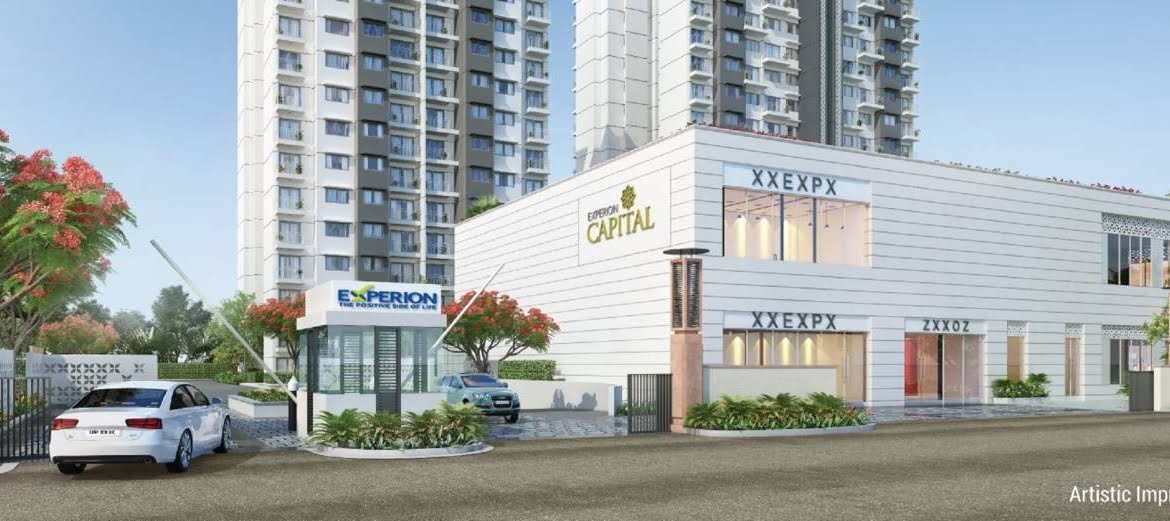
“Chica Loca” Bar and Unauthorized Constructions (Lucknow, 2025): Experion’s penchant for pushing boundaries hasn’t been confined to Delhi-NCR. In Lucknow, the company developed a residential high-rise called Experion Capital in the upscale Vibhuti Khand area. To the shock of its apartment owners, Experion permitted plans for a restaurant-bar titled “Chica Loca by Sunny Leone” to operate within the residential complex. This bizarre mingling of a celebrity-themed nightlife spot and a housing society led to a fierce backlash from residents concerned about safety, noise, and legality. The matter escalated to the Uttar Pradesh State Consumer Commission (SCDRC), which in January 2025 issued a strongly worded order against Experion’s actions.
The Commission noted unauthorized construction and encroachments in the building – including, it seems, modifications made to accommodate the bar – and found that these violated the sanctioned plan and threatened residents’ privacy and security. High-profile institutions adjacent to the site (like the Lucknow Bench of the High Court and the Indira Gandhi Pratishthan center) also faced potential security issues due to the unauthorized commercial activity. The SCDRC didn’t mince words: it stayed the construction and operation of the Chica Loca bar (or any similar commercial venture in the premises) and directed Experion to strictly adhere to the approved residential layout.
In effect, the developer was barred from converting residential space into a “nuisance-causing” commercial establishment. This episode quickly hit national headlines – after all, a well-known Bollywood name was involved – and it dragged Experion’s brand into yet another public scandal. The image of a family-centric developer was hard to square with the reality of a rowdy bar illegally sprouting in its project. For regulators, it was another data point suggesting Experion may prioritize profit (rent from a bar) over promises made to homeowners and city planners.
Violation of Building Norms at Windchants (2025): As if the excess-area saga wasn’t enough, Experion’s Windchants project also fell afoul of town planning authorities for flouting approved layout plans. In August 2025, Haryana’s Department of Town and Country Planning (DTCP) slapped Experion Developers (and the local RWA) with a show-cause notice for breaches of the sanctioned plan under the Haryana Development and Regulation of Urban Areas Act. Upon inspection, DTCP officials found that two designated fire tender access pathways had been converted into green landscaped areas, blocking emergency vehicle movement.
Moreover, land that was supposed to be kept as open setback (a safety buffer between roads and buildings) had been illegally sold off as part of private plots or otherwise absorbed into backyards, violating license conditions. These are serious infractions – compromised fire access can be life-threatening in an emergency, and encroaching on setback areas undermines structural safety and city planning norms.
The DTCP’s notice ordered Experion to restore the project to the approved layout and warned that failure to comply could result in cancellation of their license and denial of future licenses, along with other legal action. In effect, the government told Experion: fix this, or you might be out of business in Haryana. This regulatory flashpoint illustrates how Experion’s execution on the ground hasn’t always matched the plans on paper – raising questions about oversight within the company and how it navigates (or neglects) regulatory approvals.
Other Legal Entanglements: Beyond the headline cases above, Experion’s name has surfaced in various legal forums pointing to a pattern of contentious behavior. For instance, a case in the Haryana Real Estate Appellate Tribunal (Experion Developers Pvt. Ltd. vs. Amrita Baid, 2025) involved a buyer’s complaint – likely over delays or promises not met – that Experion felt compelled to appeal. While details are scarce, such disputes are common enough in real estate, yet they reinforce how customer dissatisfaction has nipped at Experion’s heels.
More intriguingly, Experion has tangled legally with the very same Alchemist ARC that figures in the Gurugram land saga: in 2021, Experion and Alchemist ARC were in the Supreme Court over what appears to be a fight related to debt or asset reconstruction prior to the Dignity Buildcon deal. Court records (Diary No. 32504/2021) show proceedings into January 2022, hinting that Experion’s relationship with Alchemist was adversarial well before they ostensibly “cooperated” in the CoC voting – raising eyebrows about what understandings (if any) were reached behind closed doors.
Finally, public sentiment has been turning against Experion on social media as well. On X (formerly Twitter), users have voiced frustration at perceived regulatory inaction against the firm – one post from December 11, 2025 even tagged India’s Finance Ministry and ED, calling for “housing justice” and swift action on Experion’s alleged misdeeds. This shows that Experion’s troubles are not only legal and regulatory, but reputational. Homebuyers and the public are increasingly aware – and wary – of the company’s track record.
Each of these incidents, in isolation, might be dismissed as the cost of doing business in India’s tough real estate market. After all, many developers face court cases or the occasional regulatory penalty. But in aggregate, they portray Experion Developers as a company walking a fine line – if not over the line – in multiple domains: consumer rights, fair business practices, adherence to building norms, and corporate transparency. It is this backdrop of mounting allegations and irregularities that makes the ED and IBBI’s recent intervention even more consequential.
Experion isn’t just fighting one case – it’s battling a narrative that it cuts corners and skirts rules whenever convenient. And that narrative is being shaped not by innuendo or hearsay, but by the words of judges, regulators, and official findings: from a Supreme Court judge decrying its contract as unfair, to a consumer court calling its fee demand illegal, to a state commission halting its bar, and now to national agencies probing potential fraud.
Growth Ambitions vs. Governance: The Road Ahead
Ironically, even as Experion Developers grapples with these challenges, the company has been boasting of aggressive growth plans. As a wholly-owned subsidiary of a Singaporean fund, Experion has access to deep pockets, and it has publicly projected a doubling of revenues to around ₹5,000 crore by FY2026 (from roughly ₹2,200 crore the previous year). New project launches are on the horizon, and the firm has even trumpeted achievements like international WELL certifications for its buildings, highlighting green design and health features. It’s clear Experion wants to be seen as a rising star in Indian real estate, an embodiment of global capital meeting India’s urban aspirations.
But this ambitious trajectory is colliding with a reality check: heightened regulatory scrutiny and a trail of litigation are now inseparable from Experion’s story. The juxtaposition is stark – on one hand, a company in expansion mode; on the other, a company under siege from courts, consumer forums, and enforcement agencies. Industry observers note that this combination of rapid expansion and legal headwinds places Experion at the center of a broader policy debate. At stake are questions that go beyond one developer or one deal:
- Integrity of the IBC Process: How far can creative maneuvers (like debt assignments and creditor influence) go in a resolution process before they undermine the spirit of the law? The Experion case may prompt authorities to clarify rules on CoC composition – perhaps by tightening norms around related-party claims or voting rights. Depending on the outcome, IBBI might issue new guidelines to ensure that creditor-turned-bidder situations are handled with greater oversight. The case could shape jurisprudence on Section 30(5) and beyond.
- Role of Consumer Redress in Real Estate: Experion’s run-ins with homebuyers underscore the importance of consumer courts and RERA in keeping developers accountable. The fact that buyers could get relief from NCDRC and the Supreme Court suggests that regulatory systems (like RERA authorities or DTCP in Haryana) might need to be more proactive, so issues don’t always escalate to lengthy litigation. Policymakers might ask whether penalties for contractual abuses or building-plan violations should be stiffened to deter the kind of behavior seen at Experion’s projects.
- Interplay of Insolvency and Criminal Law: Perhaps the most politically charged question is how to prevent insolvent companies from being used as shields against criminal asset recovery. The ED-Experion confrontation highlights a loophole where a smart player might use IBC proceedings to frustrate a PMLA attachment. To plug this, coordination between NCLT and agencies like ED needs strengthening – something that is already in motion via new SOPs. If the Experion deal is indeed unwound, it will set a precedent that crime-tainted assets cannot be easily laundered through bankruptcy resolutions – a precedent that could resonate in other high-profile cases where business and fraud intersect.
For Experion Developers itself, the coming months (and years) will be crucial. Rebuilding trust – with regulators, customers, and investors – might prove as challenging as constructing its next skyscraper. The company will need to demonstrate that it can operate by the rules and not just exploit them. Its response to the current investigations will be telling: Will it cooperate and course-correct, acknowledging gaps in governance? Or will it fight tooth and nail, potentially at the cost of its reputation and goodwill?
One thing is clear, that the saga is far from over. Both the ED’s petition in NCLT and IBBI’s ongoing investigation ensure that the Dignity Buildcon–Experion transaction remains under a microscope. If the MCA green-lights an SFIO inquiry, what began as an insolvency proceeding could morph into one of the most closely watched corporate fraud probes in recent memory. That would spell uncharted territory for all parties involved – and could even lead to criminal charges if willful misconduct is proven.

In the end, the tussle around Experion Developers encapsulates a larger truth about India’s evolving business landscape. As capital flows in (be it foreign or domestic) and companies grow at breakneck speed, regulatory vigilance becomes both harder and more essential. Experion’s case is a cautionary tale of what can happen when an enterprise’s ambition isn’t matched by robust governance and compliance. It shows that even a well-heeled developer with marquee projects can stumble – or be tripped up – by the very frameworks meant to ensure fair play. And it reaffirms an age-old principle, one that cuts through the corporate jargon: the higher you rise, the harder you can fall – especially if you build on shaky foundations.