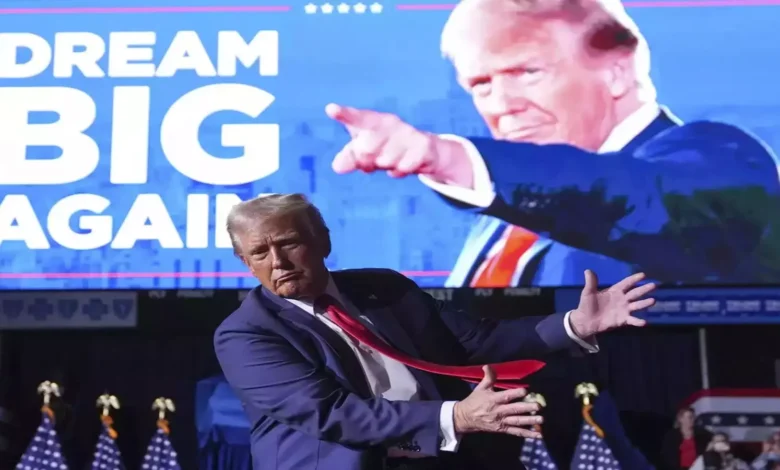
A fresh wave of trade tensions is brewing, and this time, India may not escape unscathed. U.S. President Donald Trump, known for his aggressive stance on trade, has once again turned up the heat with a promise of “reciprocal tariffs” set to take effect on April 2. If implemented, these tariffs could deal a multi-billion-dollar blow to India’s exports, impacting industries from automobiles to agriculture.
In a fiery address to the U.S. Congress, Trump reiterated his long-standing grievance: the U.S. has been at the losing end of global trade for too long.
As per him, other countries have used tariffs against America for decades, and now it’s America’s turn to impose tariffs against those other countries; singling out nations like the European Union, China, Brazil, Mexico, Canada and notably, India.
He pointed to India’s steep import duties, particularly on automobiles, which exceed 100%, as a glaring example of unfair trade practices.
Until now, India has managed to sidestep Trump’s tariff war, which has primarily targeted Canada, Mexico, and China. However, that could change overnight. With the April 2 deadline closing in, India may find itself in the direct line of fire, facing retaliatory tariffs aimed at narrowing the trade gap.
According to experts India’s significant tariff differential with the U.S. makes it highly vulnerable to such measures. The average rate that India imposes on U.S. imports is more than 10 percentage points higher than the tariffs Washington applies to Indian goods. A broader interpretation of reciprocity, one that factors in trade surpluses and corporate tax policies, could have even more severe consequences.
Morgan Stanley analysts, led by Chetan Ahya, predict that India and Thailand could face tariff hikes ranging from 4 to 6 percentage points as the U.S. moves to rebalance the scales. If that happens, India’s export-driven industries, including chemicals, jewelry, and pharmaceuticals, may bear the brunt of the impact.

A $7 Billion Blow?
The gaining threat of reciprocal tariffs from April 2 is sending shockwaves through India’s export-dependent sectors. Analysts at Citi Research estimate that if Trump’s proposed tariffs materialize, India could face losses of up to $7 billion annually.
The most vulnerable sectors include chemicals, metal products, and jewellery, followed closely by automobiles, pharmaceuticals, and food products, according to Citi analysts.
India’s merchandise exports to the U.S., projected to reach nearly $74 billion in 2024, are heavily concentrated in pearls, gems, and jewellery ($8.5 billion), pharmaceuticals ($8 billion), and petrochemicals ($4 billion). However, with India’s weighted average tariff sitting at approximately 11%—a sharp 8.2 percentage points higher than the U.S. tariffs on Indian goods—reciprocity could prove costly.
On the flip side, U.S. manufacturing exports to India, worth about $42 billion, already face steep import duties. These range from 7% on wood products and machinery to 15–20% on footwear and transport equipment, and a staggering 68% on food products. According to a White House fact sheet, the tariff disparity is most glaring in agriculture: while the U.S. imposes an average 5% duty on farm goods, India’s tariffs soar to 39%.
If Washington extends reciprocal tariffs to farm products, India’s agricultural export which are already struggling with low trade volumes, could take a severe hit. Meanwhile, labor-intensive sectors such as textiles, leather, and wood products may see a milder impact, given smaller tariff gaps and a limited share in U.S.-India trade.
A recent report by India Ratings and Research (Ind-Ra) suggests that India’s exports to the U.S. could decline by $2 billion to $7 billion in FY26 if these tariffs are enforced.
Can The Indian Govt Do Anything?
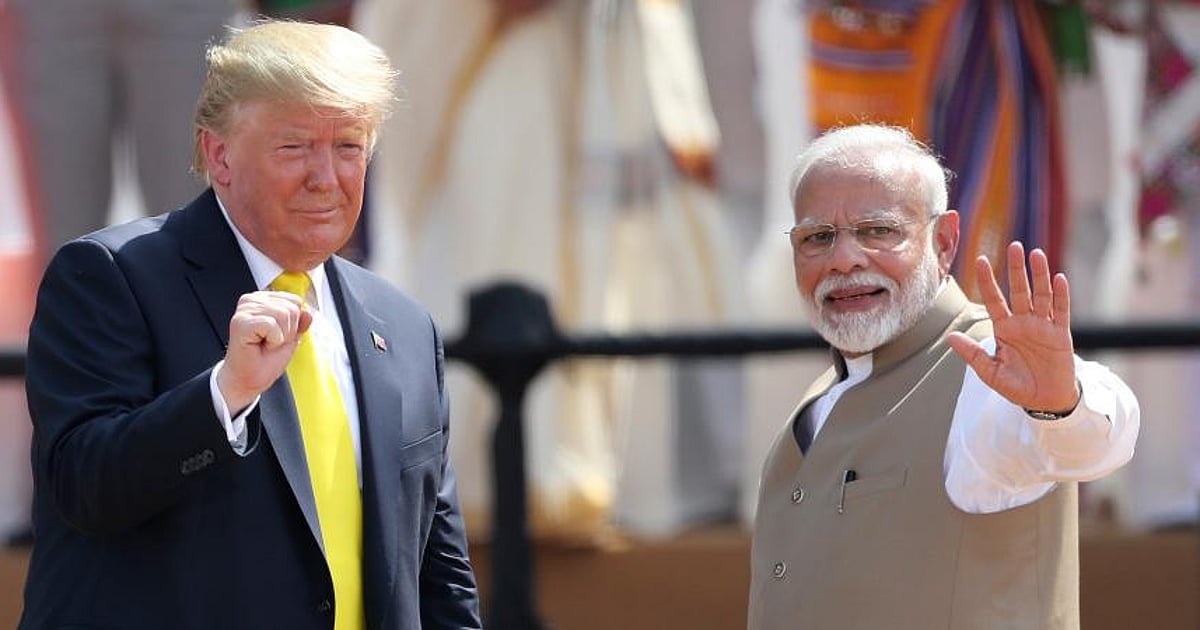
Both India and the U.S. have set an ambitious goal to double bilateral trade to $500 billion by 2030. The two nations recently committed to negotiating the first phase of a multi-sector bilateral trade agreement (BTA) by fall 2025, a move expected to boost market access, reduce tariff and non-tariff barriers, and strengthen supply chain integration. However, even as these plans take shape, the immediate threat of Trump’s reciprocal tariffs could potentially derail progress before the deal gains momentum.
Hence, sensing the urgency, it explains why India’s Commerce Minister Piyush Goyal made a sudden trip to Washington this week, cancelling previously scheduled meetings until March 8.
His primary agenda could be a discussion with Jamieson Greer, the newly appointed U.S. Trade Representative (USTR), to gauge the full impact of the proposed tariffs on India. According to sources, Goyal’s mission includes negotiating potential concessions and exploring ways to soften the blow of Trump’s tariff threats.
India is reportedly willing to discuss tariff reductions on industrial products such as automobiles and chemicals but remains firm in its stance against lowering agricultural tariffs, citing the impact on millions of small-scale farmers.
However, in a bid to ease trade tensions, India has already implemented selective tariff cuts by reducing duties on high-end motorcycles from 50% to 30% and slashing bourbon whiskey tariffs from 150% to 100%.
Additionally, New Delhi has signaled a willingness to expand energy imports and increase defense purchases from the U.S. Even though no immediate breakthroughs are expected before Trump’s April 2 deadline for reciprocal tariffs, Indian officials hope that visible progress in trade negotiations might be enough to delay or soften Washington’s stance.
The Last Bit
India finds itself at a critical juncture as Trump’s proposed reciprocal tariffs threaten to upend trade dynamics with its largest export market along with potential annual losses estimated at $7 billion.
While the Modi government has sought to preemptively defuse tensions through selective tariff cuts and increased defense and energy imports, these concessions may not be enough to avert the April 2 deadline. Piyush Goyal’s urgent visit to Washington signals India’s intent to negotiate and secure a reprieve, but the U.S. administration’s stance remains unpredictable.
The broader challenge lies in striking a balance between protecting domestic industries, especially in agriculture, where millions depend on subsidies and tariff protections and maintaining favorable trade relations with the U.S.
If Trump moves ahead with the tariffs, India may be forced to retaliate, escalating trade tensions at a time when global economic stability is already fragile.
India’s best hope lies in accelerating negotiations for a broader trade deal that ensures long-term stability while addressing U.S. concerns.