How India’s Toll Tax Has Become A Means For Filling Government Coffers Rather Than For Public Development?

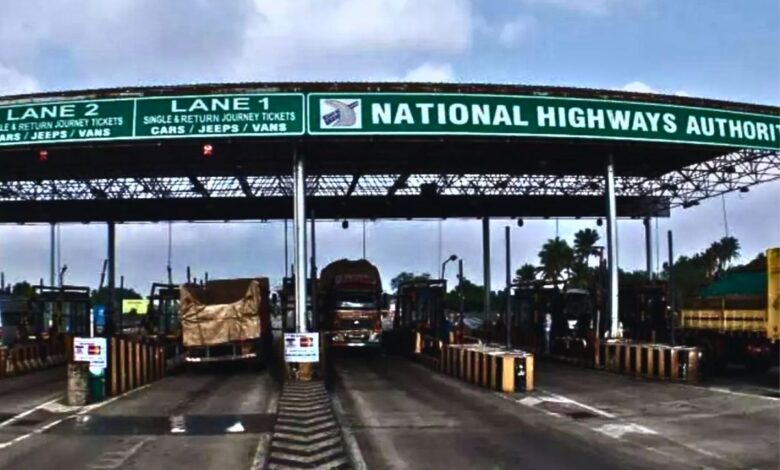
Highway Robbery With Receipts: How India’s Toll System Taking Citizens For A Ride
Have you ever had that delightful experience of paying road or toll tax when registering your vehicle, feeling civic pride as you contribute to national infrastructure, only to drive onto a highway and there’s another handout for more money? Welcome to India’s toll system, where paying once for roads is so passé that we’ve made paying twice the national standard.
Every time that toll barrier rises like a conductor’s baton signalling the start of your journey’s financial symphony, it’s worth asking: Is this really the most sensible way to fund our roads? Or have we collectively accepted a system that’s less about infrastructure development and more about perpetual revenue extraction?
Let’s Start The Chronicle With The Economics Of Our Empty Wallets!
Let’s start with some numbers that might make your FASTag account cry in pain! A one-way journey on the 1,386-km Delhi-Mumbai expressway could empty your wallet by anywhere between ₹1,000 to ₹3,000, depending on whether you’re driving a modest hatchback or something more substantial. That’s roughly the cost of a decent meal for a family of four at a nice restaurant—except instead of food; you’re purchasing the right to drive on asphalt roads that is built by your taxes.
When you zip across Mumbai’s Bandra Sea Link (and by “zip,” I mean crawl at a glacial pace during rush hour), you’re now paying 18% more than last year for the privilege of reaching the traffic congestion waiting for you on the Worli side. It’s rather like paying extra for express delivery only to find the package arrives at the same time as regular mail.
In Hyderabad, ₹20 get you a thrilling 5 km stretch on the Outer Ring Road before you join the vehicular mosh pit at Gachibowli junction. The toll doesn’t mention the complimentary benefits: wasted fuel, increased pollution, and the frustration of paying premium prices for a decidedly non-premium experience.
If you think this all are just imaginary cases, then we have real news as well. In a recent news, tourism company owners in Himachal Pradesh have expressed significant opposition to the state government’s proposal to raise entrance fees at different toll gates under the excise policy. According to Fazia Khan, a visitor from Dharamshala, many individuals are unable to afford the hike, which would have a negative influence on tourism.
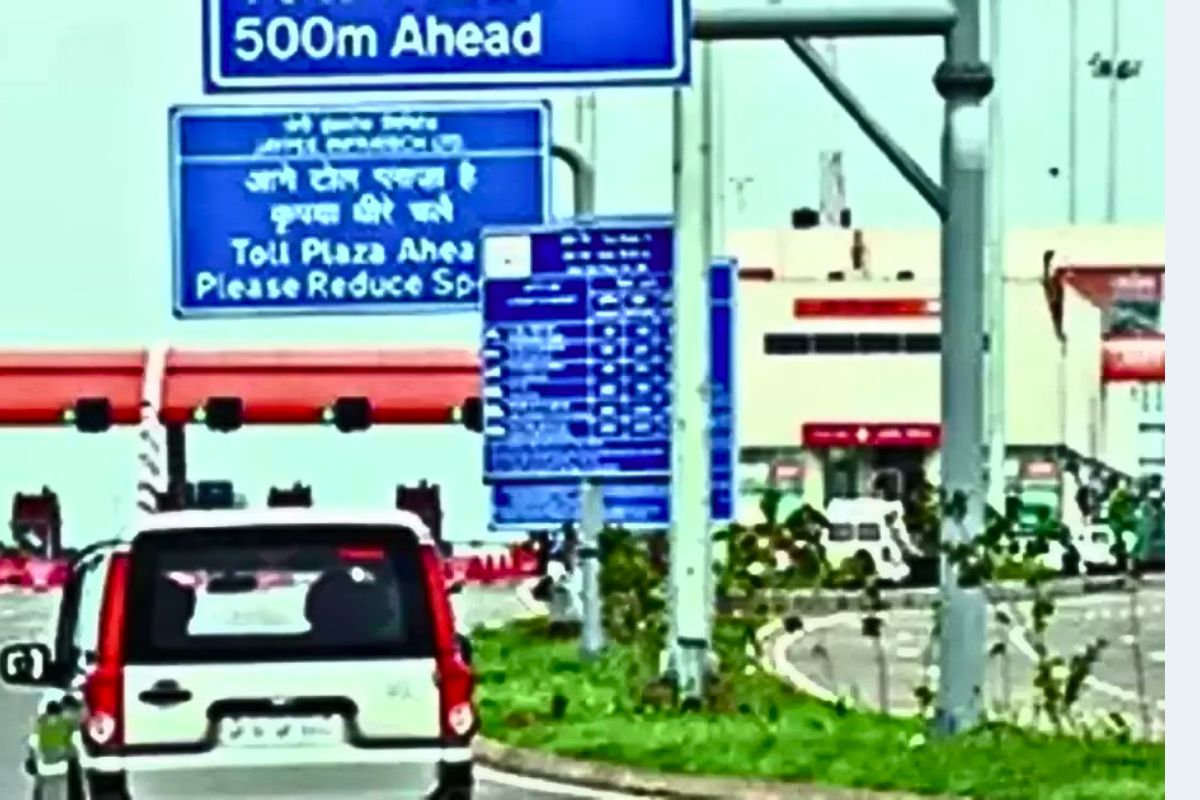
These Are Our Tolls: The Toll Tax That Keeps On Looting Us!
Here’s a perspective that might make you reconsider your next highway trip: India’s toll economy now represents 0.29% of our GDP. That doesn’t sound like much until you realize the government expects toll revenue to exceed ₹70,000 crore in the 2025 fiscal year. That’s 50% of the Central education budget and 70% of healthcare spending.
Let that sink in for a moment. We’re spending almost as much on toll roads as we are on keeping people healthy and educated. But wait, it gets better (or worse, as per your perspective): while government expenditure on education and healthcare has grown slower than GDP, toll collections are increasing at 1.5X the GDP growth rate. It’s almost as if we’ve decided that smooth highways are more important than schools or hospitals.
To understand in laymen terms, let’s break it down to the family level makes it even more stark. An average Indian family currently spends the equivalent of 6.5% of its education budget and 7.5% of its healthcare budget on tolls. If toll collections reach the targeted ₹1.3 lakh crore by FY30, those percentages will climb to 7.5% and 8.5% respectively. Perhaps we should include “toll payment strategies” in family financial planning sessions alongside college funds and health insurance.
Where Are We Going After Paying Such Huge Tolls?
Remember those promises of 10-second waiting times in the electronic fast lanes? Those promises apparently hit the same traffic jams we do. There’s a special irony in sitting in a slow-moving queue at an electronic toll plaza that was specifically designed to eliminate queues. It’s like installing a high-speed internet connection that only works at dial-up speeds. The most annoying aspect is that these highways reverting to public ownership and free to use have no obvious expiration date. It’s like paying off a mortgage where the bank keeps extending the term every time you get close to being debt-free. It is like easy-flowing traffic, an ideal-state scenario, but the reality is quite different.
The overwhelming number of vehicles at tolls resulted in two things:
- First, commuters kept changing lanes in the hope of reducing wait time, with some even following an ambulance to take advantage of the cleared lane;
- Second, officials often opened up the emergency services lane designated for ambulances, police vehicles, and fire engines, to regular traffic.
This did not improve the problem; rather, it made it worse.
The Centre reportedly plans discounted toll passes for frequent users or lifetime options with a one-time payment. That sounds promising until you realize it asks us to pre-pay for roads we’ve already funded through taxes. It’s like a restaurant asking you to pay for your meal when you make the reservation, then charging you again when you arrive, but offering a small discount on the second payment as if they’re doing you a favour.
Now, Read The Auditor’s Verdict About The Condition Of Roads For What We Are Paying Taxes.
If you think I’m being unnecessarily cynical, let me introduce you to the Comptroller and Auditor General of India (CAG), who shares my scepticism but with official stamps and formal reports. Their 2019 assessment of the National Highways Authority of India (NHAI) found that the authority had failed to meet its construction and maintenance targets while accumulating a debt of ₹2.74 lakh crore.
The recent news of an order issued last month says the same. The order is likely to have broader implications; the J&K and Ladakh High Court last month ruled that if a highway is in poor condition “due to varied types of construction operations,” NHAI or its concessionaire cannot collect toll revenue from passengers.
Hearing a PIL on the Pathankot-Udhampur stretch of NH-44, a bench of Chief Justice Tashi Rabstan and Justice M A Choudhary ordered NHAI to collect only 20% of the toll at two toll plazas – Lakhanpur and Bann – until the highway from Lakhanpur to Udhampur is fully operational. HC further asked NHAI not to build any plazas within 60 kilometres of NH-44 and to remove such buildings within two months. “Furthermore, there should not be a proliferation of such plazas in the two UTs only for the purpose of generating revenue from the general public,” it stated.
The CAG report didn’t just question the NHAI’s financial management; it raised serious concerns about how toll contracts are awarded and monitored. It highlighted a disturbing lack of transparency and accountability in the toll collection system, not to mention the harassment and inconvenience faced by road users due to faulty toll plazas, overcharging, and those interminable queues that make you question your life choices.

What Are The Hidden Costs of Standing Still At Tolls, Even After Implementing FASTag And paying Toll Tax?
The toll system’s impact extends far beyond our individual frustrations.
A 2018 study by the TCI, aka the Transport Corporation of India and the IIM Calcutta estimated that delays and fuel wastage at toll plazas cost the Indian economy approximately ₹1.5 lakh crore annually—equivalent to 1% of India’s GDP. The survey revealed that goods vehicles on roads spend 10% of their journey at toll plazas and average speed of barely 25 km/h. This is not just an inconvenience, but also a significant drag on the logistics sector, which is fundamental to trade and industry growth. Every minute a truck spends waiting at a toll plaza is a minute it’s not delivering goods, not contributing to economic activity, and not helping its driver earn a living.
Beyond the financial implications, there’s a human dimension to the toll system that often goes undiscussed. Time spent waiting at toll plazas is time not spent with family, not invested in productive work, and not used for recreation or rest. In a country where work-life balance is already precarious for many, adding unnecessary delays to daily commutes exacerbates stress and reduces quality of life. For commercial drivers, who are in the trucking industry, toll-related delays can mean missed deadlines, lower earnings, and increased pressure to make up for lost time—sometimes leading to unsafe driving practices. The human cost of an inefficient toll system extends far beyond the financial burden.
Bihar And UP: The Ironic Tale of Two States Having Sync In Tolls and Poverty!
There were alarming trends in the link between toll roads and socioeconomic elements. As per NITI Aayog’s 2023 Multidimensional Poverty Index, around 135 million Indians, which is 1/10th of country’s population, live in multidimensional poverty, lacking basic necessities like healthcare, education, and adequate living standards. Bihar and Uttar Pradesh account for more than 40% of India’s multidimensionally poor population. Coincidentally (or perhaps not), these two states also have the highest number of toll plazas in India, with 127 and 121, respectively. Although correlation does not always translate into causation, it is interesting to think about how toll roads could be influencing the access to required services and economic possibilities for the most underprivileged sections of society.
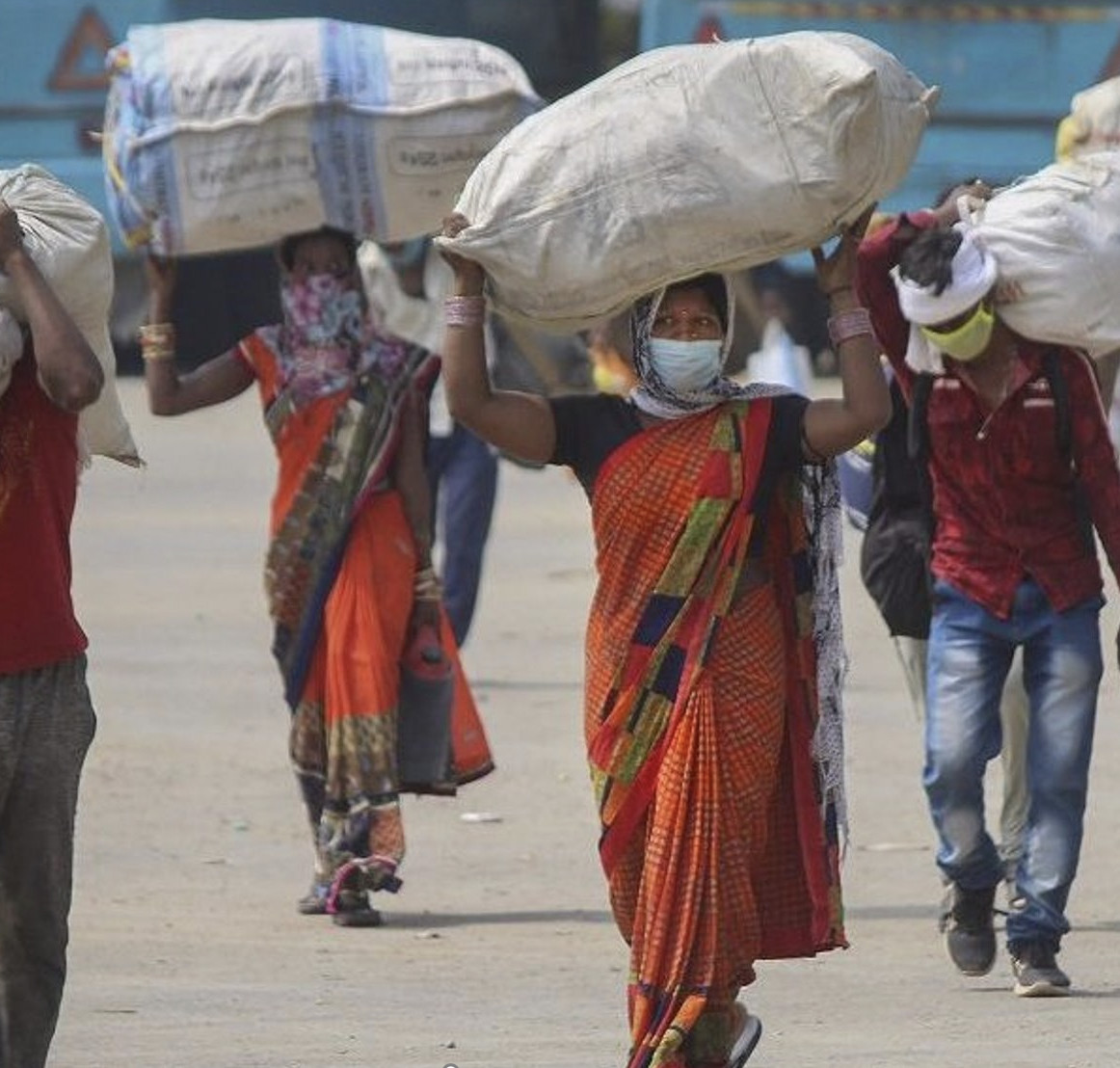
For families already dying to make ends meet, toll charges represent a disproportionate burden on their income. When the choice might be between paying a toll to reach a hospital or buying medicine, the toll system becomes more than an annoyance—it becomes a potential barrier to basic human needs.
The problem is not settling at economic and human loss- It exaggerates to one more domain- the Fraud! Isn’t this a policy failure?
Case 1- Dubious Transaction
There have been cases of unsystematic recording as well that has caused inconvenience to passengers, which is again against the motive for which the highways have been made. Cases have been recorded when, particularly in festive rush days, a dubious entry was recorded during a passenger’s commute via the highway, suggesting that he had passed through both sides three days after the journey. This entry, falsely created using a photograph of his vehicle and its FASTag taken while he was in the vicinity, led to an erroneous round-trip charge, despite him being 200 km away from the plaza.
The above case is not isolated; it is likely that several others who crossed the toll on the same day were affected. It was admitted by the highway administrator and project director that the festive period’s rush prevented immediate toll entries, leading to delayed records, and no rules related to unfair waiting time in tolls were considered during festival hours. This explanation is considered evidently inadequate. Even after someone asks for a refund for the delay caused in the queue, it is still pending.
Helplines aren’t uniform.
Using the FASTag system for toll transactions is simple; nevertheless, maintaining correctness is hard. People are unaware of the helpline accessible for reporting such disparities, which exacerbates the situation. Instead of calling a centralized hotline like 1033, drivers can contact their individual FASTag suppliers to file concerns.
This fragmented approach is a policy failing that may deter individuals from reporting occurrences, limiting the effective use of existing interventions. Furthermore, commuters are resentful because they believe there is no redress process (there is, but it is not well marketed, and there is no notice at toll plazas informing passengers).
Case 2- FORCEFUL Double Transaction
A news from February 2023 stated that a consumer forum in Vadodara had said that the National Highways Authority of India (NHAI) toll plaza cannot charge double the toll fee if the FASTag pasted on any vehicle is non-functional. Dhaval Soni, member, Vadodara District Consumer Disputes Redressal Commission, had ordered NHAI to return Rs 145 to a resident who filed a complaint after being charged Rs 290 at the Surat-Hazira NH toll plaza, saying that ‘User can’t not be pushed at mercy of toll employee‘. The resident was travelling from Songadh to Surat in November 2021 but his FASTag couldn’t be scanned at the toll plaza.
The forum stated that while FASTag may be necessary, it must also ensure that the user of the toll road is not forced to rely on the toll staff. The NHAI cannot avoid its duties by claiming that (FASTag) operation is the responsibility of the issuer bank.
So if your FASTag is not working, in no case, you, being the driver of the vehicle, is responsible. It is either the fault at the bank end, or the NHAI’s portal end. But at the end, as the system does, a common man is put under the knife. This makes me recall the scene from the film OMG where the character of Kanji Lalji Mehta argues that either the insurance company should pay him or God should pay him, because at the end, it is him, a common man, who is devastated by the earthquake.
The output of implementing FASTag- Deviation Between Purpose And Reality.
To be fair, toll roads do serve a purpose. The 341 crore toll transactions recorded by January of FY25 generate revenue that attracts investment and provides returns for the public and private entities that build and maintain these roads. No one is arguing against the need for well-maintained highways—they’re essential for economic growth and connectivity.
But there’s a difference between funding infrastructure and treating it as a perpetual revenue stream. Tolls shouldn’t surge like ride-sharing prices during peak hours, nor should they continue indefinitely after construction costs have been recovered. If the primary purpose of tolls is to finance road construction and maintenance, shouldn’t there be a point at which the road is considered “paid for”?
The fundamental issue with India’s current toll system isn’t the existence of tolls themselves—it’s their seemingly perpetual nature and the lack of a clear endpoint. When we pay for a product or service, we expect to eventually own it outright. We don’t keep paying for our smartphones or televisions indefinitely after covering their cost; why should roads be different?
A highway funded by public money, whether through direct taxation or tolls, should eventually become a public asset in the truest sense—freely accessible to all. This doesn’t mean abandoning the principle of user fees for infrastructure; it means establishing a reasonable timeline for when those fees have served their purpose.
Transportation constituted 17.29% of personal consumption expenditure in FY23. With such a significant portion of household budgets already allocated to movement, shouldn’t we be working toward reducing that burden rather than institutionalizing it?
What Can we Learn From Global Examples?
Other countries have managed to strike a better balance between private investment in infrastructure and public benefit. In some European nations, toll roads have clear concession periods after which they return to public ownership. Others use shadow tolling systems where the government pays the concessionaire based on usage, eliminating the need for direct user charges. Even within India, there are examples of successful infrastructure projects that have transitioned from toll-based funding to free public access. The Mumbai-Pune Expressway, one of India’s first major highway projects, was initially operated as a toll road but with a clear timeline for cost recovery.
Why Do We Need A Call For Reform?
The current toll system in India represents a significant opportunity for reform. Reimagining how we fund, develop, and run road infrastructure might result in a more fair system that balances the demands of private investors, government budgets, and regular residents. This is not about abolishing tolls overnight; it would be financially unfeasible and perhaps detrimental to continuing infrastructure development. It’s about establishing clear principles: tolls should fund specific projects with defined timelines, not become permanent revenue streams; user charges should decline over time as capital costs are recovered; and the ultimate goal should be the creation of public assets that benefit everyone.
Transportation infrastructure is too important to be treated merely as a profit centre. Roads connect communities, facilitate commerce, enable access to education and healthcare, and form the literal foundation of economic development. Our approach to funding and operating them should reflect their fundamental importance to society.
The next time you hear that distinctive beep as your FASTag account is debited, remember: it doesn’t have to be this way. A better, more equitable system is possible—one where highways serve the public rather than perpetually extracting from it. The road to reform may be long, but it’s one worth travelling.