America First, Investors Last? De-Globalize, De-Stabilize, De-Value, Trump’s Trade War Sparks Market Exodus. The End of American Exceptionalism?

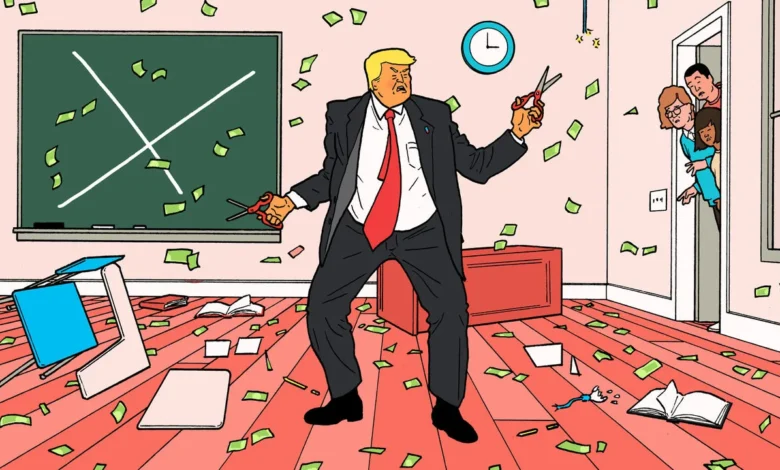
Global markets are no longer swooning over the United States, and Trump’s trade war might just be the heartbreak they never signed up for.
Despite grand promises of ushering in a “new golden age of America,” President Donald Trump’s tariff-heavy tactics are proving to be more wrecking ball than renaissance. Hence, the long-standing appeal of the U.S. as the gold standard for global investment is losing its sheen and fast.
According to Bank of America’s latest fund manager survey, a record number of global investors are dumping U.S. equities. Seventy-three percent now believe that the era of American exceptionalism has peaked, a damning indictment for a country that once claimed the market crown.
Trump’s aggressive and often erratic tariff policies have injected chaos into corporate boardrooms and turned once-predictable economic models into question marks. CEOs have slashed forward guidance, Wall Street has retracted its optimism on the S&P 500, and faith in U.S. economic dominance is fraying.
Arun Sai of Pictet Asset Management minced no words: “Even if there is a steady de-escalation from here, the damage is done. There is no putting the genie back in the bottle.”
For over 15 years, the S&P 500 dominated its global counterparts, until now. It’s currently down 10% this year and limping toward its worst monthly showing since 2022. The crown is slipping and rivals are circling.
Three catalysts have accelerated this global pivot, according to Invesco’s Alessio de Longis.
First, China’s DeepSeek, a low-cost AI model, stunned Silicon Valley, throwing America’s AI supremacy into question. Second, Europe’s newfound defense spending, spurred by waning U.S. commitment to Ukraine, lit up the continent’s economic potential. And third, Trump’s tariff tirades in March and April sent a clear signal: the U.S. is no longer the safe bet it once was.
Investors, once hopelessly infatuated with U.S. markets, are now courting Europe, and even China. “Add in the tariffs, the AI shift, and the de-globalization trend, and you have a perfect storm,” said Jason Blackwell of Focus Partners Wealth. “We’ve gone from America First to America… maybe later.”
Even Barclays’ Ajay Rajadhyaksha admits: the U.S. had a good run. “For nigh on 20 years, the U.S. has benefited from almost relentless flows into USD financial assets. Perhaps we were primed for some give-back.”
That give-back is playing out now, in real-time. Europe is finally warming up to fiscal stimulus. China is leaping forward in AI and EVs. And investors, spooked by the erratic playbook in Washington, are pulling up stakes.

A Lot At Stake
The world isn’t waiting on America anymore. And Trump’s “golden age” pitch? It might be going the way of coal, outdated, smoky, and too risky to touch.
If Trump’s first term cracked the glass on global confidence in America, his second term is threatening to shatter it.
Barely 100 days into his encore performance, Donald Trump is no longer just rattling sabers, he’s retooling the entire playbook of American economic and foreign policy with the blunt force of a sledgehammer. Global investors? Shaken. Markets? Tumbling. Diplomats? Packing.
Gold Glitters, Dollar Dims
Gold has surged a staggering 27% this year, eclipsing record highs and stealing the crown from Wall Street’s once-darling “Magnificent Seven” tech stocks. The rush to safe-haven assets is no longer just a hedge but a mass exodus.
Bank of America’s April fund manager survey delivers the sucker punch: 49% of respondents now predict a “hard landing” for the global economy, up from just 11% in March. That’s not a blip. That’s a full-blown crisis of confidence.
Meanwhile, the US dollar, long the bedrock of global finance, is slipping. The dollar index just clocked its worst week since 2022, and the euro’s now at its strongest in over three years. If Trump’s goal was to make American assets less attractive, mission accomplished.
As Goldman Sachs analysts bluntly put it, if tariffs pinch profits and reduce consumer power, US exceptionalism takes a hit, and with it, the strength of the greenback.
Trump’s Trade Tantrums Rewrite the Rules
Tariffs, tariffs, and more tariffs. Trump’s policy mantra reads more like a battering ram than an economic strategy and American firms face squeezed margins, consumers battle inflationary shockwaves, and foreign investors look to other markets for shelter.
Pictet Asset Management’s Arun Sai isn’t sugarcoating it. “Even if there is a steady de-escalation from here, the damage is done,” he said. “There is no putting the genie back in the bottle.”
That genie is now floating over Europe and Asia. The US, which once gobbled up 65% of global stock market value, is losing its shine. Investors are rebalancing. DeepSeek’s AI breakthrough, Europe’s ramped-up defense spending, and China’s tech surge are making the “rest of the world” suddenly sexy again.
Even long-time US market loyalists are starting to stray. Jason Blackwell from Focus Partners Wealth said it’s been 15 years since clients asked about international stocks. Now, it’s the hot new topic.

Diplomacy on Mute, Isolationism on Max Volume
And if that wasn’t enough, Trump’s second term is taking a flamethrower to America’s foreign presence. Budget cuts threaten to halve the State Department’s funding. Embassies and consulates are on the chopping block, especially in Africa, where China and Russia are already busy making friends.
The Voice of America? Silenced. USAID? Demolished. Peacekeeping, humanitarian aid, global health projects, the United Nations, NATO, defunded, deprioritized, or dismissed altogether.
While Trump obsesses over bringing manufacturing back to Peoria, the rest of the world is finding other dance partners. The Global South is drifting further from Washington’s orbit, lured by Beijing’s money and Moscow’s maneuvering.
Krishna Guha at Evercore ISI calls it what it is: “A loss of confidence in Trump’s economic policy.” Add to that a geopolitical vacuum, and America’s soft power is shrinking faster than its trade surplus.
A bear market may just be the tip of the iceberg for the US economy.
With the S&P 500 now 16% below its peak and showing signs of entering official bear market territory, defined as a 20% decline from its previous high, the mood on Wall Street is rapidly darkening. But while the red numbers on the tickers are alarming, it’s the deep structural concerns behind the selloff that have economists and market veterans more worried.
On Monday, all three major US indices plunged as President Donald Trump ramped up his criticism of Federal Reserve Chairman Jerome Powell, reigniting fears over the central bank’s independence just as investors were already struggling with the unpredictability of Trump’s trade agenda.
The Dow shed 971.82 points, or 2.48%, closing at 38,170.41. The S&P 500 fell 124.50 points, or 2.36%, ending at 5158.20, while the Nasdaq Composite dropped 415.55 points, or 2.55%, to finish at 15,870.90.
Every major sector within the S&P 500 closed in the red, with consumer discretionary and technology stocks taking the worst hits. The once-dominant “Magnificent Seven” stocks – tech giants that have driven market sentiment for nearly two years – saw notable pullbacks, led by Tesla and Nvidia.
Tesla shares slipped 5.8% on reports of further delays in launching a basic Model Y variant. Once seen as the crown jewel of the EV sector, Tesla’s valuation has now halved from its December peak. Concerns about overvaluation and CEO Elon Musk’s controversial entanglements with government spending cuts have rattled investor faith.
Meanwhile, Nvidia dropped 4.5% following reports that Huawei may soon begin bulk deliveries of advanced AI chips to Chinese customers, heightening fears of geopolitical fragmentation in the tech industry.
Adding to the mix, US Treasury yields continue to rise, unsettling both consumers and corporations. Higher yields translate to more expensive mortgages, auto loans and corporate borrowing – tightening financial conditions just as growth projections are already being downgraded. S&P 500 companies are now expected to post Q1 earnings growth of 8.1% – down from initial projections of 12.2%, according to LSEG.
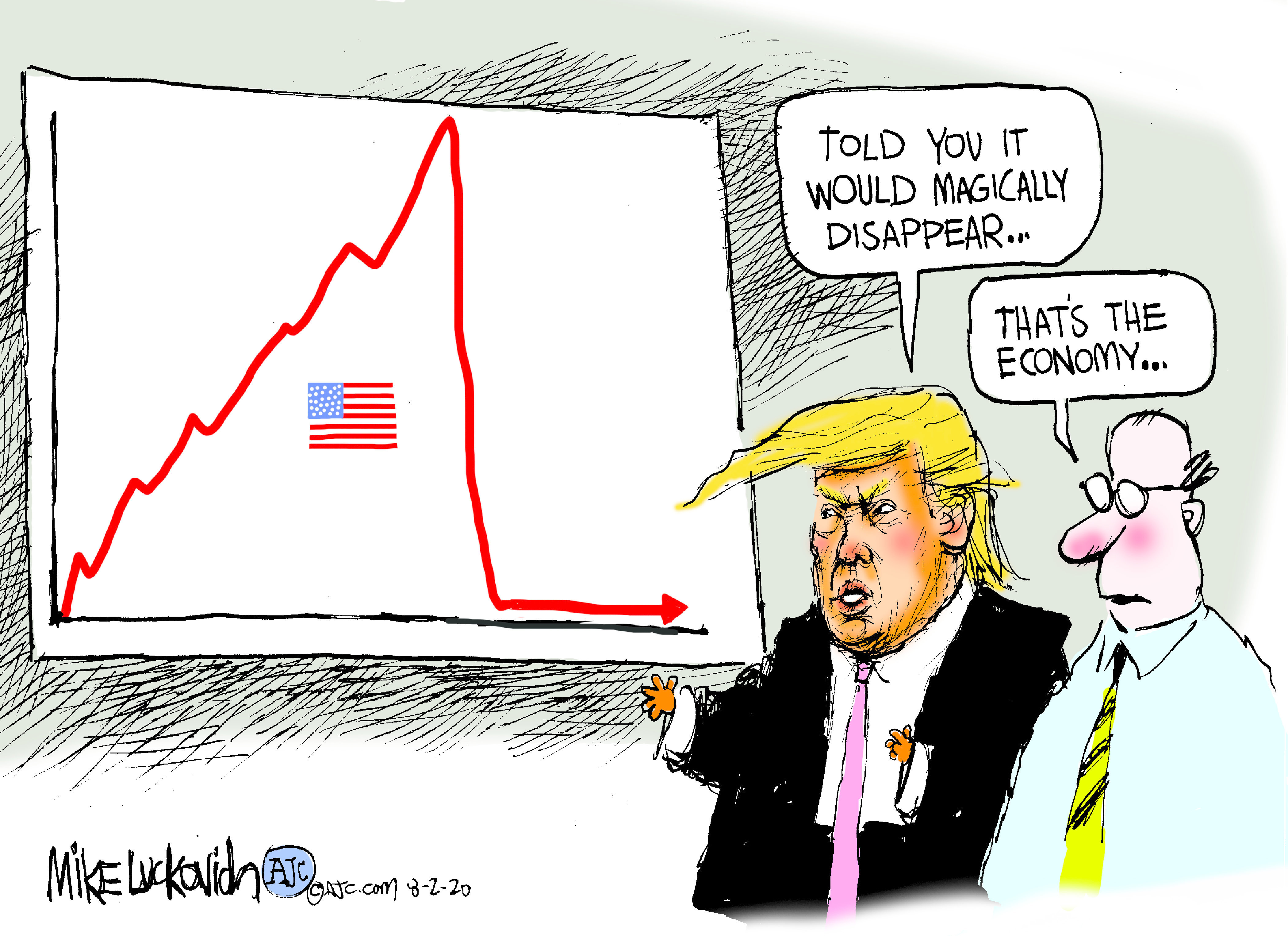
This market downturn isn’t happening in a vacuum.
China, the world’s second-largest economy, remains central to Trump’s escalating trade war. Beijing’s recent statement warning countries like Japan and South Korea about entering US-led trade pacts that could undermine Chinese interests shows how delicate the global trading landscape has become. The diplomatic temperature continues to rise as US-China economic ties fray further.
In a rare development, both US government bonds and the US dollar have depreciated alongside equities, a break from their traditional safe-haven behavior during times of volatility. The dollar has dropped 9% this year, falling sharply in recent months against major currencies including the euro, yen, Swiss franc and Canadian dollar. Normally seen as the anchor in turbulent times, the dollar is now facing the consequences of mounting investor anxiety over Trump’s economic policies, tariffs and weakening institutional credibility.
As JP Morgan pegs the chance of a global recession at 60%, investors around the world are beginning to rethink old assumptions. International exposure is back in fashion, and US equity dominance no longer feels as assured as it once did. Amid rising inflation, policy unpredictability and softening macro data.
The biggest question now is – Is the US economy slowly sliding into a recession, and are the markets just the first domino to fall, all thanks to Trump’s trade war?