Degrees Without Direction: Why Engineering And MBA Degrees Aren’t Delivering Careers?

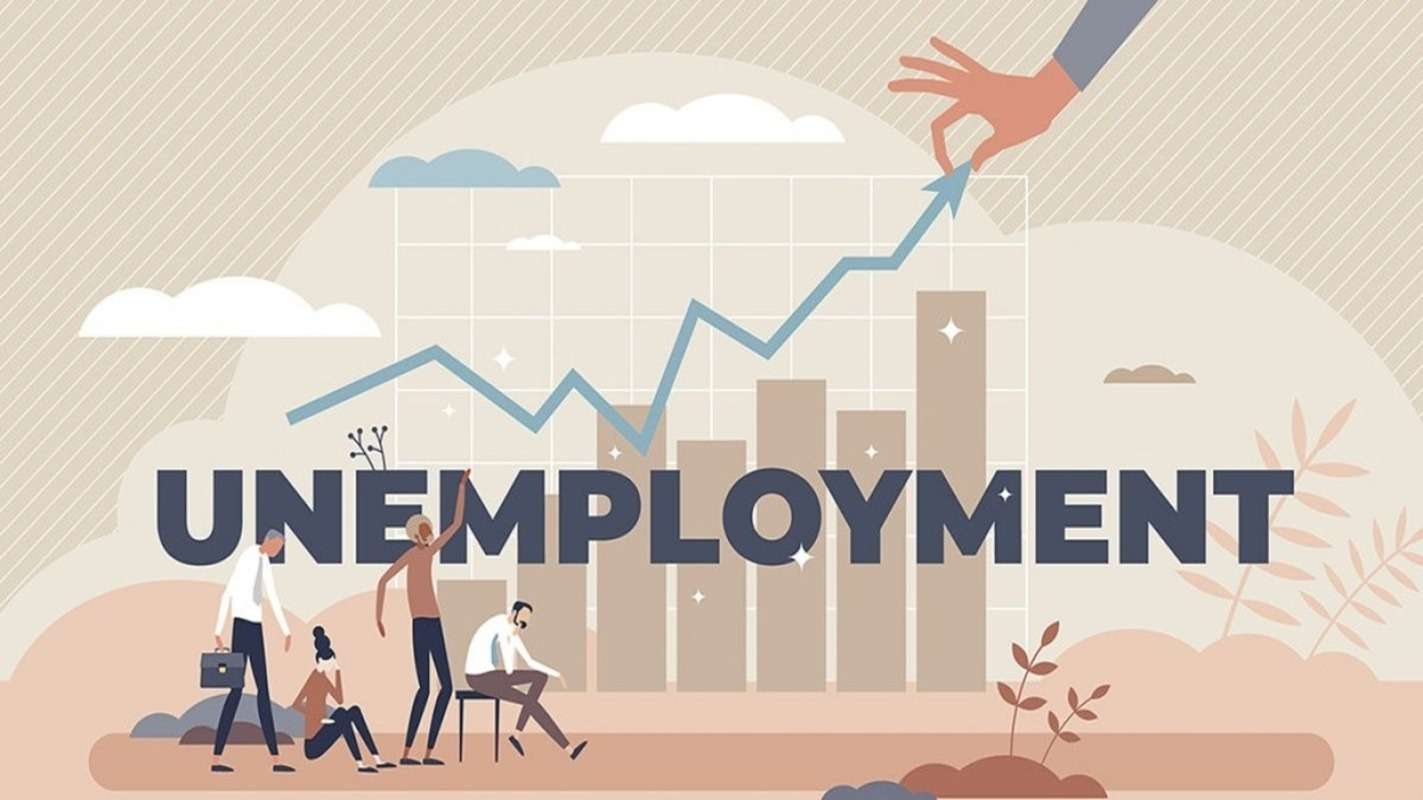
In a country where parents sell jewelry to fund their children’s engineering and MBA dreams, wouldn’t it be nice if those degrees actually led to jobs? But alas, here we are in 2025, watching 83% of engineering graduates and half of our business school products wandering the streets with degrees in hand and emptiness in pockets. Meanwhile, our esteemed ministers are busy debating whether Akbar was truly “Great” or simply “OK-ish” in textbooks.
The Magnificent Unemployment Machine
Let’s talk numbers. A recent talent report by Unstop has dropped a bomb on our collective educational fantasy:
83% of engineering graduates couldn’t secure a job or internship offer. Even among the hallowed halls of B-schools, where future “business leaders” are supposedly crafted, nearly half are left staring at their expensive degrees, wondering if they might look better as wallpaper.
One particularly troubling trend is that one in four graduates now complete unpaid internships, up from one in eight just two years ago. Yes, you read that correctly – they’re working for free! As the old saying goes, “If you’re good at something, never do it for free.” But apparently, our graduates aren’t even being given the chance to be bad at something for money.
This reminds me of the “guru-shishya” tradition of ancient India, where students would spend years learning from a master before entering the world. The only difference? Those students eventually got to practice their craft. Our modern “gurus” – the colleges – seem to have forgotten the second part of that equation.

Engineering Dreams: From Visvesvaraya to Unemployment
When Sir M. Visvesvaraya, the legendary Indian engineer, advocated for technical education in the early 20th century, he envisioned creating problem-solvers who would build the nation. “The way to build a nation is to build a good citizen,” he said. But somewhere along the line, we traded quality for quantity.
India’s engineering obsession has historical roots. Post-independence, Jawaharlal Nehru’s vision of a scientifically advanced India led to the establishment of the prestigious IITs. They were meant to be temples of learning that would produce the brightest minds to solve India’s complex problems. Fast forward to today, and we have engineering colleges sprouting like mushrooms after monsoon rain – over 6,000 of them, producing 1.5 million graduates annually. But the market demand? Nowhere close.
Remember when getting into engineering college was actually about interest in engineering? Now it’s more like:
“Beta, doctor ya engineer banna hai?” “But papa, I want to be a writer.” “Haan, engineering kar le, free time mein likh lena.”
And thus another reluctant engineer is born, destined to memorize thermodynamics principles they’ll never use while their creative talents wither away.
The MBA Mirage: From Management Gurus to Corporate Coolies
India has a rich history of management thinking. The Arthashastra by Chanakya from the 4th century BCE outlines principles of governance and economics that MBA programs would do well to incorporate. But instead, we’ve adopted a westernized cookie-cutter approach that often fails to address Indian business realities.
The MBA degree in India has followed a trajectory similar to engineering. What began as an exclusive qualification for future corporate leaders has devolved into a mass-market product. India produces approximately 300,000 MBA graduates annually, with only the top 20% landing jobs that justify their investment.
The historical perspective is interesting. Post-liberalization in 1991, when India opened its markets, there was a genuine need for management professionals who understood international business practices. The IIMs were producing graduates who were immediately absorbed by multinational corporations entering India. The success stories from that era fueled the MBA dream for generations to come.
But the market has since become saturated. As one HR director from a leading firm says that “Most MBA graduates can talk about Porter’s Five Forces and SWOT analysis till the cows come home, but ask them to solve a real business problem, and they freeze like a deer in headlights.”
Syllabus from the Stone Age
Have you ever looked at an engineering syllabus? Some of them still teach programming languages that were cutting-edge when Lata Mangeshkar was topping the charts. In the era of AI, quantum computing, and blockchain, our students are mastering technologies that tech companies view as vintage collectibles.
Take for instance the case of Rajan, an engineering graduate from a reputed college in Bangalore. “I spent four years learning C++ and Java fundamentals,” he says, “only to discover that companies were looking for proficiency in Python, R, and AI frameworks that weren’t even mentioned in our curriculum.”
This reminds us of the ancient Indian education system where students learned texts like the Vedas through memorization. The difference was that those texts remained relevant for centuries. Our technical syllabi, on the other hand, are outdated before the ink dries on the printout.
The problem isn’t limited to technological subjects. MBA programs still teach marketing strategies that worked when billboards were revolutionary advertising. In an age of influencer marketing, SEO optimization, and social media analytics, our business graduates are learning how to create newspaper advertisements and TV commercials.
As the famous Indian saying goes, “Even the best mango tree can’t bear good fruit if it’s not watered properly.” Our educational trees are being watered with knowledge that dried up decades ago.
Political Priorities: History Books Over Science Books
Perhaps the most satirical aspect of this educational tragedy is where our political energy is spent. While graduates struggle to find employment, our ministers are busy debating whether historical figures should be renamed, removed, or recast in textbooks.
In recent years, we’ve witnessed heated debates over whether certain rulers were “invaders” or “administrators,” whether ancient India had nuclear weapons, and whether certain historical figures deserve more or less prominence in textbooks. All valid historical discussions, perhaps, but hardly the pressing educational reforms our youth desperately need.
Remember when the government of Rajasthan spent months debating whether Maharana Pratap defeated Akbar in the Battle of Haldighati, contrary to established historical evidence? Or when textbooks in another state were revised to minimize the contributions of certain freedom fighters based on their religious identity?
Meanwhile, the science and technology syllabi in most institutions remain virtually unchanged. Computer science departments teach programming paradigms that were revolutionary in the 1990s. Electronics engineers graduate without ever learning about the latest semiconductor technologies. Civil engineers learn building codes that have been revised multiple times since their textbooks were written.
As one frustrated professor from an engineering college in Pune says, “I’ve been trying to update our curriculum for seven years. Each time, I’m told there’s no budget, no time, or no approval. But when it comes to changing a paragraph about some historical figure in a history textbook, funds materialize overnight, committees are formed within days, and new books are printed within months.”
The “Premier Institute” Mirage!
The report reveals an interesting shift: 73% of recruiters now prioritize talent-based hiring over college prestige. Yet, the mad rush for IITs and IIMs continues unabated, with coaching centers for these institutions becoming multi-billion-dollar industries.
This reminds me of the ancient Indian caste system, where your birth determined your social standing. We’ve merely replaced it with an educational caste system, where your college determines your worth. The irony? Even this system is failing to deliver on its promises.
The coaching industry for IIT-JEE and CAT (the entrance exam for IIMs) is worth over $4 billion annually. Families spend lakhs of rupees preparing their children for these exams, often starting as early as class 8. Kota, a city in Rajasthan, has transformed from a quiet industrial town to the coaching capital of India, with over 150,000 students flocking there annually to prepare for engineering entrance exams.
The pressure is so intense that student suicides have become tragically common. In 2024 alone, Kota reported 28 student suicides. These young fellas, tired before they even begin their professional journey, are perhaps the most heartbreaking evidence of our broken system.
The GenZ Disconnect
What’s particularly fascinating is how GenZ professionals are responding to this crisis. According to the report, 77% of them now prefer monthly or project-based reviews over annual evaluations. They’re adapting, evolving, and demanding more dynamic work environments.
This generation witnessed their older siblings graduate with flying colors only to end up in jobs they hated or, worse, no jobs at all. They’ve learned the hard way that the traditional path doesn’t guarantee success.
As a result, over half of MBA graduates now focus on multiple income streams, with freelancing becoming the biggest side hustle. They’re hedging their bets, recognizing that the corporate ladder they were promised might be leaning against the wrong wall—or might not exist at all.
Consider Priya, an MBA graduate from a tier-2 B-school in Delhi. Unable to secure a traditional corporate role, she began freelancing as a social media manager. Two years later, she manages accounts for clients across three continents and earns more than her classmates who landed “prestigious” corporate roles. “My professors would probably consider me a failure because I don’t have a designation or a company name to drop at alumni meets,” she says. “But I have something better—financial independence and work satisfaction.”
The Skills Gap: A Canyon, Not a Gap
The disconnect between academia and industry isn’t new, but it has reached absurd proportions. Universities teach theoretical concepts divorced from practical applications, while companies demand job-ready candidates with years of experience for entry-level positions.
This reminds me of the ancient Indian concept of “Vidya” versus “Shiksha.” Vidya refers to holistic education that transforms the individual, while Shiksha refers to the acquisition of skills and information. Our current system provides neither. It offers outdated Shiksha without the transformative power of Vidya.
Dr. Raman, who heads the computer science department at a college in Chennai, shares a telling anecdote: “Last year, a company visited our campus for recruitment. Their basic test included questions about technologies we don’t even cover in our four-year program. When I approached them about this, their HR representative simply said, ‘Sir, we’re hiring for 2025, not 1995.'”
The skills gap extends beyond technical knowledge. Employers consistently report that graduates lack critical thinking, problem-solving abilities, communication skills, and adaptability. In essence, they lack the very qualities that make human workers valuable in an age of automation and AI.
The Experience Paradox
Here’s a puzzle that would baffle even the greatest minds: Companies want experienced candidates, but how does one gain experience without being hired first? This has led to the rise of unpaid internships, where graduates work for free just to add a line to their resumes.
Historically, the concept of apprenticeship was central to skill development in India. Whether it was in crafts, arts, or academic disciplines, learning happened through a combination of observation and supervised practice. The modern equivalent would be internships integrated into the curriculum, yet many colleges treat internships as optional extras rather than essential components of education.
The Unstop report reveals that 1/4 graduates completed unpaid internships in 2024, compared to 1/8 in 2023. This shift unfortunately paves the way for increasing desperation among students to gain any form of industry experience, even if it means working without compensation.
As Ramesh, an engineering graduate who completed three unpaid internships before landing a job, puts it: “I spent four years paying for education, only to work for free to prove I could actually do the job. Something is fundamentally broken in this system.”
The Ray of Hope: Talent Over Tags
If there’s a silver lining in this educational cloud, it’s the growing recognition among recruiters that talent matters more than college tags. The report indicates that a large chunk of 73% of recruiters now prioritize talent-based hiring over the prestige of a graduate’s college.
The rise of alternative educational pathways is challenging the traditional degree monopoly. Coding bootcamps, specialized certifications, and online courses are providing targeted skills development at a fraction of the cost and time of traditional degrees. Companies like Google, IBM, and Microsoft now offer their own certifications, often valued more highly than conventional degrees for certain roles.
Raghav, a self-taught programmer who dropped out of an engineering college, now earns more than most of his former classmates. “College wanted me to spend four years learning theories developed decades ago,” he explains. “Instead, I spent one year learning cutting-edge technologies directly applicable to current industry needs. The market rewarded my skills, not my lack of a degree.”
Dream Employers Have Been Shifted From Stability to Disruption
The report reveals another interesting trend. While tech giants like Google, Microsoft, and Amazon remain top choices for graduates, there’s growing interest in next-generation companies like Zomato and Meesho. This suggests that the youngest and most controversial workforce, aka the GenZ folks value growth and flexibility over traditional corporate routes.
This shift mirrors larger changes in the Indian economy. Post-independence, government jobs were the gold standard of employment, offering stability and prestige. The liberalization era elevated multinational corporations to the top of the desirability index. Now, we’re seeing a third shift toward innovative, disruptive companies that offer rapid growth and significant responsibility early in one’s career.
Nikhil, who turned down offers from established MNCs to join a growing health-tech startup, explains his decision that in a traditional company, he would spend years navigating corporate hierarchies before making any meaningful impact; however, at his current organization, he is directly involved in decisions that affect thousands of users. The learning curve is steeper, but so is the growth trajectory.
Gender Parity
One unexpected positive finding from the report is the noteworthy gender pay parity among engineering and MBA graduates, particularly in IT and service companies, suggesting that diversity hiring practices have improved gender equality in compensation. This progress, while commendable, starkly contrasts the overall employment situation. It’s like celebrating that the first-class cabins on the Titanic had excellent gender diversity. This can be termed a positive development overshadowed by the larger catastrophe.
Historically, women in India have faced significant barriers to technical education and professional advancement. From the pioneering efforts of Anandibai Joshi, India’s first female physician, to the groundbreaking work of E. K. Janaki Ammal in botany, women have had to overcome immense societal resistance to pursue education and careers in male-dominated fields.
The improvement in gender pay parity represents genuine progress, but it also highlights how much further we need to go. After all, equal pay in a broken system is still a broken system.
At The End: Is There Anything Beyond the Blame Game?
It’s easy to point fingers at universities for outdated syllabi, at companies for unrealistic expectations, at politicians for misplaced priorities, or at students for chasing degrees without developing skills. The reality, as always, is more complex.
Our education system reflects our collective values and priorities. As long as we prioritize rote learning over critical thinking, theoretical knowledge over practical application, and prestigious degrees over actual skills, we’ll continue producing graduates who aren’t equipped for the real world.
The COVID-19 pandemic forced educational institutions to adapt in ways they had resisted for decades. Virtual learning, flexible assessments, and skill-based certifications became mainstream almost overnight. This demonstrated that change is possible when it’s perceived as necessary.
Perhaps what we need is to recognize that the current educational crisis is indeed an emergency; one that threatens not just individual careers but India’s aspirations of becoming a knowledge superpower. Our demographic dividend, the large young population that should be our greatest strength, will become a liability if we fail to equip them with relevant skills and opportunities.
As the ancient Sanskrit saying goes, “Vidya dadati vinayam” (Education gives humility). Perhaps it’s time for our educational system to show some humility, acknowledge its shortcomings, and evolve to meet the needs of a rapidly changing, dynamic world.

After all, what’s the point of having the world’s largest higher education system if it can’t fulfill its most basic promise of preparing students for meaningful participation in the economy and society? While our ministers argue about who built which monument in the 16th century, an entire generation’s monuments to success are crumbling before they’re even constructed.
The degrees haven’t failed the students; we have failed the degrees by allowing them to fossilize while the world moved on. It’s time to breathe new life into our education system, or else prepare for a future where the most common use of engineering and MBA degrees will be as particularly expensive paper planes, flying briefly before inevitably crashing to the ground.