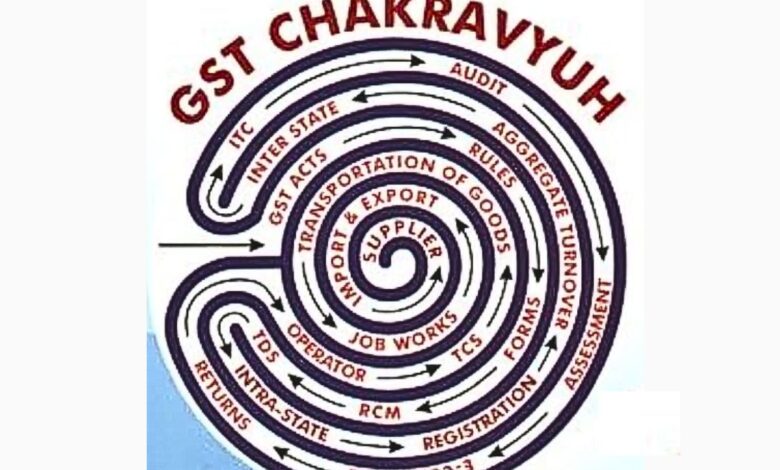
Imagine a nation with over 1.4 billion people, where approximately one in four adults cannot read or write fluently, decides to implement perhaps the most convoluted taxation system known to humankind.
Welcome to India’s Goods and Services Tax (GST) saga—where complexity isn’t a bug; it’s the feature!
In 2017, India proudly rolled out its GST system with the catchphrase “One Nation, One Tax.” A beautiful sentiment, truly. Except that “One Tax” somehow morphed into five different tax slabs, plus special rates, exemptions, reverse charges, and enough paperwork to deforest the Amazon (the rainforest, not the website—though Jeff Bezos probably felt the paperwork pain too when entering the Indian market).
The irony couldn’t be more pronounced if it wore a neon sign. A country where millions struggle with basic literacy implemented a tax system that has accountants; people who literally study numbers and taxation for years, reaching for aspirin bottles and contemplating career changes. If that’s not a cosmic joke, what is?
A Brief History of Making Simple Things Complicated
India isn’t the first nation to excel at bureaucratic complexity. The ancient Romans, despite building straight roads and revolutionary aqueducts, managed to create a tax system so byzantine that it contributed to their empire’s downfall. Tax collectors (known as “publicans“) became so notoriously corrupt and the system so oppressive that revolts were commonplace. Sound familiar?
Fast forward to medieval England, where tax assessors would literally count the number of hearths in homes to determine how much tax was owed. This “hearth tax” became so unpopular that people started bricking up their fireplaces when tax collectors came knocking. Human ingenuity at its finest—finding loopholes rather than logs to burn.
The French pre-revolution tax system was another masterpiece of confusion. The nobility and clergy were largely exempt, while peasants bore crushing tax burdens. This inequality eventually led some aristocrats to lose their heads—literally. One might argue that India’s GST hasn’t reached guillotine-worthy status, but the screams from small business owners sometimes suggest otherwise.
Modern Marvels of Tax Complexity
In more recent times, Brazil gifted the world with its infamous tax system that makes accountants weep. Brazilian businesses spend an estimated 1,500 hours annually just complying with tax regulations. India looked at this figure, nodded appreciatively, and said, “Hold my chai.”
The United States offers another splendid example with its tax code exceeding 70,000 pages—longer than all the Harry Potter books combined, but significantly less magical and far more terrifying. Yet somehow, India’s GST managed to compress comparable complexity into fewer pages but with greater confusion. It’s like the tax equivalent of those Japanese micro-apartments—small in size but impressively efficient at making life difficult.
India’s Special GST Recipe: Confusion with a Side of Chaos
The Indian GST system wasn’t content just being complex; it needed to be unpredictably complex. Tax rates have been changed more frequently than some people change their bed sheets. Products have jumped categories with the agility of Olympic gymnasts. One day, a product falls under the 18% slab; the next day, surprise! It’s been reclassified.
Small business owners found themselves transformed overnight from merchants into amateur tax lawyers. Imagine a small shopkeeper in rural Bihar, who might have never seen a computer before, being told to file returns online—monthly! It’s like asking someone who has never seen water to compete in Olympic swimming.
“But wait,” the government said, “we’ve created a simplified system for small businesses!” This “simplified” system came with its own 50-page guidebook. As Albert Einstein reportedly said, “The hardest thing in the world to understand is income tax.” Clearly, Einstein never encountered Indian GST.
Before GST, a typical small business might have filed a few tax forms annually. After GST, the same business found itself filing monthly returns, quarterly summaries, annual reconciliations, and enough additional forms to wallpaper the Taj Mahal. Trees across the planet felt a disturbance in the force as printers whirred to life across India.
In one particularly iconic case, a small textile trader from Surat had to hire three accountants where previously he had managed with occasional help from his nephew who had “done some math in college.”
The GST portal itself deserves special mention—a website so temperamental it makes dial-up internet seem reliable. On filing deadlines, it would inevitably crash, as if shocked by the audacity of people trying to comply with the law. It’s been compared to a moody teenager: unpredictable, prone to shutting down communication, and inexplicably slow when you need it most.
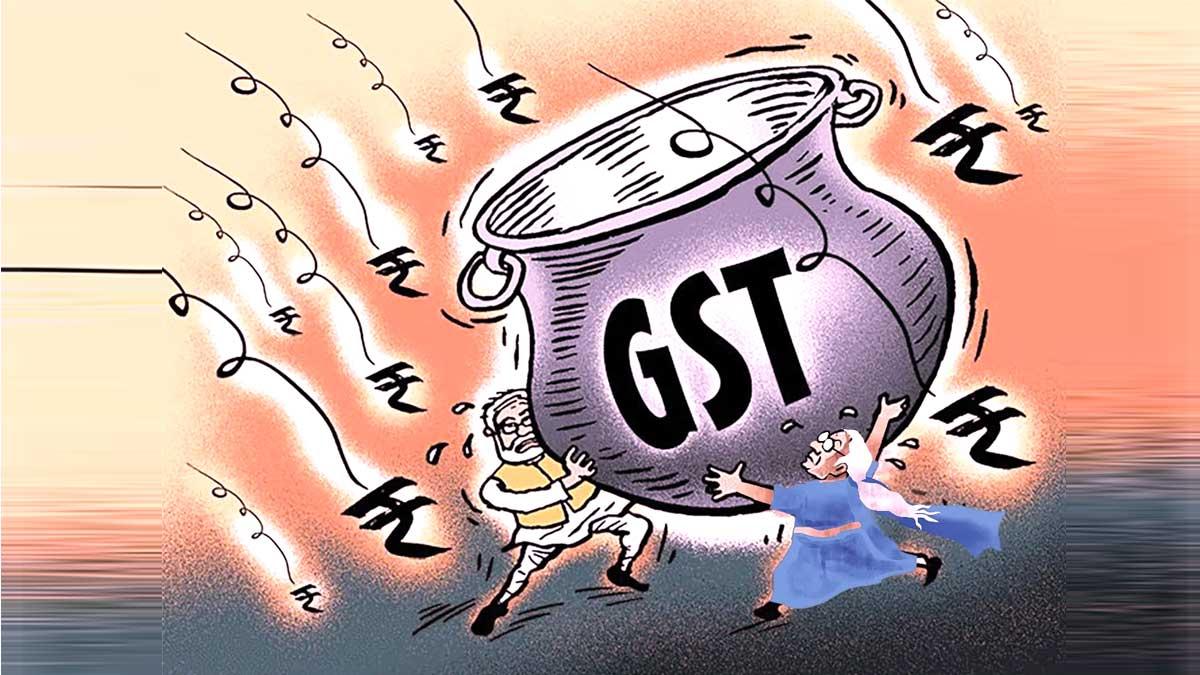
International Observers Watch in Awe
When Australia implemented GST in 2000, they chose a single rate of 10% for simplicity. Canada’s GST also follows a relatively straightforward system. Even the European VAT systems, while not perfect, maintain some semblance of logical structure.
International tax experts studying India’s GST system have been known to go through the five stages of grief: denial (“This can’t possibly be the actual system”), anger (“Who designed this monstrosity?”), bargaining (“Maybe if I just focus on one section at a time”), depression (“I’ll never understand this”), and finally acceptance (“So this is how my professional career ends”).
GST: The Small Business Nightmare
For small businesses, GST became the uninvited guest who not only overstayed their welcome but also reorganized the entire house according to an incomprehensible system, then demanded regular reports on how well the new organization was working.
Take the case of Sharma Ji’s small handloom business in Varanasi. Pre-GST, he spent perhaps two days a month on tax-related paperwork. Post-GST, he found himself dedicating two weeks to navigating the labyrinthine requirements, filing returns, and correcting errors from previous filings. His actual business, the thing that contributes to the economy, became almost a side hustle to his new primary occupation: GST compliance.
Or consider the small restaurant owner in Kochi who found herself needing to classify every item on her menu according to GST categories. Is papad a prepared food item or a snack? The fate of her profit margins hung on such distinctions. “I used to worry about my recipes,” she joked darkly. “Now I worry about my recategorizations.”
The Accountant’s Paradox
For accountants, GST created a strange paradox. On one hand, business boomed as desperate enterprises sought professional help. On the other hand, many accountants found themselves questioning their life choices as they stared into the abyss of ever-changing GST notifications at 2 AM.
“I chose accounting because I liked order and logic,” lamented one Kolkata-based accountant. “GST has made me question whether logic even exists in this universe.” Another accountant from Delhi developed a peculiar eye twitch that occurred specifically when the words “input tax credit reconciliation” were mentioned.
Accounting software companies, meanwhile, celebrated like it was 1999 and Y2K all over again. Their sales pitches essentially became: “Use our software, or spend the rest of your life trying to calculate tax manually.” Never has technological salvation come with such a high subscription fee.
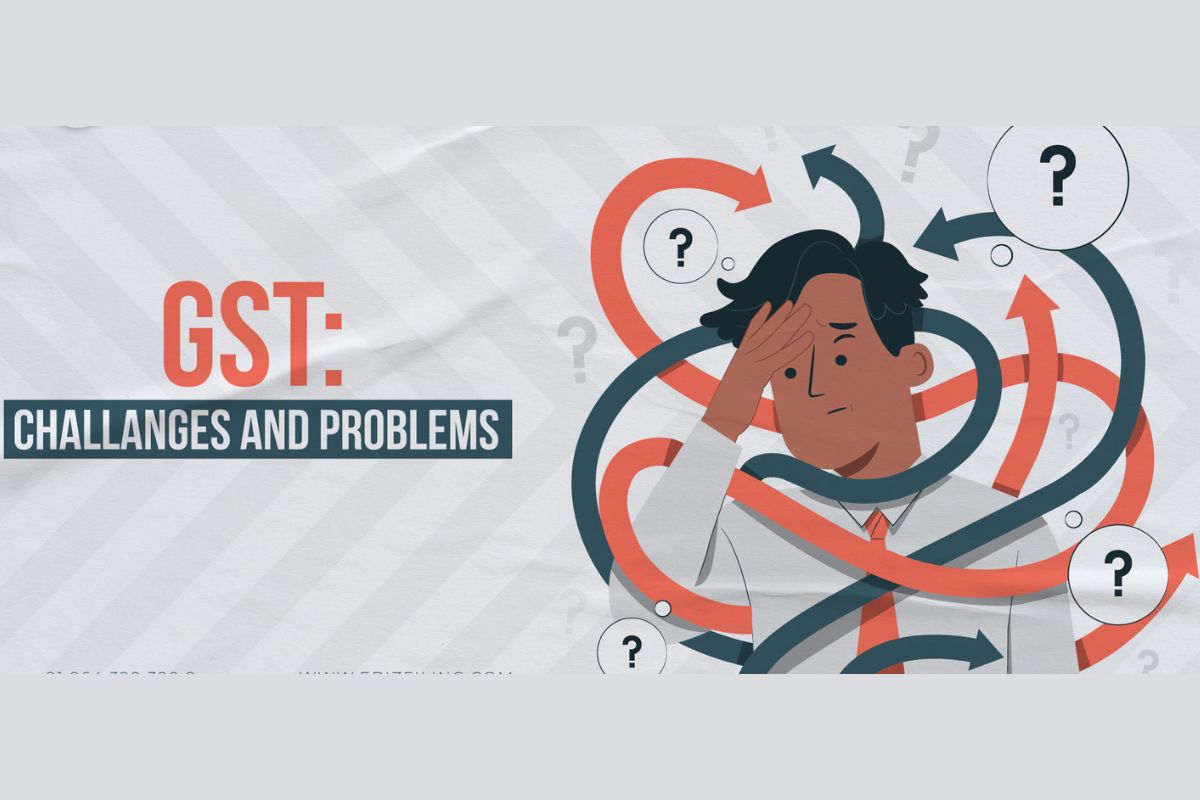
At The End, GST Is The Taxing Irony That India Never Wanted!
The supreme irony of India’s GST implementation is that it was genuinely intended to simplify the previous tax regime. Like someone who burns down their cluttered house to solve an organization problem, GST eliminated the old jumble of state taxes by creating a spectacular new jumble of national taxes.
Perhaps in some distant future, archaeologists will discover GST documentation and mistake it for religious texts, given the devotion and sacrifice required to follow its commandments. They might wonder what deity demanded such complex rituals and what blessings were promised in return.
Until that day of archaeological misunderstanding comes, millions of Indians will continue their monthly pilgrimage to the GST portal, armed with nothing but determination, several cups of strong coffee, and the faint hope that this time, just maybe, the system won’t crash fifteen minutes before the deadline.
As the old saying goes, “In this world, nothing is certain except death and taxes.” India’s GST system proved that while taxes are indeed certain, understanding them doesn’t have to be. And for small business owners caught in this tax typhoon, that uncertainty has become their most reliable companion.