In The Rush To Modernize, Is Urban India Erasing Its Great Past?
How Urban India Is Losing Its Cultural Relevance!

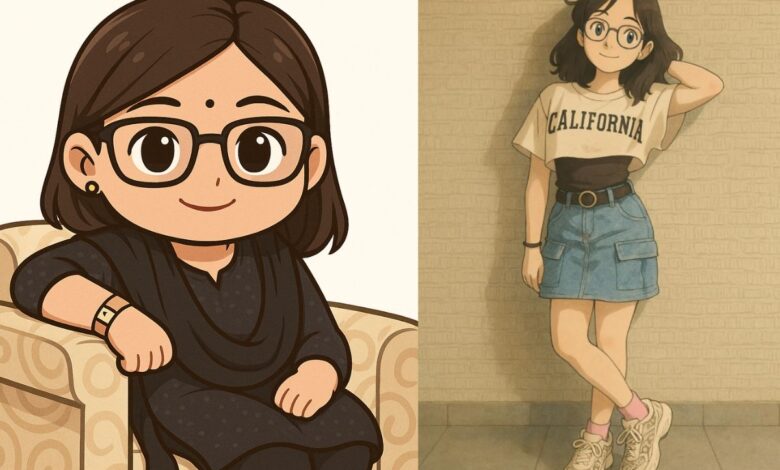
There’s something peculiar happening in India’s urbans. We noticed it most clearly a few years ago in Bengaluru where a young executive striding confidently into a café, sporting in Balenciaga sneakers (the kind deliberately made to look worn at a premium price), holding a Starbucks cup where his name is written, while discussing “language debate” in domestic relations. The irony was he was someone advocating for India’s own affairs policy while his personal choices reflected an imported identity from head to toe.
This scene highlights two different angles, which are 180 degrees to each other. We aspire for self-reliance in governance and economy, yet when it comes to cultural expression, i.e. the clothes we wear, the food we eat, even the aesthetic values we uphold, we’ve developed a peculiar dependency on Western validation. It’s as though Indians have globalized our wallets but de-Indianized our identities in the process.
Consider the transformation of our celebrations and traditions. Auspicious ceremonies now feature Calvin Klein underwear beneath traditional dhotis. Our humble haldi doodh has been repackaged and sold back to us as “turmeric lattes” at ten times the price. Even our wellness practices haven’t been spared—yoga returns to us filtered through Western commercialization, rebranded as “mindfulness” or “self-care.” We’ve unwittingly become brand ambassadors seeking approval from cultural centers that rarely understand the depth and context of our traditions.

To be clear, this isn’t an argument against globalization. Cultural exchange has always been part of India’s story—from the influence of Persian aesthetics on Mughal architecture to the integration of Portuguese ingredients into Goan cuisine. Rather, it’s about the mindless mimicry that betrays a deep-seated insecurity about our own cultural worth. As Gandhi once remarked, “I don’t want my house to be walled in on all sides and my windows to be stuffed. I want the cultures of all lands to be blown about my house as freely as possible. But I refuse to be blown off my feet by any.”
Looking back through history, we find that this isn’t India’s first encounter with cultural displacement. During the British colonial period, Thomas Macaulay’s infamous Minute on Education (1835) explicitly aimed to create “a class of persons Indian in blood and colour, but English in tastes, in opinions, in morals and in intellect.” The strategy was clear: cultivate contempt for indigenous knowledge systems while elevating European thought. What’s remarkable is how effectively this colonial mentality has persisted, even flourished, seven decades after independence.
There was a time when India carried itself with unquestionable cultural confidence. Our traditional textiles weren’t just commodities but expressions of regional identity—Banarasi weaves telling stories of Mughal gardens, Patola silks requiring mathematical precision in their creation, Bundelkhandi leather craftsmanship making functional items beautiful. Our ancestors didn’t chase fashion trends; they created enduring aesthetics that carried meaning beyond seasonal changes. They understood what Coco Chanel would later articulate: “Fashion fades, only style remains.”
Today, even our attempts at cultural reclamation feel performative rather than authentic. We “decolonize our wardrobes” by shopping at fast fashion giants and wearing mass-produced t-shirts with Sanskrit slogans. We celebrate “ethnic chic” while traditional artisans struggle to survive. What happened to the quiet dignity of our grandmothers in handwoven cotton saris or our grandfathers in their regional headgear? When did confidence become confusion?
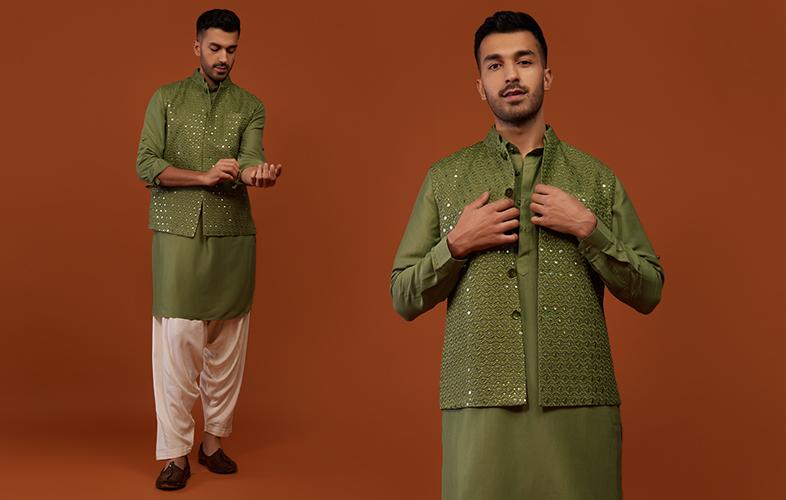
The root issue isn’t exposure to global influences—it’s the cultural insecurity that makes us hesitant to embrace our heritage without Western endorsement. We’ve developed a strange psychological relationship with our traditions, where we value them only after they’ve been validated abroad. As writer Pankaj Mishra observed, “Many Indians now live in a state of cultural schizophrenia, suspended between tradition and modernity.” This manifests in curious ways: we hesitate to wear a kurta to a high-end restaurant unless it’s been rebranded as “contemporary ethnic.” We won’t gift handloom unless it comes with a designer label that transforms it from “village craft” to “luxury product.”
Similar patterns have played out elsewhere. Japan experienced its own cultural identity crisis following WW II, embracing American consumerism so thoroughly that traditional practices nearly vanished! However, by the 1980s, a cultural renaissance emerged as Japan rediscovered its aesthetic principles and confidently incorporated them into modern contexts. Today, Japanese design is recognized worldwide precisely because it maintains its cultural distinctiveness while engaging with global trends.
Mexico offers another instructive example. After centuries of colonization and American cultural dominance, the country experienced what scholars call “Mexicanidad”—a deliberate reclamation of indigenous and mestizo aesthetics that influenced everything from architecture to fashion. Artists like Frida Kahlo rejected European standards of beauty and dress, instead celebrating local textiles and traditional adornments as expressions of authentic identity. Today, Mexican design stands confidently on the global stage because it speaks with its own voice rather than mimicking others.
What makes India’s situation particularly perplexing is that we claim to want an “Atmanirbhar Bharat” (self-reliant India) while our tastes remain largely imported, filtered, and approved by fashion capitals that can barely pronounce words like “Kantha” or “Phulkari.” The disconnect between our economic aspirations and cultural practices reflects a deeper confusion about what modernization should mean for India.
Imagine a different approach—one where contemporary Indian fashion draws inspiration from tribal patterns that have evolved over centuries. Where wedding wear celebrates local craft rather than Italian fabrics with Indian embellishments. Where our urban spaces incorporate regional architectural principles rather than generic glass-and-steel structures that could exist anywhere. Most importantly, imagine a future where both corporate boardrooms and village communities respect indigenous aesthetics not as quaint nostalgia but as living, evolving expressions of identity.
As Mark Twain wryly noted, “The clothes make the man. Naked people have little or no influence on society.” Perhaps it’s time to ask ourselves what our clothes—and our broader cultural choices—say about who we are becoming as a society. Are we wearing our identity or borrowing someone else’s?
This isn’t about retreating into cultural isolation or rejecting global influences. It’s about approaching cultural exchange from a position of confidence rather than inferiority. It’s about understanding, as philosopher Kwame Anthony Appiah suggests, that “cultural purity is an oxymoron” while still recognizing that not all forms of hybridity are equally thoughtful or meaningful.
The path forward requires what scholar Homi Bhabha calls “cultural translation”—the ability to adapt elements across contexts while maintaining awareness of their significance. It means creating spaces where traditional knowledge systems aren’t treated as museum pieces but as living resources for innovation. Most importantly, it requires urban Indians to develop the confidence to wear who we are with the same pride with which we wear who we admire.

As we navigate this complex cultural landscape, perhaps we should remember the words of Rabindranath Tagore: “I will never allow patriotism to triumph over humanity as long as I live.” But equally important was his vision of a confident India that could “stand at the crossing of the roads and give its hand to all.” Standing at that crossing requires knowing who you are—and having the courage to express it without apology.