Beijing Calls Trump’s Bluff, Doubles Down On Domestic Support As Trade War Heats Up. No Deal, More Pain?

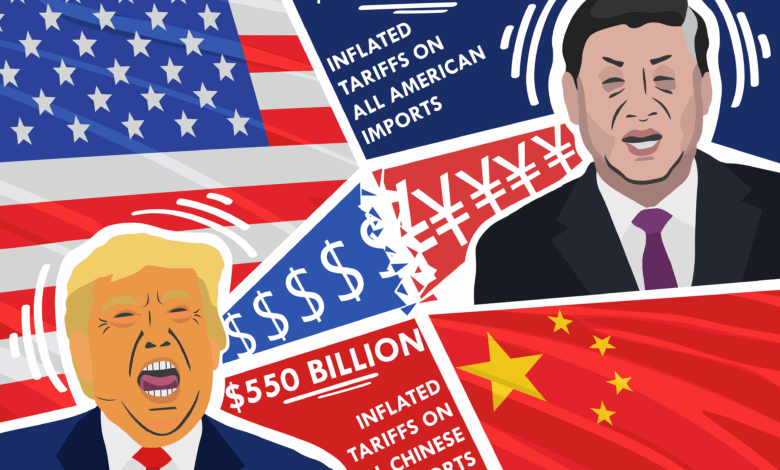
Beijing on Monday firmly denied ongoing trade negotiations with Washington, countering recent assertions by U.S. President Donald Trump and his administration that discussions were underway to resolve the escalating tariff war.
“Let me make it clear once again that China and the U.S. are not engaged in any consultation or negotiation on tariffs,” Chinese Foreign Ministry spokesperson Guo Jiakun said at a press briefing. Guo also refuted President Trump’s recent claim- made during an interview – that Chinese President Xi Jinping had personally reached out to him. “As far as I know, there have been no calls between the two presidents recently,” Guo added.
The denial indicates Beijing’s uncompromising stance against the Trump administration’s imposition of sweeping tariffs – up to 145% – on Chinese imports, a key pillar of U.S. trade policy targeting China, the top supplier of goods to America.
Despite Beijing’s repeated denials, Trump administration officials, including Treasury Secretary Scott Bessent, continue to insist that the United States holds the upper hand in the trade dispute and is prepared for a favorable outcome. However, mounting concerns from American businesses and market analysts suggest the tariff standoff could soon trigger widespread economic disruptions, including price hikes, product shortages, and potential retail closures.
Against this backdrop, and amid President Trump’s claims that the U.S. is nearing completion of new trade deals with multiple countries, some administration officials have adopted a more conciliatory tone toward Beijing.
“We are in conversations with China every day,” Secretary of Agriculture Brooke Rollins said Sunday; however, when confronted with China’s denial, Rollins maintained, “Our team in Washington is engaged in ongoing discussions regarding multiple trade goods moving between the two countries.” She added, “The bottom line is: they need us more than we need them.”
Treasury Secretary Bessent, speaking separately on Sunday, suggested that Beijing’s public denials were aimed at a domestic audience, stating, “I think they’re playing to a different audience.” Asked if talks were genuinely underway, Bessent remained cautious, noting, “We have a process in place,” and emphasized that he believed the Chinese tariff levels were “unsustainable.”
:max_bytes(150000):strip_icc()/GettyImages-2161768439-412574fe432d484eb211d6b599013ab7.jpg)
Bessent has predicted a “very near” de-escalation of the trade tensions. On Monday morning, he sought to downplay fears of immediate consumer impacts, he was “not concerned at present” about potential empty store shelves. “Our retailers have likely preordered; there will be elasticity in the system and replacements sourced,” he said. He added that the pace of de-escalation “depends on how quickly the Chinese want to come back to the table.”
China has consistently maintained that tariff removal must precede any meaningful talks. A spokesperson for the Chinese Ministry of Commerce reiterated last week that, “If the U.S. genuinely wants to resolve the issue, it should cancel all unilateral measures against China.”
Tensions further escalated last week when Trump claimed that U.S. and Chinese officials had “a meeting this morning,” though details of who participated were not disclosed. Administration officials later confirmed that Chinese delegates were in Washington primarily for the World Bank and International Monetary Fund meetings, rather than formal trade talks.
Meanwhile, Bessent signaled progress on other trade fronts, speaking on India as a potential early success among 15 to 18 “important trading relationships” currently under negotiation. “We’ve received several strong proposals, and I would guess that India will be one of the first trade deals we sign,” he said.
Bessent also warned of economic turbulence in Europe, suggesting that the euro’s 10% appreciation against the U.S. dollar since January could prompt intervention by the European Central Bank.
While the Trump administration projects confidence in its trade strategy, the mixed messages regarding the status of negotiations have left markets cautious, with investors closely monitoring developments for any signs of genuine de-escalation.
China Announces Employment Measures, Signals Potential Stimulus Amid Intensifying U.S. Trade Tensions
Amid escalating trade tensions with the United States, senior Chinese officials on Monday unveiled measures to bolster employment and support exporters, while indicating that further economic stimulus may be on the horizon.
Over the past few weeks, a series of retaliatory tariffs between Washington and Beijing have driven effective duties beyond 100%, pressuring Chinese manufacturers to scale back operations and furlough workers.
Exports, a relative bright spot in an otherwise sluggish economy struggling with weak domestic consumption and a protracted real estate downturn, are now under renewed strain.
“Stability in the labor market remains a critical priority for Chinese policymakers, given its fundamental link to social stability and the recovery of consumption,” Goldman Sachs analysts noted in a report Sunday, estimating that approximately 16 million Chinese jobs are tied to exports bound for the U.S.
Chinese authorities acknowledged the labor market risks at a press conference Monday, shifting emphasis from consumption-driven growth to urgent measures to stabilize employment. This follows Friday’s announcement by the Ministry of Human Resources, which promised subsidies for companies hiring recent graduates, though no specific funding amounts were disclosed.
Officials outlined broader plans to encourage entrepreneurship, expand vocational training programs, and adjust wage distribution to better support sectors facing acute labor shortages. Financial aid for exporters was also announced, aimed at helping firms secure new orders and navigate rising operational costs.
He spoke of the ongoing efforts, in collaboration with the National Development and Reform Commission, to assist exporters in redirecting sales toward the domestic market and to lower business expenses, including rent.
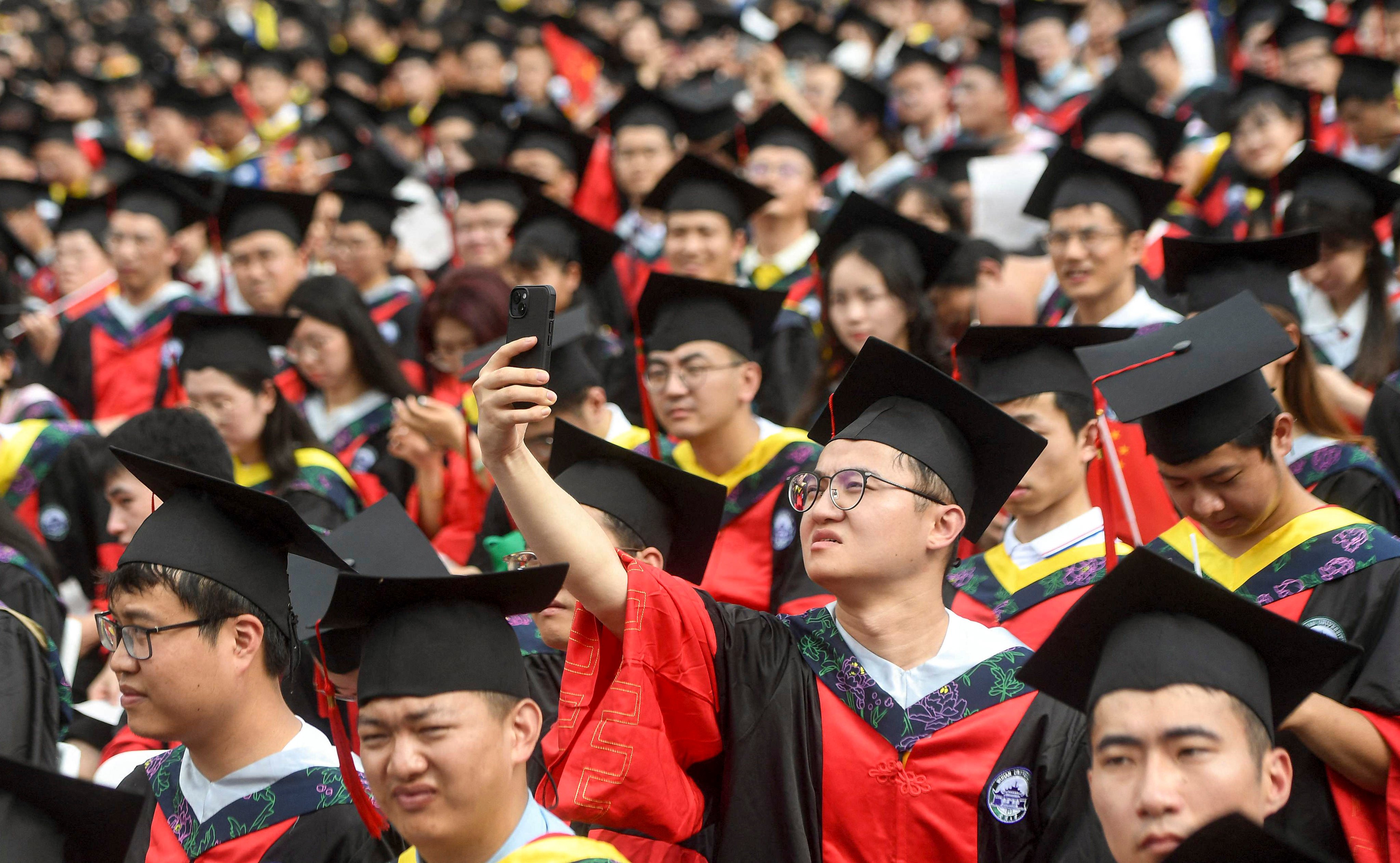
The challenge is compounded by a record 12.22 million university graduates expected to enter the workforce this year – an increase of 430,000 compared to last year.
According to the National Bureau of Statistics, China’s urban youth unemployment rate (excluding students) stood at 16.5% in March, a slight improvement from February’s 16.9%. The overall urban unemployment rate eased to 5.2% in March, down from a two-year high of 5.4%.
Historically, the People’s Bank of China (PBOC) has cut interest rates during periods of labor market weakness. Goldman Sachs predicts that the central bank will lower policy rates by 20 basis points and reduce the reserve requirement ratio by 50 basis points by the end of September to support liquidity.
Incremental Stimulus Measures on the Table
Despite a series of smaller support measures introduced since late September, Beijing has so far refrained from deploying large-scale stimulus programs akin to previous cycles, disappointing some investors. China’s economy grew 5.4% year-on-year in the first quarter, outperforming market expectations.
According to Louise Loo, Lead Economist at Oxford Economics, policymakers appear to be adopting a cautious approach, waiting for clearer evidence of the impact of U.S. tariffs before committing to broader stimulus.
Chinese Factories Halt Production and Hunt for New Markets as U.S. Tariffs Bite
Meanwhile, Chinese manufacturers are pausing production lines and seeking new markets as the full impact of U.S. tariffs begins to take hold, according to companies and analysts, with lost orders now translating into rising job strain.
“I know several factories that have told half their employees to go home for a few weeks and halted most production,” said Cameron Johnson, Shanghai-based senior partner at consulting firm Tidalwave Solutions. He noted that factories producing toys, sporting goods, and low-cost dollar-store items are feeling the brunt of the disruption.
Goldman Sachs estimates that between 10 million to 20 million Chinese workers are tied to businesses exporting to the U.S. For context, China’s urban workforce stood at around 473.45 million last year.
The shock from the sudden tariff hikes is “way bigger” than the disruptions caused by Covid-19, said Ash Monga, CEO of Guangzhou-based Imex Sourcing Services. Small businesses, in particular, may find the sudden tariff surge unbearable, potentially pushing some out of business altogether.

Turning to Livestreaming and E-Commerce
Facing canceled orders, Chinese exporters are rapidly pivoting their sales strategies.
Woodswool, an athleticwear maker based in Ningbo near Shanghai, quickly shifted to selling domestically through livestreaming e-commerce. Within just a week of launching the channel, Woodswool recorded more than 30 orders worth over 5,000 yuan (roughly $690).
“All our U.S. orders have been canceled,” said Li Yan, Woodswool’s factory manager and brand director. He noted that over half the company’s production once went to U.S. customers. Now, some of their production capacity will sit idle for two to three months while they attempt to build up new markets in Europe, Australia, and other regions.
The company is selling its products online through Baidu’s livestreaming platform, using Baidu’s “virtual human” option – AI-driven digital salespeople – which allowed Woodswool to set up operations quickly without hefty investments in physical studios or human staff.
Baidu claims to have helped hundreds of businesses transition to domestic e-commerce sales, offering free AI tools like the “Huiboxing” virtual humans and subsidies. The company maintains that the AI sales agents have delivered higher returns on investment than traditional human livestreamers.
Domestic Market Push Faces Headwinds
Other tech giants like JD.com and Meituan are also offering support. JD.com pledged to buy 200 billion yuan ($27.22 billion) worth of goods originally intended for export and sell them within China. However, that figure is only about 5% of the $524.66 billion worth of Chinese goods exported to the U.S. last year – illustrating the scale of the challenge.
“A few businesses have told us that under 125% tariffs, their business model is not viable,” said Michael Hart, president of the American Chamber of Commerce in China. He also noted increased competition among domestic companies vying for a smaller pool of buyers.
Tariffs on both sides are expected to persist, albeit with selective exemptions, Hart said.
One fundamental issue is that many products designed for American suburban lifestyles are ill-suited for China’s urban consumers living in much smaller spaces. Meanwhile, direct pleas on Chinese social media platforms like Red Note and Douyin (the local version of TikTok) for domestic support have met with mixed results, according to Ashley Dudarenok, founder of China marketing consultancy ChoZan.
Exploring Markets Beyond the U.S.
With U.S. scrutiny of transshipments intensifying, fewer Chinese businesses are trying to reroute products through third countries, Dudarenok added. Instead, many manufacturers are expanding into Southeast Asia and India, or shifting focus to European and Latin American markets.
Some have already built new trade paths. Liu Xu, for instance, runs Beijing Mingyuchu, an e-commerce firm selling bathroom products to Brazil. Despite challenges from fluctuating exchange rates and high container shipping costs, Liu remains optimistic that trade with Brazil will remain stable despite U.S.-China tensions.
Indeed, China’s exports to Brazil have doubled since 2018 – as have its exports to Ghana.
Bright Tordzroh, CEO of Ghana-based Cotrie Logistics, said he founded his company during the pandemic to address shipment delays and help businesses navigate sourcing from China. Today, Cotrie generates between $300,000 and $1 million in annual revenue.
The ongoing trade friction has pushed many companies to diversify away from U.S.-centric strategies – a shift Tordzroh hopes will open even more opportunities for logistics firms like his.