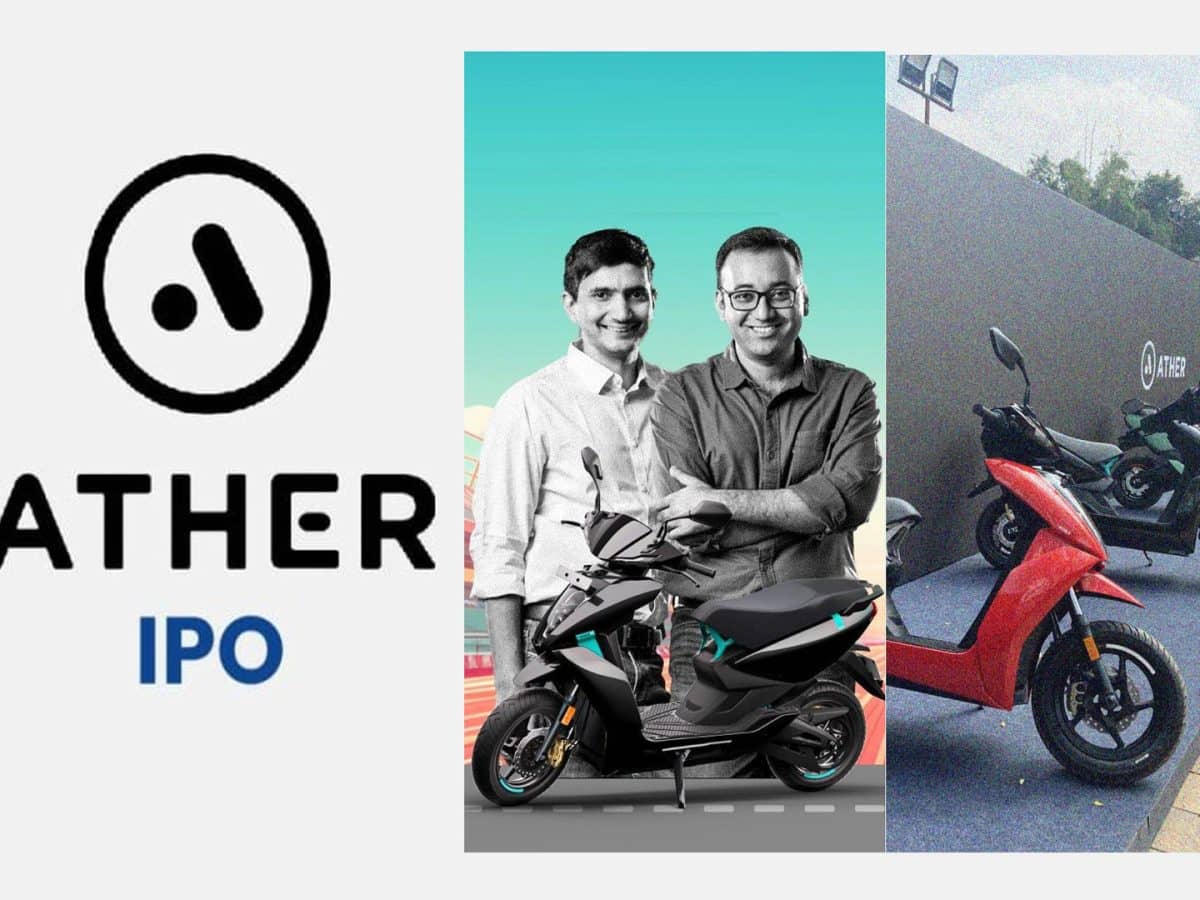
Among startups, IIT alumni have a certain charm and interesting business stories. If you visit any IIT campus in India, you will hear enthusiastic debates about starting the next big thing. When Tarun Mehta and Swapnil Jain graduated from IIT Madras in the early 2010s, they shared the same aspirations—but their journey was very different from the conventional software and services route.
In 2013, when every entrepreneur was pursuing the digital gold rush of platforms and apps, these two young adults set their sights on something that was almost quixotic then—electric mobility. The EV ecosystem in India at that time was a desolate wasteland, dominated by primitive lead-acid battery vehicles that were more meek concessions than desirable buys. Mehta and Jain, however, had something else in mind: electric scooters that not only would compete with petrol vehicles but would beat them in terms of design, features, and experience.
Ather Energy, their company, has taken a giant leap in April 2025 by listing itself. The Initial Public Offering of the company began on April 28 and will close on April 30. The IPO is special because approximately INR2,600 crore of it will go directly to Ather, which will be used to fuel the growth of the company and its expansion. Current shareholders are selling only about 12% of the IPO, and the founders are selling only a very small percentage of their stakes, which is a testament to the faith they have in the company’s future- unlike respective counterpart, where founder sold gigantic shares, paving the way for the public to think and doubt about company’s future!
Ather is not entering the public markets by itself. The recent Ola Electric IPO in August 2024 is a major contributor to this new issue. Investors who have tracked Ola’s highs and lows since its IPO—where the stock fell 66% from its peak—are eyeing Ather both with interest and with trepidation. One money man wistfully noted, “The market has a long memory, especially for pain.”
So where does Ather find itself in this evolving scenario? What are its strengths, and what are the potential challenges it may face? Most importantly, what experience can investors expect if they decide to join in?
The Engineering DNA: Ather’s Strongest Suit
One of the very first things that comes up while discussing Ather Energy is how much the company focuses on engineering quality. It is understandable, considering the background of the founders, but this all-encompassing obsession has seeped into every facet of the company’s personality.
They didn’t want to make any ordinary electric scooter, perhaps this is what IIT duo’s aspirations would be. They wanted to make something so excellent that petrol scooter owners would feel they were missing out. Such has been the outcome of this idea that aspects are now described as Ather hallmarks—enhanced hill climbing ability, the new hill-hold feature to avoid rollback on slopes, and battery management systems that provide consistent performance in different conditions.
This “engineering magic” as frequent customers often remark, has helped Ather create a unique image in an increasingly crowded market. While other companies rush to bring out new features, Ather has been careful not to roll out features until they meet the company’s high standards. As one industry watcher noted, “Other companies launch products. Ather launches experiences.”
This strategy has cost the company dearly, both in terms of money and market share. The company has incurred INR768 crore of research and development expenses since FY22—a tremendous amount for a company of such size. All these investments in platform development and in-house design have given the company more losses than profits but have also given the company a quality reputation above ordinary industry standards.
But the numbers are alarming.
Ather has struggled with finances even though it has good engineering skills. It has losses of INR3,495 crore till December 31, 2024, and has just INR108 crore in net worth. Without further investment, Ather would have already had negative net worth—so this IPO is not only crucial to expansion but also necessary for its finances.
There are definite indications that the company is improving in its operating numbers for FY25:
Loss per vehicle before Ebitda has declined to INR38,000, approximately half of FY23. This is important since government subsidies have declined drastically—from INR55,000 per scooter to less than INR10,000 in the first nine months of FY25. Subsidies have declined further now to approximately INR5,000 and could phase out completely by 2026.
This cost decrease did not result from the raising of prices (which could lead to a loss of consumers) but most notably from the decline in the cost of material substantially. Cost of goods per scooter fell 14% during FY24 and is going to fall another 20% in FY25—highlighting the focus of the company on enhanced design and optimizing supply chains.
Due to this, Ather’s gross margins remain all-time highs despite reduced outside support. Nine-month revenue as of December 2024 was up 28% to INR1,579 crore, and losses went down 25% to INR578 crore. Most importantly, gross margins rose to 19%, implying the company is improving at keeping costs in check.
These trends indicate that Ather has established a stable growth platform but breaking even is still to be achieved through a significant level of growth. In order to break even, the company needs to significantly drive revenue while also focusing on expanding gross margins—this is challenging but not impossible given the projected growth of India’s electric two-wheeler market.
However, There Is The Regional Problem: Beyond South India, Ather Struggles!
Ather’s balance sheet is healthy, but its spread over several locations has its pros and cons. Ather is completely dominant in South India’s some regions—it is the market leader in Karnataka (where it began) and in neighboring Kerala. In Tamil Nadu, it is TVS Motor’s close second.
This local dominance is impressive but reveals a weak spot: Ather’s numbers decline significantly the further north you travel. It is fourth in Maharashtra, India’s biggest electric scooter market and Bajaj Auto’s stronghold. In Uttar Pradesh, the most populous state, it drops to the fifth position.
Ather’s sales remain highly concentrated in the south, although they are attempting to shift this. Following the launch of Ather Rizta, which was aimed at bringing in customers from regions other than South India, the southern states continued to account for 61% of sales in the first nine months of FY25. This is down from 68% in FY24, so selling in other regions remains a work in progress.
Ather’s task will be to replicate its southern success model in other markets, adapting to fit different consumer preferences, service expectations, and competitive realities while maintaining its brand image and quality standards.
The Valuation Topic: Value of Potential
At an IPO valuation of INR12,300 crore, Ather is priced at 5.5X estimated FY25 revenues of INR2,240 crore, above the market cap to standalone sales multiple of established players like TVS Motor (3.7X) and Bajaj Auto (4.5X). But such comparison is of limited use with Ather having a -26% EBITDA margin, versus the positive 12% of TVS Motor and 19% of Bajaj.
A better but still suboptimal comparison is to Ola Electric, which has a comparable poor EBITDA margin of -26.7% for the first nine months of FY25. Ola has a 4X market cap-to-sales multiple on last 12-month figures—lower than Ather’s proposed valuation multiple.
Equity analysts are split on Ather’s IPO prospects. While some like Ventura Securities have made ‘subscribe’ recommendations on the basis of “potential growth in the growth electric two-wheeler segment with robust sales and strategic growth plans,” others like SBI Securities recommend investors ‘avoid’ as “the company is yet to achieve profitability at the EBITDA and PAT level.”
The divergence of opinion is a reflection of the underlying tension in assessing companies such as Ather—trading off present losses against potential in the future. Throughout history, the tension has been played out repeatedly in new industries. In the early 2000s, internet companies were questioned due to their enormous losses, but some of them later vindicated themselves through growth and profitability. More recently, renewable energy firms have followed the same path of initial skepticism and some gaining acceptance.
The recent Rs 1,340 crore in Ather investment backed by institutional investors such as SBI Mutual Fund, Abu Dhabi sovereign wealth fund ADIA, and Franklin Templeton Global is an expression of institutional confidence in the future of the company. The investors purchased the shares at Rs 321 per share—the upper price band—indicating that they are not opposed to the valuation.
The Hero Factor: Good or Bad? One interesting point regarding the Ather story is that it has a tie-up with Hero MotoCorp, the biggest two-wheeler manufacturer of India. Hero has a 38% stake in Ather prior to the issue, which will drop to about 30% post-IPO if it does not make further purchases. The founders, however, will retain about 10.2% post-issue.
This is a two-way relationship. Hero’s financial assistance has been crucial for Ather to make it through its costly growth phase. Yet, some analysts worry about a potential “Hero discount” that might reduce Ather’s worth. Hero MotoCorp has been struggling lately, losing market share and witnessing many of its leaders depart the company. This has led its stock to be priced significantly lower than other Indian two-wheeler firms listed on the market.
People worry that this discounting will affect Ather because Hero has a big stake in it. Hero’s stake also has implications about who will ultimately own the company in the future. Now, the founders seem to have the trust of other major investors, like big Indian, Japanese, and Singaporean funds, who together own about 30% before the new shares get issued. But this can alter if Ather has problems in the future.
The relationship between major companies and new startups in the automobile sector has witnessed its share of peaks and troughs. General Motors’ stake in Nikola and Ford’s stake in Rivian are the best examples of how such affiliations can help but also add to the complexity of a newer company’s life. In India, the investment by Bajaj Auto in KTM is a great example of such unions, helping both the companies.
Now Comes The main Question- The Ola Contrast: Two Paths to the Same Destination
Ather can be understood best by contrasting it with Ola Electric. Both firms deal with the same large market—electric two-wheelers in India—but they employ extremely different approaches.
Ola Electric wishes to grow large and gain more customers. They are working hard to become India’s largest electric two-wheeler manufacturer in volume. This has succeeded, as Ola has around 30% market share. But Ola has also created issues of product quality and service, creating dissatisfied customers and a weaker brand.
Second, Ola has taken large bets on vertical integration, heavily investing (INR 2,200 crore in phase one alone) in battery cell manufacturing—a new business that increases the risk profile of the company. The company has also seen top-level executive turnover, which has raised questions on internal stability.
Ather, on the other hand, has grown more prudently, investing in improved products and customer experience instead of growing at a fast pace. Its production methods have improved over four generations of scooters, each of which has enhanced efficiency and quality. The recent Gen 3 launch showed that the company can ramp up production without any issues, which Ola has not been able to do, as seen by its February 2025 registration backlog that took months to clear.
Supply chain veterans note Ather’s 94% localisation rate against Ola’s 60%, insulating it from import shocks. This strategy helps Ather to handle supply chain problems more effectively. This strategy is the same strategy that Toyota employed to be successful by focusing on making quality products before growing at a fast pace.
In customer engagement, too, the companies have diversified differently. Ather has invested in over 200 experience centers that offer test rides and service—a physical presence that is distinct from Ola’s predominantly app-based sales model. When registration delays affected Ola’s direct sales model, Ather’s dealer network provided more consistent delivery schedules.
This split in strategy has created various perceptions of the brands. Ather is increasingly regarded as the “Apple of EVs”—sophisticated, ecosystem-centric, and perpetually innovative. Ola, with its deep discounting and feature-loaded but sometimes buggy offerings, has been likened to being a “fast-fashion” player in EVs.
The Customer Experience: Where the Rubber Meets the Road
Beyond strategy and finances, how EV products hold up in the real world has become extremely important in this new economy. Long-time Ather users typically report that their scooters “feel new even after 20,000 km,” with batteries that still hold up well after a long period of time. This reliability leads to predictable costs—a big factor for customers and investors to consider.

Ola riders have experienced a mixed bag. Some users have reported problems like unpredictable behavior and hill climb performance issues. Leaving aside aspects like the top speed, which Ola’s products like to show on paper with bigger numbers, like the S1 Pro’s claimed top speed of 115 kmph, which is higher than Ather’s not-so-impressive numbers, actual performance hasn’t always matched hopes. Users have noted gaps between what was advertised and what they felt.
This split in consumer experience has antecedents in the history of the automotive industry. During the 1980s and early 1990s, the Japanese automakers Honda and Toyota focused on customer satisfaction and reliability, while American automakers focused on specifications and features. The subsequent long-term reorganizations of market share justified the reliability strategy.
The Road Ahead: Challenges and Opportunities
As Ather makes its way as a public entity, several forces will shape its trajectory:
The evolving guidelines for electric vehicles (EVs) in India present opportunities as well as challenges. Government incentive in the form of subsidies is diminishing, while policy favors electric mobility. Production-linked incentive (PLI) for new battery cells and automotive components can provide relief to businesses like Ather that have already incurred high expenditures on research and development and indigenous production.
Competition in the space of electric two-wheelers is intensifying. Ola Electric is not single-handed; major players like Bajaj, TVS, and Hero MotoCorp are also increasing the quantum of electric vehicles. This will squeeze margins and will need relentless innovation to create differentiation.
Battery technology is evolving fast with improved energy storage, faster charging, and improved safety. Ather’s significant research and development spending allows it to keep up with these advancements, but to remain ahead, it will need to keep spending.
Supply chain resilience will remain paramount, especially given the geopolitical tensions surrounding the important battery materials. Ather’s high degree of localization insulates, but managing input costs will remain a persistent challenge.
Raising output while maintaining quality is likely the greatest challenge for operations. Most new automobile firms have stumbled at this very juncture—when they transition from low-volume production to mass manufacturing.
To Invest in Ather Energy IPO or Not Is The Big Question!
For Ather’s IPO investors, the decision ultimately comes down to risk appetite and time horizon. Its current financials, with high cumulative losses and negative EBITDA, would otherwise discourage risk-averse investors. However, its improving unit economics, strong product differentiation, and the massive size of India’s EV market provide a compelling growth narrative for investors with longer time horizons.
Historical comparisons suggest prudence. The automobile industry has several promising new entrants who could not turn a profit. Even veteran companies such as Tesla incurred years of losses and volatility before they became profitable. Indian electric vehicle companies have more to contend with, such as infrastructure problems and price sensitivity in the market. There are also reasons to be optimistic.
Ather has demonstrated it can recover and adapt to varying market fluctuations and regulations. Its focus on quality engineering and sound customer service has built a loyal customer base who wish to purchase again and give positive word-of-mouth—significant strengths in a market where trust is difficult to come by. Institutional investor enthusiasm is a sign that the company is a promising one. The large number of seasoned investors like SBI Mutual Fund and sovereign wealth funds demonstrates faith in Ather’s ability to implement its growth plan and eventually become profitable.
As one fund manager put it, “Ather isn’t selling scooters—it’s selling sustainability in product performance and financial reporting.” This dual sustainability—operational and financial—will ultimately determine whether Ather’s public market experience is more successful than that of its larger rival. The coming years will determine whether Ather’s deliberate path of establishing trust “one reliable kilometer at a time” can overcome the early advantage of bolder competitors.

For investors willing to endure potential volatility, the company offers an opportunity to be part of India’s transition to electric mobility through an unconventional participant with superior fundamentals—a strategy that, with risks aside, has tremendous potential gains as the market expands. One of the Wall Street sayings is, “The market can remain unpredictable longer than you can remain financially healthy.” For the Ather investors, the most pressing question is whether they have the patience to hold out with the company’s longer-term strategy—and whether the strategy can succeed in terms of producing the financial results demanded by the public markets in the end.