The Scariest Thing About Social Media- If The Likes Fade; So Do You.
The Silent Epidemic: How Social Media Is Devouring Our Self-Worth

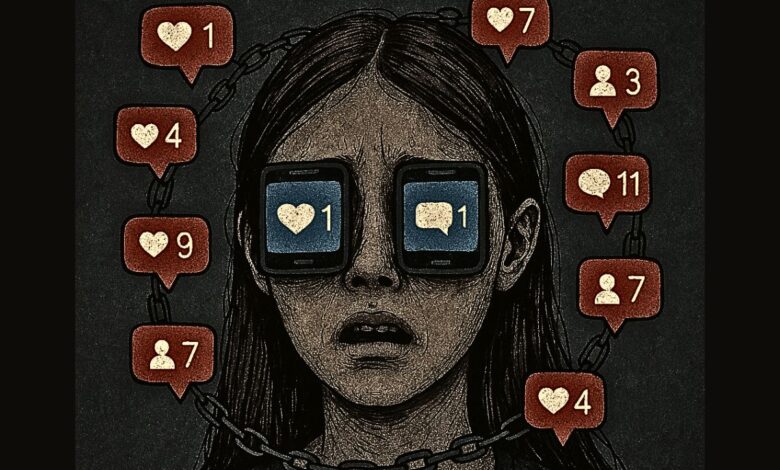
What’s the scariest aspect about social media? It seeps into your brain like insidious poison, rewiring your self-worth and feeding your fears until the numbers stop increasing… and so do the people.
The recent tragedy of Misha Agarwal has forced us to confront a horrifying truth about our digital existence. On 24.4.25, just 2 days before her 25th birthday, Misha took her own life. Her family’s heart-wrenching revelation on her Insta account confirmed what many had feared – she had been consumed by the very platform that once gave her purpose. Misha had exclusively devoted her entire existence to chasing the elusive milestone of 1 mn followers, a goal so deeply ingrained that it became the lock screen on her phone, as a constant reminder of her perceived inadequacy!
Despite her family’s desperate attempts to remind her that Instagram was merely a fragment of life, not its entirety, Misha couldn’t separate her worth from her follower count. The gradual decline in her engagement metrics became, in her mind, a decline in her value as a human being. The digital numbers had become more real to her than the flesh-and-blood family pleading for her to see beyond the screen.
This isn’t just about Misha. This is about all of us.

We’re swimming in a sea of carefully curated lives, drowning in comparison while pretending we’re just taking a leisurely dip. The constant exposure to these highlight reels tricks our brains into believing that extraordinary is normal, that perfect is expected, and that our ordinary moments aren’t worth living. This isn’t new – humans have always compared themselves to others. But never before has the comparison been so relentless, so immediate, and so global in scale.
In the 1950s, researchers were already worried about how television advertising made people feel inadequate by showing them idealized versions of life. Leon Festinger’s social comparison theory explained how we evaluate ourselves by comparing to others. But back then, you might see these perfect images a few times a day. Now? We voluntarily subject ourselves to hundreds of these comparisons every hour, continuously scrolling through an endless parade of apparent perfection.
William James, the father of American psychology, once wrote that “a man’s Self is the sum total of all that he CAN call his.” In the 1890s, this meant your body, your family, your reputation, your work. Today, for many, the self has been reduced to metrics – likes, shares, followers – intangible numbers on a screen that somehow feel more real than the beating heart within our chests.
The Victorian era had its own version of social media anxiety. When photography became widely available, people suddenly became conscious of their appearance in ways they never had before. Victorian women would literally faint in the pursuit of tiny waists because they wanted to appear perfect in photographs that only a handful of people would ever see. Today, we’re doing the equivalent for audiences of thousands or millions – but the psychological damage runs deeper because rejection feels more public, more permanent, more personal.
Remember when Instagram briefly hid likes in 2019? The panic that ensued revealed our addiction. Influencers reported feeling lost, anxious, and worthless without their metrics. The experiment was quickly abandoned – not because it wasn’t helping mental health, but because engagement plummeted. The platform needed our insecurity to survive.
“I feel like I’m screaming into the void,” wrote 16-year-old Sophia in her journal, discovered after her suicide attempt in 2023. Her TikTok account, once boasting thousands of followers, had seen declining engagement for months. “It’s like I’m disappearing. If they don’t see me, do I even exist?” This existential question would have seemed absurd to previous generations, but for many young people today, it’s devastatingly real.
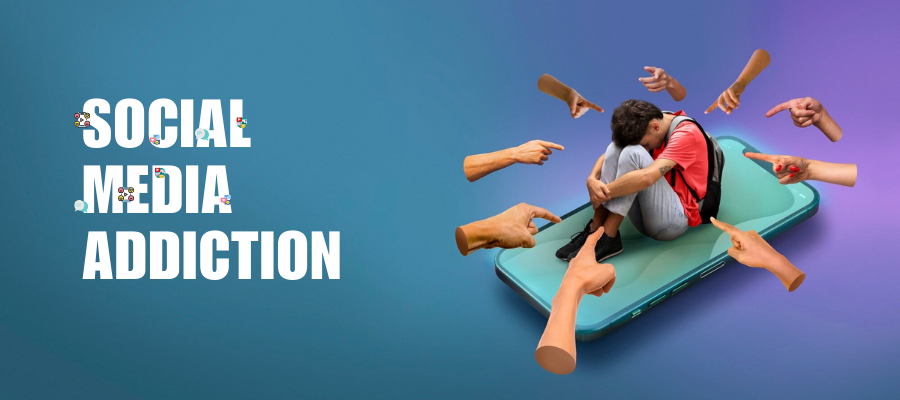
The neural pathways being carved into our brains through constant validation-seeking mimic those found in gambling addiction. Each notification provides a tiny dopamine hit – unpredictable enough to keep us hooked, but insufficient to ever truly satisfy. We’re turning ourselves into rats pressing levers, desperately hoping for the next reward, never questioning why we’re in the cage to begin with!
And do you know the reality behind these social media algorithms? Let me tell you, they are not neutral observers or mere coding patterns; rather they are strategically designed to maximize engagement, which eventually means exploiting our insecurities and outrage. They feed us whatever keeps us scrolling, even if it’s slowly destroying our sense of self. The more anxious, insecure, or angry we become, the more we rely on these platforms for validation or distraction, creating a vicious cycle that’s increasingly difficult to break.
Studies show that the average person checks their phone 96 times a day – that’s once every 10 minutes of waking life. Each time, we’re subconsciously asking: “Do I matter? Has someone validated my existence in the last few minutes?” The constant seeking of external validation has created a generation that struggles to find worth within themselves.
In 2018, a survey revealed that 41% of Gen Z respondents said that social media makes them feel anxious, sad, or depressed. Yet 77% of the same group said they couldn’t imagine life without it. This paradox – knowing something is harmful yet feeling unable to abandon it – is the classic definition of addiction.

Think about it. We’ve created a world where young people are taking deadly risks to create viral content. In 2020, 16-year-old Addy was permanently disabled attempting a dangerous TikTok challenge. “I just wanted to get more followers,” she explained from her hospital bed. “I thought if I got enough views, I’d finally feel like I was enough.” The most heartbreaking part? As she lay recovering, her follower count did indeed skyrocket – not because of her talent or personality, but because of her tragedy.
What’s equally disturbing is how normalized this has become. Some Parents encourage their children to perform for the camera, to develop their “personal brand” before they’ve even developed their own identity. We’re raising a generation to believe that their most valuable asset is not their compassion, their intelligence, or their character – but their ability to attract attention.
The pandemic only intensified our digital dependence. When physical interactions became limited, social media became even more central to our sense of connection and validation. Many found themselves falling deeper into the comparison trap, watching others seemingly thrive while they struggled to get through each day.
Even the platforms themselves are starting to acknowledge the damage. Internal Facebook documents leaked in 2021 revealed that the company knew Instagram was harming teenage girls’ body image and mental health. “We make body image issues worse for one in three teen girls,” stated one internal presentation. Yet the algorithm continued to serve content that fueled these insecurities because, simply put, insecure users engage more.
And what about the influencers themselves? They’re often suffering the most, trapped in a constant performance where authenticity is scripted, vulnerability is strategized, and every life moment is evaluated for its potential “content value.” Many fellas have reported feeling like hostages to their platforms, unable to take breaks for fear of becoming irrelevant. The pressure to constantly increase followers, to always be “on,” has led to widespread burnout, anxiety, and depression among the very people whose lives seem most enviable.
The philosopher Soren Kierkegaard, long before the internet, warned about the dangers of living for others’ approval: “To dare is to lose one’s footing momentarily. Not to dare is to lose oneself.” Today, many are losing themselves not by taking risks, but by living cautiously within the boundaries of what will receive approval online. They’re editing away their authentic selves in favor of their marketable selves.
What would Kierkegaard make of a world where people measure their worth in followers? Where a declining social media presence can trigger such profound despair that it leads to the ultimate self-destruction?
Perhaps he would remind us, as Misha’s family tried to remind her, that our value isn’t determined by metrics. That a life lived performing for others is no life at all. That true connection can’t be quantified in likes or shares.
The tragedy of Misha Agarwal isn’t just that she died pursuing an arbitrary number. It’s that she’s one of countless casualties in a war being waged for our attention, our insecurities, and ultimately, our very sense of self. For every Misha, there are 1000s suffering silently, watching their numbers, equating their follower count with their worth as human beings.
So ask yourself – when was the last time you felt truly content without sharing it? When did you last experience joy without documenting it? Can you remember who you were before you started performing for the algorithm?
Because the scariest thing about social media isn’t just that it creeps into our minds like slow poison. It’s that we’ve handed over the antidote – our intrinsic sense of worth – in exchange for numbers on a screen. And for some, like Misha, when those numbers stop growing, there seems no reason to continue growing either.
This is the choice we face. To reclaim our humanity from the algorithm. To remember that we are not content creators – we are human beings, worthy of love and belonging regardless of our follower count. Or to continue down this path, where more Mishas await, where we trade authentic connection for digital validation, until we can no longer tell the difference between who we are and how we appear.
The choice seems obvious. But then again, so did the choice facing Misha. And yet, here we are, still scrolling, still seeking, still surrendering ourselves to the same systems that devoured her.
Maybe it’s time we put down our phones and looked – really looked – at what we’re becoming. Before we, too, disappear into the void we’ve created.