Trump Kicks Off Trade Push With UK Deal But 10% Tariff Ghosts Still Linger. One Trade Agreement Done, More To Be Signed!

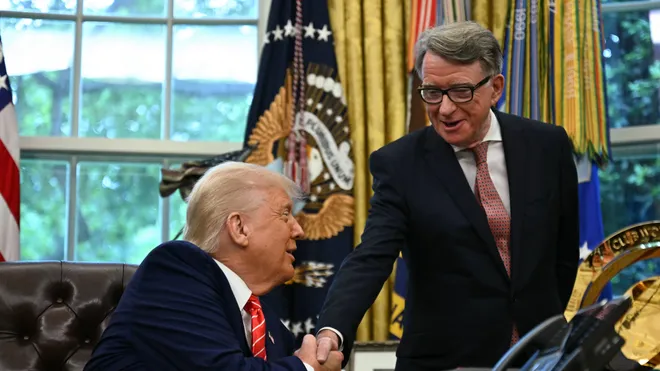
President Donald Trump on Thursday announced the outline of a new trade deal with the United Kingdom, the first such agreement since he imposed blanket tariffs on U.S. trading partners in early April. Though no documents were signed during the Oval Office announcement, Trump called the deal “comprehensive,” promising final details “in the coming weeks.”
The White House said the deal aims to unlock “billions of dollars of increased market access for American exports” by cutting down on nontariff barriers and enhancing cooperation across industrial and agricultural sectors.
Under the agreement:
–The U.S. will maintain a 10% blanket tariff on U.K. imports.
–U.K. auto exports will face a 10% tariff on the first 100,000 vehicles annually; anything beyond that will be taxed at 25%.
–The deal is expected to create a $5 billion opportunity for U.S. farmers and producers, including $700 million in ethanol and $250 million in beef and agriculture exports.
–Both nations will streamline customs, strengthen intellectual property protections, and secure supply chains for aerospace and pharmaceutical products.
–U.K. tariffs on U.S. goods will drop from 5.1% to 1.8%, though how those figures were calculated was not immediately clear.
–The U.S. has committed to negotiating alternative arrangements to the Section 232 tariffs on steel and aluminum, including the creation of a new “trading union.”
U.K. Prime Minister Keir Starmer, appearing remotely, hailed the deal as “an incredible platform for the future.” However, experts were quick to temper expectations.
“It’s a very small win, and it’s limited in scope,” said Josh Lipsky of the Atlantic Council.
The deal notably omits changes to the U.K.’s digital services tax, a 2% levy that has drawn ire from Washington. A U.K. official confirmed there’s no current process to address this issue, despite U.S. pressure.

Tariffs Still a Burden
Many U.K. exporters remain affected by Trump’s tariff policies. While the new deal slashes the 27.5% U.S. tariff on British autos to 10% – a level that applies to nearly all U.K. auto exports to the U.S. – the British-American Business group expressed disappointment that many tariffs remain in place, calling for deeper digital economy integration in future agreements.
Trump first imposed reciprocal tariffs of up to 50% on goods from 57 countries, including the U.K., in April, before announcing a 90-day pause. The across-the-board 10% rate remains in place, with higher tariffs still levied on steel, aluminum, and autos. On Thursday, Trump said the U.K. made “a good deal,” but warned other nations with large surpluses would face steeper rates.
Agriculture, Pharmaceuticals, and Entertainment in Focus
U.S. Agriculture Secretary Brooke Rollins said the agreement will “exponentially increase” U.S. beef exports to Britain, though British food standards remain intact, meaning hormone-treated beef is still banned.
The U.K. secured a first-ever, tariff-free beef quota of 13,000 metric tonnes, while U.S. ethanol tariffs will fall to zero within a quota of 1.4 billion liters, far exceeding last year’s U.S. export volume.
Details on pharmaceutical tariffs remain vague, raising concerns for companies like AstraZeneca and GSK, though the U.S. agreed to give the U.K. preferential treatment in future Section 232 tariff investigations.
The U.K. also received assurances that it would be shielded from Trump’s latest proposal to slap tariffs on foreign-made films, a move that could disrupt cultural trade.
Broader Context and Challenges
The agreement comes as Trump’s administration faces pressure to de-escalate its aggressive tariff regime, which has disrupted global trade and rattled markets. The U.S. is expected to roll out dozens of new trade deals in the coming month, though the biggest hurdle remains its fractured relationship with China. Talks led by Greer and Bessent are scheduled in Switzerland this weekend, with Trump hinting at possible tariff reductions if progress is made.
Meanwhile, the U.K. faces its own post-Brexit economic challenges. With growth stalling, British firms like Jaguar Land Rover have temporarily halted U.S. shipments, and the government has intervened to rescue British Steel.
Despite limited short-term economic impact, many economists believe the deal could foster long-term growth and deeper trade ties. As one FTSE 100 CEO put it, “It’s a start – not a breakthrough.”
One Trade ‘Deal’ Down, But So Many To Go
President Donald Trump has finally secured what he’s calling his first trade “deal”- though that term may be a generous stretch.
What’s actually been reached is more of a conceptual framework than a formal agreement: a preliminary understanding between the United States and the United Kingdom that lays the groundwork for negotiations in the months, or even years, ahead. The end goal is a comprehensive trade deal that may or may not eventually improve upon the current trade dynamics.
Still, for Trump, it’s a win – and politically, a significant one. The agreement with the UK offers other global leaders a sliver of hope that trade negotiations can help rescue the faltering global economy and perhaps chart a course away from escalating protectionism.
When asked whether this new framework improved upon the trading relationship prior to Trump’s presidency, UK Prime Minister Keir Starmer remarked Thursday,
“The question you should be asking is: Is it better than where we were yesterday?” The answer, albeit cautiously, is yes. Even with its vague structure, the agreement outlines some immediate tariff reductions on UK goods and may provide more access for American exports.
But this is just the beginning with roughly 199 more trade understandings to go before July 8, the day sweeping retaliatory tariffs of up to 50% are scheduled to kick back in, Trump faces a monumental task.
No pressure, though; however, it should be noted that in a recent Time interview, Trump claimed to have already completed 200 trade deals, later clarifying they are on the verge of being finalized. That optimism, however, belies the notoriously slow process of formal trade negotiations, often taking years to complete. And time is not on Trump’s side.
The greatest challenge looms with China. US-China trade is practically frozen under the weight of massive tariffs: 145% on most Chinese imports into the US and 125% in retaliatory tariffs by Beijing. This economic standstill is taking a serious toll. American and Chinese officials are scheduled to meet in Geneva this weekend, though Treasury Secretary Scott Bessent has already tempered expectations, noting a full agreement is unlikely and that he’s only hoping for “de-escalation.”
Trump, meanwhile, said Wednesday that he won’t reduce tariffs in advance of talks, a key Chinese condition for meaningful dialogue.
Back home, the effects of this trade war are mounting. Fitch Ratings estimates the effective US tariff rate on imports now exceeds 22%, the highest among developed economies. That’s contributing to a sharp economic downturn. US GDP contracted for the first time since early 2022, driven in part by companies rushing to import goods ahead of tariff deadlines.
And that was just the first quarter, before the harshest trade penalties even took effect.
More Symbol Than Substance
Despite the administration’s claims of advanced negotiations with over a dozen countries, comprehensive trade deals take years to negotiate. These aren’t handshake agreements; they involve detailed negotiations around thousands of product categories, regulatory barriers, and political interests.
What was announced with the UK is more akin to a memorandum of understanding. While it may lead to modest near-term tariff reductions, it doesn’t yet qualify as a meaningful economic breakthrough.
“The 90-day tariff pause—already one-quarter over—leaves very little time for back-and-forth negotiations that usually span months or years,” said Jacob Jensen, trade policy analyst at the American Action Forum.
“There’s a world of difference between binding, written trade agreements and vague promises to buy more US products,” he added. “Only the former carries long-term economic weight.”
And time is running short. The reciprocal tariffs that were imposed on April 7 and temporarily paused two days later affect dozens of countries. Around 100 more nations are subject to a 10% universal tariff. It’s highly unlikely the administration can complete formal deals with all of them by the July 8 deadline.
Trump recently confirmed he would not extend the tariff pause again and may even reinstate some tariffs within weeks for countries where no progress is made.
History of Reversals
Even if deals are struck, history offers little assurance they will stick. Trump’s previous term saw the successful negotiation of the USMCA agreement with Canada and Mexico, only for it to be undermined later by ad hoc tariffs on key imports from both countries. Meanwhile, tariffs introduced during Trump’s first term also dismantled several existing trade agreements with long-standing allies.
China Again…
While the markets cheered Thursday’s announcement, the real test remains China. Art Hogan, chief market strategist at B. Riley Wealth Management, said, “This was probably the easiest one to do. Now the hard part begins.”
The high tariffs on China have essentially halted trade. Shipments from China to the US fell by 60% in April, according to logistics firm Flexport, and JPMorgan estimates that Chinese imports into the US could decline by as much as 80% in the second half of the year.
As the inventory of pre-tariff goods dwindles, American consumers should brace for price spikes, product shortages, and empty store shelves, akin to pandemic-era disruptions, warn port authorities and supply chain experts.
Even Trump’s Treasury Secretary Bessent concedes that the current tariff structure is “unsustainable.” While both sides may hope for a reduction, trade experts believe tariffs would need to drop by at least 50% before commerce can resume at scale. And even then, supply chains would take weeks or months to normalize.
With no signs of a breakthrough, Bessent estimates it could take two to three years before US-China trade regains stability.