Zepto Cries Foul Play In Quick Commerce Battle With Smear Campaigns, Bots, Billion-Rupee Burn Rates! Groww’s $1 Billion IPO Bet Marks A Positive In The Startup Ecosystem

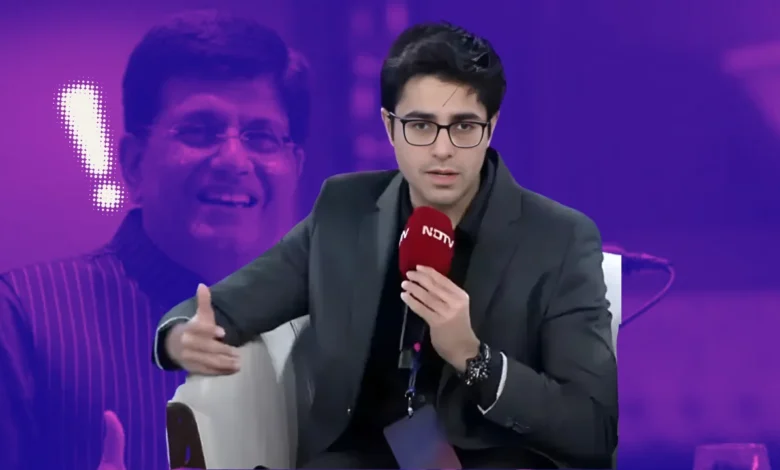
Zepto’s cofounder Aadit Palicha has just shaken things up with some bold accusations that hint at just how high the bets are in India’s fiercely competitive quick commerce race. There are certain kinds of plot twists one would expect in a racy corporate thriller, but certainly not in the cut-and-dry world of grocery deliveries, but that is what Aadit Palicha alleges.
In a rather candid LinkedIn post, Palicha claimed that the chief financial officer (CFO) of a rival quick commerce firm is orchestrating a full-blown smear campaign against Zepto.
According to him, this is not everyday corporate gossip; this is allegedly a calculated, malicious attempt to dent the startup’s image. He accuses the unnamed CFO of spreading false information to investors, the media, and even planting doctored data – like “fake Excel sheets”- through proxy sources.
But the allegations dont stop here, Palicha further claimed that bots were being paid to fan the flames online and amplify this negative narration.
“Frankly, this episode is below the stature expected of the CFO of a high-quality company,” he wrote. Not pulling any punches, Palicha suggested that the smear campaign might be born out of insecurity – specifically, that Zepto’s financial performance is beginning to make competitors sweat.

To support his point, Palicha laid out some serious performance stats.
—In just one year, Zepto’s monthly gross order value (GOV) has surged from ₹750 crore in May 2024 to a staggering ₹2,400 crore in May 2025.
—Their EBITDA margin, a key profitability indicator, improved by 2,000 basis points (or 20%) between January and May this year, while the company’s cash burn shrunk by 65% over the same period.
And, that’s not all – Zepto is clocking in a consistent 4–5% month-on-month growth, translating to a 20% GOV jump between January and May. The company expects most of its dark stores to turn EBITDA-positive in the coming quarter, with overall cash flow approaching breakeven. And with ₹7,445 crore sitting in the bank – reconciled and verified – the startup claims it has “many years of runway” ahead.
Addressing potential murmurs about store closures, Palicha shot down any talks of large-scale rationalisation. On the contrary, Zepto is expanding, doubling down on new dark store launches. He also touted Zepto’s robust compliance ecosystem: best-in-class payment systems, stringent vendor audits, asset verification, and a squeaky-clean statutory audit track record validated by Big Four firms.
Though Palicha didn’t name the rival CFO at the centre of his allegations, it doesn’t take much imagination to guess that the pressure cooker that is India’s quick commerce space has something to do with it.
According to a March 2025 report by Bain & Company in collaboration with Flipkart, quick commerce now accounts for more than two-thirds of all e-retail orders in India. From just $1–1.5 billion in 2022, the market has exploded to an estimated $6–7 billion today.
But beneath all this excitement lies a grim truth: profitability remains elusive. As of early 2025, the top three players – Zepto, Blinkit, and Instamart – were collectively bleeding between ₹1,300 crore and ₹1,500 crore every month, with Zepto reportedly leading that burn.
Even Flipkart has taken a cautious step back. Its quick commerce unit, Flipkart Minutes, is reportedly scaling down expansion plans and limiting operations to just six to eight cities to keep costs in check.
:max_bytes(150000):strip_icc()/GettyImages-1319794555-380b240960d046319aa08b23d5434369.jpg)
Behind The Curtain When Market Rivalries Cross the Line into Corporate Espionage
The startup battlefield is no longer just about product innovation or customer acquisition, it has quickly morphed into a scenario where perception can be as powerful as performance.
Hence, the recent allegations by Zepto cofounder Aadit Palicha shine a rare spotlight on a murky corporate underworld that few talk about openly; however, while it may sound like the stuff of spy thrillers, such tactics are not uncommon, especially in ultra-competitive, high-burn industries like quick commerce – when fighting for market share, investor dollars, and public trust, the temptation to win at any cost can lead even seemingly reputable players to adopt questionable tactics
Therefore, in fast-growth sectors where billions are at stake, the line between aggressive competition and outright sabotage can blur.
The High Cost of Losing Face
For a CFO, or any senior executive, whose company is struggling to keep pace, the optics of losing to a younger, faster-growing rival like Zepto can be damaging. Valuations, investor confidence, and even personal reputations hinge on staying ahead. In such pressure-cooker environments, undermining a competitor with misinformation can seem like an expedient shortcut.
It might start small, for example – feeding selective data to journalists, leaking internal gossip to amplify doubt, nudging analysts with off-the-record innuendos. But sometimes, as Palicha’s claims suggest, it escalates, aiming at PR warfare – a strategic assault on investor psychology.
For example – if a startup’s growth story can be questioned, its funding pipeline can dry up. If the media picks up a negative trend, public trust can erode. In an ecosystem where perception often drives valuation, a smear campaign can inflict real economic damage.
Corporate Espionage
While we often associate “corporate espionage” with shadowy figures in trench coats or cyber-intrusions, the real-world version is often far subtler and more insidious.
—-Information leaks: Employees or consultants paid to share confidential data.
—Data manipulation: Fake performance numbers circulated to distort investor judgment.
—Fake reviews and bot campaigns: Designed to flood online spaces with negativity or fake praise.
—Proxy whistleblowing: Anonymous sources “exposing” alleged wrongdoing, sometimes entirely fabricated or exaggerated.
Such tactics are not only unethical, they can also be illegal and in markets where oversight is patchy and startup valuations swing wildly, enforcement is often weak, and accountability elusive.

Why Quick Commerce Is a Breeding Ground
Quick commerce, by design, is built on speed – speed of delivery, speed of scaling, and speed of execution. But speed also means fragile margins, untested models, and burning cash like kerosene. The top players are under immense pressure to show profitability or at least a credible path to it. That pressure can easily morph into desperation.
Add to that the media spotlight, the frenzied funding cycles, and FOMO-fueled investor sentiment, and you have the perfect storm. It’s not surprising, then, that Palicha’s bold claims have hit a nerve in the ecosystem.

Groww’s IPO – The $1 Billion Bet to Prove Fintech’s Mettle in Public Markets
Meanwhile, the Indian IPO season got a shot of adrenaline as online investment platform Groww has quietly fired the starting gun for what could be one of India’s biggest tech listings in recent times, filing its draft red herring prospectus (DRHP) with SEBI under the radar through the now-popular confidential route.
According to insiders, Groww is aiming high – somewhere between $700 million to $1 billion in IPO proceeds. If it pulls this off, the company could be marching toward a $7 billion valuation, more than double what it commanded during its last private funding round in 2021.
But before we uncork the celebratory champagne – filing confidentially means the company wants to feel the regulatory pulse before stepping into the bright glare of public scrutiny – a strategic slow dance to test the waters, refine pitch, and only then go for the full dive.
The DRHP, filed under the name Billionbrains Garage Ventures Ltd (Groww’s registered entity), includes equity shares with a face value of ₹2 each, to be listed on both the NSE and BSE. However, the company was quick to issue a disclaimer: just because it filed the pre-DRHP, doesn’t mean going public – but more about getting “the ducks in a row” than a hard commitment, a classic case of keeping options open in an unpredictable market in the present.
A Pre-IPO Flex: GIC Steps In
If one is wondering how serious Groww is, here is the answer – Singapore’s sovereign wealth fund GIC just filed for CCI clearance to buy a 2.14% stake in Groww through Viggo Investments, its special purpose vehicle. This is part of a broader pre-IPO round worth $250–300 million, with GIC expected to pour in a hefty $150 million chunk.
That kind of confidence from a heavyweight investor signals not only financial backing but also a reputation booster. And Tiger Global is also expected to join the party, Groww’s long-time investor, is reportedly sharpening its pencils too.
If all goes according to plan, this could position Groww as a rare breed in the Indian startup zoo – a fintech unicorn that has successfully flipped back to India and still commands serious investor confidence.

The Flip That Cost A Fortune
But it hasn’t been all smooth sailing. Groww’s net loss for FY24 came in at ₹805 crore, a significant chunk of which was attributed to the costs of reverse flipping – moving its base from the US back to India. The company’s revenue stood strong at ₹3,145 crore, which shows momentum, but the loss is a sobering reminder of the structural and tax burdens many Indian-origin tech startups face when returning home.
The reverse flip was meant to align Groww better with Indian markets, regulators, and its customer base. And while costly, it also reflects a growing trend among startups – if India is your core market, being domiciled here might just be worth the price.
Groww, From Startup Star to Public Contender
Founded in 2016, Groww has grown (pun intended) into a household name for retail investors. With backers like Y Combinator, Ribbit Capital, Peak XV (ex-Sequoia India), and of course, Tiger Global, it had the early-stage artillery needed to dominate India’s online investing wave.
Now, it’s trying to make the leap from VC darling to public market heavyweight, a move few tech companies have managed with grace. The IPO, if executed well, could cement Groww’s place as a fintech bellwether in a market that still treats most startup listings with cautious optimism (or skepticism, depending on which side of the fence you sit).
Let’s not forget – going public is about more than just raising money. It’s about validation, visibility, and above all, vulnerability. Once you’re listed, the curtain is pulled back. Growth metrics, unit economics, compliance, everything becomes fair game for public and media scrutiny.
Groww’s IPO Could Reignite India’s Tech Listing Flame, But Will It Avoid the Mistakes of Zomato, Paytm, and Nykaa?
It is hard to forget the ghosts of IPOs past. If there’s one thing India’s public markets have taught us in the last few years, it’s that valuation hype fades, but performance sticks.
Let us rewind the tape and look at what happened with the OGs of India’s tech IPO wave – Zomato, Paytm, and Nykaa.

Zomato: First Mover, Fast Fizz
When Zomato hit the bourses in July 2021, it was a watershed moment. The first Indian internet unicorn to go public, it opened to wild fanfare and even wilder valuations – closing nearly 66% higher on listing day. For a while, Zomato enjoyed the high’s of India’s startup maturity.
But then came the reality check. Questions were raised about profitability, corporate governance, and the rationale behind acquisitions like Blinkit. The stock slumped, then recovered slightly, and now sits in a zone that reflects more realism than hype.
Paytm Headache
If Zomato was the celebratory toast, Paytm’s IPO was the hangover. Valued at a jaw-dropping $20 billion, it was India’s biggest IPO at the time. But instead of triumph, it unraveled into what many investors now call a cautionary tale.
The stock tanked nearly 27% on debut. It didn’t help that the business model was hazy, and the company was burning cash faster than it could explain why. Retail investors were left bruised, and Paytm has been clawing back credibility ever since – facing regulatory heat, investor fatigue, and an uphill battle to show sustainable growth.
Groww would do well to study Paytm’s missteps like scripture, opaque business strategy, overvaluation, and poor investor communication don’t end well.
The Last Bit, This Is Not 2021 Anymore
If there’s one thread that ties Zepto and Groww together, it’s that both companies are writing their own playbooks in a scenario that’s become increasingly unforgiving.
Zepto is fighting not just to scale faster, but also to defend its integrity. The alleged smear campaign it is now battling sheds light on the dark underbelly of modern competition, where corporate espionage, bot-driven narratives, and strategic misinformation may be deployed just as aggressively as pricing models or user acquisition tactics.
But Zepto’s response – armed with data, EBIDTA gains, and a confident tone – reflects the coming of age of Indian startups. This isn’t about reacting emotionally. It’s about setting the record straight with numbers, and building credibility through transparency.
On the other end of the spectrum, Groww’s confidential IPO filing shows a company cautiously stepping into the public arena, learning from those who stumbled before it; whether it becomes a success or another overhyped listing will depend on how it manages the now-sober expectations of India’s retail and institutional investors.
Both Zepto and Groww represent a new generation of Indian startups – ones that are no longer just chasing the unicorn tag but are now fighting to prove staying power. They’re operating in a post-hype world where profitability is king, investor scrutiny is ruthless, and one wrong move can undo years of brand-building.
But maybe that’s a good thing – because if Indian tech’s early IPO years were about celebration and spectacle, the current era demands accountability, clarity, and character. And in that sense, Zepto’s fierce defense and Groww’s careful disclosure may just be the template for tomorrow’s credible, battle-tested unicorns.
Ethics in a Cutthroat Game
Coming to the Zepto episode – it is a wake-up call.
If startup ecosystems are to mature, we need a collective introspection on what kind of culture we’re nurturing. Are we celebrating those who build or those who backstab? Is success defined by customer love or clever sabotage?
The race for dominance in quick commerce and startups more broadly, cannot come at the cost of integrity. In the short term, a smear campaign might slow down a rival. But in the long run, it corrodes trust not just in one company, but in the ecosystem as a whole.
And as the saying goes: when the tide goes out, you see who’s swimming naked. If such tactics are exposed, the reputational damage for those involved could be far worse than any temporary gain they hoped to achieve.