Warfare Reimagined, As Drones Dominate South Asia’s Skies, Are India And Pakistan Quietly Entering A New Era Of Escalation?

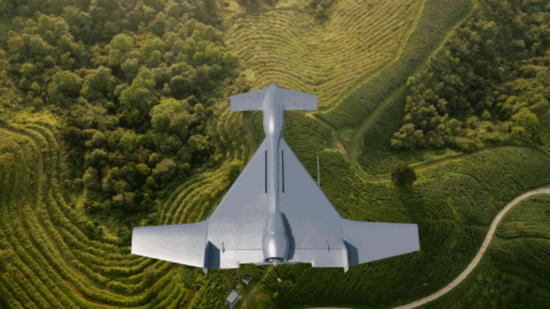
In May of this year, a historic shift occurred, marking the first time both nuclear-armed neighbors deployed unmanned aerial vehicles (UAVs)/drones at scale against each other during a four-day escalation.
For decades, the Indian and Pakistani militaries have relied on conventional force projection – fighter jets, artillery barrages, and surgical cross-border strikes – to assert dominance across one of the world’s most volatile frontiers. However, with drones, this new move was not merely tactical experimentation; it was a calculated pivot in doctrine, ushering in what may now be described as a drone arms race in South Asia.
The strategic implications of this shift are deep. Both India and Pakistan, which collectively spent more than $96 billion on defense last year, now appear committed to institutionalizing drones as key instruments of military coercion, surveillance, and limited engagement.
According to over a dozen security officials, defense executives, and military analysts interviewed, the race to dominate unmanned warfare is rapidly gaining momentum.
This transformation signals more than just a technological upgrade and represents a recalibration of risk in military confrontations.
As KCL’s Dr. Walter Ladwig III astutely notes, “UAVs allow leaders to demonstrate resolve, achieve visible effects, and manage domestic expectations — all without exposing expensive aircraft or pilots to danger.” In a region where escalation can quickly veer into nuclear brinkmanship, this attribute is priceless.
The Tactical Chessboard, Victories Claimed, Lessons Learned
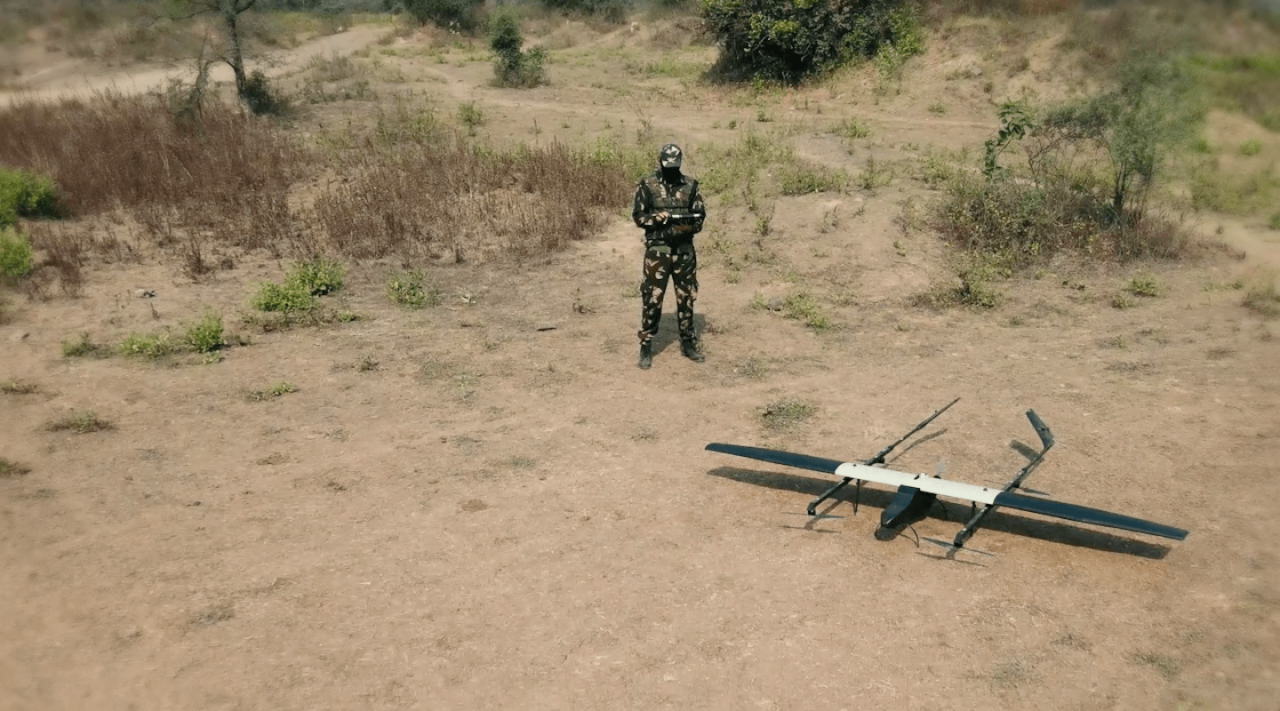
Both India and Pakistan claim operational success in the recent UAV encounters. Indian drones reportedly struck critical infrastructure within Pakistani territory without risking pilots or frontline aircraft. For a military accustomed to operating under the threat of rapid escalation and international censure, this was a decisive advantage.
Pakistan, on the other hand, employed a blend of innovation and subterfuge. It set up decoy radar installations to mislead India’s loitering HAROP drones and even timed interceptions when these drones descended below 3,000 feet – vulnerable and exposed as their flight endurance waned. This not only neutralized the threat but offered critical real-time battlefield intelligence.
Pakistani military sources suggest that their own drone strikes targeted Indian defense installations, delivering psychological pressure and strategic messaging without incurring the usual diplomatic fallout. UAV strikes – being below the threshold of major military conflict – allow Islamabad to maintain plausible deniability and dilute global condemnation, a tool it has lacked in previous high-profile operations.
India’s UAV Renaissance, Domestic Arsenal, Global Aspirations
India, for its part, is now preparing to triple its drone investment. According to Smit Shah of the Drone Federation of India, the government could spend up to $470 million on UAVs over the next 12–24 months – nearly three times pre-conflict levels. The urgency is illustrated by New Delhi’s recent allocation of $4.6 billion in emergency military procurement, with combat drones and surveillance UAVs squarely in focus.
What was once a plodding, bureaucratic procurement system has been jolted into a state of wartime alert. Drone manufacturers are being summoned for demonstrations at an unprecedented pace. Indian companies like ideaForge and NewSpace are racing to improve loitering munitions – UAVs designed to circle a target and strike with lethal precision. These are the spearheads of India’s evolving drone doctrine – affordable, scalable, and lethal.
“We’re talking about relatively cheap technology,” says Michael Kugelman, a Washington-based South Asia expert. “And while UAVs don’t have the shock and awe of fighter jets, they offer strategic signaling without provoking the type of backlash that conventional attacks often trigger.”
Pakistan’s Counter Strategy, Partnerships and Production Pipelines
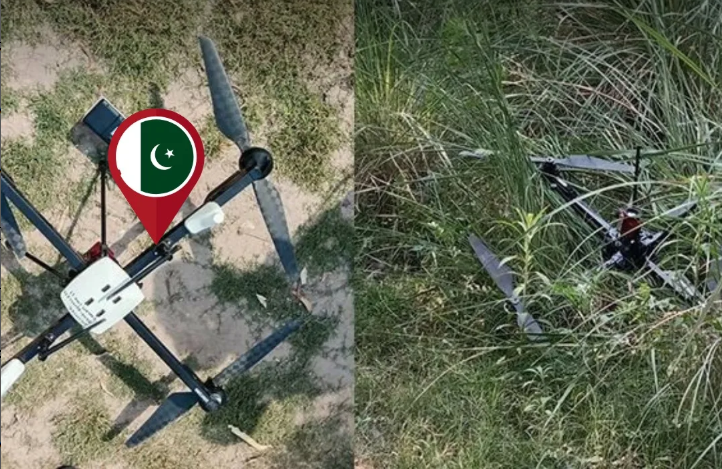
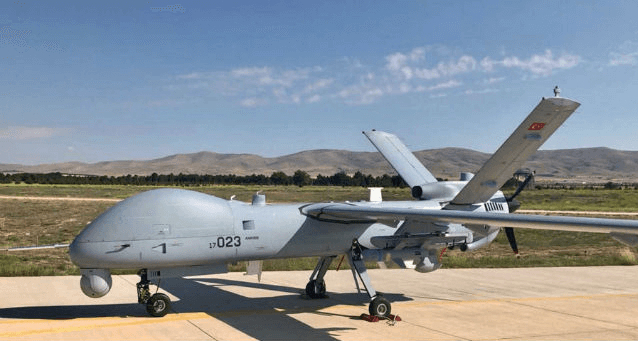
Resource-constrained but strategically agile, Pakistan is leaning on its relationships with China and Turkey to counterbalance India’s growing indigenous drone ecosystem. Pakistan’s National Aerospace Science and Technology Park has teamed up with Turkish defense firm Baykar to locally assemble the YIHA-III drone.
According to sources familiar with the matter, each unit can be produced domestically in two to three days – an astonishing turnaround time that emphasizes scalability in times of heightened conflict.
While Pakistan lacks the deep industrial base of its larger neighbor, it is playing a smarter game. Instead of spreading its resources thin, it is doubling down on partnerships that yield immediate operational advantages. This asymmetry will likely shape South Asia’s drone dynamics in the coming years – quality versus speed, mass production versus strategic alliances.
Weak Links in India’s Chainmail: Supply Chain Vulnerabilities
But India’s UAV ecosystem, though expanding rapidly, has its own Achilles heel. Four Indian defense executives and officials confirm a persistent over-reliance on Chinese-made components – particularly lithium for batteries and high-performance magnets crucial for propulsion systems.
This raises a strategic paradox. While India positions itself as a bulwark against Chinese influence in Asia and a staunch defense partner of the West, its drone capability is, in part, hostage to Chinese supply chains.
“Weaponization of the supply chain is also an issue,” says ideaForge’s Vishal Saxena. “Beijing could cut off critical components at will.”
China has already demonstrated such behavior in the Ukrainian conflict, tightening export controls on dual-use items like drone motors and flight controllers. This precedent should alarm Indian defense planners. Diversification of the supply chain is underway, but as Shah of the Drone Federation concedes, “You can’t solve it in the short term.”
The Strategic Dilemma, Controlled Escalation or a Slippery Slope?
While drones offer a tantalizing way to apply pressure without overt escalation, they are not immune to miscalculation. A UAV strike on a misidentified or highly symbolic target could provoke an asymmetric response. Worse, drones may be used to attack densely populated or contested areas that manned aircraft would previously have avoided, increasing the risk of collateral damage and international blowback.
India and Pakistan are treading a tightrope – leveraging the surgical precision and political palatability of drones to assert strength, without tumbling into full-scale conflict. But make no mistake – this is warfare by other means, a quieter but equally dangerous evolution of hostility between two nuclear neighbors.
The Last Bit, The Future is Unmanned but Not Unchecked
The drone era in South Asia has truly arrived. Cheap, scalable, and deniable, UAVs are redefining the tactical and strategic contours of the India-Pakistan conflict. For military planners in both nations, drones are not just instruments of war – they are tools of diplomacy, deterrence, and domestic assurance.
But as each side digs in for a long-haul arms race, the region inches closer to a dangerous normalization of sub-conventional warfare. The next flashpoint may not feature the roar of fighter jets but the silent hum of loitering drones could be just as deadly.
Still, in the skies above the Line of Control, a new kind of war is unfolding – unseen, unmanned, and increasingly unpredictable.