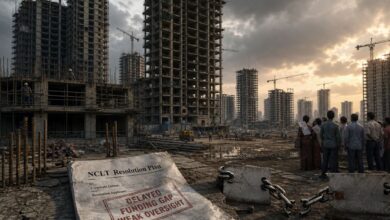
14 Years, 1 FIR, 1,000 Cheated Families: And Kabul Chawla Still Roams Free In Manhattan!

Fraud Allegations and Scams
Kabul Chawla, founder and MD of Gurgaon’s realty firm BPTP Ltd, has been at the center of repeated fraud allegations for over a decade. The saga began with a January 2011 FIR by Faridabad police accusing Chawla of defrauding over 1,000 homebuyers in a supposedly “fake” project in Sector 85, Faridabad. The case alleged cheating, criminal conspiracy and forgery, claiming Chawla’s firm had collected around Rs.400 crore from buyers but never delivered the promised plots and flats. A Gurgaon court even issued a non-bailable arrest warrant for Chawla that year, but he has remained “absconding” while BPTP continued to sell new projects.
In 2014, Faridabad police again booked Chawla and other BPTP executives in a fresh cheating case. Buyers Rohit and Mamta Kapoor complained that BPTP handed them an incomplete plot-buyer’s agreement (with blank pages) and still failed to hand over plots in Parklands Sector 85 despite full payment. The police action, taken on court orders, named Chawla and senior staff (including the VP of customer services) under charges of fraud, breach of trust, and conspiracy.
Similarly, in late 2016 the Delhi High Court directed the Gurgaon police to register three FIRs against BPTP after three buyers sued over undelivered plots in Sector 102, Gurgaon (near Daultabad, Faridabad). The Times of India reported that the buyers had each deposited sums of ₹86–110 lakh for plots in the “SVP” project in 2010, but Chawla’s company failed to give possession as promised. The FIRs charged Chawla (then CMD), along with five other BPTP directors and managers, under multiple IPC sections for breach of trust, cheating, forgery and conspiracy. BPTP publicly called the complaints “frivolous” and claimed the projects were nearly complete, but the FIRs remain on record and unresolved.
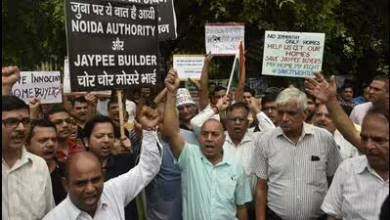
By 2022, IANS noted that hundreds of homebuyers, many of them retired defence officers were still waiting for flats bought years earlier. In one notorious case, some 400 buyers (reportedly including 300 army officers) had paid 95–100% of flat prices for high-rise apartments at Park Serene (Gurgaon) back in 2008–11. Yet a decade later the buildings were mostly unfinished and BPTP was still refusing possession. Chawla denied wrongdoing and even claimed he did not own the buyers’ cited Manhattan apartment (though evidence tied it to him, see below), but his company’s refusal to refund or compensate buyers has left deep resentment.
These allegations are not isolated: investors and buyers have reported more than a dozen cases across Delhi-NCR. In short, Chawla and BPTP are accused of repeatedly using new projects’ funds to cover existing commitments, running a classic Ponzi-like scheme. Victims’ petitions describe a “callous attitude” by BPTP management and even slap banners saying “Kabul Chawla Kaatil Hai” (“Kabul Chawla is a murderer”) at unfinished sites. In sum, the police records and press accounts paint a consistent picture: fraudulent non-delivery of residential plots and flats by BPTP, under Chawla’s leadership.
Continued Operations and New Projects
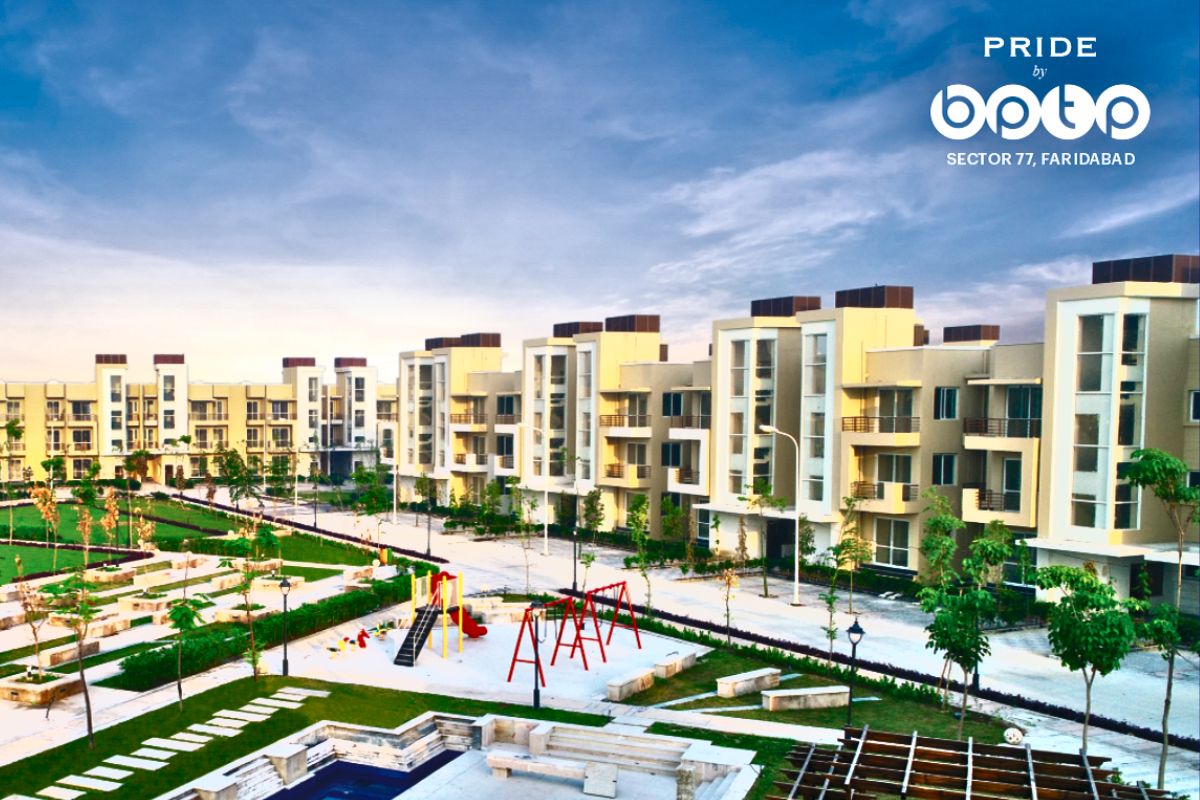
Despite the scandal, BPTP has continued to operate aggressively. BPTP’s own disclosures describe it as a major NCR developer, with projects and “footprints” across the region; Gurgaon, Faridabad, Noida, Greater Noida and now Hyderabad. In Feb 2025 the company launched a new ₹3,000 crore luxury housing project (“BPTP Amstoria Verti-Greens” on Gurgaon’s Dwarka Expressway), boldly promising 885 premium apartments and a ₹6,500 crore revenue. That announcement came even as dozens of older BPTP projects (in Gurugram and Faridabad) remain incomplete and under court dispute.
Corporate filings confirm BPTP is still active. According to MCA records (cited by a data site), BPTP is an “active” unlisted company (authorized cap ~₹1,063 crore, paid-up ~₹257 crore). The latest annual meeting (Dec 2023) shows Kabul Chawla still listed as a director, alongside at least four others. (Notably, one is Anupam Bansal, who was a director at the time of the 2016 FIR and booked in those cases.)
Investors’ sites note BPTP’s declared revenues as over ₹500 crore for FY2023, and a conservative debt/equity (~0.12), suggesting it finances development primarily through equity and buyer deposits. Whatever the balance sheet details, the bottom line is that business has gone on: sales teams still solicit payments for new towers even as old buyers wait for promised homes.
Legal Proceedings and FIRs
Chawla and BPTP currently face multiple legal actions at various levels. The 2011 Faridabad FIR and ensuing warrant remains unresolved, reportedly because Chawla has not returned to India to face trial. In 2022 press reports noted that an Interpol Red Corner Notice was issued for Chawla in Nov 2018, indicating he had fled the country to avoid arrest. (Chawla has acknowledged living in the US; IANS sources say he “lives it up in New York” while absconding from Indian courts.)
Other suits are winding through consumer and civil courts. Multiple homebuyers have sued BPTP under the Consumer Protection Act, seeking refunds and damages for delayed/delivered flats. Recent decisions show buyers still fighting: for example, in September 2023 the Gurgaon Consumer Commission heard cases like Rajiv Kumar Bajaj v. BPTP (complaint filed 2020) seeking relief under new RERA-based rules.
These cases underscore that ongoing litigation involves hundreds of aggrieved customers. Additionally, BPTP has faced regulatory penalties: the Haryana RERA authority imposed a ₹25 lakh fine on BPTP in Dec 2022 for missing the possession deadline on its “Park Terra” project (Sector 37D Gurugram). That order extended the project’s completion deadline to 2024, but also serves as formal notice of BPTP’s non-compliance. (News reports also note RERA took the unusual step of granting new timelines despite fines.)
On the corporate side, BPTP has fought several investor claims. In 2015 Economic Times reported that BPTP was locked in arbitration with US private equity firm JPMorgan. A London tribunal had ordered BPTP to pay ~₹560 crore for failing to honor a 2008 share-purchase exit pact, but BPTP resisted enforcement. Eventually BPTP agreed to settle by paying ~₹350–390 crore to JP Morgan. In that saga, BPTP attempted to sell off its Gurgaon office building (BPTP Crest) to meet its obligation, but co-investor CPI (Apollo Global) challenged the sale. This dispute, still cited in news reports, suggests that BPTP’s debt and contingent liabilities are substantial.
Yet, despite these many proceedings, no public information shows Chawla or BPTP ever convicted. His company’s PR line (in 2016) was that complaints were “subjudice” and buyers would soon get possession, but years later many flats remain undelivered. Activist websites track dozens of consumer cases and police complaints against BPTP, indicating a steady stream of litigation fueled by angry homebuyers. In summary, the legal record shows a long, unresolved trail of criminal cases, consumer suits and regulator actions, all against the backdrop of unfinished projects and unpaid customers.
Financial Disclosure and Red Flags
Public filings and news hint at troubling financial patterns. The very fact that BPTP repeatedly delayed older projects while launching expensive new ones suggests it recycled incoming funds to mask shortfalls, a red flag for any builder. Officially, BPTP’s 2023 operating revenue was reported as just “over ₹500 crore”, which is modest given their advertised ₹6,500+ crore of sales in pipeline. Yet the company’s declared profits jumped dramatically year-over-year (profit growth ~5,680% in FY2023 on scant sales), raising eyebrows about accounting practices. (A public investor site even flags BPTP’s P/E ratio at an eye-popping 346, due to tiny earnings on a large market cap.)
On the liability side, BPTP’s formal debt-to-equity ratio appears low (around 0.12), but that may mask large customer advances sitting as liabilities on its books. Buyer advance payments fund construction; when projects stall, that money is effectively owed to customers. BPTP’s 2015 settlement with JP Morgan also underscores unresolved foreign-currency exposure and regulatory entanglements (the collapse of the 2008 IPO plan, plus FEMA issues cited in court). Moreover, lack of transparent disclosures is notable: after the IPO was shelved in 2010, BPTP remained unlisted, limiting public scrutiny.
In contrast, one clear financial penalty stands out: the Haryana RERA ₹25 lakh fine, trivial for a project of hundreds of crores, but symbolically significant. There is no evidence of any securities or tax penalties beyond that, but regulators have taken the extraordinary step of issuing arrest warrants for developers on delayed-possession cases (18 builders in Dec 2022). It’s unclear if Chawla himself is wanted under that crackdown, but the media focus suggests he escaped enforcement. In sum, BPTP’s financial filings hint at overreach and aggressive expansion financed by buyers’ money, with minimal penalties or oversight applied so far.
Political Connections and Protection
Kabul Chawla’s ability to remain untroubled for so long has fueled speculation about political backing. News outlets repeatedly note that Chawla “is said to have strong political connections” in Haryana. Nothing in the public record identifies specific leaders or party ties, but the pattern is notable: despite huge buyer grievances, even stalwarts like the Indian National Congress or BJP have not (publicly) enforced action against him. In 2012, anti-corruption activist Arvind Kejriwal singled out BPTP as allegedly holding undisclosed investments by politicians when attacking Haryana’s Congress government. (Kejriwal hinted that, like DLF and Indiabulls, BPTP may have enjoyed favourable treatment, though no formal proof of quid-pro-quo was produced.)
In the absence of convictions, critics suggest Chawla’s network, reportedly including bureaucrats and local leaders, has provided de facto immunity. BPTP’s ability to get fresh RERA registrations and extensions (despite project delays), along with the long delay in enforcing FIRs or prosecuting Chawla, lends weight to suspicion. Industry analysts also point out that BPTP was once touted as “emerging as a prominent player” by 2010 with political clout, only to betray those buying into that dream. The persistence of new projects and partnerships (e.g. joint ventures with DLF, Shalimar Group etc. in the past) indicates Chawla remains a well-connected builder, able to raise large funds despite criminal allegations lurking over him.
International Assets and Money Trails
Perhaps the most dramatic revelation against Chawla came from international investigative journalism. In 2015 The Financial Express (via the NY Times) reported on a NYC luxury apartment bought through secretive shell companies and linked to Chawla. The story detailed that Chawla was living in a 4,050 sq ft, five-bedroom condo on the 68th floor of Manhattan’s Time Warner Center, a unit he claimed belonged to his cousin. However, NYT had obtained broker emails and records showing the sale in 2012 for $19.4 million, routed through an opaque Delaware/Singapore entity (NYC Real Estate Opportunities LLC).
This revealed a pattern of money flowing abroad that paralleled the domestic fraud. While Chawla was squeezing homebuyers in India, he secretly splurged on a US skyscraper condo. Investigators note that nearly two-thirds of the 192 condos at Time Warner Center are owned by shell companies, a loophole enabling anonymous foreign money in US real estate.
In Chawla’s case, the fact that a politically and financially controversial Indian builder could move $19M into NYC via elaborate corporate veils suggests potential money-laundering or at least massive unexplained wealth. The NYT series described these transactions as part of a global flow of ill-defined “wealth” into luxury real estate, implicating Chawla alongside diplomats, royals, and oligarchs (ironically, piece 3 of their investigation was titled “as complaints of unfinished homes mounted against Kabul Chawla…”).

Beyond the condo, no other major foreign asset of Chawla is publicly documented. But the optics are damning: retired officers and middle-class buyers in Faridabad toil under loans, while Chawla reportedly relaxes in Manhattan and owns a posh house in Delhi’s Lutyens’ zone. The New York revelations prompted local petitions and outrage (see Change.org petitions by buyers and ex-servicemen), and even mentions of possible ED interest, though no official FIR by ED is on record. It’s telling that the only asset media can link to him abroad is this condo, and even that connection is shrouded in secrecy.
Conclusion
The cumulative evidence presents a disturbing portrait: a once-celebrated builder who allegedly duped thousands of people, then slipped away from justice while amassing assets overseas. All verified sources agree on the core facts; failed projects, cheated customers, police FIRs, and these stand in stark contrast to BPTP’s glossy marketing and endless project launches. If Kabul Chawla is guilty as alleged, the scale of the betrayal is staggering: life-savings lost, flats undelivered, and retirement dreams shattered. If he is innocent, the weight of unpaid debt and unanswered complaints still hangs over BPTP, begging accountability.
What remains clear is that far too many questions about BPTP’s money flows, ownership structures, and political insulation have gone unanswered. Reporters and investigators have laid out the connections between Chawla’s domestic frauds and his international condominium purchase. Regulators have slapped only minor fines and extended timelines. Courts have granted repeated chances for BPTP to explain delays. Meanwhile, homebuyers, including war veterans continue their desperate fight for justice. The gravity of these allegations demands thorough, impartial legal scrutiny. The evidence uncovered so far shows a web of fraud and secrecy that few builders or politicians would dare to weave, yet Chawla and BPTP have done so in plain sight.