Prices Are Going Up, Wallets Are Closing ; Tariffs Tumbles And Tension. The Hidden Pain Behind America’s Sticker Shock Economy. Is The US Economy Quietly Breaking?
People are holding back, and it's not hard to see why. Tariffs are driving up the cost of everything from appliances and tools to electronics. The job market might still look solid on the surface, but hiring has slowed. Many who are out of work are struggling to find new opportunities.

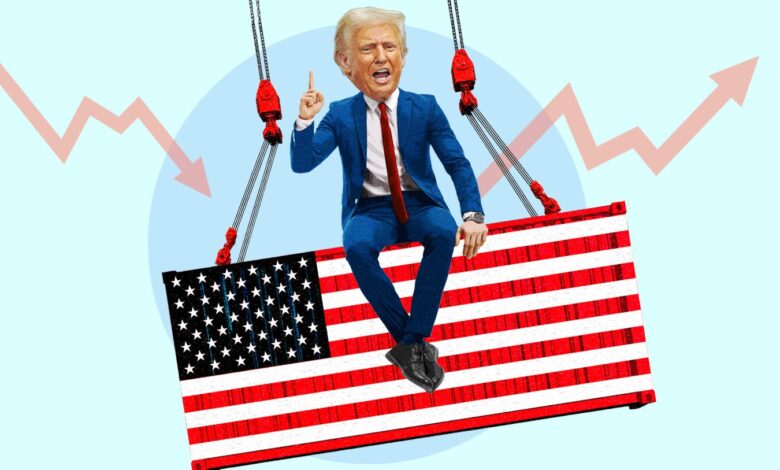
At a glance, the U.S. economy looks familiar: prices are creeping higher, and inflation is sticking around more than the Fed would like. But zoom in, and things get more complicated. Retailers, distributors, and consumers are all seeing a slow, sneaky shift, one shaped by tariffs, thinner inventories, and hesitant shoppers.
Nike made headlines this week after revealing a $1 billion hit from tariffs alone. The company hasn’t even rolled out its full round of price increases yet, that’s coming this fall. And they’re not alone.
Distribution networks are feeling the squeeze too. Ryan Martin, who heads distribution and fulfillment at ITS Logistics, says his company is re-ticketing “millions of units” of products, from clothes to household goods as clients are hiking prices – somewhere between 8% and 15%, depending on the item.
“We’re seeing customers push through pricing changes,” Martin said. “This is creating more inflation in the system.”
And while physical tags are being changed in warehouses, digital prices are quietly shifting online too. It’s a slow but steady rollout of cost to the end consumer.
A recent Q2 survey from the Footwear Distributors and Retailers of America shows that over half the industry expects to raise retail prices by 6–10% next year, all thanks to tariffs.
Martin says the last time he saw this much re-ticketing was during the pandemic. Back then, everything was getting more expensive, from shipping, labor, raw materials, even groceries. Price changes were far steeper, up to 40%.
)
Inflation’s Still Sticking Around and Consumers Are Starting to Pull Back
Meanwhile, inflation data for May showed prices were up 2.3% year over year, slightly higher than April. Core inflation, which strips out food and energy, came in at 2.7%, still above the Federal Reserve’s 2% target.
But the more telling stat is that Americans are spending less. May saw the first dip in consumer spending since January (down 0.1%) while personal incomes fell 0.4%. Sure, some of that drop was skewed by quirks like early car purchases to dodge tariffs and one-off Social Security adjustments. Still, it paints a picture of growing caution.
Even services (typically resilient) are feeling the pressure. May’s 0.1% bump in service spending was the weakest in nearly five years. Travel, dining, and hotel bookings all declined.
“Consumers just don’t have the bandwidth to absorb all these higher prices,” said Luke Tilley, chief economist at Wilmington Trust. “So they’re cutting back on things like vacations, eating out, all the extras.”
Tariffs Are Starting to Show Their Teeth, But the Big Inflation Wave Hasn’t Hit, Yet!
Despite the pressure, overall inflation has remained relatively tame, at least so far.
Prices rose just 0.1% from April to May. Gas prices actually dropped.
So why hasn’t Trump’s tariff machine caused a bigger surge?
The answer lies in smart stockpiling. Earlier this year, importers rushed to bring in goods before the duties kicked in. A lot of what’s being sold today was bought at old prices, hence, tariff-free. But that cushion is thinning fast.
Nike says it will introduce “surgical” price hikes this fall. Walmart, too, has warned that back-to-school shoppers will feel the pinch.
It also takes time for the cost of imported materials to ripple through to finished products. Many U.S. imports aren’t finished goods, they’re parts and raw materials. That delayed cost hit is slowly working its way down the supply chain. In the short term, companies have been eating some of the added costs to protect margins but that’s not sustainable forever.
)
The Fed’s Dilemma and Trump’s Usual Bluster
With inflation cooling but not gone, all eyes are once again on the Fed. After two years of aggressive rate hikes to tame runaway inflation, there’s now growing chatter about whether it’s time to ease up.
Trump has gone back to attacking the Fed, calling Jerome Powell a “numbskull” and a “fool” for not cutting rates. But Powell is holding steady, telling Congress this week the Fed wants more clarity before making a move.
As discussed above, the data, is sending mixed signals. Prices are up, but not dramatically. Consumer spending is down, but not collapsing. The tariff hit is real, but the full pain hasn’t filtered through just yet.
In other words – the surface of the economy may look calm, but just underneath, things are getting churned up – there’s also less on the shelves.
Retailers and manufacturers, rattled by trade uncertainty and softer consumer demand, are tightening their belts. They’re shrinking their SKU counts and importing fewer products, playing it safe in a market full of question marks.
According to the Bureau of Economic Analysis, the U.S. economy shrank by 0.5% in the first quarter of 2025. That slowdown is showing up across supply chains.
“The overall inventory footprint is smaller,” said Ryan Martin of ITS Logistics. “You’re looking at three months of inventory on hand now versus six.”
What that essentially means is – businesses don’t want to be caught with stock they can’t move, especially when tariffs and wavering demand make the future murky.
Warehouse inventories are already down 6% month-over-month, per the Logistics Managers’ Index. And if you look at June, the slight boost in early-month stockpiling didn’t last, momentum slowed by the end of the month, according to Zachary Rogers, a supply chain expert at Colorado State University.
“We haven’t seen major shifts in transport yet,” said Rogers. “But warehouse capacity is edging from mild contraction to mild expansion.” That slight bump – likely tied to the early batch of holiday goods trickling into ports.
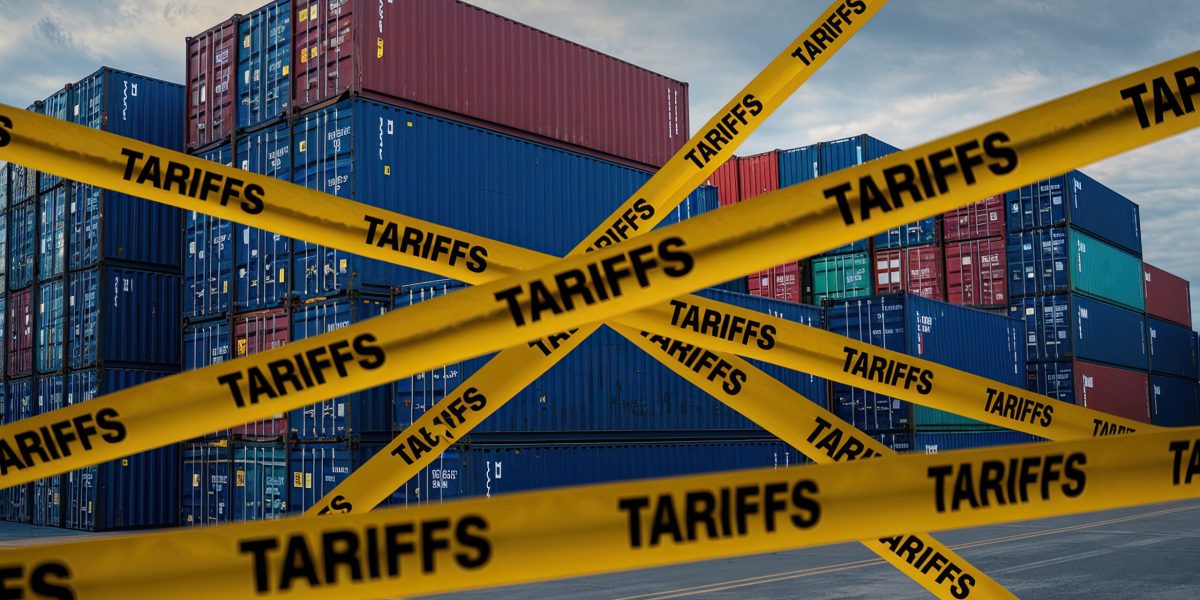
Empty Containers Tell Their Own Story
Then there’s the empties – the silent bellwether of trade flows. Right now, a lot of them are just…sitting. There’s no rush to get empty shipping containers back to Asia, which would usually be happening if importers were gearing up for a busy season.
There will be movement (especially in trucking and warehousing) as goods trickle in through Q3. But it’s unlikely to see a traditional peak. Even ocean freight markets are flashing red.
The average spot rate for shipments from the Far East to the U.S. West Coast has plunged 39% since June 1, according to Peter Sand at Xeneta. The reason – carriers flooded the route with capacity right after Trump rolled back some of the harshest tariffs but demand didn’t follow.
The Mood Across the Trade Chain
This pullback isn’t just anecdotal, it’s showing up in the numbers. Oxford Economics noted that U.S. imports of consumer goods dropped by $4.3 billion in May, following a $33 billion decline in April. The only real bump came from autos. Everything else – Flat or falling.
U.S. Economy Shrinks More Than Expected in Early 2025
Meanwhile, the U.S. economy shrank more than we thought at the start of 2025, marking its first contraction in three years.
The Commerce Department’s final tally shows GDP fell by 0.5% annually from January through March, a steeper decline than earlier estimates of 0.3% and 0.2%. While not a collapse, it’s a clear sign that something is off.
And what dragged growth down?
A surge in imports – as businesses and households scrambled to stock up before Trump’s tariffs kicked in, the rush of foreign goods distorted the numbers.
Fed Chair Jerome Powell said this week, “The stuff you’re buying today may have been sitting in warehouses since February or March,” Powell told lawmakers. “But come summer, we’ll start seeing the impact.”
Indeed, economists expect inflation data for June and July to reflect the tariff wave more clearly.
Meanwhile, Markets Are Still Riding High
Despite the GDP dip, markets remain buoyant. Oil prices are stable, and investors seem unfazed for now. “There’s just too much momentum,” said Kathleen Brooks of XTB. “As long as oil supply holds and sentiment stays strong, stocks will keep climbing.”
But the deeper question is, can the economy keep growing if tariffs tighten consumer belts, and if private demand continues to cool?
And A Small Peek – What About Trump Voters?
Across the country, many Trump supporters are backing the tariffs, even as they watch their 401(k)s dip and their paychecks stretch less. Tariffs remain one of the most cited policies among Republican voters surveyed in recent weeks.
But the sentiment is not uniform. While support for Trump’s broader economic vision is holding among his base, some are growing uneasy with the practical consequences.
In parallel, Trump’s budget plans, including steep tax cuts, have drawn fire from analysts who say they effectively transfer wealth from younger Americans to older ones.

The Last Bit, A Slow Burn
The U.S. economy right now feels like a duck gliding on a calm pond, serene on the surface, but paddling furiously underneath. GDP shrank in early 2025. Consumer spending has softened. Inventories are lean. And prices, though not exploding, are quietly inching up thanks to a delayed tariff wave and strategic re-pricing.
But it’s not just inflation anymore. It’s hesitation.
Retailers are importing less. Shoppers are buying less. Warehouses are emptier. And even with supply chains adjusting and consumers shielded (for now) by pre-tariff inventory, the buffer is wearing thin. The price tags haven’t caught up to reality, but they will.
Tariffs haven’t sparked headline-grabbing inflation yet, but they’ve sparked something else: uncertainty. And in an economy as consumption-driven as America’s, uncertainty is its own kind of recessionary force.
Businesses aren’t overcommitting while consumers are pulling back. Even ports and freight markets are flashing yellow. Yet stocks are still buoyant, fueled by momentum and a strong labor market, for now.
The real risk isn’t a dramatic crash but a quiet fraying – an economy that isn’t breaking all at once, but gradually losing its edge. Growth that looks okay on paper, but feels thinner in the real world. A “soft landing” that might not crash, but still bruises.
For now, the U.S. economy is still standing. But look closer, and perhaps, it’s wobbling more than Washington, Wall Street, or Main Street may want to admit.