BRICS Summit Minus China’s Xi. A Symbolic Snub Or A Strategic Shuffle? Can The Global South Still Speak With One Voice?
Observers caution against interpreting Xi’s absence as a snub. His recent visits to Brazil, multiple bilateral agreements with Lula, and consistent messaging about BRICS' relevance all suggest continuity. Yet diplomacy is as much about presence as policy. When your top leader skips a summit you once treated as essential, the world notices.

BRICS summit, for the first time in more than a decade, Chinese President Xi Jinping (the undisputed architect of China’s bid to reshape global power structures) is absent. And not just any summit, but the first gathering of the newly expanded BRICS+, which now includes geopolitical wildcards like Iran, Egypt, and the UAE.
Xi’s decision to sit out the summit in Rio de Janeiro and send Premier Li Qiang instead is drawing scrutiny not just because of the timing with the Global South facing renewed fragmentation and pressure from Washington but because BRICS itself is at a crossroads. The group, now more unwieldy than ever, is being closely watched for whether it can transform the story into resistance against the Western-dominated global order.
A Summit, But No Supreme Leader
Xi’s absence is conspicuous. Since taking power, he has used BRICS as a cornerstone of China’s foreign policy, a platform to position Beijing as a benevolent superpower for the Global South, and a counterweight to Western institutions like the G7 and the IMF. His physical absence sends a powerful, if subtle, signal.
At face value, Beijing insists BRICS remains a priority. But Xi’s no-show illustrates competing urgencies at home. China is in the midst of a sluggish post-COVID recovery, growing youth unemployment, trade tensions with Washington, and a critical Communist Party meeting on the horizon with the domestic ship rocking, even a global chess master like Xi must return to the boardroom.
And yet, geopolitics abhors a vacuum.
Trump’s Tariff Sword and the BRICS Challenge
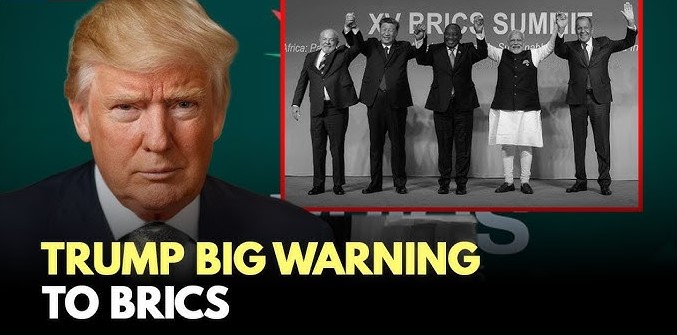
BRICS members, (old and new) are also staring at another external shock – the looming July 9 tariff deadline imposed by U.S. President Donald Trump. This economic comes as Trump accelerates his “America First” doctrine with new threats of punitive measures, especially against any BRICS attempt to introduce a common currency or shift trade flows away from the dollar.
That threat is real. Trump has already warned of 100% tariffs on what he calls “hostile” BRICS nations, especially if they rally behind a “BRICS currency” to dethrone the greenback. Unsurprisingly, the idea, floated by Brazil’s Lula in 2023, hasn’t formally made the agenda this time. But de-dollarization is unmistakably the elephant in the room.
For China, which has long championed the internationalization of its own currency, the yuan, this is a moment to press forward with digital RMB adoption in energy transactions and cross-border trade. That job now falls to Li Qiang, tasked with promoting currency alternatives and building deeper energy ties with fellow BRICS+ oil giants.
A Stage Left Open for Others?
Xi isn’t the only absentee. Russia’s Vladimir Putin, under an ICC arrest warrant for war crimes in Ukraine, is attending via video, a necessity given Brazil’s obligations under the Rome Statute. That leaves India’s Narendra Modi, present both for the summit and a state visit, as the most prominent physical attendee.
Modi’s presence, flanked by South Africa’s Cyril Ramaphosa and possibly Indonesia’s Prabowo Subianto, will likely shift the power dynamics of the summit, at least symbolically. With both China and Russia physically missing, India could seize the opportunity to shape the story and showcase itself as the more “reliable” democratic giant within BRICS+, especially to fence-sitting aspirants like Saudi Arabia.
A Club Too Big to Succeed?
Since its expansion in 2024, BRICS has struggled with the very thing it hoped would empower it – size. The ideological, economic, and political diversity within the bloc has led to friction and policy paralysis. A case in point: the group’s timid response to recent US-Israeli strikes on Iran, one of its own. The final communique offered “grave concern,” but conspicuously avoided naming the aggressors.
The group wants to speak for the Global South. But what does the Global South want and can BRICS really deliver it? Without Xi’s direct leadership and with Russia’s war-challenged status, the bloc risks drifting without a rudder.
Not a Snub, But Not a Signal of Strength Either
Observers caution against interpreting Xi’s absence as a snub. His recent visits to Brazil, multiple bilateral agreements with Lula, and consistent messaging about BRICS’ relevance all suggest continuity. Yet diplomacy is as much about presence as policy. When your top leader skips a summit you once treated as essential, the world notices.
De-Dollarization Dreams and the Dollar’s Shadow
Since its inception in 2009, BRICS has styled itself as the Global South’s counterweight to the elite club of developed economies, the G7. With South Africa joining shortly after its launch, and an expansion in 2024 that welcomed nations like Iran, Egypt, and Indonesia, the bloc now spans a significant swath of the Global South, in geography, population, and ambition.
Its raison d’être has become sharper as the world drifts away from unipolar dominance and stumbles toward a messier multipolar order. For Beijing and Moscow, especially, BRICS offers a strategic platform to challenge Western institutional dominance without direct confrontation, a place to propose alternatives, float new currency systems, and present themselves as benevolent champions of a more “equitable” world.
But therein lies the paradox – the more inclusive BRICS becomes, the harder it is to cohere.
The group’s expanding ideological spectrum, from Russia’s autocracy to India’s democracy, and from Iran’s theocracy to Brazil’s volatile populism, has made consensus a diplomatic minefield. Divergences are becoming difficult to paper over.
The group’s recent statement on the Israeli-American strikes against Iran, one of BRICS’ newest members was revealing. While it voiced “grave concern,” it notably failed to name the attackers, exposing the fault lines within a club trying to juggle moral outrage with geopolitical realism.
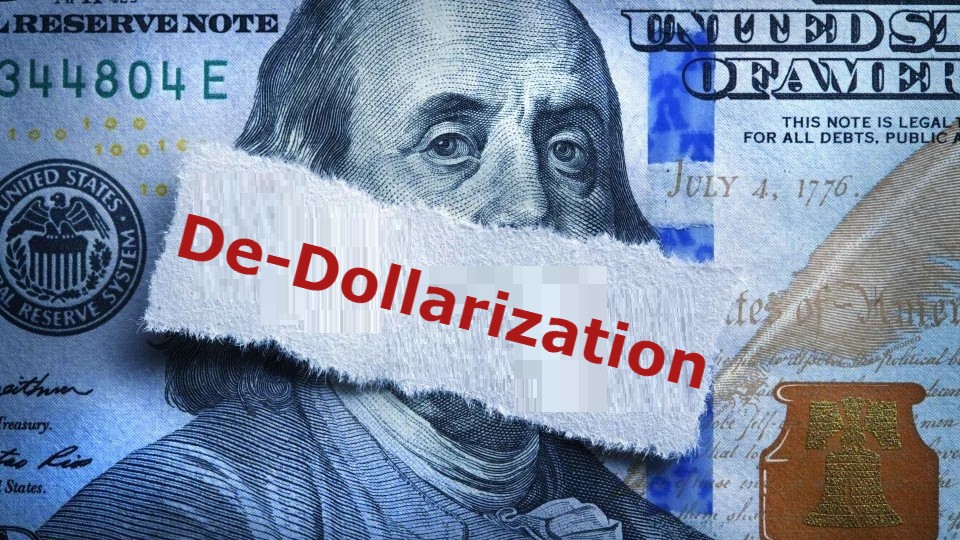
Yet amid all the dissonance, one agenda still garners a fragile unity: de-dollarization.
For countries like Russia and Iran, both heavily sanctioned by Washington, finding ways to escape the stranglehold of the U.S. financial system is not just desirable, it’s existential. Replacing the dollar in trade and reserves would allow BRICS states greater autonomy in shaping global flows of capital and commodities. But aspiration doesn’t equal action.
Brazil’s President Lula has used his host term this year to emphasize “increasing payment options” and reducing “financial vulnerabilities.” Last year, Moscow pushed for a dedicated BRICS payment mechanism a financial circuit breaker insulated from the Western-dominated SWIFT system.
But while the bloc rallies behind the desired monetary independence, the boldest idea a unified BRICS currency remains shelved, for now.
Lula’s proposal in 2023 for such a currency sparked international headlines but little internal traction. Other BRICS leaders, wary of surrendering monetary sovereignty or antagonizing the United States, have kept their distance. Washington, unsurprisingly, has taken the idea seriously. President Trump issued a warning in January, threatening “100% tariffs” on any BRICS nation backing a common currency or publicly supporting alternatives to what he called “the mighty U.S. Dollar.”
The threat may have had a chilling effect. No such plan is expected to materialize in Rio. Yet the pivot to national currencies, China’s yuan, India’s rupee, Russia’s ruble remains active on the agenda.
And therein lies the irony – even in a summit where Xi Jinping is physically absent, China remains central. The expanded use of the yuan in BRICS+ trade would be a step toward the very future China envisions, one where the global financial system no longer pivots on American terms.
But as leaders gather in Rio, one truth remains unshaken: despite the talk of de-dollarization, the gravitational pull of the U.S. economy and its currency still casts a long shadow over BRICS’ boldest ambitions.

BRICS in Flux Between Multipolar Dreams and Geopolitical Realities
The 2025 BRICS+ summit in Rio de Janeiro arrives not just as a routine diplomatic gathering, but as a litmus test for the viability of the Global South’s most ambitious multilateral project. And the most telling development this year isn’t a new member joining, or a flashy announcement on trade it’s who didn’t show up.
Xi Jinping’s absence, though diplomatically managed through the presence of Premier Li Qiang, is more than a scheduling footnote. It reflects a fundamental recalibration both of China’s priorities and of BRICS’ trajectory.
Domestically, Xi is contending with significant headwinds – economic sluggishness, demographic dilemmas, and internal political pressures ahead of a crucial party conclave. However, internationally, the calculus is shifting as Donald Trump returns to the global stage with aggressive tariff threats, making Xi’s diplomatic choices more tactical than symbolic.
Yet the broader story is this – without China’s top leadership physically present, BRICS+ must struggle with its deepest identity crisis yet.
A Club Without a Conductor
As BRICS expands, so too does its incoherence. The bloc’s ideological diversity once touted as a strength now increasingly looks like a structural flaw. It includes democracies and autocracies, oil-rich monarchies and energy-poor republics, U.S. allies and anti-Western actors; all trying to forge a unified agenda under these conditions is less about shared values and more about geopolitical convenience.
That incoherence was sharply evident in the group’s vague response to military strikes on Iran a fellow member without naming the perpetrators. It wasn’t diplomacy; it was paralysis.
At a time when Western blocs like the G7 act with relative cohesion, BRICS risks looking like a diplomatic kaleidoscope, yes, colorful, but fragmented.
The De-Dollarization Dilemma
Despite these cracks, one unifying ambition endures: reducing reliance on the U.S. dollar. And this is where BRICS+ still flirts with significance.
For sanctioned states like Russia and Iran, de-dollarization is more than ideological; it’s survival. For China, it’s a long game to internationalize the yuan and shift global trade architecture. But even as leaders speak of alternative payment systems and currency swaps, the idea of a single BRICS currency remains shelved chilled, perhaps, by Trump’s renewed threats of economic retaliation.
So far, the response has been cautious. The conversation has shifted from creating a joint currency to promoting national currencies, a pragmatic step, but one that lacks the boldness BRICS often aspires to project.
The Modi Moment and India’s Calculated Ascent
With both China and Russia absent from the summit floor, Indian Prime Minister Narendra Modi finds himself in an enviable, if delicate, spotlight. India is the only major BRICS founding member physically present in Rio with both diplomatic clout and economic stability.
For New Delhi, this is a moment to project leadership and woo undecided aspirants like Saudi Arabia. But it also comes with risks. If BRICS becomes too synonymous with China-led ambitions, India could find itself in a geopolitical squeeze — torn between asserting autonomy and being seen as a junior partner in a Beijing-centric bloc.

The Last Bit, What is the Future for BRICS?
This summit lays bare a central truth, BRICS is no longer just a club, it is a contested space. A space where China eyes leadership, Russia seeks validation, India wants balance, and newcomers demand voice. But as the bloc expands in number, it risks shrinking in relevance unless it can act with greater coherence and clarity.
Xi’s absence may not be a snub, but it does illustrate the limits of symbolism in multilateral diplomacy. Presence matters especially in a club already strained by asymmetries of power, policy, and principle.
In the final analysis, BRICS+ remains a geopolitical idea in search of operational coherence.
It is a coalition of contradictions- united by frustration with the Western order, but divided on what should replace it. The Rio summit, stripped of its usual theatrics, was a quiet reminder of that contradiction.
Whether BRICS will evolve into a genuine geopolitical counterweight or simply remain a talking shop with big dreams and bigger disagreements depends not just on who’s in the room, but who’s willing to lead it.
And for now, the leader that built the bloc into a cornerstone of Global South cooperation is watching from afar a silence louder than any summit speech.