Bitcoin Blazes Past $120K; From The Billionaire Who Never Spoke To The Politician Who Won’t Stop Talking, Is Trump Building A New Crypto Empire Or Just Pumping His Portfolio?
As the world watches “Crypto Week” unfold in the halls of Congress and across global markets, the truth is that what began as a cypherpunk experiment is now challenging the very foundations of the financial world. Whether it ends in revolution, regulation, or reckoning, the crypto story is far from over.


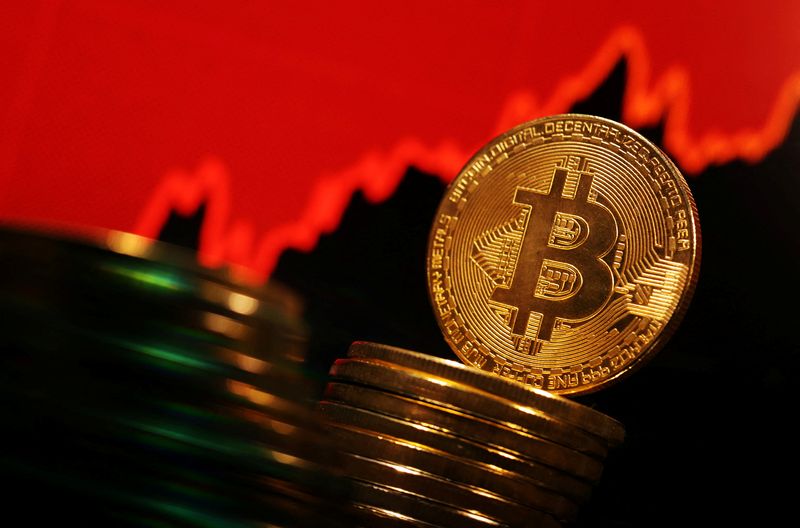
Bitcoin has smashed through the $120,000 mark for the first time ever, a historic milestone for the world’s most famous cryptocurrency, just as Washington prepares for what may become a game-changing week for the entire crypto industry.
Beginning July 14, the U.S. House of Representatives will kick off debates on three pro-crypto bills during what’s been dubbed “Crypto Week”, legislation that could finally give digital assets the regulatory clarity they’ve been begging for.
President Donald Trump, once a crypto sceptic, is now leading the charge, urging lawmakers to shift away from the SEC’s lawsuit-heavy approach under the Biden administration and move toward rules that work with, not against, the industry.
All eyes are on Capitol Hill and the markets are responding. Bitcoin, already up 29% year-to-date, soared to a record $122,055 on Monday. Not bad for a digital asset that launched in 2009 with a humble value of $0.004.
Ethereum followed the rally, climbing to a five-month high of $3,048, while the total crypto market cap has ballooned to $3.8 trillion, per CoinMarketCap data.
What’s the name of the game?
Three major bills will headline “Crypto Week”:
The GENIUS Act: Designed to draw a clear line between securities and commodities in the crypto world, potentially a game-changer for startups plagued by legal ambiguity. (Yes, it’s already cleared the Senate.)
The Clarity Act: Aims to rein in regulators by making it clear that Congress, not the courts or federal agencies, gets to define how crypto is governed.
The Anti-CBDC Surveillance State Act: A bold move to ban the Federal Reserve from launching a central bank digital currency (CBDC), citing fears of financial surveillance and erosion of individual privacy.
Now, with the winds shifting in Washington, optimism is booming. “We expect capital that was previously sidelined due to regulatory uncertainty to re-enter,” said Jag Kooner, head of derivatives at Bitfinex.
But Not Everyone’s Buying It
Critics, particularly from the Democratic side, see the new bills as a dangerous overreach.
Senator Elizabeth Warren slammed the legislation, warning it could become just another “industry handout.” She’s calling for strict guardrails, including bans on public officials (like Trump) from issuing or profiting from crypto tokens.
Warren further cautioned against crypto laws that could unravel decades of investor protections and potentially let crypto chaos spill into the traditional financial system.
She also flagged a key concern: crypto’s anonymity. Wallets are identified by random strings of numbers, not names, a loophole often exploited by bad actors to launder money.
Biden’s Approach? Much Tougher
During his presidency, Joe Biden’s administration treated digital assets as securities holding them to the same rules as traditional stocks and bonds. That meant a steady stream of lawsuits, heavy oversight, and a clear message: crypto isn’t above the law.
But under Trump 2.0, the pendulum is swinging hard in the other direction. Once a vocal critic of crypto, Donald Trump has done a complete 180 and now, he’s not just embracing the blockchain revolution, he’s trying to ride it all the way to political and financial capital.
During his 2024 campaign, Trump became the first major-party presidential candidate to accept crypto donations, a bold move that sent a clear signal: the man who once called Bitcoin “a scam” now wants to be its biggest cheerleader.
And the crypto industry rolled out the red carpet, pouring in nearly $250 million, according to FEC data, to back pro-crypto candidates and shut out regulatory hardliners.
By March, Trump had gone full throttle. He pledged to establish a “U.S. crypto reserve” featuring five digital currencies, including Bitcoin, vowing to make America “the crypto capital of the world.”
Meanwhile, his business empire was busy launching meme coins like $Trump and $Melania, cashing in on online hype and MAGA loyalists. One of the ventures, World Liberty Financial, reportedly earned Trump a cool $57 million, raising serious questions about conflicts of interest especially given that he’s now the sitting president.
Not stopping there, Trump Media & Technology Group recently filed with the SEC to launch a “Crypto Blue-Chip ETF” – a fund designed to hold top digital assets like Bitcoin, further blurring the line between policymaking and personal profit.
Bitcoin’s Trump Bump
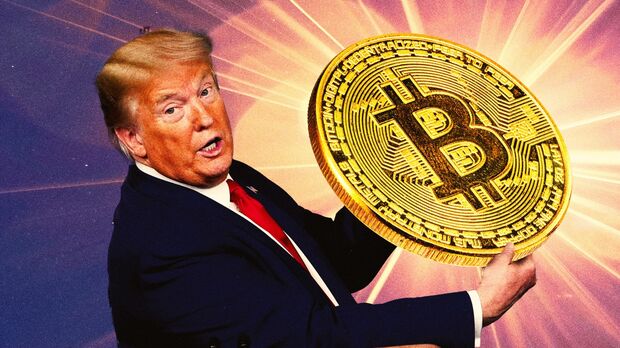
Since Trump’s re-election, Bitcoin has been on a rocket ride. It’s up 75%, soaring from around $69,500 on Election Day to over $122,000, smashing records and reshaping market dynamics.
To put it in perspective: if Bitcoin were a country, its GDP-equivalent value would rank in the top 10 globally, right alongside the likes of Brazil and Canada.
Sure, there were a few speed bumps. In late February, BTC briefly slipped below $90,000, rattled by Trump’s surprise announcement of sweeping tariffs across multiple countries. But once he doubled down on crypto unveiling plans for the national reserve the market snapped back with fresh momentum.
All this is unfolding against a backdrop of global instability: Trump’s tariff wars, conflicts in Ukraine and the Middle East, and jittery financial markets.
Still, Bitcoin has shown remarkable resilience. “BTC is bouncing in line with its macro exposures, especially after tariff shocks,” Citibank analysts noted in a recent report.
Satoshi Nakamoto, The Billionaire Ghost Who Might Be Richer Than Buffett
Bitcoin’s anonymous creator, Satoshi Nakamoto, is now knocking on the door of the world’s richest club and they’ve done it without ever spending a dime, revealing their identity, or giving a single TED Talk.
With Bitcoin breaking past $122,000, Satoshi’s long-dormant stash of 1.1 million BTC is now worth a staggering $134 billion catapulting the mystery figure just outside the Forbes Top 10 Rich List.
That’s ahead of Michael Dell, Rob Walton, and creeping up fast on Warren Buffett and Steve Ballmer. In fact, Satoshi is within striking distance of Google co-founder Sergey Brin, who’s currently estimated at $142 billion.
What makes this even wilder is that Satoshi mined those coins back when Bitcoin could run on a laptop and hasn’t touched the wallet since 2010. Not one satoshi has moved.
The silence has sparked endless speculation – is Nakamoto dead, in hiding, or just a die-hard decentralist determined to never interfere? Whatever the answer, the impact is undeniable. That early digital drop in 2009 has now grown into a $2.4 trillion financial ecosystem.

Wall Street’s Crypto Awakening – Big Money, Bigger Bets
Bitcoin’s meteoric rise this week wasn’t just about memes and moonshots; it’s being driven by serious institutional firepower.
New all-time highs have been buoyed by massive ETF inflows, inflation-hedge narratives, and demand from asset managers once too shy to touch crypto. In fact, while BTC hovered around $119,500, U.S.-listed digital asset funds pulled in a record $3.74 billion in inflows, even as Germany posted $85.7 million in outflows, showing a widening gap in global sentiment.
Even Vanguard, the $10 trillion behemoth that once called Bitcoin “immature,” is now the largest shareholder in MicroStrategy, effectively making it the most important traditional finance player exposed to Bitcoin, thanks to Michael Saylor’s BTC binge.
The Froth Factor
But behind the headlines and the hype, caution lights are starting to flash.
According to QCP Capital, while institutional interest remains red-hot (with over $2 billion flowing into spot BTC ETFs just last week), the derivatives market is frothing.
Perpetual funding rates are nearing 30%, and open interest has breached $43 billion, levels not seen since Bitcoin broke the $100K barrier earlier this year. The risk? Overleveraged long positions could trigger a cascade, as seen during the $2 billion liquidation washout in February.
“Froth is building,” warns QCP. And when froth turns to fizz, things can get messy.
Bitcoin vs. Luxury, The Battle of Bling
Bitcoin is now even outperforming luxury timepieces. Year-to-date, BTC is up 27.87%, with a solid 13.22% gain in the past month, blowing past the +4.5% Q2 rebound seen in the luxury watch market, according to a joint report by Morgan Stanley and WatchCharts.
That modest watch recovery was led by top-tier icons like the Rolex Daytona, Patek Philippe Nautilus, and Audemars Piguet Royal Oak – while mid-tier brands like Panerai, Breitling, and IWC lagged behind. Meanwhile, watches priced under $5,000 are still struggling with bloated inventories and sluggish turnover at the dealer level.
The rebound, the report notes, is “narrow and concentrated”, fueled by deep-pocketed collectors and a renewed global risk appetite. But while both watches and BTC have historically thrived in easy-money, wealth-creation cycles, the correlation broke hard in late 2023.
That’s when U.S. spot Bitcoin ETFs were approved, sending crypto into institutional territory and leaving watches to drift back to what they are: high-end fashion. Today, Bitcoin is a macro-sensitive, liquid, and institutionally backed asset class.
Market Snapshot:
Bitcoin (BTC): Briefly flirted with $123,000 before cooling off. Despite the surge, analysts say we’re still nowhere near euphoria. One bold projection? BTC’s $2.5 trillion market cap could eventually close the gap with gold’s $22 trillion.
Ethereum (ETH): Jumped past $3,079 in early trading before retreating slightly to $3,011. A classic breakout-pullback setup, with strong support holding just above the key $3K level.
Gold: Slipped 0.1% after hitting a three-week high. Ongoing tariff drama and U.S. macro data are in focus, while silver surged to its highest level since September 2011.
Nikkei 225: Markets across Asia opened mixed, with investors largely shrugging off Trump’s latest tariff salvos and eyeing upcoming Chinese economic indicators. Japan’s Nikkei held flat.
S&P 500: RBC hiked its 2025 target to 6,250 (from 5,730), but warns there may not be much upside left especially with the index already above 6,280 as of July 11, well ahead of rivals like Goldman Sachs and Bank of America.
The Last Bit, Is This the Dawn of a New Financial Order or Just a Beautiful Bubble?
Bitcoin’s record-smashing rally is surely more than a story about price charts and market momentum, it’s about power, policy, and a tectonic shift in how money itself is being defined in real time.
From Satoshi’s silent empire to Trump’s thunderous embrace, crypto is no longer lurking on the fringe. It’s now front and center shaping political standpoints, shifting global capital flows, and forcing regulators to play catch-up.
But with Washington warming up, ETFs pouring in billions, and traditional finance finally bowing to the blockchain altar, crypto is growing up – fast.
Yet, questions – will Trump’s crypto crusade unlock innovation or merely pad his portfolio? Will the new laws bring clarity or crack the door open to chaos? Can Bitcoin keep climbing or are we nearing a frothy peak?
As the world watches “Crypto Week” unfold in the halls of Congress and across global markets, the truth is that what began as a cypherpunk experiment is now challenging the very foundations of the financial world. Whether it ends in revolution, regulation, or reckoning, the crypto story is far from over.