The Great AI Wall Of China; Can The World Resist China’s Digital Influence And Can Authoritarian A.I. Win The Global Mind War?
China’s surge in open-source A.I. is quietly redrawing the map of influence, access, and ideology. With sweeping government support, strategic investments, and a commitment to scaling infrastructure at speed, Beijing has created an A.I. machine that’s hard to ignore and even harder to contain. Nvidia CEO Huang calls Chinese AI models 'world class', lauds innovation.


The race for artificial intelligence, AI supremacy is not limited to innovation alone but has now evolved into other significant points – influence, ideology, and who gets to define the future.
On one side stands the United States, home to tech giants like OpenAI, Google, and Meta, who have pioneered some of the world’s most powerful A.I. systems. On the other, China, armed with state-backed ambition, open-source momentum, and a sweeping industrial policy that’s rapidly closing the gap. Hence, what was once a Silicon Valley playground is now a geopolitical battleground where lines of code could determine lines of control in the global order.
Thus, when OpenAI pulled the plug on China’s access to its advanced A.I. tools last July, many expected it to be a major setback for Chinese developers. But the response from Chinese coders was a collective shrug. Instead of relying on closed systems from Silicon Valley, they turned to the world of open-source A.I. where the code is public, the pace is fast, and innovation is communal.
At first, that meant leaning on American-made tools like Meta’s open-source models. But fast-forward a year, and the scene has shifted dramatically. Homegrown Chinese players like DeepSeek and Alibaba have rolled out powerful open-source A.I. models that now rival the best in the world.
This isn’t a coincidence; in fact it is the result of a carefully orchestrated national strategy. Over the past decade, Beijing has been playing the long game, pouring resources into artificial intelligence much like it did with electric vehicles and solar panels. The goal – to become an undisputed A.I. superpower.
“China is applying state support across the entire A.I. tech stack, from chips and data centers down to energy,” says Kyle Chan of the RAND Corporation. And that support shows. While Washington focused on restricting China’s access to Nvidia’s top A.I. chips, Beijing doubled down on building its own. Today, companies like Huawei are hard at work developing homegrown alternatives.
But it’s not just about chips. China’s approach is sweeping; the government has footed the bill for massive infrastructure – data centers, semiconductor hubs, and high-performance computing power. It’s funded a national network of research labs and poured nearly $100 billion into nurturing its semiconductor industry. Cities like Hangzhou have become buzzing A.I. hotbeds, thanks to entire districts designed to incubate innovation – places like “Dream Town,” where start-ups bloom under the wing of both local government and tech giants.
And the investment isn’t slowing down. Just this April, Beijing announced an $8.5 billion boost for A.I. start-ups.
“For the government to help us cover even 10 or 15 percent of our early-stage research costs, that’s a huge benefit,” says Jia Haojun, founder of Deep Principle, a Hangzhou-based start-up that raised $10 million last year.
In other words, while Washington is busy drawing red lines, China is laying down concrete foundations.

The AI Hubs
Moreover, in China’s rapidly evolving A.I. ecosystem, competition isn’t just among companies – it’s between city districts too. Local governments are rolling out red carpets, offering subsidies, office space, and housing to attract the next big thing in artificial intelligence. Jia Haojun, the founder of Deep Principle, revealed that moving his start-up to Hangzhou came with a generous $2.5 million incentive package and hands-on help from officials in setting up shop.
But while the infrastructure race intensifies on the ground, the digital battleground is governed by a different set of rules.
Unlike their American counterparts, Chinese A.I. companies don’t have the luxury of tapping into massive, unfiltered data from sites like Reddit or Wikipedia, platforms blocked by the country’s strict internet censorship. Instead, they’re working within carefully curated datasets sanctioned by Beijing. One such example: a government-approved “mainstream values corpus,” built largely from state media content, designed to keep public-facing A.I. models ideologically aligned.
That said, Chinese tech giants aren’t short on user data. Platforms like Douyin (China’s TikTok) and WeChat provide a rich stream of behavioral information, giving companies like ByteDance a major edge in building intuitive, high-performing A.I. systems.
Still, the state-led strategy has its shortcomings.
With funding pouring into hundreds of start-ups, the market has become overcrowded and hypercompetitive. Companies undercut each other to attract engineers and users, often at the cost of sustainable innovation. And when the tech tide shifts, as it did from facial recognition to generative A.I., the bureaucracy struggles to pivot quickly.
“A.I. doesn’t evolve like traditional heavy industries,” notes Kyle Chan from RAND. “It’s not like making ships or steel – where you build on proven technologies. It moves fast and unpredictably.”
Much of the financial muscle has been flexed in one direction: semiconductors. The government’s flagship chipmaker, SMIC, is working overtime to manufacture A.I. chips for domestic giants like Huawei. These chips are being positioned as a fallback plan, a functional, if slightly underpowered, alternative to Nvidia’s dominant processors. But volume and performance still fall short.
The aim, insiders say, isn’t immediate parity. It’s resilience. “The idea,” Chan explains, “is to avoid a total standstill if global suppliers are cut off, even if China’s chips are a step behind.”

With closed systems harder to monetize under export pressure and technical barriers, China’s big tech firms are going all-in on open-source. It’s fast, adaptable, and increasingly competitive.
In the past year alone, Alibaba, ByteDance, Huawei, and even Baidu, once bullish on closed models, have all rolled out open-source A.I. systems. It’s a sign that China is betting big on shared code as its best chance to catch up to Silicon Valley, which still holds a small but shrinking lead.
While American tech giants like OpenAI and Google are locking their most powerful A.I. systems behind paywalls and exclusive APIs, Chinese companies are going in the opposite direction. By open-sourcing their models, firms like DeepSeek and Alibaba have made it easier for developers, both in China and abroad, to build, experiment, and innovate on top of their work.
And that strategy might just be China’s most powerful export yet.
For Altman, this isn’t just a tech turf war but most likely an ideological one. He’s positioned the A.I. arms race as a battle between democratic values and authoritarian control. His goal is to ensure “democratic A.I. wins over authoritarian A.I.”
But here is where it gets China’s open approach, ironically, might be winning hearts and minds. Engineers across Asia, Africa, Latin America, and even Europe, many of whom are locked out of expensive, U.S.-made A.I. tools, are finding that Chinese models are more accessible, adaptable, and community-driven.
“Open-source is a source of technological soft power,” says Kevin Xu, founder of Interconnected Capital. “It’s effectively the Hollywood movie or the Big Mac of technology.” In other words, while American companies debate ethical guardrails and pricing tiers, China is handing out the tools and gaining quiet influence in return.
But Is China’s Open-Source Really That Open?
While China’s open-source A.I. strategy has gained traction globally, not everyone is convinced it’s as open or altruistic as it appears.
Critics argue that these “open” models still operate within the tight grip of government control and censorship. In China, the definition of open-source can be narrow, models may be available for use, but their datasets, training methods, or underlying code might still be partly restricted or subject to state approval. Foreign developers often face licensing uncertainties, usage limitations, or vague compliance clauses when engaging with Chinese systems.
Moreover, while the Chinese government has been aggressive in funding and fast-tracking A.I. innovation, this top-down control also raises questions about transparency, ethics, and surveillance. After all, this is a system where tech must align with “core socialist values,” and where censorship is baked into the infrastructure itself. How open can an open-source model really be when trained on filtered datasets?
There’s also the broader concern of trust. As geopolitical tensions rise, many countries may hesitate to integrate Chinese A.I. models into sensitive applications, from education and media to defense and governance, fearing data privacy breaches, backdoors, or ideological influence.
So while China’s approach may appeal to engineers looking for accessible tools, policymakers and institutions may tread with caution.
Therefore, in that sense, the A.I. race isn’t just about code but about credibility too. And whichever nation can build both powerful tools and global trust may ultimately set the rules for this century’s most defining technology.
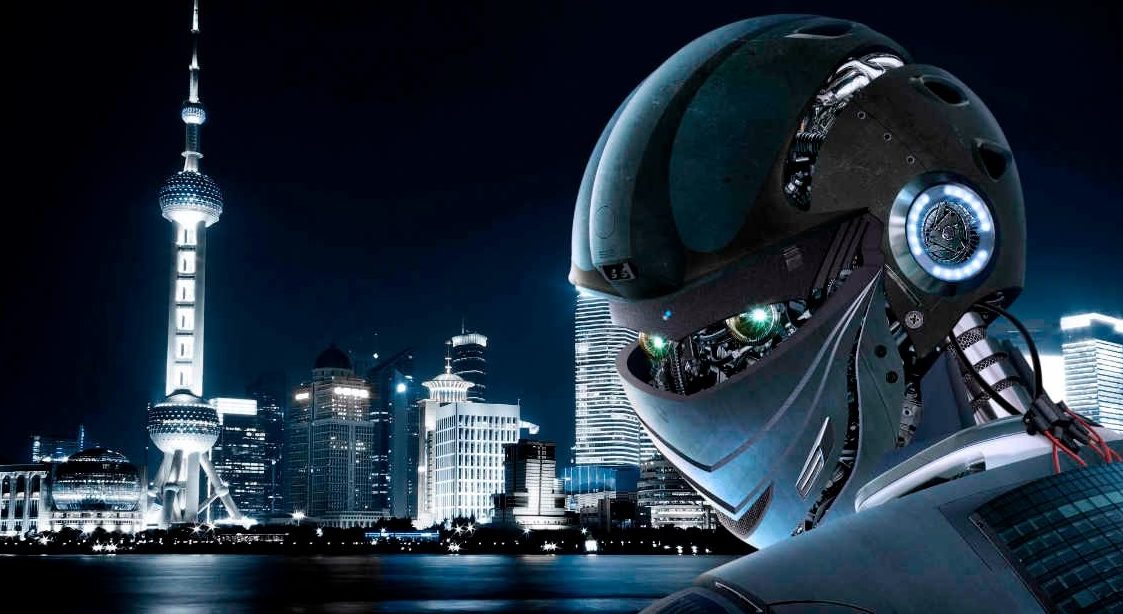
The Last Bit, The Great AI Wall May Be Invisible, But Its Impact Won’t Be
China’s surge in open-source A.I. is quietly redrawing the map of influence, access, and ideology. With sweeping government support, strategic investments, and a commitment to scaling infrastructure at speed, Beijing has created an A.I. machine that’s hard to ignore and even harder to contain.
But this isn’t just a technological sprint alone, it’s a battle over values, trust, and who gets to write the rulebook of the future. The West may have pioneered the tools, but China is rapidly rewriting how they’re distributed, developed, and deployed.
Whether this leads to a more connected and collaborative digital world or a fragmented one split by digital iron curtains will depend not just on innovation, but on intention.
As countries around the world weigh the benefits of cheaper, open-source tools against the risks of ideological influence and censorship, one question that must be asked: Can the world benefit from China’s A.I. prowess without being shaped by its political playbook? Or will the allure of accessible tech slowly chip away at democratic digital norms?
The global mind war has begun and it won’t be won with just smarter machines but with smarter choices!