80,000 Jobs Gone, July Brings More Pain To A Shaky 2025. The Latest Tech Bomb Layoffs, Is AI Delivering The Sucker Punch?
While every company offers its own justification, from cost-cutting to operational efficiency to AI investment, the underlying trend is more than loud: AI is reshaping the tech ecosystem, and human roles are being displaced in the process.

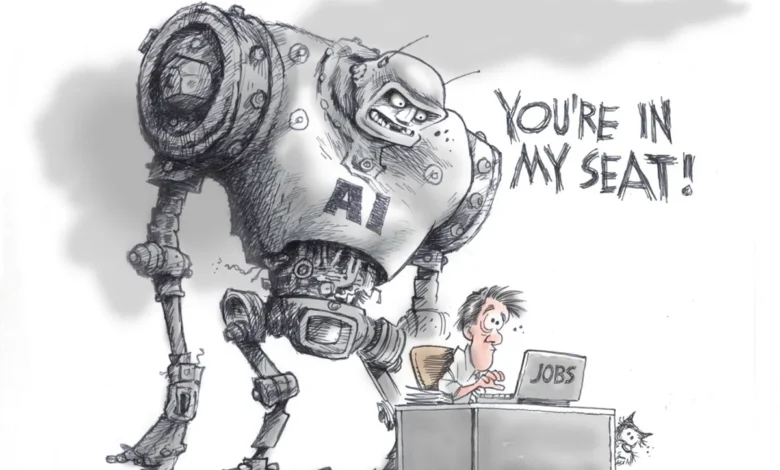
Jobs: The pink slips are flying again and they’re coming from the cloud.
Amazon Web Services (AWS), the world’s largest cloud provider, has just laid off hundreds of employees. Teams within its Sales, Marketing, and Global Services vertical, as well as specialists from its Physical Stores Technology division, have been impacted. On the surface, AWS says it’s all part of a “streamlining” move. But scratch that surface and a sharper reason emerges, one shaped by AI, automation, and a radically shifting tech ecosystem.
These job cuts come not long after Amazon CEO Andy Jassy declared that generative AI would result in fewer jobs. No matter how softly you wrap it, that’s a warning shot. And right on cue, AWS has begun its biggest tilt in years, from cloud-scale dominance to agentic intelligence.
At its AWS New York Summit, the company unveiled a wave of AI-first tools. It launched AgentCore, a powerful new framework that enables developers to deploy autonomous AI agents at scale. It upgraded Bedrock, its flagship AI development platform, and introduced Titan Text Lite and Titan Text Express, compact, fast language models tailored for real-time apps. AWS also integrated LangChain and Weights & Biases, and strengthened ties with Hugging Face and Mistral, underscoring its push toward a multi-model, agent-driven future.
Swami Sivasubramanian, AWS’s VP for Data and AI, summed it up with this striking line: “We believe agent-based applications will be as big as the internet or the smartphone.”
Meaning, the robots aren’t in a line but they’re already here and they’re eyeing your role.
To make things clear, these are not just smarter chatbots; Agentic AI represents a deeper shift. Unlike traditional AI models that respond to inputs, agents can reason, decide, act, and learn, all without human supervision. With AgentCore, developers can now build autonomous systems that integrate with APIs, access tools, manage workflows, and continuously evolve.
But here is where things start getting worrying – agentic AI is doing more than optimizing work, it (potentially) displaces the worker since every agent that can operate independently across applications is potentially replacing a human doing that very task. And AWS is marketing this as a feature, not a bug.
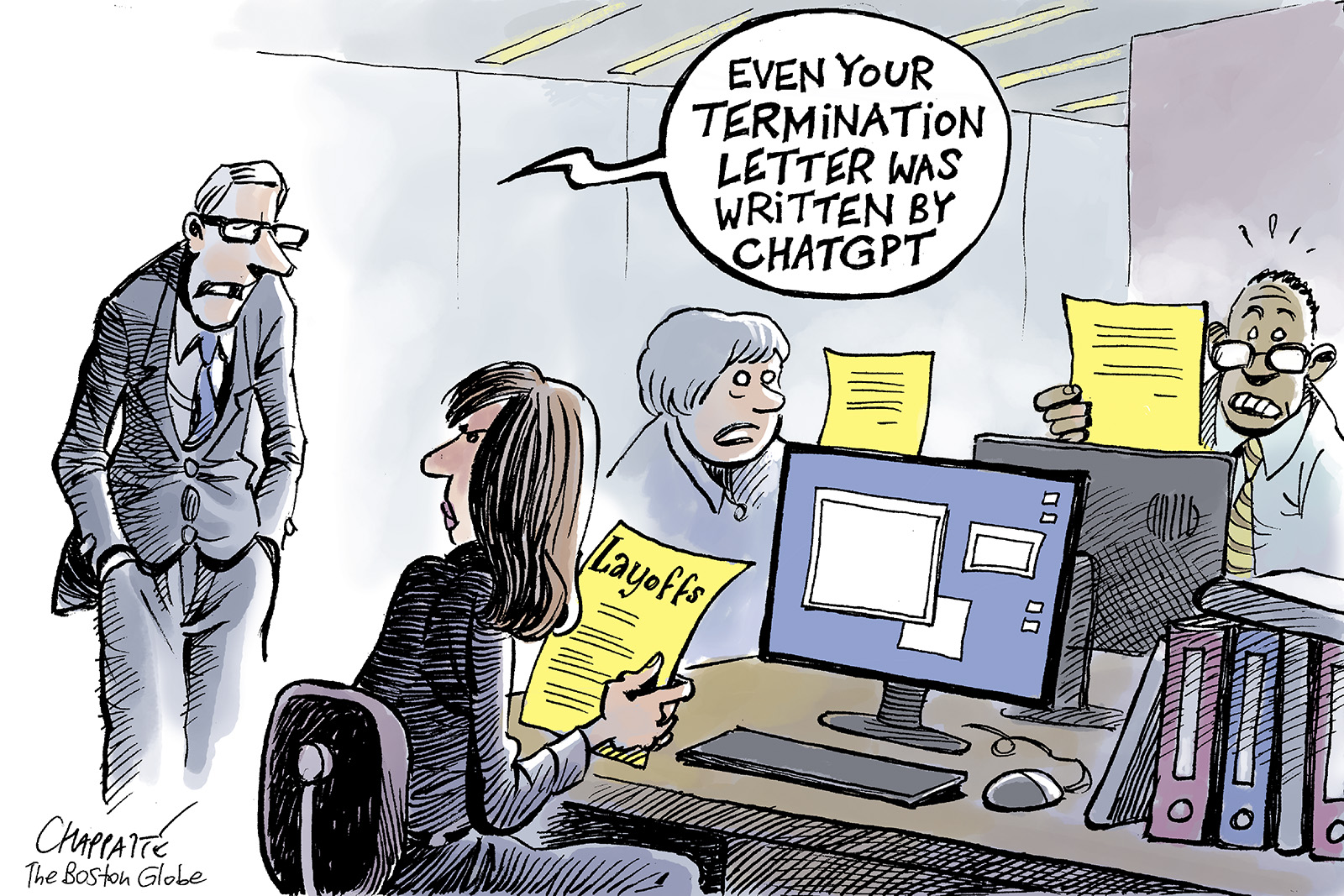
Others Follow..
All this comes just weeks after Microsoft ramped up its Copilot for Azure and GitHub offerings, which also embed AI assistants into every part of the developer workflow. Clearly, AI is no longer an accessory, it’s the operating system.
Meanwhile, Google Cloud just committed over $25 billion to build AI and data centers across 13 U.S. states. Oracle is doing the same in Europe. Everyone is racing to construct the next digital battleground but unlike earlier cloud wars, this one doesn’t need an army of people; it just needs machines that think.
The irony is that these AI systems are trained on human knowledge – code, emails, manuals, support logs – the very things people once did. Now, they’re learning fast enough to replace their teachers.
Oracle Bets Big on Europe’s AI Future, And Wall Street Is Paying Attention
Now let us look at Oracle in detail, in a global race to dominate the AI-cloud frontier, Oracle is no longer content with playing catch-up. The longtime enterprise software giant (often ranked fourth in the hyperscaler league behind AWS, Microsoft, and Google) has just thrown down a billion-dollar gauntlet in Europe, signaling its intent to become a serious AI infrastructure contender.
This week, Oracle announced massive new investments to expand its cloud and AI footprint across two major European economies: the Netherlands and Germany. The plan is to pour $1 billion into the Netherlands, particularly the tech-savvy Amsterdam region, and $2 billion into the Frankfurt cloud corridor in Germany over the next five years.
“Organizations in the Netherlands are rapidly embracing AI and new technologies,” said Wilfred Scholman, Oracle’s country head in the Netherlands. He praised the Dutch government’s ambition to create a robust AI ecosystem and positioned Oracle’s investment as a catalyst for productivity, resilience, and sustainable growth.
In Germany, the message was the same but the bets higher, both in terms of dollars and political alignment. Oracle’s senior vice president Thorsten Herrmann emphasized that the $2 billion German expansion would support the federal government’s AI innovation agenda, helping the country cement its role as a continental AI powerhouse.
But these aren’t just headline-grabbing infrastructure announcements. They’re strategic moves aimed at positioning Oracle Cloud Infrastructure (OCI) as a credible, sovereign-friendly alternative to the American duopoly of AWS and Microsoft. Especially in a post-Schrems II Europe, where data sovereignty and AI governance are top concerns, Oracle’s “in-region” investments could prove to be a masterstroke.
And Wall Street is noticing. In a bullish client note, Scotiabank analysts likened Oracle’s transformation to “a butterfly emerging from a chrysalis,” slapping the company with a sector outperform rating and a $300 price target. The bank sees Oracle as evolving into a Tier-1, independent AI infrastructure provider with a justified valuation premium.
“This nearly 50-year-old software giant is having an AI renaissance,” the memo read, noting that Oracle’s projected revenue growth is double that of its large-cap software peers.

Google Cloud Bets $25 Billion on U.S. AI and Infrastructure Boom, as Public Sector Embraces Cloud Amid Budget Crunch
Not to be left behind, in a bold move showing the rising strategic importance of AI and cloud computing, Google Cloud has announced a massive $25 billion investment into expanding its U.S. infrastructure. This capital injection, unveiled at an event in Pennsylvania attended by Sen. Dave McCormick and President Donald Trump, marks one of the company’s most aggressive U.S. buildouts to date.
“Google’s investments announced today will increase energy abundance and empower Americans with the skills needed to thrive in the AI era,” said Ruth Porat, President and Chief Investment Officer of Alphabet, Google’s parent company. “We support President Trump’s clear and urgent direction that our nation invest in AI infrastructure, technology and the energy to unlock its benefits so that America can continue to lead in AI.”
The funds will be deployed across 13 U.S. states, including Illinois, New Jersey, Ohio, and Virginia, and will cover the development of AI-ready data centers and cloud infrastructure. Around $3 billion is also earmarked for modernizing two hydropower plants in Pennsylvania and launching a workforce development initiative titled “AI Works for America.”
This investment comes as part of a broader commitment by Google CEO Sundar Pichai, who had earlier announced a 40% increase in capital expenditure, targeting $75 billion in 2025.
A Public Sector Catching Up
Google’s massive infrastructure push comes at a time when the U.S. public sector, long reliant on aging legacy systems, is accelerating its own cloud transformation journey, albeit under financial and workforce pressures.
According to a new 2025 report by Information Services Group (ISG), state, local, and educational agencies are increasingly turning to cloud managed service providers (MSPs) to meet growing digital demands. The ISG Provider Lens Private/Hybrid Cloud – Data Center Services report reveals that 90% of agencies surveyed plan to adopt hybrid cloud models, favoring flexibility, scalability, and cost efficiency.
“U.S. public agencies are looking for IT modernization projects with measurable outcomes, provided through AI-powered tools and automation,” said Nathan Frey, ISG Partner and U.S. Public Sector lead. “They are relying on MSPs to administer their IT assets and supply the skills necessary for digital transformation.”
The cloud shift is also tied to the growing importance of data-driven governance. Agencies are adopting AI tools to automate workflows, manage sprawling data, and extract insights that can lead to faster, more informed policy decisions. Many are also turning to FinOps (Financial Operations) tools to align cloud spending with limited budgets and improve cost predictability via consumption-based models.
Summer of Tech Layoffs, July Brings More Pain to a Shaky 2025
Taking the trend forward from past year, the summer of 2025 has been far from sunny for tech workers. Since May, tens of thousands have been shown the door across some of the industry’s biggest names, a trend that has continued well into July, with no signs of slowing down.
In May, layoffs hit workers at Panasonic, Match Group, Google, and CrowdStrike. In June, cuts swept through Microsoft, Disney, and Bumble, among others. Now, July is shaping up to be just as bleak.
Here’s a detailed look at the most significant tech layoffs announced since the beginning of the month.

Microsoft: Up to 9,100 Laid Off
The most striking announcement came from Microsoft, which has been slashing jobs in waves. Following roughly 6,000 job cuts in May, and additional layoffs in June, including its Xbox division, the software giant revealed it would eliminate up to 9,100 more jobs in July. That amounts to nearly 4% of its global workforce.
The cuts are widely interpreted as part of a sweeping internal shift: reallocating capital from human resources to AI development. As Microsoft races to compete in the AI arms race, the job losses paint a painful picture of the human cost of digital transformation.
Making matters worse, the company drew criticism for how it handled the layoffs. A now-deleted LinkedIn post from Xbox executive producer Matt Turnbull suggested that laid-off employees use AI tools to process the emotional toll of losing their jobs, an attempt at encouragement that backfired and was met with swift public backlash.
ByteDance: 65 Jobs Cut at TikTok and E-Commerce Units
ByteDance, the parent company of TikTok, also made layoffs in July, cutting 65 roles across its operations in Bellevue, Washington where it has a workforce of around 1,000 people.
The affected roles span both ByteDance and TikTok, specifically within its growing e-commerce division, which includes TikTok Shop. A TikTok spokesperson told GeekWire that the decision came after “careful consideration” as the company reviews its operations to align with evolving strategic priorities.
Intel: More Than 5,000 Job Cuts Across Key States
Intel has emerged as another major player in this month’s layoff wave. The chipmaker is laying off more than 5,000 workers, with the majority of job losses hitting its campuses in California and Oregon, and additional impacts in Texas and Arizona.
While Intel has not broken down the departments most affected, a spokesperson confirmed that the company is undergoing structural changes to become “leaner, faster and more efficient.” Like Microsoft, Intel is pivoting resources toward AI development, and the restructuring is part of that broader transformation.
Glassdoor and Indeed: 1,300 Jobs Cut by Parent Company
Even the job platforms themselves are not immune. Recruit Holdings, the Japanese parent of Glassdoor and Indeed, announced plans to cut 1,300 jobs in its HR Technology segment, about 6% of its global workforce.
In a memo, CEO Hisayuki “Deko” Idekoba pointed to the rise of AI as a major factor behind the cuts. “AI is changing the world,” he wrote, adding that the company must adapt to ensure its products remain competitive and meaningful for both job seekers and employers.
Lenovo: Strategic Reductions in U.S. Workforce
On the hardware front, Lenovo announced it is laying off 3% of its U.S. full-time workforce, roughly 100 positions, according to The News & Observer. The reductions are expected to affect staff at the company’s U.S. headquarters in North Carolina, particularly across the Raleigh-Durham region.
A Lenovo spokesperson said the cuts are part of a broader strategy to “accelerate growth and overall transformation,” signaling a recalibration of focus in North America.
Scale AI: Startup Cuts 14% Despite $14.3B Investment
Even AI-native companies aren’t immune. Scale AI, a rising star in the generative AI space, is laying off 14% of its workforce, just weeks after receiving a $14.3 billion valuation in a funding round led by Meta.
Scale AI’s work revolves around data annotation, labeling the vast quantities of data that train machine learning models. CEO Alexandr Wang recently agreed to lead Meta’s new AI research lab, while interim CEO Jason Droege acknowledged in a company memo that the startup had “expanded too quickly” and become weighed down by “excessive bureaucracy.”
The layoffs, he said, will make the company “more nimble” as it repositions itself to better respond to changing customer needs and market conditions.
2025’s Running Total: 80,000+ Tech Workers Laid Off
With Microsoft, Intel, and Recruit Holdings alone cutting nearly 15,000 jobs in July, the month has added substantial weight to 2025’s ongoing layoff crisis.
According to data from Layoffs.fyi, more than 80,000 tech workers have lost their jobs this year, a number that spans layoffs at 159 companies. That’s already over half of 2024’s full-year total of 152,000 layoffs, and the year is only halfway through.
For context, 2023 remains the worst layoff year on record in recent memory, with a staggering 264,000 job losses across 1,193 tech firms.

The Last Bit. A Shifting Industry in a New AI Era
While every company offers its own justification, from cost-cutting to operational efficiency to AI investment, the underlying trend is more than loud: AI is reshaping the tech ecosystem, and human roles are being displaced in the process.
But as layoffs mount, questions are also being raised about how companies are managing the human side of these changes. Whether it’s the tone-deaf use of AI to help process grief or the silent erasure of entire teams, the tension between technological progress and workforce stability is sharper than ever.
And with the second half of 2025 still ahead, workers and industry observers alike will be watching to see if the “strategic rebalancing” continues or if the bleeding finally slows.