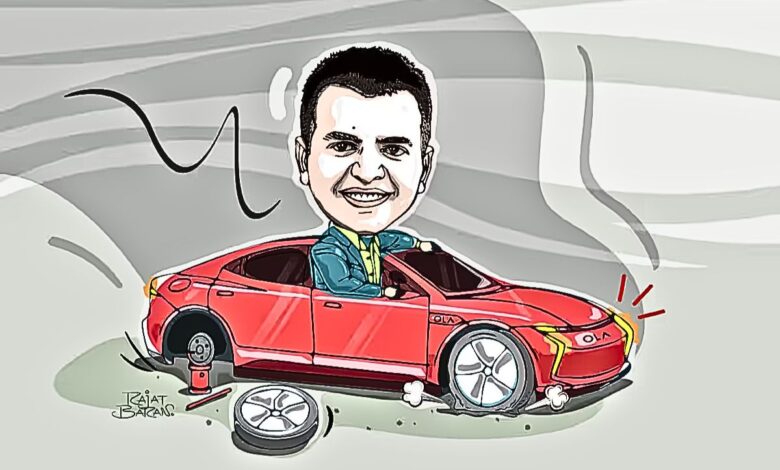
Ola’s story has taken a nightmarish turn. Once celebrated as India’s homegrown ride-hail and EV star, the company has been rocked by a cascade of top-tier resignations that industry analysts say “add to a trend of key exits” across the group. In late 2024 alone, multiple senior leaders quit in rapid succession, an exodus punctuated by Ola Electric’s CTO and CMO (Suvonil Chatterjee and Anshul Khandelwal) leaving on the same day. The Economic Times noted that these departures came “amid declining market performance” for Ola. In short, Ola’s corporate ship is leaking badly.
- Dec 2024: Ola Electric’s Chief Technology/Product Officer Suvonil Chatterjee and Chief Marketing Officer Anshul Khandelwal resigned simultaneously, effective December 27, 2024. Both had been Bhavish Aggarwal’s long-time lieutenants, Chatterjee since 2017 and Khandelwal since 2018,making their joint exit especially alarming.
- Nov 2024: N. Balachandar, Group Chief People Officer (former Head of HR for Ola Electric, Ola Cabs, and AI unit Krutrim), quietly departed in November.
- Oct 2024: In what the press dubbed “another shock” month, Ravi Jain (Business Head, AI startup Krutrim), Sidharth Shakdher (Mobility CBO), and Mahesh Alanthat (VP, Ola Electric Sales) all resigned in October. Shakdher jumped to Paytm, while Alanthat left barely eight months after joining from Samsung.
- May 2024: Ola Cabs’ finance chief Kartik Gupta quit in May 2024. He had been appointed CFO only six months earlier.
- Early 2024: The first shock of the year: Ola Cabs’ new CEO Hemant Bakshi left after just three months on the job. (Co-founder Bhavish Aggarwal resumed command afterward.)
Each departure alone might have been manageable, but together they constitute a leadership bloodbath. Moneycontrol bluntly observed that this “slew of high-level exits” dampened investor sentiment. Indeed, one headline declared a “continued top-level exit” crisis in Ola during 2024. Even an ETMarkets report noted that the exits “add to a series of top-level exits from Ola’s businesses” this year. The toll is clear: key functions from technology and marketing to finance and HR have lost veteran managers, raising alarm bells inside and outside the company.
Investors Run for Cover: Market Panic
Investors have responded in horror. Ola Electric’s stock has been in a freefall. After its August 2024 IPO, the shares never recovered, by mid-2025 they were roughly half of the listing price. It was reported that Ola Electric shares were “down around 48% since their debut in August 2024”. On bad-news days the slide has been dramatic: for example, in early October 2024 the stock “tanked by 8%” in a single day after CEO Bhavish Aggarwal engaged in a public Twitter spat. Similarly, on December 30, 2024 the price fell over 3% after news that two more senior executives had quit.
It’s not just the headlines. Traders and analysts openly warned of turmoil. Samco Securities commented on Q1 2025 results that Ola was “best suited for high-risk traders” due to “sharp operational turnaround” but large price swings. Even as the company occasionally spikes (a 20% surge on one good quarter), the narrative is bleak. One broker succinctly summarized: Ola “continues to cede significant market share” and has “a track record of overly optimistic guidance”. Another exhorted investors to remain “cautious” and to wait and see.
Behind the sober talk, social media has seethed with anger. Furious shareholders took to X/Twitter after every mishap. After that CEO-comedian row, one investor (Ganeshan Iyer) tweeted that he’d sold his Ola Electric shares “at a loss” of ₹40,000 because Aggarwal’s “arrogance” made the company worthless. Hundreds more chimed in: one wrote that “Ola has drained its investors’ wealth” and warned that such “disdain for customers, employees and investors” would never create value. As one exasperated commenter put it, they could no longer expect “much from a company led by ‘such a toxic person’”. In short, investor confidence is shattered and the social-media rage, widely reported by big outlets only adds fuel to the fire.
By the numbers, the stock charts speak volumes. In late 2024, Ola Electric’s share price slid into the ₹80s; it only briefly recovered to ₹100+ when a quarter beat expectations. Over the last three months of 2024 alone it “fell over 12 percent”. Meanwhile, a growing fraction of retail investors has been left holding the bag, ironically, small shareholders holding ₹2 lakh or less rose from 4.45% at IPO to 12% in the March 2025 quarter as the price dropped.)
In summary: once early backers bragged about Ola’s eye-popping valuations, today many worry it has burnt through their wealth. The combination of a tumbling stock, desperate investor tweets, and frantic price swings has created a self-reinforcing panic. Financial commentators now routinely describe Ola as a “high-risk” or “volatile” investment, which is a far cry from the stable blue-chip aura it once projected.
A Deadly Exodus: Ola’s Leadership Turnover
Why has Ola suffered so badly? Apart from obvious operational headwinds, a toxic management culture seems to be part of the answer. Employee attrition is through the roof. Ola itself quietly admitted in its IPO prospectus that in FY2024 its “employee attrition rate was 44.25%”, a staggeringly high figure that essentially admits half the workforce turned over that year. Analysts have not been shy about connecting the dots. It was noted that Ola is “facing a decline in market share, increased customer complaints and a fall in its stock price” after laying off hundreds in its manufacturing wing.
Meanwhile, reviews on job sites have been scathing. (Employees have complained of 12–14 hour days, six-day weeks, and a cutthroat environment. These comments were so extreme that a Reddit user called it “the worst place to work”. Though such testimonies are informal, they echo the high attrition statistics.)
Whether or not every ex-employee story is true, the accumulated evidence of churn is irrefutable. Google searches and Glassdoor pages for “Ola Electric” now overflow with warnings to prospective hires. In one widely circulated review, a departing developer lamented that any work-life balance promised during interviews evaporated once they were hired, writing cryptically that “your life is finished” at Ola. (Similarly, dozens of LinkedIn posts by former Ola EV engineers have surfaced decrying overwork and low morale.)
In practical terms, the damage is clear. With C-level and senior roles empty or held by interim leaders, critical projects have stalled. Ola Electric’s slick “Gen 2” scooter launch in 2022 was a triumph, but follow-up products have been repeatedly delayed, in part because the product and tech teams have kept losing leadership. Ola Maps, its promised Uber competitor “Krypton” for ride-booking, and new subscription services have likewise been slowed by the revolving door of managers. One observer told that Suvonil Chatterjee had been steering many of Ola’s flagship tech projects (Ola Maps, AI Krutrim, etc.), and that his departure left a vacuum.
Notably, Ola’s woes are not uniform across the group. The erstwhile taxi arm (Ola Cabs/Ola Consumer) did see its own CEO and CFO exit, but had already been struggling with profitability issues under government regulations. By contrast, Ola Electric was meant to be the futuristic growth engine. Yet its founding product was slow to ship to customers, and by late 2024 the EV arm’s market share plummeted from ~49% in mid-2024 to under 19% by year-end. Inside sources say internal targets were repeatedly missed and that by the end of 2024 few senior staff still wanted to soldier on.
In short, Ola now looks like a company hollowed out from within. The steady stream of exits at every level, from the boardroom to mid-management, suggests “retention of senior talent” is a massive problem. As one report grimly put it, Ola’s leadership vacancy chart is downright spooky: AI labs, marketing, HR, finance, sales; all bleeding experienced professionals. With growth targets unmet and morale low, many analysts are asking whether Ola’s management has lost the energy and vision to execute its own mission.
Media Firestorms and Public Backlash
The company’s troubles have been aired unflinchingly in the press. Tech and financial media have been relentless in highlighting Ola’s misfortunes. Stories in The Economic Times, Moneycontrol, LiveMint and others have headlined each executive exit and product delay. Headlines like “Slew of High-Level Exits Continue at Ola” (Moneycontrol) and “Ola group’s continued top-level exits in 2024” (ET Tech) practically read as obituaries for company stability. Even general-interest outlets (Hindustan Times, Zee, national TV) have picked up the CEO’s social-media battles, amplifying the picture of a company beset by bickering and chaos.
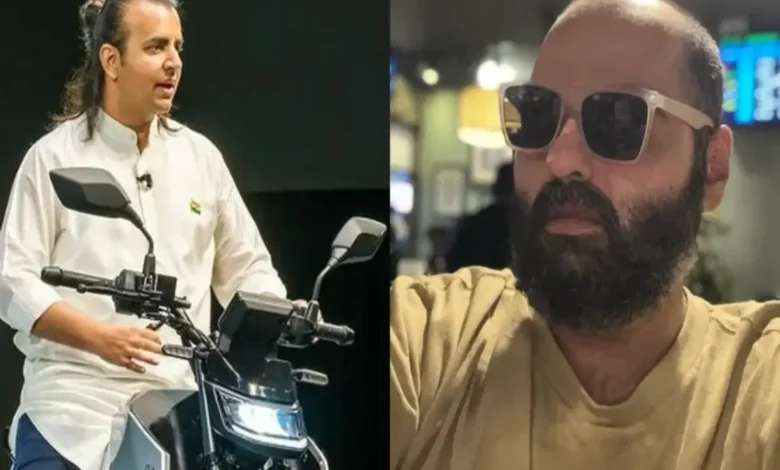
The PR damage goes beyond facts. In October 2024, the spat between Aggarwal and comedian Kunal Kamra, in which Aggarwal unleashed profanity on Twitter, was splashed across mainstream media. It wasn’t just entertainment news; financial analysts explicitly linked it to an 8% stock drop. Overnight, Bhavish Aggarwal became a lightning rod for criticism: reporters quoted outraged users calling him “arrogant,” “crass,” even “toxic”. That kind of branding sticks. At a time when startup founders are idolized as visionary, Aggarwal’s public altercations fed a narrative that he might be leadership poison.
Within India’s startup community, horror stories about Ola’s work culture have proliferated. Venture capitalists in India, when asked off the record, admit they’re now wary of new bets on anything connected to Aggarwal. During the IPO roadshow, several analysts nervously asked if Aggarwal planned to step down after listing; a clear sign that the founder’s style was a concern. Even on LinkedIn and Twitter, former Ola employees have candidly criticized the company. (In one viral post, an ex-employee described line-up hell where no one dared smile for fear it’d be their “last smile at the company”.) Such stories, some anonymous, some on the record, have fed a growing media narrative that “Ola is burning out its people.”
Taken together, the relentless media scrutiny has only exacerbated the misery. Each news report on a miss or a misstep seems to trigger social-media jabs and fresh sell-offs. Ola’s public image is now far from the disruptor darling it once was: coverage often evokes “dysfunction,” “crisis,” and “meltdown.” Advertisers and partners have started to edge away subtly. The once-packed industry events where Ola executives spoke boldly about global expansion now feature noticeably fewer Ola banners.
Rivals in Focus: Uber, BluSmart, and Ather
Meanwhile, Ola’s rivals are sharpening their pitch. Most obviously, Uber remains waiting in the wings. International analysts note that Uber currently has a smaller footprint in India (about 35% market share in ~30 cities) compared to Ola (around 45% share in ~110 cities). But given Ola’s stumbles, Uber has suddenly smelled an opportunity.
The same story noted that Uber is pushing into electric vehicles (Uber Green) and aggressively filling its executive ranks. (Indeed, one source noted Uber has been scrambling to fill dozens of vacancies in India after its own management shake-up.) In a pointed line, industry experts told: “Uber is not going to quit any time soon,” and predicted a “two-horse race” in India. In short, Uber’s strategy is “girding for battle”, and it may view Ola’s troubles as its chance to finally catch up.
Beyond the ride-hail giants, Ather Energy and Bajaj loom large in the EV space. These legacy-backed startups have so far avoided the personal-drama headlines. In fact, at least one analyst publicly advised that conservative investors might prefer steadier automakers: “Conservative investors might still prefer steadier names like TVS or Bajaj for now,” he said, implying that Ola’s volatility makes companies like Ather (backed by TVS) or Bajaj Auto more reliable bets.

This is not an accident. Ather has quietly churned out solidly selling scooters and just filed for IPO, while Bajaj and Hero have maintained consistent (if not spectacular) EV rollouts. On that note, the dramatic collapse of another EV taxi service, BluSmart, has become a cautionary tale. BluSmart was hailed a year ago as a clean-alternative to Uber/Ola in cities like Delhi and Mumbai. Yet in April 2025, it abruptly suspended operations amid scandal. Regulators allege BluSmart’s co-founders diverted customer funds to personal luxury purchases.
The images from New Delhi airport show shuttered BluSmart booths and stranded drivers,a stark, eerily silent scene reminiscent of the closure of a ghost town. Many view BluSmart’s fate as a warning: even an EV-only startup with foreign backing (BP Ventures) can crash suddenly. This underscores how tough the competitive landscape is: Ola’s growth dreams now stand alongside tales of fast failures and frauds.
Meanwhile, incumbents from the ICE world are circling too. Ather’s backer TVS is now pushing electric scooters aggressively, and Bajaj is launching its own EV models. These firms have their own challenges, but at least their management teams have not been publicly dissolving. As one industry newsletter dryly noted, “The contrast between Ola’s chaos and its rivals’ caution could not be sharper.” For example, while Bhavish Aggarwal has been involved in daily social-media altercations, Bajaj’s CEO ran quietly behind the scenes on production planning, and Ather’s leaders have been focusing on factory expansions. Such steadiness is proving attractive to both customers and investors in comparison to Ola’s headline-making drama.
The Road Ahead: Can Ola Recover?
The sum of these signals is ominous. Ola’s boardroom turmoil, plummeting stock, and bruised public image create a potent mix of risk. By now, few doubt the company is in a crisis. Even ardent fans admit that Ola’s management is facing an unprecedented test: revitalizing a brand that now seems to stand for mismanagement and attrition. If one charts Ola’s trajectory, it looks like a classic boom-to-bust startup arc, with multiple pivot points. The company’s original ambition was to be India’s answer to Uber and Tesla, but today it is scratching for stability.
Nevertheless, some optimists cling to hope. The Q1 2025 results did show some operational improvement and profits at one division. Ola still has a massive installed base (hundreds of thousands of drivers and riders using its app daily) and deep pockets (SoftBank and Tiger Global remain committed to funding, for now). A successful turnaround story is still possible if the leadership can arrest the bleeding;for example, by rapidly filling key roles, improving governance, and repairing its brand. The fact that retail investors are doubling down (the number of small shareholders actually increased during the share plunge) suggests that a segment of the market still believes in the core business.
But even believers warn: time is short. Every new resigning CXO is another argument against Ola’s stability. Each snarky tweet from the CEO costs trust. Rivals are energized and government policy is growing tougher (forcing safety and pricing standards). If Ola does not show substantial change soon, a clear new leadership strategy, better customer service, or at least an end to damaging public feuds,the exodus might truly become a terminal blow.

In the end, Ola stands at a crossroads. It must decide whether to fix the internal rot or risk watching its rivals eat its lunch. Right now, the writing on the wall is scary: shareholders have seen 50% of their money vanish, and top talent is voting with its feet. As one venture analyst put it, Ola’s situation is like “a senior exec leaving every month, nobody sane wants to join.” This is a far cry from the “Ola boss” storyline investors once cheered.
Whether this slide into chaos will yield lessons or obliteration, one thing is clear: the next chapters for Ola will be make-or-break. One hopes for the millions of users and employees affected that Ola can somehow reverse course – but all the current evidence suggests it will require a near-miracle or a very dramatic change of tune.