The Great Digital Block Party: How Gen Z’s Block Button Obsession Is Building Walls Instead Of Bridges?
Gen Z champions authenticity, like authentic brands, authentic experiences, authentic lives. But when faced with authentic challenges, real disagreements, genuine feedback, difficult conversations, they choose digital invisibility. You can’t scream “keep it real” while vanishing into the ether over a mildly passive-aggressive Slack emoji.

Imagine you’re a hiring manager at a shiny new startup, sipping cold brew and imagining a future where your new team will build unicorns. You’ve just wrapped up an interview with a promising Gen Z candidate, the one who is bright-eyed, quick-witted, TikTok-verified sense of humor. You ask the usual questions:
“Tell us about your experience.”
“How do you handle stress?”
“What’s your biggest weakness?”
And then… silence.
Not metaphorical silence. Literal digital silence.
Your emails bounce back like bad cheques, your WhatsApp texts remain stuck at a lonely single tick, your LinkedIn message says “This member is no longer available,” and, just for good measure, they’ve unfollowed the company’s Instagram.

Welcome to 2025, where Gen Z has weaponized the block button.
Generation Blockbuster: Now Streaming on Every Platform
Let’s not sugarcoat this. Gen Z, those born between 1997 and 2012, are entering the workforce in droves. By 2024, they officially outnumber Baby Boomers. By 2030, they’ll make up 30% of the global workforce.
The generation that once perfected ghosting high school crushes has now brought those same conflict-avoidance superpowers to boardrooms, Slack channels, and salary negotiations. They’ve turned blocking into a Swiss Army knife, using it for slices, dices, and amputating professional relationships with surgical precision and the emotional subtlety of a sledgehammer.
In Gen Z’s world, difficult conversations are optional, but digital vanishing acts? Ah! That is Mandatory…
Let’s See Some Real Life Case Files from the Professional Twilight Zone, where The Blocking Obsession of Gen Z has Irritated Employers!
The Interview Ghost
Sarah, an HR manager at a Bangalore tech firm, shares her horror story:
“I asked a candidate about a four-month gap in their resume. They smiled, said they’d ‘get back to me after processing the question,’ and they vanished. Blocked my number, blocked LinkedIn, emails bounced. I’m half expecting Netflix to drop a documentary about them.”
The Feedback Phantom
A young creative director at a Mumbai agency was given constructive criticism. Not insults. Not career-ending humiliation. Just gentle suggestions. Their response? They blocked the entire management team on every channel. Emails undelivered. Slack access revoked (by them). “Out of office” auto-replies mysteriously enabled.
The Collaboration Catastrophe
In Delhi, a product manager dared to suggest a slightly different approach to user testing. What The Gen Z colleague did? Blocked him on Slack. Blocked him on Teams. Blocked him on Instagram for good measure. When asked why, they reportedly said “I needed to protect my mental space.”
The Psychology Behind the Block
Before we roast them alive, let’s pause. Why are Zoomers or the Gen Z like this? Are they allergic to confrontation? Do Gen Alpha memes leak anxiety hormones into their feeds? Not quite. It’s deeper, and yes, there’s science.

1. Information Overload & Social Media Fatigue
Gen Z grew up in a perpetual notification apocalypse. Studies show they spend up to 9 hours a day juggling WhatsApp, Instagram, Discord, Snapchat, TikTok, and Slack, while also pretending to listen in Zoom calls. Blocking becomes a survival mechanism. Why wrestle with nuance when you can delete noise entirely?
2. The “Perfectionism Paralysis” Trap
Psychologists have identified a common Gen Z trait called perfectionism paralysis. Many would rather vanish than admit they don’t know something or made a mistake. Admitting flaws is Too vulnerable for Gen Z. Also, Negotiating solutions can be Too exhausting for them. So, Clicking block is an Instant dopamine hit for Gen Z.
3. Feedback Feels Like Personal Attacks
Studies show only 14% of Gen Z employees find their work meaningful and just 21% feel they have autonomy. That’s corporate-speak for the fact that they already feel disconnected and insecure. Now when the employer adds constructive feedback to the mix, the result comes out as “They treat it like a personal boss-level attack”. And what’s the digital equivalent of a force field, ofcouse,ultimately, Block.
When Blocking Leaks Into the Boardroom
Blocking isn’t just a personal coping mechanism anymore for Gen Z. It’s redefining workplace culture in many ways:
- In the U.S.: Venture capitalists report founders blocking investors after being asked about basic business models.
- In Japan: Young employees are blocking senior colleagues post-performance reviews, earning the nickname デジタル切腹 (“digital seppuku”).
- In India: Startup mentors joke that “blocking is the new resignation letter.”
And they’re not wrong.
India’s Jugaad Meets Gen Z’s Ghosting
India thrives on relationships, aka “rishtas,” as we call them and jugaad (creative problem-solving). But Gen Z’s disappearing acts are throwing centuries of trust-based business etiquette into chaos.
- IT Industry Fallout: In Bangalore, candidates block recruiters after salary negotiations. Not because offers are bad, but because they don’t want to negotiate at all.
- Startups Under Siege: Founders complain employees ghost entire companies instead of resigning formally.
- Family Businesses Imploding: Nephews blocking uncles over budget disagreements while working in the same office building.
When even your chacha’s WhatsApp DP disappears, you know it’s serious.
But The Elephant In The Room Is Career Consequences And They Are Brutal!
Gen Z, here’s the hard truth that you can’t block your way up the ladder.
- Lost Opportunities: Every blocked recruiter is a potential job you’ll never see again.
- Burned Bridges: That manager you blocked? They might end up hiring at your dream company next year.
- Reputation Fallout: In India’s tightly-knit startup ecosystem, word spreads faster than memes. If you develop a “block-happy” reputation, expect doors to slam shut quietly but permanently.
Gen Z champions authenticity, like authentic brands, authentic experiences, authentic lives. But when faced with authentic challenges, real disagreements, genuine feedback, difficult conversations, they choose digital invisibility. You can’t scream “keep it real” while vanishing into the ether over a mildly passive-aggressive Slack emoji.
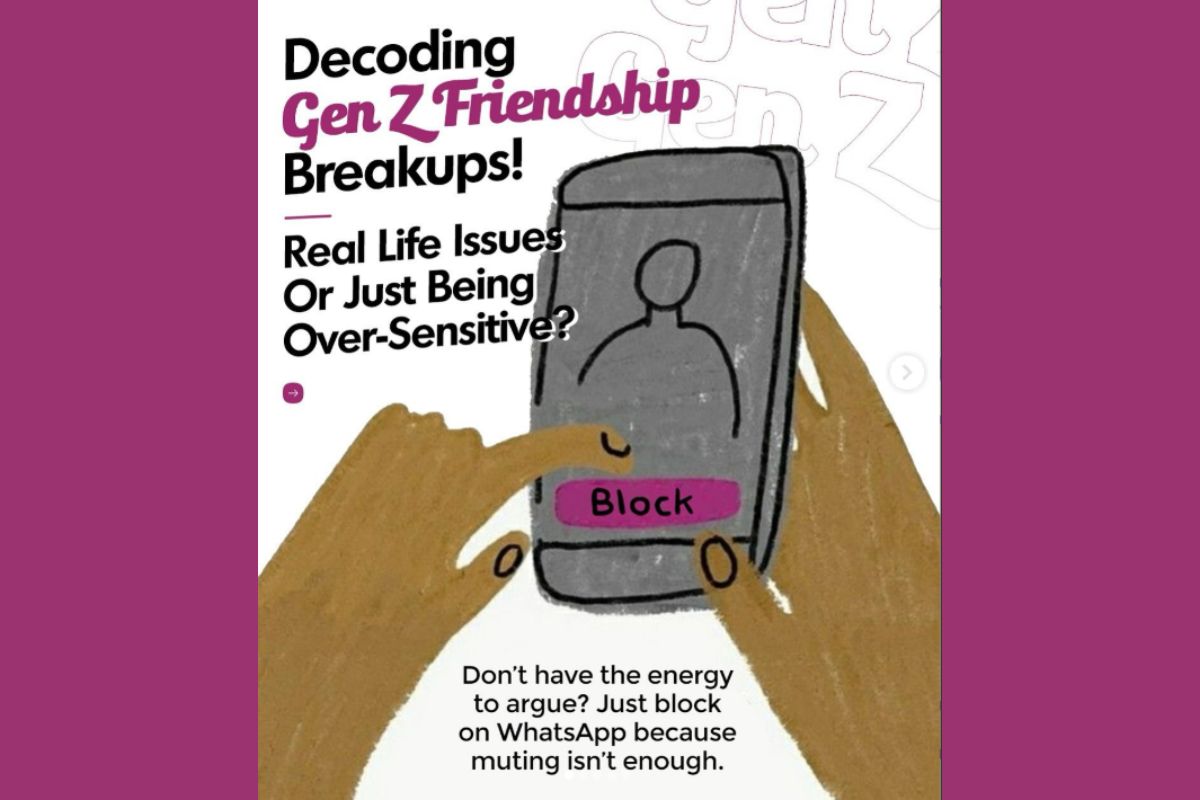
Blocking might feel like self-care, but it’s quietly choking innovation. Great ideas are born from collaboration and feedback, and those require; well, talking to people you disagree with. Without that? We risk raising a workforce that’s highly connected but emotionally disconnected. Always online, rarely engaged.
At the end: You Can’t Ghost Your Way to the Top
Dear Gen Z, here’s the tea; the professional world isn’t a curated Instagram feed. You can’t filter out uncomfortable conversations, mute difficult bosses, or swipe left on every critique. Yes, boundaries matter. Mental health matters. But relationships matter too, especially in business. Every time you block instead of talk, you’re choosing temporary comfort over long-term growth.
The block button will always exist. The question is “Will you use it like a scalpel, or like a sledgehammer?” Because careers, unlike Tinder matches, don’t come with infinite retries. And before you block the next employer for saying that, maybe, just maybe, let’s have that uncomfortable conversation instead.