BLS International Services Ltd. is a Delhi-based company that has become a dominant player in outsourced visa and consular services worldwide. Operating in 70+ countries on behalf of 46 client governments, BLS claims to have processed over 360 million applications to date. On paper, it projects an image of efficiency and “service excellence,” but a closer investigation reveals a pattern of consumer complaints, legal troubles, and corporate governance issues spanning multiple countries.
Lets see how BLS International has been tied to alleged scams, from visa processing upcharges affecting ordinary travelers to mishandling of sensitive programs like Estonia’s e-residency, and even internal misconduct accusations. The evidence paints a troubling picture of a company that has leveraged near-monopoly powers in critical services, often at the expense of ethics and accountability.
Monopoly of BLS International on Visa Services and Consumer Complaints
In several countries, BLS International enjoys exclusive contracts to handle visa, passport, and consular applications for governments, essentially acting as the only gateway for citizens and diaspora seeking these services. In Canada, for example, BLS International is the sole agency authorized for Indian visa and consular services, serving a large Indian diaspora. This monopoly has led to mounting complaints about exploitative practices, as many applicants feel they have “no choice” but to endure BLS’s fees and policies. A 2025 CBC News investigation in Toronto found numerous people including former BLS staff who described “a culture of upcharging” at BLS and pressure to pay for add-on services. Some key examples of these alleged scams and malpractices include:
- “Premium Lounge” Overcharges: In Toronto, Indian passport renewal applicants were unexpectedly charged for a so-called premium lounge service. One customer paid CA$206, only to find on the receipt that the official service fee was just CA$106.40, the remaining $100 was a lounge fee they never explicitly requested. Many felt misled and “cheated”, as this optional service was effectively imposed on them as a mandatory charge. Such incidents have led Canadian clients to accuse BLS of fraudulent billing practices.
- Forced Courier Fees: In various BLS International’s centers, people report being forced to pay for courier delivery of their documents even when in-person pickup was possible. For instance, at a BLS center in Singapore, a notice stated courier service was optional, yet customers weren’t allowed to opt out at payment and were charged S$15 for delivery. Insiders note it costs BLS only a few dollars to courier locally, making this a hefty mark-up. Clients who felt coerced into these fees likened it to a scam, since self-collection (a free option) was ostensibly available but not honored.
- Unnecessary Services as “Requirements”: Former customers and employees describe hard-sell tactics where BLS staff insist on paid services like photocopying, form-filling assistance, or SMS updates that are not actually required by the consulate. These add-ons inflate the cost for each applicant. Multiple people felt their visa or passport might be delayed or rejected if they didn’t pay for these extras. This is the fear BLS’s monopoly status reinforces. Essentially, what should be optional conveniences are presented as if they are mandatory.
The Canadian scenario particularly highlights the impact of these practices. Because BLS is “the only agency providing Indian consular services in Canada,” many in the Indian community felt captive to its fees. CBC News reported that applicants felt their ability to visit India or legally stay in Canada was at stake if they didn’t go along with BLS’s extra charges.
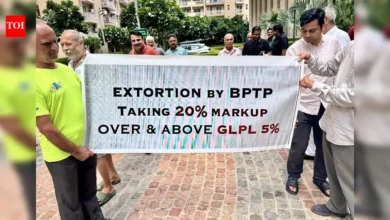
Tellingly, despite the chorus of complaints on social media and forums, Consumer Protection Ontario received only one formal complaint about BLS International in the last three years. Advocates say this low official count is not because BLS’s service is problem-free. Rather, customers often don’t know where to complain, and many resignedly pay the fees to avoid jeopardizing their travel plans. Community groups in Canada have now begun organizing, urging regulators to investigate BLS for “consumer frauds” and put an end to these exploitative practices.
For its part, BLS International has denied wrongdoing in these customer service controversies. The company insists it adheres to all required standards and that any fees charged are for optional value-added services. BLS claims to have a “reputation for ‘service excellence’” and says it “will always investigate concerns thoroughly and take steps to improve”.
However, such assurances ring hollow for many clients. Even some investors note bluntly that poor customer treatment is effectively built into BLS’s business model, one commentator quipped that lousy service “does not make it a fraud company” in their eyes, but rather is a byproduct of the oligopoly like position BLS International holds in its niche. In other words, with little competition, BLS can get away with practices that would otherwise drive customers to rivals. This dynamic has turned into real harm for consumers, tarnishing BLS’s public image globally.
It is important to note that these allegations are not isolated to one region. They span BLS operations in Asia, Europe, and North America, indicating a possible systemic issue. BLS International’s business depends on contracts with governments, and those contracts typically allow charging only certain approved service fees. If BLS has indeed been levying unauthorized or deceptive fees, it could face legal penalties or loss of contracts. So far, however, enforcement has been minimal.
The Indian government has not publicly rebuked BLS for these customer complaints, and foreign governments whose citizens are affected often defer to India (since it’s India’s outsourced service). This lack of oversight has arguably emboldened the company. As one frustrated customer wrote, “I can’t wait until the embassies start handling visas themselves like before”, lamenting the outsourcing model that gave BLS this much power.
Diplomatic Storms and International Scandals
BLS International’s troubles aren’t confined to customer service. They have also erupted on the international diplomatic stage. Two major incidents in 2023 underscored how failures by BLS International had far-reaching consequences. It all started with Canada-India Diplomatic Fallout. In September 2023, Canada and India were embroiled in a diplomatic crisis after Canadian PM Justin Trudeau alleged Indian involvement in the killing of a Sikh separatist leader on Canadian soil.
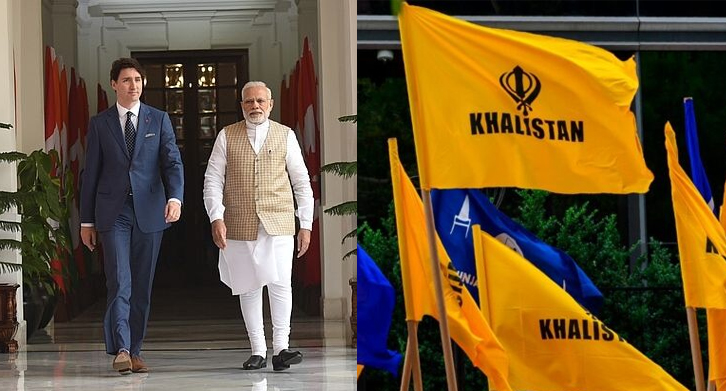
India responded with sharp denials, and amid the escalating tensions, India took the dramatic step of suspending visa services in Canada. Since BLS International was running India’s visa application centers in Canada, this suspension meant BLS shut down operations overnight in Canada, leaving many would-be travelers in limbo. Crowds of applicants suddenly had nowhere to go for visas, as BLS offices closed and India instructed Canadians to use a cumbersome e-visa process in the interim. This disruption highlighted how deeply entwined BLS was in the diplomatic ecosystem; a political dispute had immediately “adversely impacted the operations of BLS International” in Canada.
The twist came a couple of months later. By December 2023, as diplomatic talks made some headway, India quietly resumed some visa services, and the Indian High Commission formally awarded BLS International a fresh contract to continue handling consular, passport, and visa services in Canada. In fact, on December 6, 2023, an official announcement noted that BLS had won the outsourcing contract for the High Commission in Ottawa and the consulates in Toronto and Vancouver. In essence, despite the rocky spell, BLS International not only retained but expanded its role as the gatekeeper for Indian visas in Canada.
This was right around the time Canadian media outlets were preparing their exposes on BLS’s practices. The development left many observers perplexed that why would India renew its trust in a company facing so many service complaints? Some analysts believe India had little alternative ready, given BLS’s entrenched position and possibly lower bids. Nonetheless, the timing was awkward as Canada’s press and diaspora voiced anger at BLS, the company was simultaneously being handed the keys back to the kingdom, so to speak. The outcome signaled that for now, BLS International remains indispensable in Canada, diplomatic storms or not.
Estonia’s e-Residency Fiasco: Perhaps the most serious allegation of wrongdoing by BLS emerged from Estonia. Estonia is known for its innovative e-Residency programme, which issues digital identity cards to entrepreneurs worldwide, allowing them to run businesses remotely in Estonia (and by extension, the EU) without living there. In 2021, Estonia contracted BLS International to act as its global service partner for e-Residency, authorizing BLS to collect applications and even hand out the e-resident ID cards in multiple cities like Tokyo, Bangkok, Singapore, São Paulo, and Johannesburg. This was a prestigious win for BLS, moving beyond visas to high-tech identity services. However, by mid-2023, Estonian authorities discovered serious breaches in how BLS was handling the program.
An investigation by Estonia’s Police and Border Guard Board found that BLS personnel in Bangkok, Thailand had issued an e-Residency card to an individual who was not authorized to receive it. In other words, someone obtained the secure digital ID through BLS by sidestepping the proper vetting process, which is a major protocol violation. To make matters worse, the authorities suspected this wasn’t an isolated incident. The same kind of breach was detected in other BLS-run locations as well. Estonia’s Ministry of the Interior viewed this as a “serious breach of protocol” that could undermine the integrity of the entire e-Residency scheme.
In response, they terminated the contract with BLS International on the spot, ceasing all collaboration. By December 2023, Estonian and international media (including ERR News and ANI) were reporting that BLS International was facing legal action for “breaching Estonia’s e-residency mandate.” The Interior Ministry confirmed BLS was ousted due to unauthorized issuance of documents, and Estonian agencies launched deeper investigations into the extent of the misconduct.
BLS International’s defense was that a few “errant employees” went rogue in Thailand and possibly elsewhere, without management’s knowledge. An unnamed BLS spokesperson told press that the employees’ unlawful conduct was “beyond the control of BLS” and not a systemic issue, claiming the company “did not encourage or partake” in those actions. BLS said it took disciplinary action against the staff involved and that the matter was sub judice (under legal proceedings) so they would refrain from further comment. Essentially, BLS attempted to isolate the blame on a few individuals, a common corporate damage-control tactic.
However, Estonian officials were not entirely assuaged. They indicated they would review their vetting procedures for partners and implement stricter controls to safeguard the e-Residency program going forward. The incident was embarrassing for Estonia, a country that prides itself on digital security, and it reflected poorly on India as well, since BLS International is an Indian company representing an Indian government outsourcing success story. For BLS, this was a significant blow as getting terminated and publicly called out by a foreign government is far more damaging than individual customer complaints. It showed that BLS’s lapses could pose security risks, not just inconvenience.
These international incidents underscore a pattern that BLS International has at times prioritized rapid expansion and contract wins over robust quality control. In Canada, political events revealed how deeply integrated BLS was, yet accountability for its service quality was murky. In Estonia, an overeager or under-supervised team in Bangkok caused a breach that ended a valuable contract.
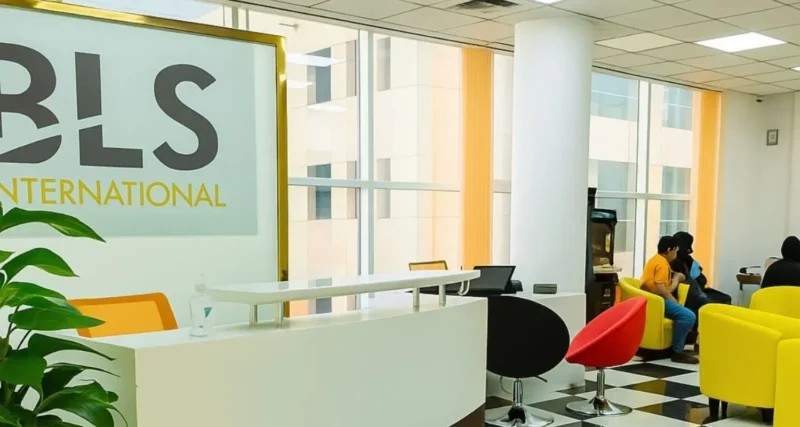
Notably, BLS’s largest global competitor, VFS Global, also operates in these spaces, and industry insiders have long observed that the visa outsourcing business can be a race to the bottom. Providers bid low to win contracts and then try to make profits via volume and add-on fees. BLS International appears to exemplify this as it often undercuts rivals to secure deals, then “upsells or skimps on quality” by, for example, hiring junior staff or interns to do work that requires experts. The Estonia case, some suggest, might have been a result of BLS using inadequately trained staff or taking procedural shortcuts to meet targets – a gamble that backfired badly.
Corporate Governance and Ethical Red Flags
Amid these external controversies, BLS International has also grappled with internal governance issues that raise questions about its leadership and ethical culture. Two incidents in particular stand out:
Sexual Harassment Allegation at the Top: In May 2024, a former employee of BLS International in India went public with serious accusations against the company’s Chief Human Resources Officer. The ex-employee, a woman who worked at BLS from 2022 to 2024, filed a First Information Report (FIR) with Delhi Police alleging that BLS’s CHRO, Gautam Aggarwal, sexually harassed her repeatedly over months. In her police complaint, she described how the CHRO “made inappropriate gestures towards me. He used to ask me to make physical relations with him”.
She claims that despite her objections, the harassment continued until she felt compelled to resign on May 1, 2024, after also emailing a complaint to the company’s chairman. This allegation is particularly noteworthy because Gautam Aggarwal is not just any executive, he is part of the family that runs BLS. The Aggarwal family (led by founder and Chairman Diwakar Aggarwal) holds the top positions. Diwakar’s son Shikhar Aggarwal is Joint Managing Director, another son Karan Aggarwal is on the board, and Gautam Aggarwal (a relative, likely another family member) served as CHRO. In effect, the person accused was in the inner circle of the company’s ownership.
BLS International’s response was swift and defensive. The company publicly refuted the sexual harassment charges as “baseless and false,” portraying the accuser as a malicious actor. A BLS spokesperson stated that the woman’s allegations were “not only baseless and unfounded, but also clearly retaliatory.” The company revealed that, prior to her complaint, BLS had filed its own FIR against that very employee (and three of her team members) for “data theft, conspiracy, and refusal to hand over company assets”. In other words, BLS International accused her of stealing data and defaming the company, and implied she made the harassment claim only after being caught.
The spokesperson went further to say the woman had orchestrated a “carefully planned extortion bid”, allegedly demanding money from BLS to stay quiet, and that the company refused to pay, after which she went to the police with what BLS calls a “counterblast” of false allegations. BLS insisted the matter was under investigation and that they “do not wish to comment further on the merits.” It’s worth noting that Delhi Police did register a case under IPC Sections 354A and 509 (outraging a woman’s modesty and sexual harassment) based on the ex-employee’s FIR, meaning the claims were serious enough to warrant an official probe.
This episode casts a harsh light on BLS’s corporate culture and governance. Firstly, it suggests that a power imbalance and potential abuse existed at high levels where a HR head (responsible for employee well-being) is the one accused of harassment. Secondly, the company’s reaction of accusing the whistleblower of theft and extortion, could be seen as an attempt to intimidate or discredit a complainant rather than address the issue transparently. Such a stance can create a chilling effect on other employees who might consider reporting misconduct.
The fact that the accused CHRO shares the Aggarwal surname also led to perceptions that nepotism might shield top executives at BLS from accountability. Governance experts point out that family-run firms (BLS International was founded by Diwakar Aggarwal and is very much a family enterprise) often struggle with instituting impartial oversight of family members. In BLS’s board, independent directors would be expected to investigate a sexual harassment claim without fear or favor, but whether that happened remains unclear.
As of this writing, the case is still under investigation, and no definitive legal conclusion has been reached. However, for a company that deals with governments worldwide, such negative publicity of an alleged violation of workplace law and dignity, is damaging. It raises concern that if internal governance is weak, misconduct can fester not just in client dealings but within the organization itself.
Financial and Transparency Concerns: BLS International’s track record in managing large projects and its finances hasn’t been spotless either. Back in 2016–2018, the company undertook a major G2C (Government-to-Citizen) project in Punjab, India, operating over 1,600 “sewa kendras” (citizen service centers) across the state. This venture turned sour when the Punjab government found the centers “financially unviable” and decided to shut them down in early 2018. BLS was left holding an enormous unpaid bill of about ₹133 crore (approximately $18 million) in receivables due from the Punjab government.
Simultaneously, BLS International had taken on debt (nearly ₹100 crore) to fund these operations, expecting the revenue to come through. When the project collapsed, BLS’s balance sheet suddenly looked shaky of high receivables that might turn into bad debt, and loans to service. Investors on forums openly fretted that “there’s never just one cockroach in the kitchen”, implying that this could hint at deeper issues. Questions arose that “Had BLS overextended itself? Did it win the Punjab contract by unrealistic pricing (like a loss leader) just to show growth, only to eat the losses later?” The episode underscored the risk of aggressive bidding, a pattern we saw echoed in the Estonia case.
During the Punjab debacle, there were also reports of BLS delaying salaries of the kendra employees due to the cash crunch. One analyst noted, “salary is the last thing management should touch in a crisis,” arguing that by not paying frontline staff on time, BLS showed poor governance and intent. The management’s communications didn’t inspire confidence either. They kept insisting that BLS had “surplus cash” and everything was fine, even as evidence mounted of strained liquidity, as seen in the case of Edtech giant Byju.
In reality, much of BLS’s cash was parked in overseas subsidiaries (from its visa business) and couldn’t be easily brought to India without a tax hit. This complicated financial picture where money in one pocket that can’t be used for a hole in another was not clearly disclosed to investors beforehand. Eventually, BLS International wrote off a portion of the Punjab receivables and refocused on its core visa outsourcing operations which have a “negative working capital” cycle (meaning they collect fees upfront).
The company stabilized, and in subsequent years made a string of acquisitions in the travel and visa space to fuel growth. But the memory of that misadventure lingers as a lesson in governance. BLS appeared willing to gamble on big projects without fully accounting for downside, and when it went wrong, transparency to stakeholders was lacking.
Given these red flags, it is perhaps unsurprising that BLS International’s ethics have been questioned. What’s striking is that even as controversies pile up, the company continues to win plaudits in some circles. In late 2017, for instance, BLS was given an award by the World CSR Congress naming it “India’s Most Ethical Company” in the visa outsourcing category.
The announcement was trumpeted by BLS’s social media, with a cheeky message to “hope the critics will think about their criticism now”. In hindsight, that award seems ironic. Critics would argue that true ethics are demonstrated by actions, not trophies. And BLS’s actions, whether allegedly overcharging vulnerable immigrants or mishandling secure IDs or battling harassment claims, suggest a gap between its public relations and reality.
It’s also telling to see how investors perceive BLS. On one hand, many investors are drawn to its strong financial performance in recent times as BLS reported robust profits and revenue growth in 2023–24, helped by post-Covid travel recovery, and even set record-high results in Q4 FY2025. The company’s share price has risen significantly over the past few years, and it has a market presence on Indian exchanges. On the other hand, savvy observers acknowledge the ethical murk.
In a candid discussion on an investor forum, one shareholder wrote that while BLS has “shoddy customer treatment,” that doesn’t stop it from making money, and in fact the lack of alternatives for customers can be seen as a competitive moat. Another replied that such behavior is acceptable to them as an investor seeking profit, even if they “object on moral grounds” personally. This reveals a somewhat cynical calculation that as long as BLS’s practices don’t trigger regulatory crackdowns that hurt profits, some investors are willing to look the other way on ethics. It’s a reminder that market success and moral success do not always align.
Conclusion: The Need for Accountability and Reform
The unfolding story of BLS International serves as a cautionary tale about the outsourcing of critical government services to private contractors without sufficient oversight. Here is a company that, by virtue of its contracts, wields enormous power over ordinary people’s access to passports, visas, and essential documents. Yet, from Canada to India to Estonia, we have seen allegations that BLS International abused that position, whether by gouging customers, cutting security corners, or mistreating its own employees. Each allegation on its own is troubling; taken together, they depict a pattern of behavior that thrives in opacity.
BLS’s business operates in a space where the end-users (citizens) have little say in choosing the provider (the government picks the contractor), and where oversight often falls through the cracks (as seen in Canada, where complaints weren’t systematically tracked). This is a recipe ripe for exploitation.
There are already signs that BLS’s run of impunity may face challenges. In Canada, the media expose has prompted calls for investigations, and at least some political attention to the plight of the Indian diaspora being nickel-and-dimed by a contractor. In Estonia, authorities decisively terminated BLS’s contract and publicly disclosed the violations; a move that will likely make other governments think twice about how they monitor such vendors.
Even in India, BLS’s high-profile Aadhaar contract (worth ₹2,055 crore) has attracted scrutiny from commentators who label it “the new partner in crime” in an ongoing Aadhaar-related scam saga. Analysts have questioned why a firm “embroiled in fraud allegations” was handed a massive project to manage citizen data. If BLS were to falter on that project, it could finally trigger domestic oversight given the political sensitivities around Aadhaar.
So far, BLS’s public communications have largely been denial and deflection of “baseless allegations,” “errant employees,” “we are aligned with standards.” These statements have not convinced skeptics, but rather reinforced the impression of a company unwilling to introspect.
Ultimately, the saga of BLS International is emblematic of a larger issue where the outsourcing of public services must be accompanied by public accountability. When a private firm’s motto becomes profit over people, scams, big and small, become almost inevitable. BLS International was even lauded as an ethical champion at one point, but real-world events have undercut that narrative.
The onus now lies both on regulators and the company itself to ensure that “service excellence” is not just a slogan but a lived reality for the millions who depend on BLS for access to passports, visas, and identity documents. Until then, BLS International will remain under the shadow of the very scams and storms it claims to have no part in; a stark reminder that trust, once broken, is hard to restore in the realm of public service.